
Skip to content
World Wars Cemetery

World Wars Cemetery

"Commonwealth war cemetery in Rawalpindi preserving First and Second World War burials, including documented Jewish military graves."

Back to Map

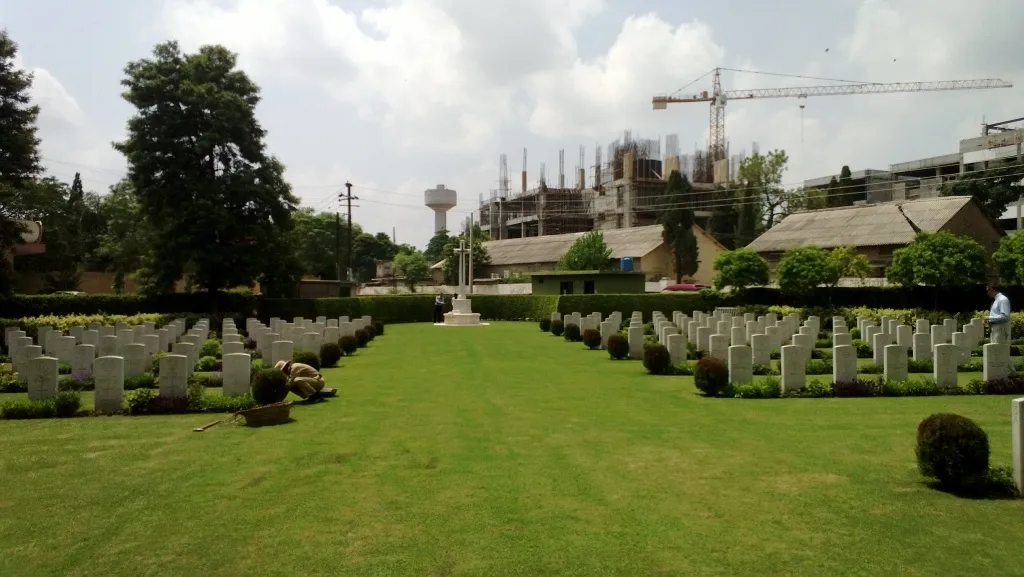
Rawalpindi War Cemetery, set within the older Protestant burial ground known locally as Gorah Qabrastaan, is one of the principal Commonwealth war cemeteries in present-day Pakistan. It contains burials connected mainly with military operations on the North-West Frontier, at a time when Rawalpindi functioned as an important garrison and logistical center of the British imperial system in the Punjab. According to the Commonwealth War Graves Commission, the cemetery contains 257 Commonwealth burials from the First World War and 101 from the Second World War.

The cemetery is historically important not only because of the number of military burials it contains, but also because it preserves, in stone, the wider geography of imperial war in South Asia. The men buried there came from different regiments and different parts of the British world. However, they were brought together in Rawalpindi because the city served as a military hinge between the Punjab and the frontier. In this context, the cemetery is not only a burial ground, but also a record of how empire, mobility, conflict, and death were organized in this part of the subcontinent.

Religious identity at Rawalpindi War Cemetery

Like other Commonwealth war cemeteries, Rawalpindi War Cemetery follows a standardized commemorative system. Headstones normally record the name, rank, regiment or service, date of death, and religious emblem of the individual. This matters because the cemetery preserves not only military identities, but also visible religious distinctions among the dead. Most graves follow Christian commemorative forms, while others may carry different religious signs, including the Star of David on Jewish graves. Even within a highly uniform military landscape, religious belonging could still be materially acknowledged.

Jewish Graves:

Joseph Michaels

Among the Jewish graves that can currently be discussed with confidence, Joseph Michaels is the best documented. Jewish military remembrance records identify him as born in London on 9 December 1895. He served in the 2nd Battalion of the Somerset Light Infantry and died on 20 June 1919. He is listed as buried in Rawalpindi War Cemetery, grave 4.A.4. His grave connects Rawalpindi not only to the British military presence in India, but also to the wider history of British Jewish service in the First World War and its aftermath.

Thomas Edward Haresnape

A second grave, that of Pioneer Thomas Edward Haresnape of the Royal Engineers, has also been associated with Jewish commemoration at Rawalpindi. His burial in the cemetery is documented, and local historical material from Huddersfield preserves aspects of his civilian and military background. However, his specifically Jewish biography is less securely documented than that of Joseph Michaels. For that reason, the strongest way to read his case is through the material evidence of commemoration itself, especially where the headstone is identified with a Jewish emblem.

Rawalpindi War Cemetery and Jewish Presence in Pakistan

For the history of Jewish presence in Pakistan, Rawalpindi War Cemetery is a small but meaningful site. Its Jewish significance does not depend on the existence of a large local Jewish community there. Rather, it lies in the way Jewish soldiers were incorporated into, and made visible within, the imperial military burial system of British India.

Gallery
Article researched and curated by Jew Where.

The Jew Where project is collaborative. Do you have additional information, found an inaccuracy, or have historical photos of this location? Contact our team.

World Wars Cemetery
Pakistan / Punjab / Faith & Ritual

World Wars Cemetery

"Commonwealth war cemetery in Rawalpindi preserving First and Second World War burials, including documented Jewish military graves."

Location
Rawalpindi War Cemetery, Gorah Qabrastaan, Lalkurti, Rawalpindi, Punjab, Pakistan
Opening Hours
March-October Monday-Thursday, Saturday: 08:00-17:00; November-February Monday-Thursday, Saturday: 07:00-16:00; Friday: 08:00-12:00; Sunday: Closed

Rawalpindi War Cemetery, set within the older Protestant burial ground known locally as Gorah Qabrastaan, is one of the principal Commonwealth war cemeteries in present-day Pakistan. It contains burials connected mainly with military operations on the North-West Frontier, at a time when Rawalpindi functioned as an important garrison and logistical center of the British imperial system in the Punjab. According to the Commonwealth War Graves Commission, the cemetery contains 257 Commonwealth burials from the First World War and 101 from the Second World War.

The cemetery is historically important not only because of the number of military burials it contains, but also because it preserves, in stone, the wider geography of imperial war in South Asia. The men buried there came from different regiments and different parts of the British world. However, they were brought together in Rawalpindi because the city served as a military hinge between the Punjab and the frontier. In this context, the cemetery is not only a burial ground, but also a record of how empire, mobility, conflict, and death were organized in this part of the subcontinent.

Religious identity at Rawalpindi War Cemetery

Like other Commonwealth war cemeteries, Rawalpindi War Cemetery follows a standardized commemorative system. Headstones normally record the name, rank, regiment or service, date of death, and religious emblem of the individual. This matters because the cemetery preserves not only military identities, but also visible religious distinctions among the dead. Most graves follow Christian commemorative forms, while others may carry different religious signs, including the Star of David on Jewish graves. Even within a highly uniform military landscape, religious belonging could still be materially acknowledged.

Jewish Graves:

Joseph Michaels

Among the Jewish graves that can currently be discussed with confidence, Joseph Michaels is the best documented. Jewish military remembrance records identify him as born in London on 9 December 1895. He served in the 2nd Battalion of the Somerset Light Infantry and died on 20 June 1919. He is listed as buried in Rawalpindi War Cemetery, grave 4.A.4. His grave connects Rawalpindi not only to the British military presence in India, but also to the wider history of British Jewish service in the First World War and its aftermath.

Thomas Edward Haresnape

A second grave, that of Pioneer Thomas Edward Haresnape of the Royal Engineers, has also been associated with Jewish commemoration at Rawalpindi. His burial in the cemetery is documented, and local historical material from Huddersfield preserves aspects of his civilian and military background. However, his specifically Jewish biography is less securely documented than that of Joseph Michaels. For that reason, the strongest way to read his case is through the material evidence of commemoration itself, especially where the headstone is identified with a Jewish emblem.

Rawalpindi War Cemetery and Jewish Presence in Pakistan

For the history of Jewish presence in Pakistan, Rawalpindi War Cemetery is a small but meaningful site. Its Jewish significance does not depend on the existence of a large local Jewish community there. Rather, it lies in the way Jewish soldiers were incorporated into, and made visible within, the imperial military burial system of British India.

Timeline

  • First World War The cemetery contains Commonwealth burials connected mainly with military operations on the North-West Frontier.
  • 20 June 1919 Lance Corporal Joseph Michaels of the 2nd Battalion, Somerset Light Infantry, died and was buried at Rawalpindi War Cemetery.
  • Second World War The cemetery also contains Commonwealth burials from the Second World War.

Sources & Bibliography

  1. COMMONWEALTH WAR GRAVES COMMISSION. Rawalpindi War Cemetery. n.d. https://www.cwgc.org/visit-us/find-cemeteries-memorials/cemetery-details/92012/rawalpindi-war-cemetery
  2. LONDON JEWISH CULTURAL CENTRE. Joseph Michaels. London Jews in the First World War: We Were There Too, n.d. https://www.jewsfww.uk/joseph-michaels.php
  3. HUDDERSFIELD EXPOSED. Thomas Edward Haresnape (c.1881-1919). n.d. https://huddersfield.exposed/wiki/Thomas_Edward_Haresnape_%28c.1881-1919%29
  4. YASIN, Aamir. War cemetery, final resting place of Commonwealth soldiers. Dawn, 2025. https://www.dawn.com/news/1883295

Additional Information

Official website: https://www.cwgc.org/visit-us/find-cemeteries-memorials/cemetery-details/92012/rawalpindi-war-cemetery

Phone: +44 1628 634221
Nearest landmark: Combined Military Hospital, Rawalpindi
Site note: The war cemetery forms a fenced section within the older Protestant cemetery known as Gorah Qabrastaan.

Article researched and curated by Jew Where.

The Jew Where project is collaborative. Do you have additional information, found an inaccuracy, or have historical photos of this location? Contact our team.