

Founded in 1845 by 37 German-speaking Jewish immigrants on the Lower East Side, Congregation Emanu-El began modestly, in a rented room near Grand and Clinton Streets, yet with a clear ambition: to create, in New York, a Reform Judaism with language, music, and pedagogy aligned with the modern world. It is regarded as the first Reform congregation in the city.
Its religious orientation took shape through concrete and, for the time, provocative choices: the gradual replacement of Hebrew by German and later English; the introduction of an organ and instrumental music into worship; the adoption of innovations in the celebration of certain festivals; and, most notably, the abandonment of the mechitza, eliminating the physical separation between men and women. From the perspective of cultural history, these choices help explain why Emanu-El became a laboratory for what the temple itself described as “Classical Reform”, today presented simply as Reform Judaism.
The congregation’s urban biography mirrors the social and geographic “uptown” movement of its community. In 1868, Emanu-El erected a major building at the intersection of Fifth Avenue and East 43rd Street, celebrated as a striking example of Moorish Revival architecture, designed by Leopold Eidlitz and Henry Fernbach. Decades later, real estate pressures and residential migration northward led the congregation to the Upper East Side. In 1926, consolidation with Temple Beth-El took place, and the new community acquired the site at Fifth Avenue and 65th Street, then associated with the former Astor family mansion.
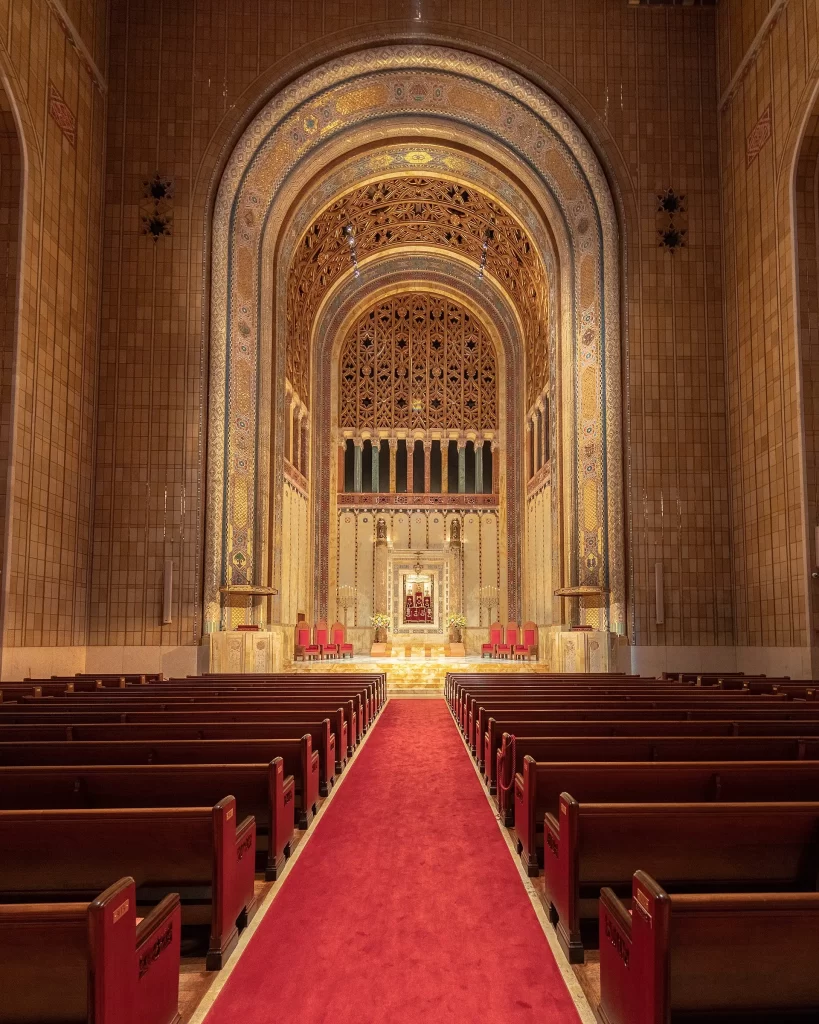
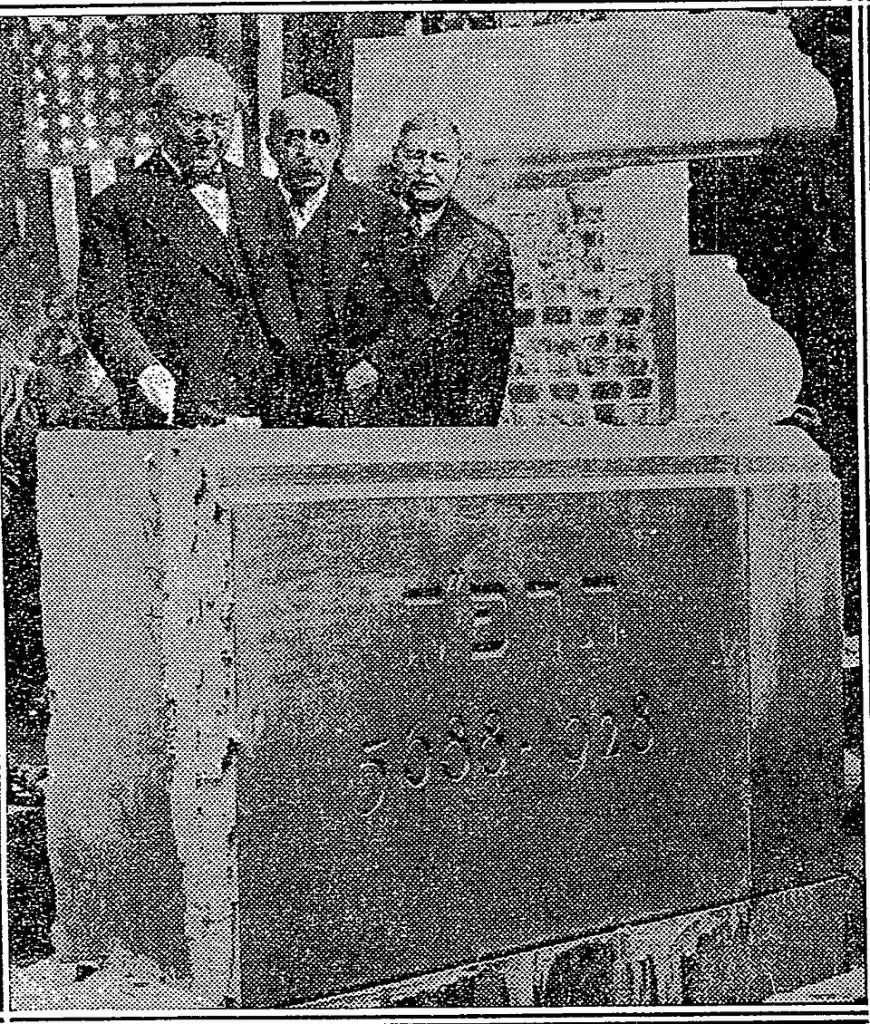
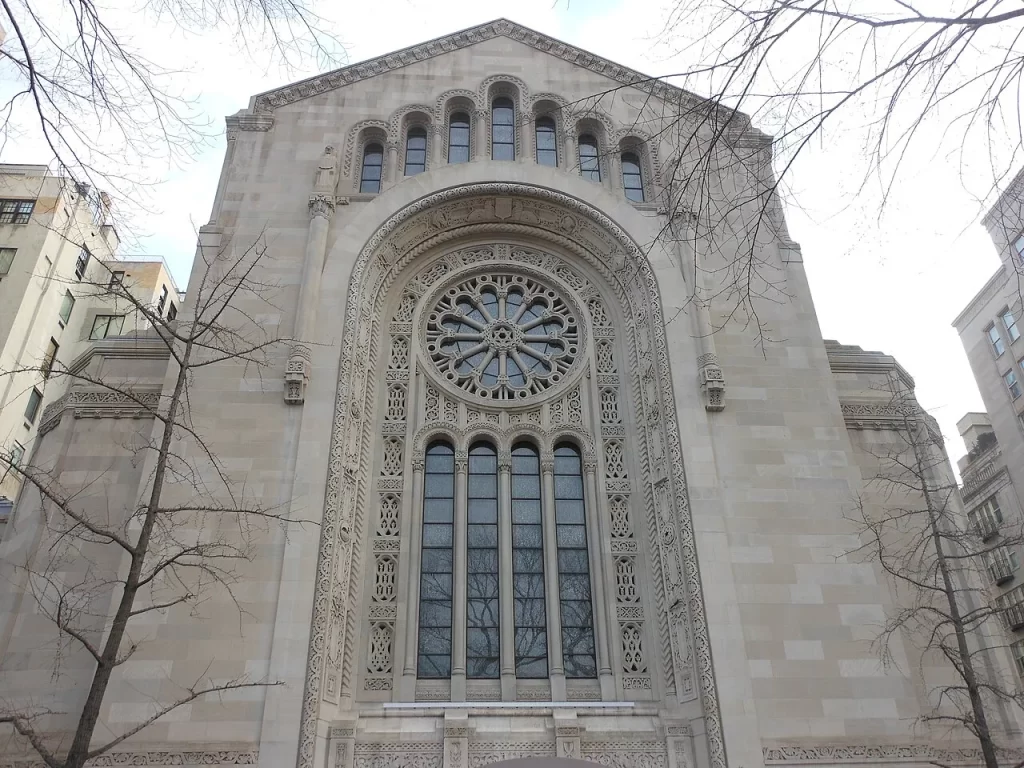
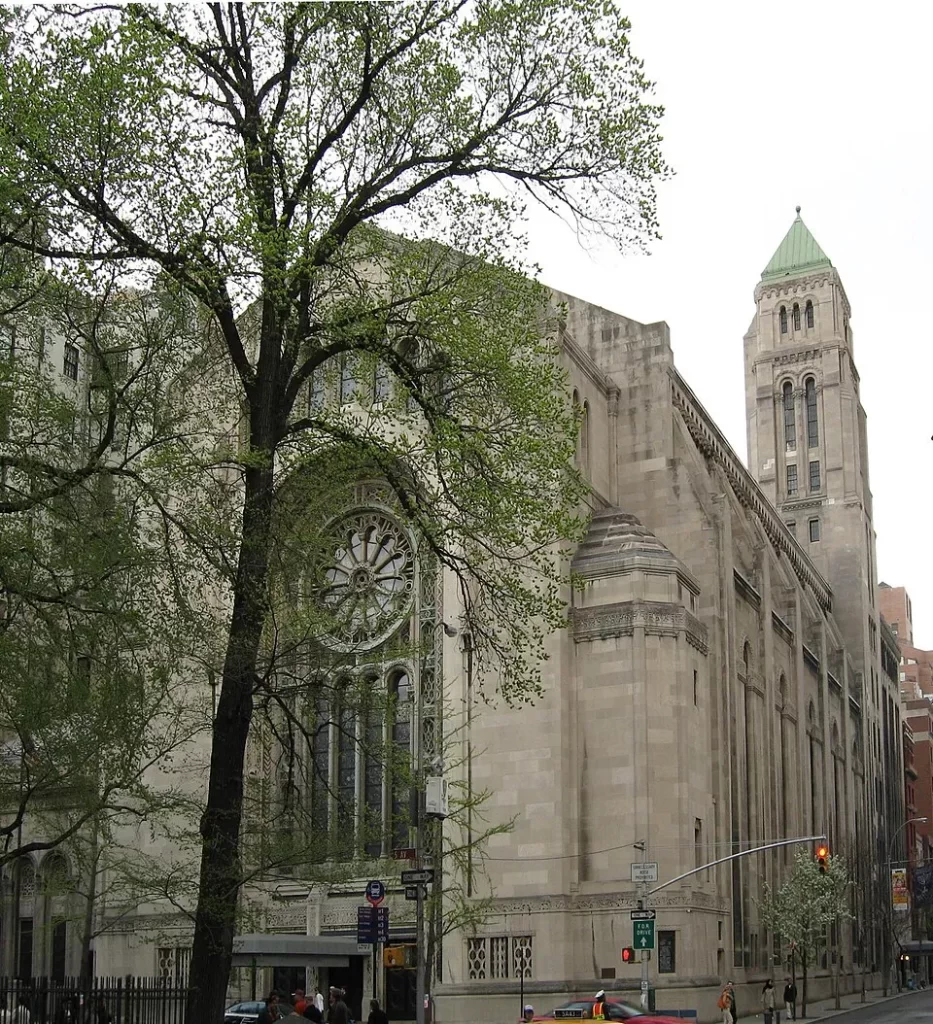
The current building, at One East 65th Street, stands as an architectural manifesto of twentieth-century New York Reform Judaism. Completed in 1929, with the first services held that same year and formal dedication in January 1930, it was designed by Robert D. Kohn, Charles Butler, and Clarence Stein, in association with Mayers, Murray & Phillip. The design combines Byzantine and Romanesque forms with Moorish references and Art Deco details. Scale is part of the message: a sanctuary 100 feet wide, 175 feet long, and 103 feet high, with seating for approximately 2,500 people and no interior columns obstructing the view.
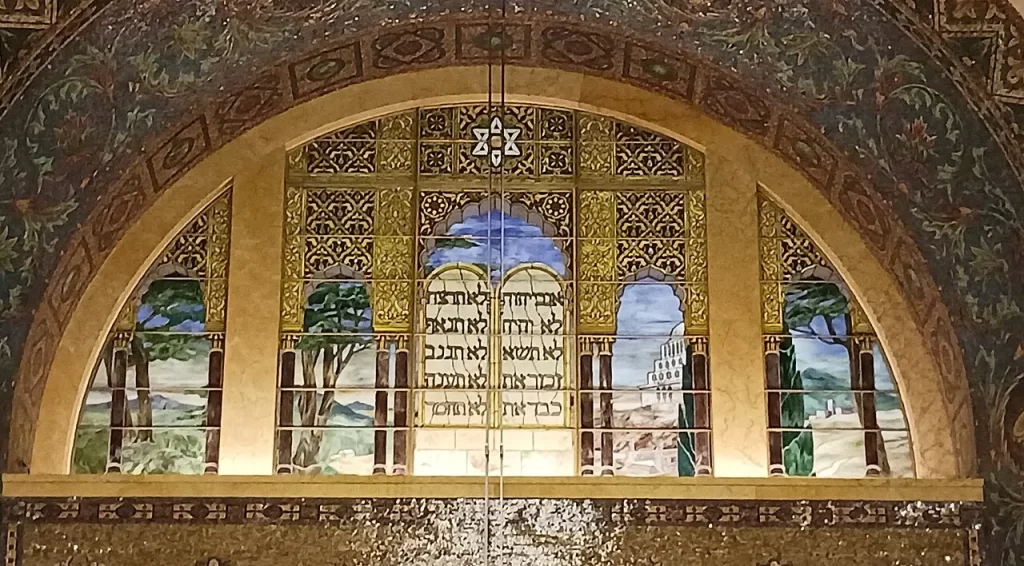
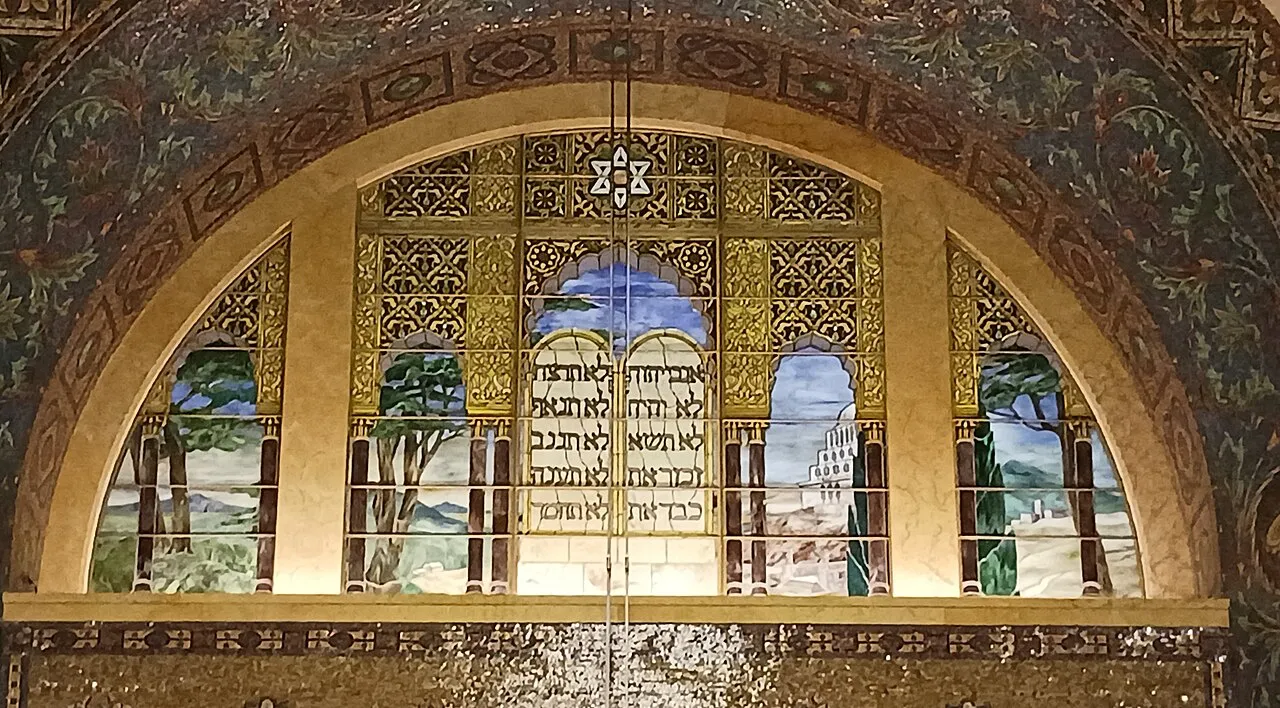
The interior was conceived as a visual text. The temple features more than 60 stained-glass windows, a large rose window rich in symbolism, including numerical and tribal references, and an ark designed as an open Sefer Torah housing seven Torah scrolls. The central role of music in Reform worship is underscored by the sanctuary organ, described as the largest synagogue organ in the world, with more than 10,000 pipes, as well as by the eight-story mosaic arch conceived by Hildreth Meière, where Jewish iconography meets Art Deco visual language.
Beyond worship, Emanu-El has established itself as a center for Jewish material culture. A key milestone was the opening of the Herbert & Eileen Bernard Museum of Judaica to the public in 1997, created to display and interpret a collection of ritual and ceremonial objects. The museum presents this collection as a window into the diversity of Jewish culture over time and offers both in-person visits and digital access via Bloomberg Connects.
For a “well-known name” that captures the synagogue’s place in American public history, the institution’s own chronology links Beth-El, which merged with Emanu-El, to Oscar S. Straus, identified as the first Jew to serve in a United States presidential cabinet, appointed by Theodore Roosevelt. Within the same milieu of civic and communal leadership appears Louis Marshall, associated with major Jewish leadership roles and with the founding of the American Jewish Committee in response to pogroms in Eastern Europe.
Gallery
Sources & Bibliography
- TEMPLE EMANU-EL. Our History. New York: Temple Emanu-El. Year: n.d
- NEW YORK LANDMARKS CONSERVANCY. Temple Emanu-El. New York: New York Landmarks Conservancy. Year: n.d
- CENTER FOR JEWISH ART, HEBREW UNIVERSITY OF JERUSALEM. Temple Emanu El in New York City, USA. Jerusalem: Hebrew University of Jerusalem. Year: n.d
Article researched and curated by Jew Where.
The Jew Where project is collaborative. Do you have additional information, found an inaccuracy, or have historical photos of this location? Contact our team.
Community notes
Comments
Logged-in visitors can submit comments for moderation before they appear publicly.
No comments yet.
Log in to leave a comment. Go to Account.