

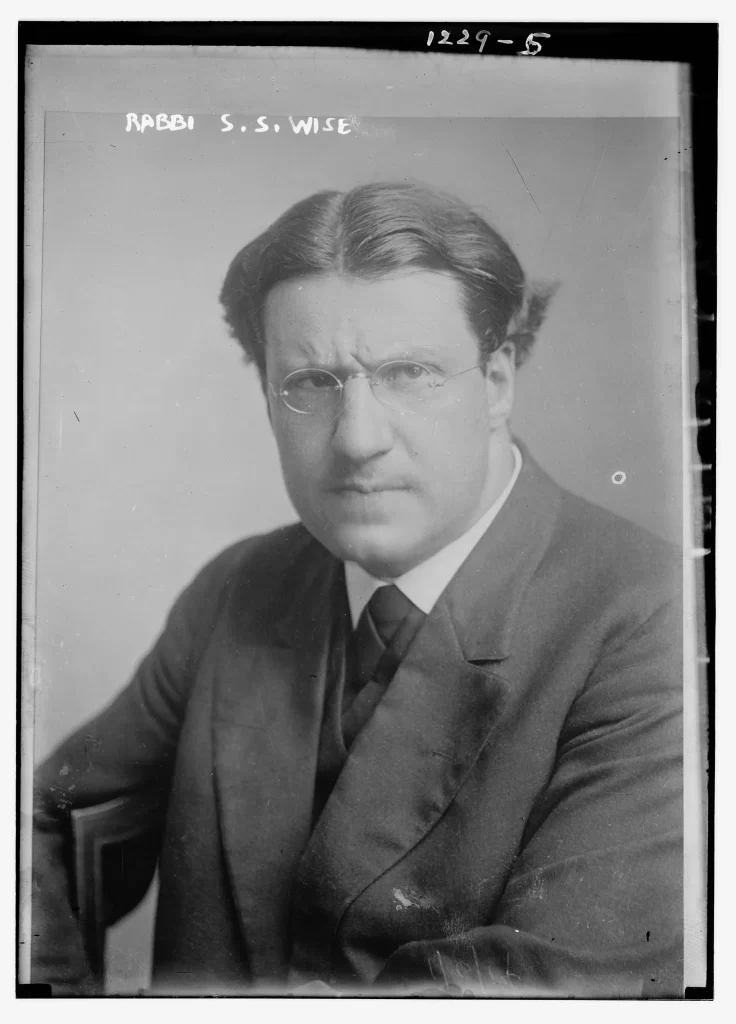
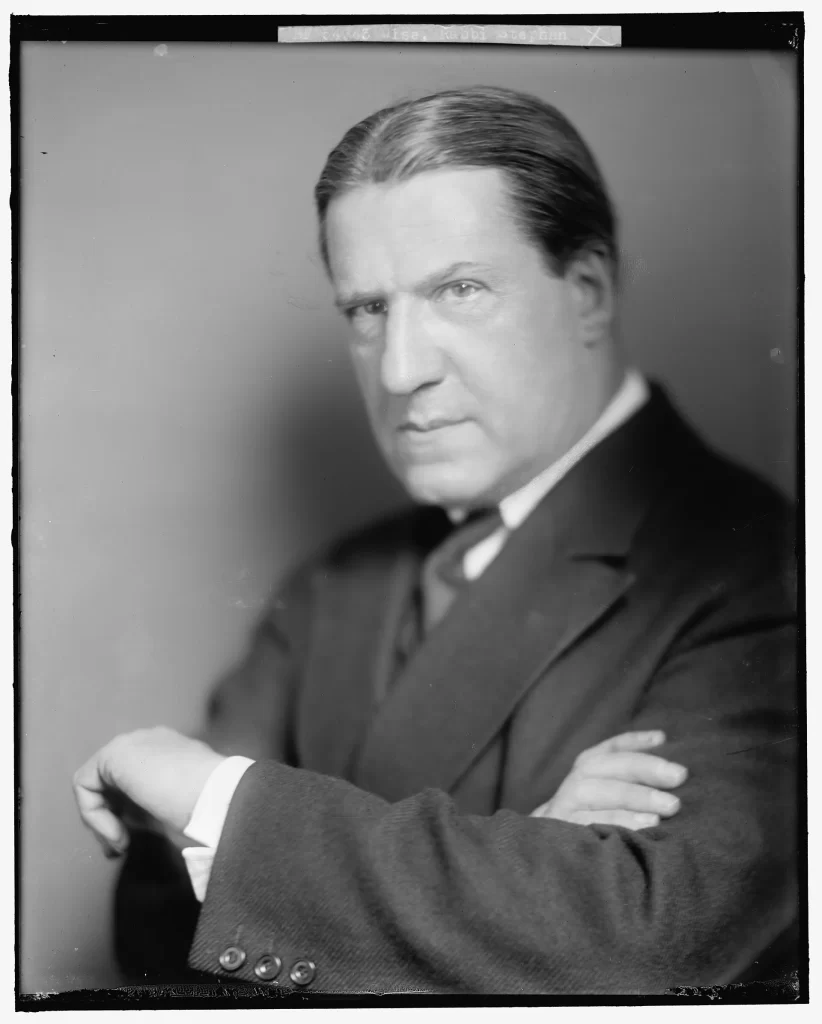
The Stephen Wise Free Synagogue was born as a public idea, almost a manifesto, before it became a building. In 1905, Rabbi Stephen Samuel Wise refused an invitation to assume the pulpit of Temple Emanu-El after learning that sermons would be reviewed in advance by lay leaders. His response was to create a synagogue where the pulpit would be free, and where religious and ethical debate would not be domesticated by committees.
By 1907, Wise was already conducting services at the Hudson Theater and also on the Lower East Side. The congregation was formally established on 15 April 1907 at the Hotel Savoy, with Henry Morgenthau Sr. as its first president. From that moment came the phrase that defined the project: the “Free Synagogue” would be democratic, without reserved seating and without membership dues, in other words, pewless and dueless.
What sets this synagogue apart in New York’s religious landscape is the institutional translation of the prophetic into community policy. In December 1907, it created a Social Service Department, described as the first of its kind within a synagogue, carrying out direct work on the Lower East Side. From the same matrix emerged Louise Wise Services, associated with the initiative of Louise Waterman Wise, focused on foster care and adoption, and on removing children from institutional abandonment.
The urban scale grew rapidly. In 1910, with more than 500 members, the Rosh Hashanah service was held at Carnegie Hall. In 1911, the community purchased brownstones on West 68th Street to establish a permanent base, and in 1922 Wise founded the Jewish Institute of Religion, which was installed next door on West 68th Street, reinforcing the area as a center for rabbinical training and liberal Jewish thought.
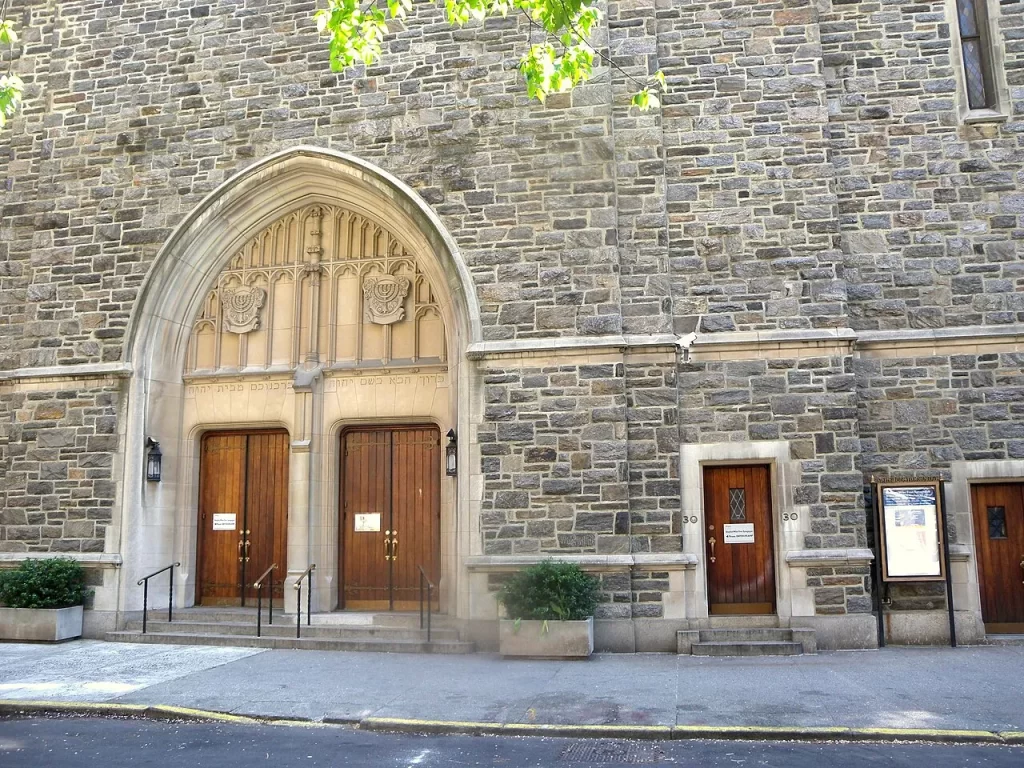
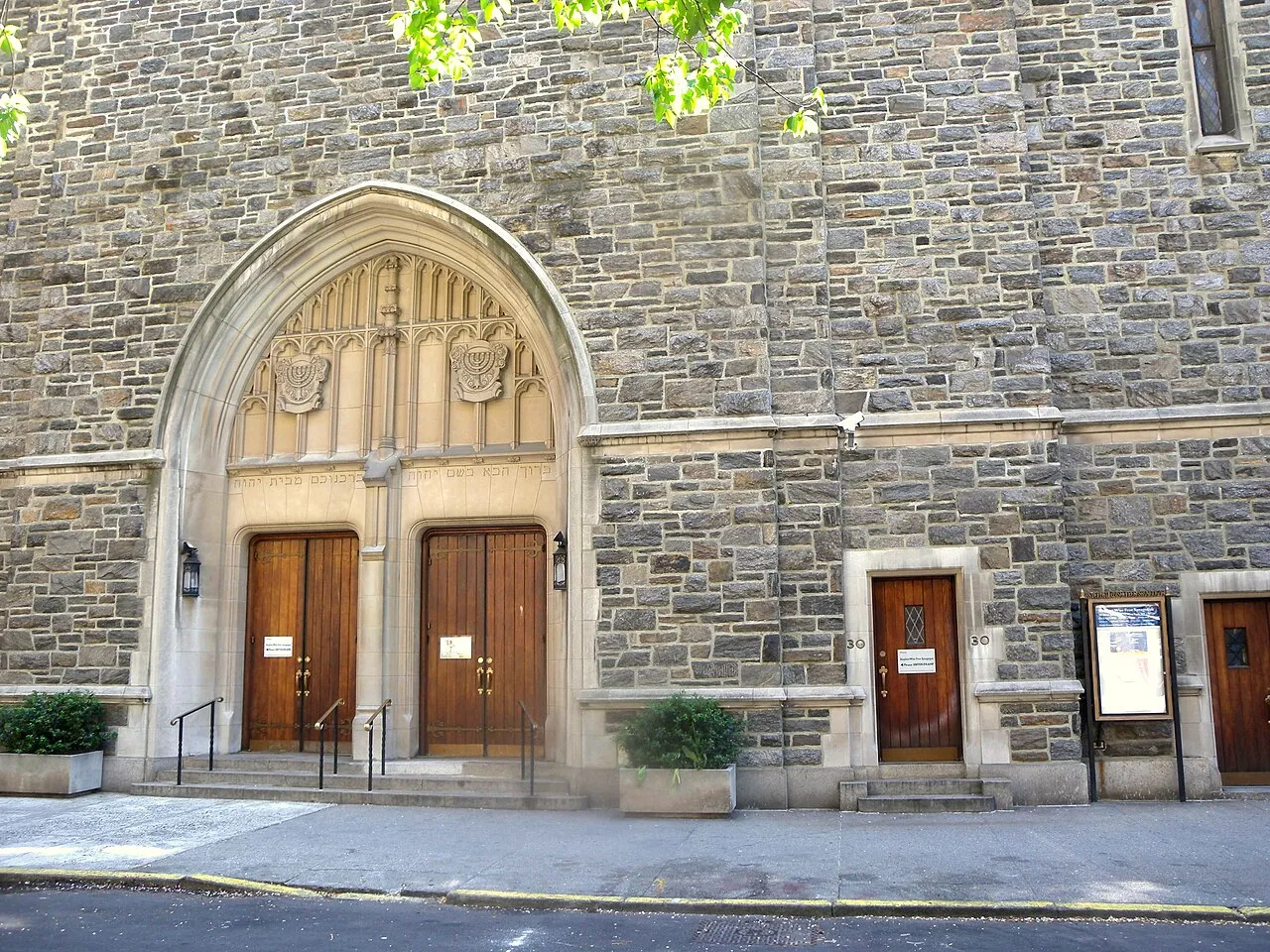
The current building, at number 30, belongs to a later phase. Construction began in 1940, was suspended in December 1941 for the duration of the Second World War, and resumed in 1947. The dedication of the new synagogue took place on 5 January 1950, after Wise’s death on 19 April 1949.
One symbolic object condenses the ambition of the project: a stone from the Western Wall, described in 1923 as intended to be incorporated into the walls of the new complex on West 68th Street. Donated to Wise by Sir Wyndham Deedes, it was also associated with the building that would house the Jewish Institute of Religion. It functioned simultaneously as religious statement, material memory, and political symbol of the sacred.
Today, the synagogue defines itself as Reform and maintains a public profile centered on musical liturgy and broad communal life. Its published schedule lists Shabbat services on Fridays at 6:00 pm and on Saturdays at 10:00 am.
Gallery
Sources & Bibliography
- AMERICAN JEWISH ARCHIVES. Stephen Wise Free Synagogue Records. Collection MS-779. Local: Cincinnati. Publisher: Jacob Rader Marcus Center of the American Jewish Archives. Year: n.d
- JEWISH TELEGRAPHIC AGENCY. Stone from Wailing Wall in Free Synagogue House. Publisher: Jewish Telegraphic Agency. Year: 1923
- STEPHEN WISE FREE SYNAGOGUE. Our History. Local: New York. Publisher: Stephen Wise Free Synagogue. Year: n.d
- STEPHEN WISE FREE SYNAGOGUE. Shabbat. Local: New York. Publisher: Stephen Wise Free Synagogue. Year: n.d
- STEPHEN WISE FREE SYNAGOGUE. Contact Us. Local: New York. Publisher: Stephen Wise Free Synagogue. Year: n.d
- UNION FOR REFORM JUDAISM. Stephen Wise Free Synagogue. Congregational listing. Publisher: Union for Reform Judaism. Year: n.d
Article researched and curated by Jew Where.
The Jew Where project is collaborative. Do you have additional information, found an inaccuracy, or have historical photos of this location? Contact our team.
Community notes
Comments
Logged-in visitors can submit comments for moderation before they appear publicly.
No comments yet.
Log in to leave a comment. Go to Account.