Skip to content
Statue of King Pedro IV

Statue of King Pedro IV

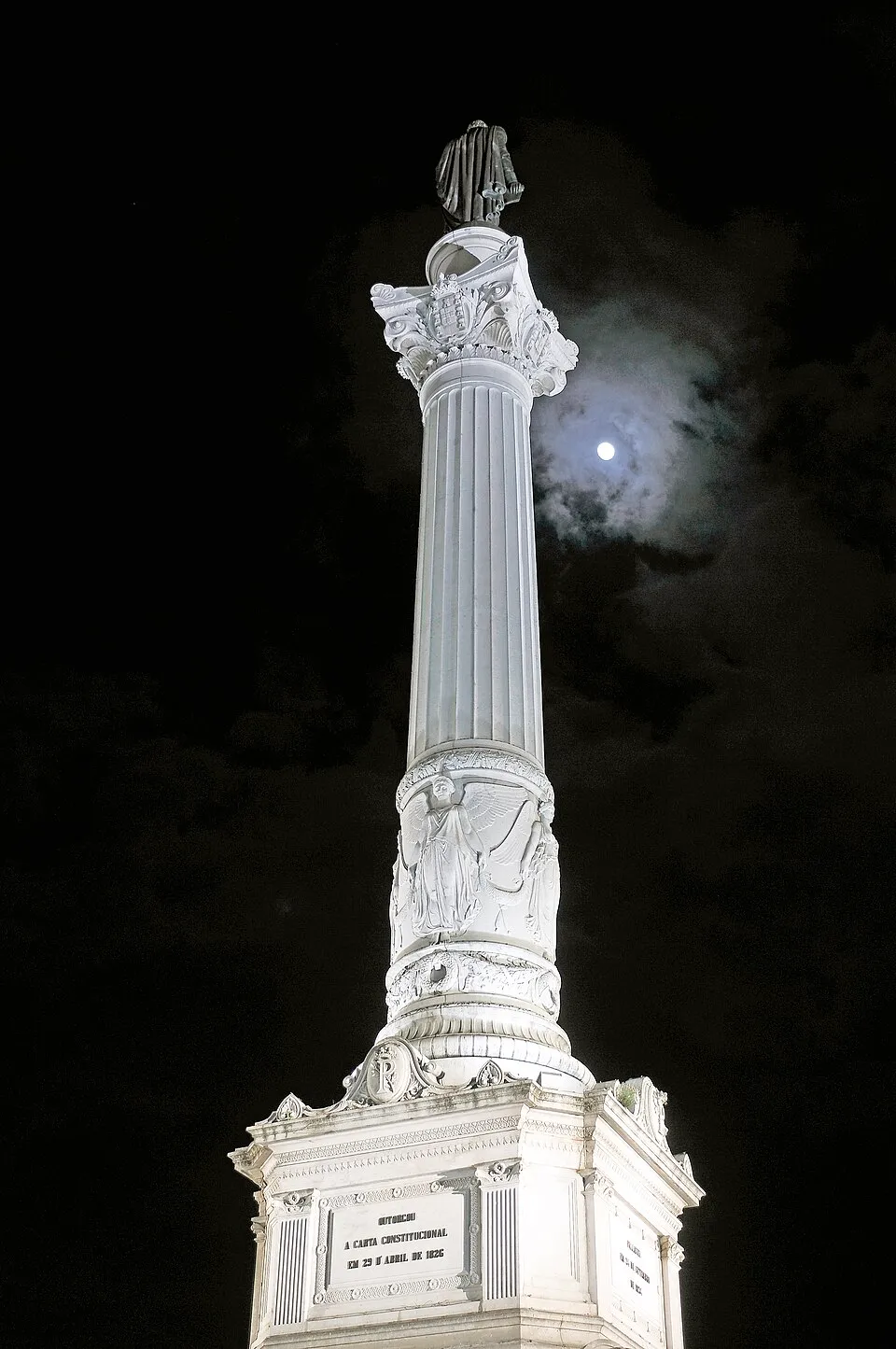
"1870 monument in Rossio commemorating Pedro IV, set in a square long associated with inquisitorial repression and later liberal constitutional change."

Back to Map

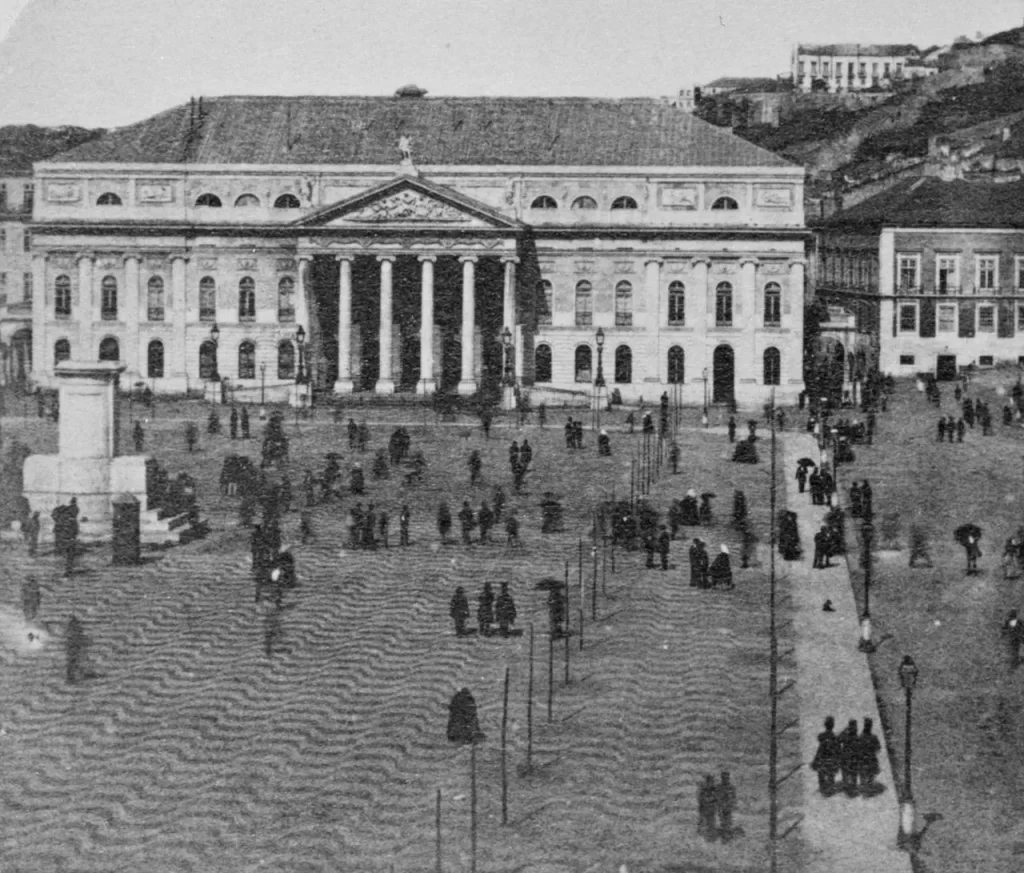
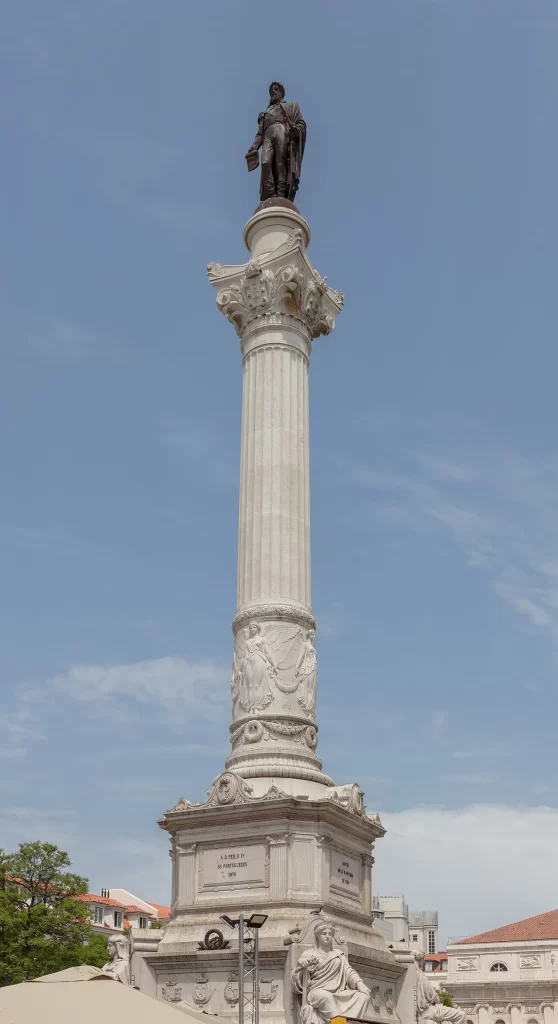
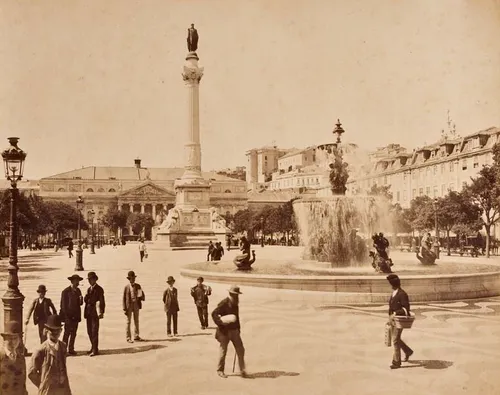
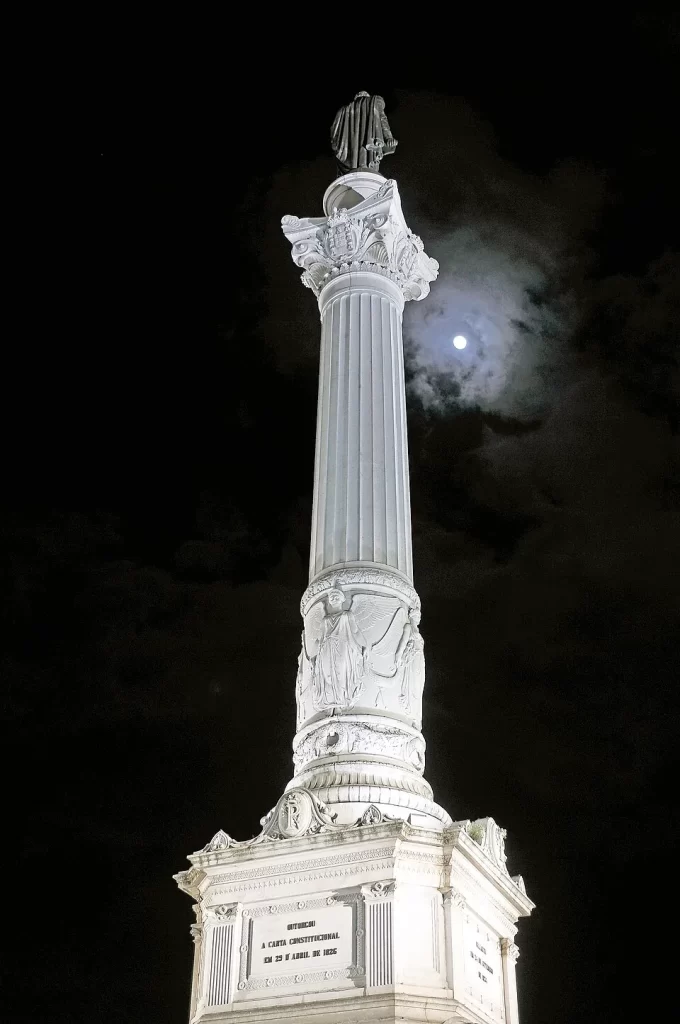
The neoclassical statue of Pedro IV stands at the center of Rossio Square, one of the most symbolically charged spaces in Lisbon’s history. Erected in 1870, the monument honors the monarch who granted the Constitutional Charter of 1826 and embodied the liberal transformation of Portugal.

Pedro IV’s political legacy is directly connected to Jewish history in Portugal. The constitutional order he established consolidated the dismantling of the legal foundations of the Inquisition and brought an end to centuries of institutionalized religious discrimination. Although the Inquisition had been formally abolished in 1821, it was the liberal constitutional framework that ensured civil equality and religious freedom, creating the conditions for Jews to return openly to Portugal and to reconstitute communal life during the 19th century after more than three centuries of forced conversion, exile, and persecution.

Artistically, the monument follows a neoclassical language inspired by Roman triumphal columns. The statue rises on a tall Corinthian column, with Pedro IV holding the Constitutional Charter as a symbol of constitutional rule and civil liberties. At the base of the column stand four allegorical female figures representing Justice, Wisdom, Strength, and Moderation, virtues associated with enlightened and constitutional governance.

The placement of the monument is deeply symbolic. Rossio Square was the main stage of the Portuguese Inquisition’s autos-da-fé from the 16th to the 18th centuries, where thousands of New Christians, many of Jewish origin, were publicly judged, humiliated, and executed. The statue thus marks a clear rupture between a space once defined by religious terror and a new civic landscape grounded in legal equality and constitutional freedom.

Gallery
Article researched and curated by Jew Where.

The Jew Where project is collaborative. Do you have additional information, found an inaccuracy, or have historical photos of this location? Contact our team.
Statue of King Pedro IV
Portugal / Lisbon / Neighborhoods & Settlements

Statue of King Pedro IV

"1870 monument in Rossio commemorating Pedro IV, set in a square long associated with inquisitorial repression and later liberal constitutional change."

Location
Praça D. Pedro IV, 1100-200 Lisbon, Portugal.

The neoclassical statue of Pedro IV stands at the center of Rossio Square, one of the most symbolically charged spaces in Lisbon’s history. Erected in 1870, the monument honors the monarch who granted the Constitutional Charter of 1826 and embodied the liberal transformation of Portugal.

Pedro IV’s political legacy is directly connected to Jewish history in Portugal. The constitutional order he established consolidated the dismantling of the legal foundations of the Inquisition and brought an end to centuries of institutionalized religious discrimination. Although the Inquisition had been formally abolished in 1821, it was the liberal constitutional framework that ensured civil equality and religious freedom, creating the conditions for Jews to return openly to Portugal and to reconstitute communal life during the 19th century after more than three centuries of forced conversion, exile, and persecution.

Artistically, the monument follows a neoclassical language inspired by Roman triumphal columns. The statue rises on a tall Corinthian column, with Pedro IV holding the Constitutional Charter as a symbol of constitutional rule and civil liberties. At the base of the column stand four allegorical female figures representing Justice, Wisdom, Strength, and Moderation, virtues associated with enlightened and constitutional governance.

The placement of the monument is deeply symbolic. Rossio Square was the main stage of the Portuguese Inquisition’s autos-da-fé from the 16th to the 18th centuries, where thousands of New Christians, many of Jewish origin, were publicly judged, humiliated, and executed. The statue thus marks a clear rupture between a space once defined by religious terror and a new civic landscape grounded in legal equality and constitutional freedom.

Timeline

  • 1497 Forced conversion of Portugal’s Jews in Lisbon.
  • 16th-18th centuries Rossio serves as a stage for autos-da-fé and other inquisitorial ceremonies.
  • 1810 Small Jewish prayer houses are recorded in Lisbon.
  • 1821 The Constituent Cortes abolish the Tribunal of the Holy Office.
  • 1826 Pedro IV grants the Constitutional Charter, marking the liberal constitutional order.
  • 1870 Inauguration of the monument to Pedro IV in Rossio Square.

Sources & Bibliography

  1. SARAIVA, António José. The Marrano Factory. The Portuguese Inquisition and Its New Christians 1536-1765. Edição: English ed. Local: Leiden. Editora: Brill. Ano: 2001. https://books.google.pt/books?id=eG8xUFivagkC
  2. BETHENCOURT, Francisco. The Inquisition. A Global History, 1478-1834. Local: Cambridge. Editora: Cambridge University Press. Ano: 2009. https://assets.cambridge.org/97805218/47933/frontmatter/9780521847933_frontmatter.pdf
  3. Assembleia da República. Carta Constitucional de 29 de Abril de 1826. Local: Lisboa. Editora: Assembleia da República. Ano: n.d. https://www.parlamento.pt/parlamento/documents/cartaconstitucional.pdf
  4. Arquivo Municipal de Lisboa. Lisboa, Rossio. Monumento D. Pedro IV. Local: Lisboa. Editora: Câmara Municipal de Lisboa. Ano: n.d. https://arquivomunicipal3.cm-lisboa.pt/x-arqweb/Result.aspx?id=1544216&type=PCD

Additional Information

Official website: https://informacoeseservicos.lisboa.pt/contactos/diretorio-da-cidade/d-pedro-iv

Article researched and curated by Jew Where.

The Jew Where project is collaborative. Do you have additional information, found an inaccuracy, or have historical photos of this location? Contact our team.