Skip to content
Statue of Amato Lusitano

Statue of Amato Lusitano

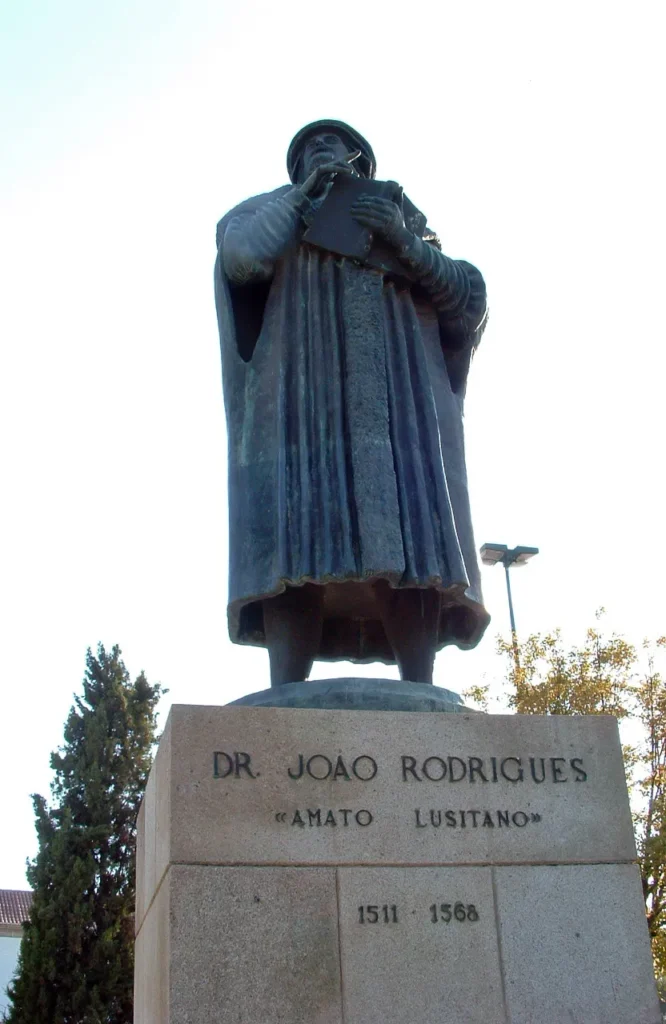
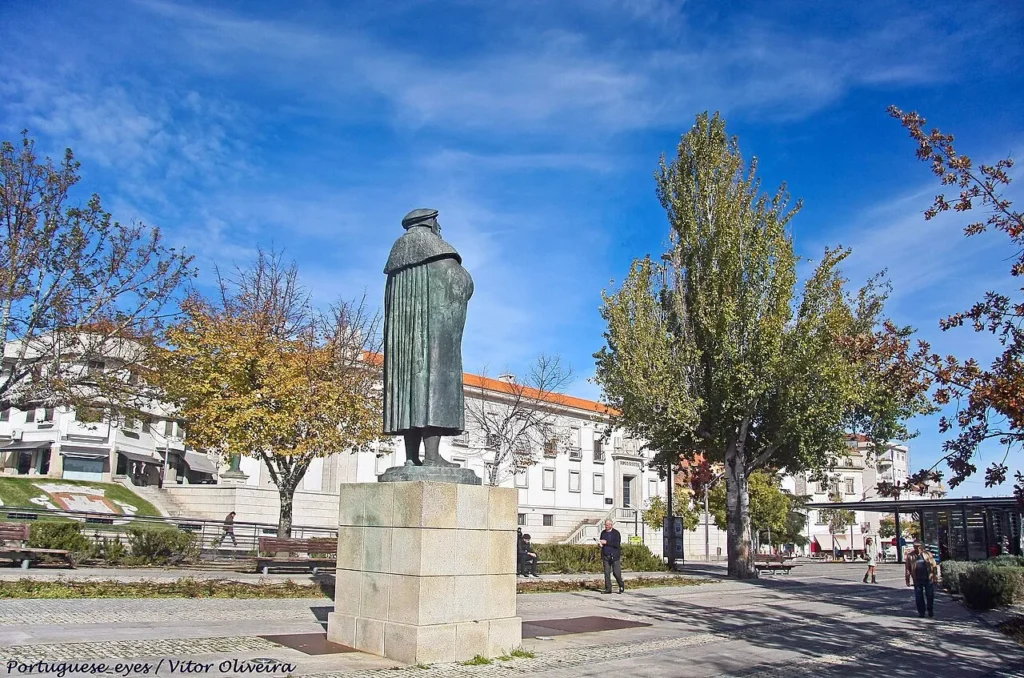
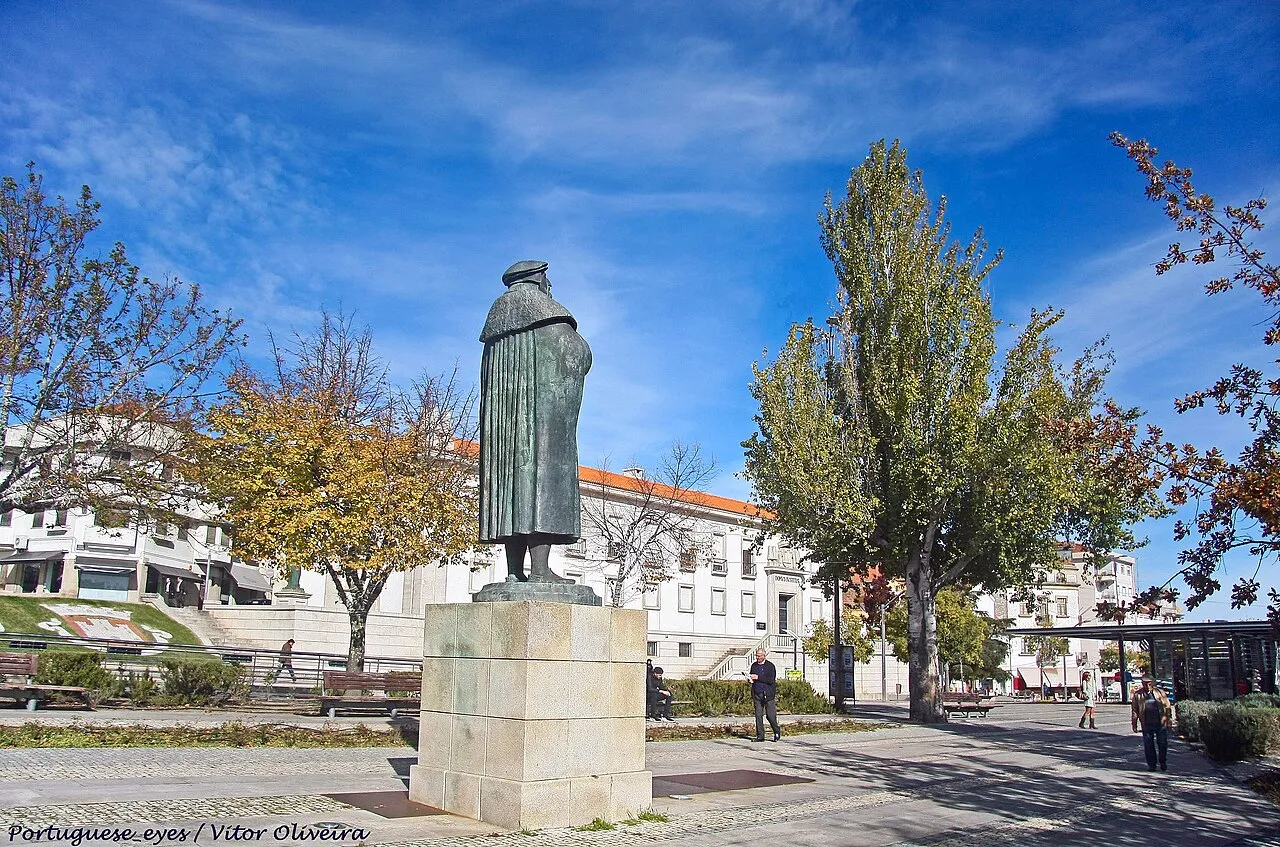
"Bronze statue in Castelo Branco honouring Amato Lusitano, a physician of Jewish origin whose career crossed Portugal, Italy, Ragusa and Salonica."

Back to Map

The Statue of Amato Lusitano stands in Praça do Município, in the central area of Castelo Branco. It honours João Rodrigues de Castelo Branco, known in Europe as Amato Lusitano, one of the most important Portuguese physicians of the sixteenth century.

Monument to Amato Lusitano

The monument was created by the sculptor Joaquim Martins Correia and inaugurated on 27 May 1956. The bronze statue represents Amato standing and holding an open book, placed on a granite pedestal in front of the municipal buildings of Castelo Branco.

The statue is not only a civic monument. It also marks the city’s public recognition of a physician whose life was shaped by Jewish ancestry, medical scholarship, exile and the wider Sephardic diaspora after the forced conversion of Portuguese Jews in 1497.

João Rodrigues de Castelo Branco

João Rodrigues was born in Castelo Branco in 1511, into a family of Jewish origin. He studied at the University of Salamanca and received medical training at a young age. After returning to Portugal, he worked in Lisbon before leaving for Antwerp, under the pressure of growing persecution against people of Jewish descent.

From Antwerp, Amato’s career developed across several European centres. He lived and worked in Ferrara, Ancona, Rome, Ragusa and Salonica. In Ferrara, he taught at the university. In Italy, he became known as a physician to important patients, while also producing medical works that circulated across the learned world of Renaissance Europe.

Medical work and legacy

Amato Lusitano became especially known for the Centuriae Curationum Medicinalium. This work gathered seven hundred clinical cases, organized into seven “centuries” of one hundred cases each. The cases record patients, symptoms, diagnoses, treatments and medical observations. For this reason, Amato is remembered as one of the major clinical authors of Renaissance medicine.

He also wrote on Dioscorides and materia medica, the study of medicinal substances. His work connected classical medical knowledge with plants, drugs and products circulating through Portuguese routes from Africa, the Indian Ocean and the East. This made him part of a broader medical culture in which observation, travel, commerce and textual scholarship were closely linked.

Amato is also cited in the history of anatomy for his observations on the venous system, especially the valves of the azygos vein. His medical career combined clinical practice, anatomical attention, humanist learning and the experience of religious displacement.

Amato Lusitano died in Salonica in 1568, during a plague epidemic, while providing medical care to the sick.

Gallery
Article researched and curated by Jew Where.

The Jew Where project is collaborative. Do you have additional information, found an inaccuracy, or have historical photos of this location? Contact our team.
Statue of Amato Lusitano
Portugal / Castelo Branco / Memory & Holocaust

Statue of Amato Lusitano

"Bronze statue in Castelo Branco honouring Amato Lusitano, a physician of Jewish origin whose career crossed Portugal, Italy, Ragusa and Salonica."

Location
Praça do Município, 6000-458 Castelo Branco, Portugal

The Statue of Amato Lusitano stands in Praça do Município, in the central area of Castelo Branco. It honours João Rodrigues de Castelo Branco, known in Europe as Amato Lusitano, one of the most important Portuguese physicians of the sixteenth century.

Monument to Amato Lusitano

The monument was created by the sculptor Joaquim Martins Correia and inaugurated on 27 May 1956. The bronze statue represents Amato standing and holding an open book, placed on a granite pedestal in front of the municipal buildings of Castelo Branco.

The statue is not only a civic monument. It also marks the city’s public recognition of a physician whose life was shaped by Jewish ancestry, medical scholarship, exile and the wider Sephardic diaspora after the forced conversion of Portuguese Jews in 1497.

João Rodrigues de Castelo Branco

João Rodrigues was born in Castelo Branco in 1511, into a family of Jewish origin. He studied at the University of Salamanca and received medical training at a young age. After returning to Portugal, he worked in Lisbon before leaving for Antwerp, under the pressure of growing persecution against people of Jewish descent.

From Antwerp, Amato’s career developed across several European centres. He lived and worked in Ferrara, Ancona, Rome, Ragusa and Salonica. In Ferrara, he taught at the university. In Italy, he became known as a physician to important patients, while also producing medical works that circulated across the learned world of Renaissance Europe.

Medical work and legacy

Amato Lusitano became especially known for the Centuriae Curationum Medicinalium. This work gathered seven hundred clinical cases, organized into seven “centuries” of one hundred cases each. The cases record patients, symptoms, diagnoses, treatments and medical observations. For this reason, Amato is remembered as one of the major clinical authors of Renaissance medicine.

He also wrote on Dioscorides and materia medica, the study of medicinal substances. His work connected classical medical knowledge with plants, drugs and products circulating through Portuguese routes from Africa, the Indian Ocean and the East. This made him part of a broader medical culture in which observation, travel, commerce and textual scholarship were closely linked.

Amato is also cited in the history of anatomy for his observations on the venous system, especially the valves of the azygos vein. His medical career combined clinical practice, anatomical attention, humanist learning and the experience of religious displacement.

Amato Lusitano died in Salonica in 1568, during a plague epidemic, while providing medical care to the sick.

Timeline

  • 1497 The forced conversion of Portuguese Jews shaped the New Christian background of many families of Jewish origin in Portugal.
  • 1511 João Rodrigues de Castelo Branco, later known as Amato Lusitano, was born in Castelo Branco.
  • 1568 Amato Lusitano died in Salonica during a plague epidemic while providing medical care.
  • 1956-05-27 The statue by Joaquim Martins Correia was inaugurated in Castelo Branco.

Sources & Bibliography

  1. DGPC / SIPA. Estátua do Dr. João Rodrigues de Castelo Branco / Estátua de Amato Lusitano. Local: Castelo Branco. Editora: Sistema de Informação para o Património Arquitectónico. Ano: n.d. https://www.monumentos.gov.pt/Site/APP_PagesUser/SIPA.aspx?id=2494
  2. FERRAZ, Amélia Ricon. João Rodrigues de Castelo Branco, Portuguese Physician Amato Lusitano (1511-1568). Acta Médica Portuguesa. Local: Porto. Editora: Ordem dos Médicos. Ano: 2013. https://www.actamedicaportuguesa.com/revista/index.php/amp/article/view/170
  3. BIBLIOTECA NACIONAL DE PORTUGAL. Amato Lusitano (1511-1568). Local: Lisboa. Editora: Biblioteca Nacional de Portugal. Ano: n.d. https://www.bnportugal.gov.pt/index.php?Itemid=679&catid=157%3A2011&id=640%3Amostra-amato-lusitano-1511-1568-18-julho-&lang=pt&option=com_content&view=article
  4. CÂMARA MUNICIPAL DE CASTELO BRANCO. Medalha da Cidade e Figuras Históricas. Local: Castelo Branco. Editora: Câmara Municipal de Castelo Branco. Ano: n.d. https://www.cm-castelobranco.pt/municipe/castelo-branco/medalha-da-cidade-e-figuras-historicas

Additional Information

Official heritage record: https://www.monumentos.gov.pt/Site/APP_PagesUser/SIPA.aspx?id=2494
Current use of the address: Open-air public monument in Praça do Município, in front of the municipal buildings of Castelo Branco.

Article researched and curated by Jew Where.

The Jew Where project is collaborative. Do you have additional information, found an inaccuracy, or have historical photos of this location? Contact our team.