

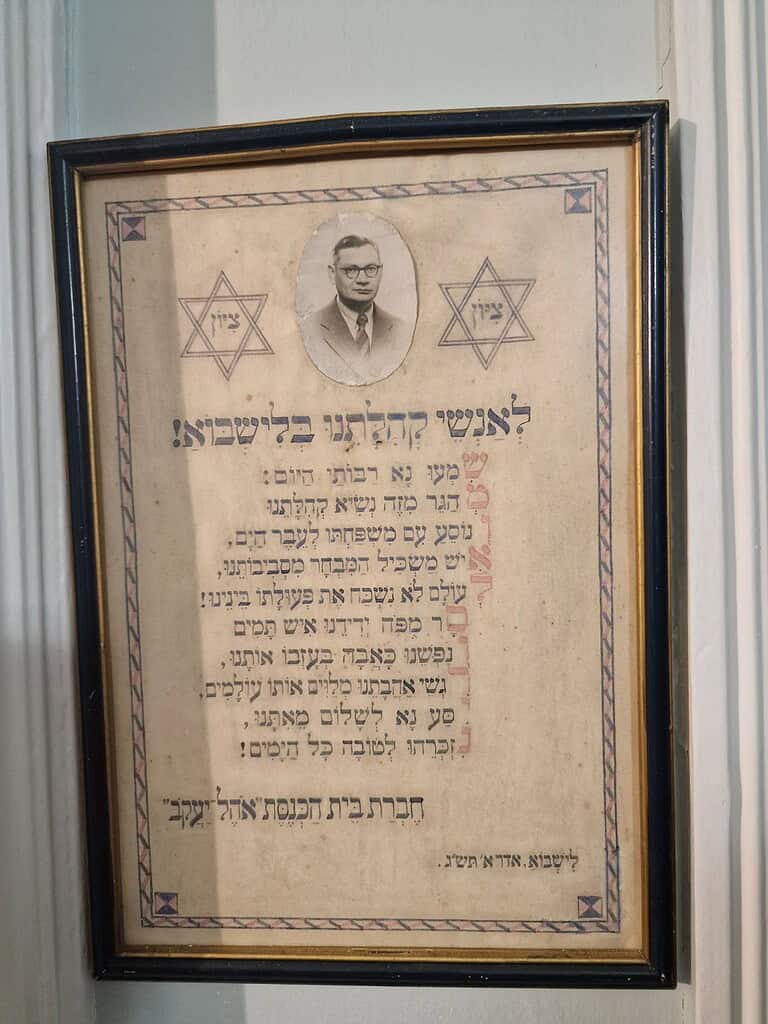
Founded in 1934, the Ohel Jacob Synagogue is Lisbon’s only Ashkenazi synagogue and, today, a Progressive (Reform) congregation linked to the Hehaver Community. Located on the upper floor of a residential building, it represents a different kind of Jewish landmark, intimate in scale and shaped by migration, refuge, and the rebuilding of Jewish life in Portugal.
The synagogue grew out of the Association of Israelite Youth Hehaver, founded in 1925 in a context of renewed religious freedom in the early Portuguese Republic. The first communal meetings began in Hehaver premises, and the synagogue was established by a small group of Ashkenazi Jews from Central Europe, many of them Polish. From its beginnings, Ohel Jacob developed a reputation for openness, especially toward Jews of diverse backgrounds and toward descendants of Portuguese anusim, also known as b’nei anusim.
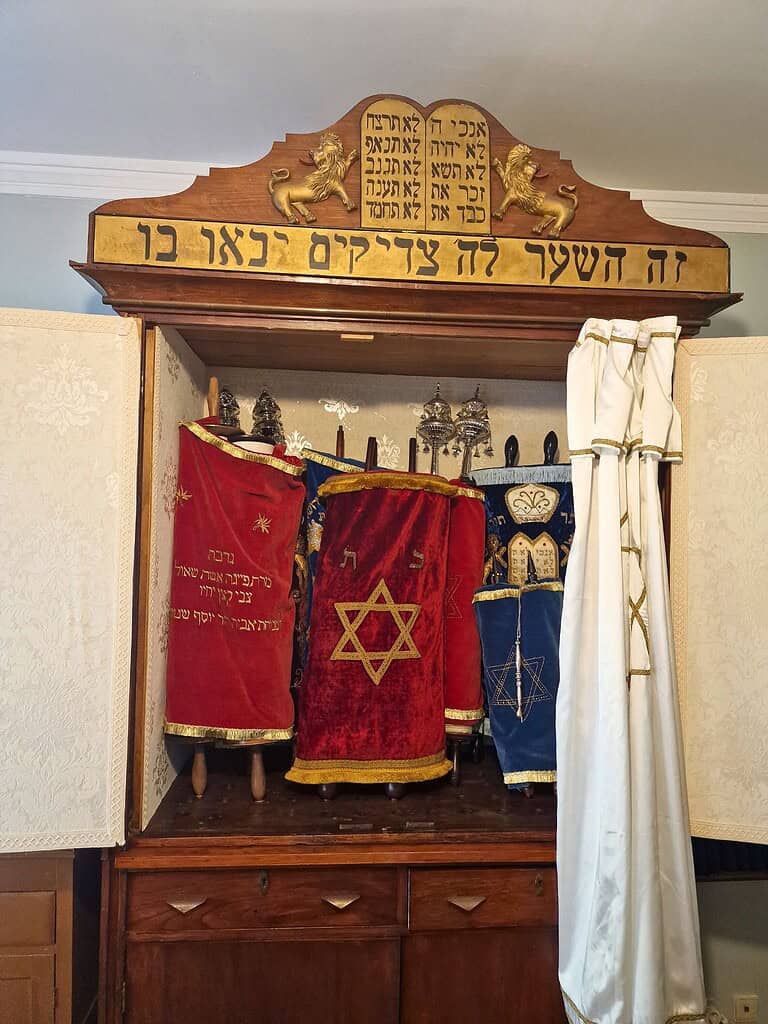
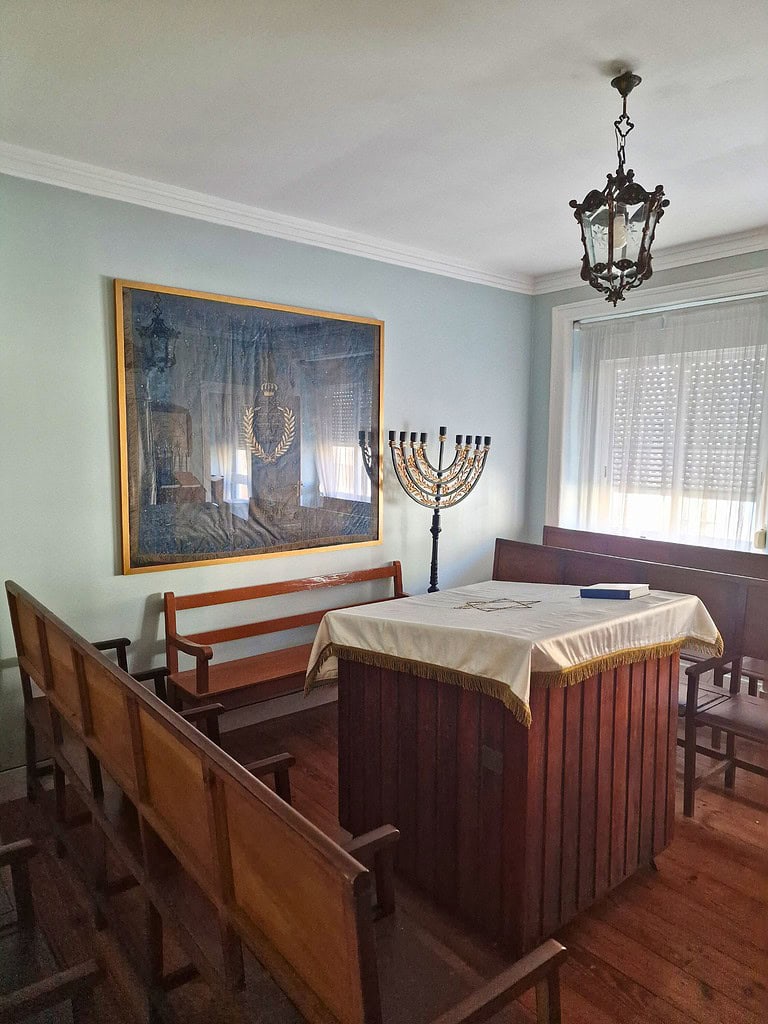
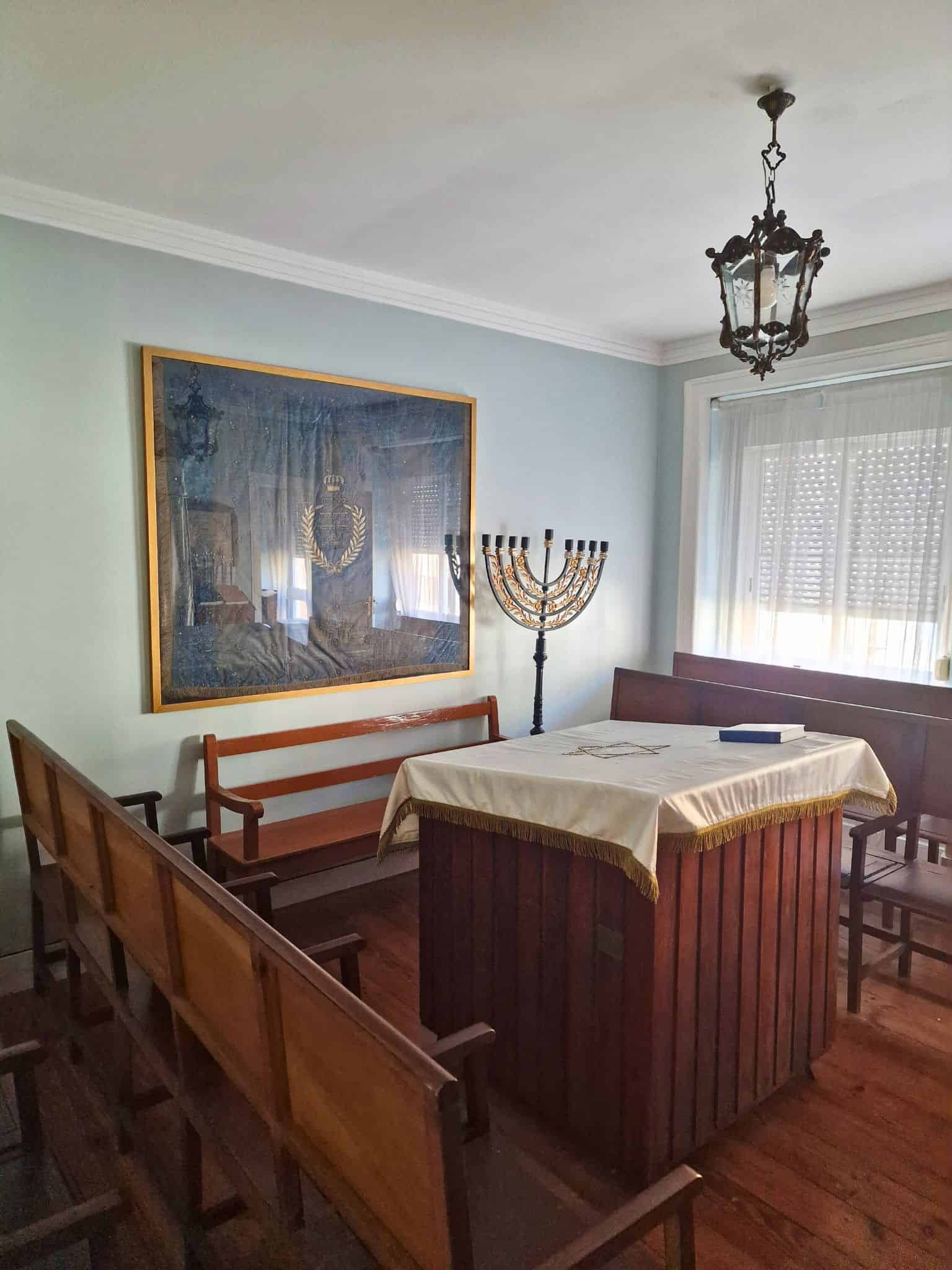
Architecturally, Ohel Jacob is defined by its setting and scale. Reached by stairs to the second floor, the synagogue occupies an adapted apartment plan. The sanctuary is organized around a clear axis between the bimah and the Aron Hakodesh. In recent renovation phases, the community also reorganized its internal spaces, including the transfer of its small museum collection to one of the larger rooms within the apartment.
Ohel Jacob’s identity is inseparable from its people and its institutional memory. The community records its early leadership, including Samuel Sorin as the synagogue’s first leader in 1934. In the 21st century, Ohel Jacob formalized its links with Progressive Judaism through affiliation with the European Union for Progressive Judaism and the World Union for Progressive Judaism.
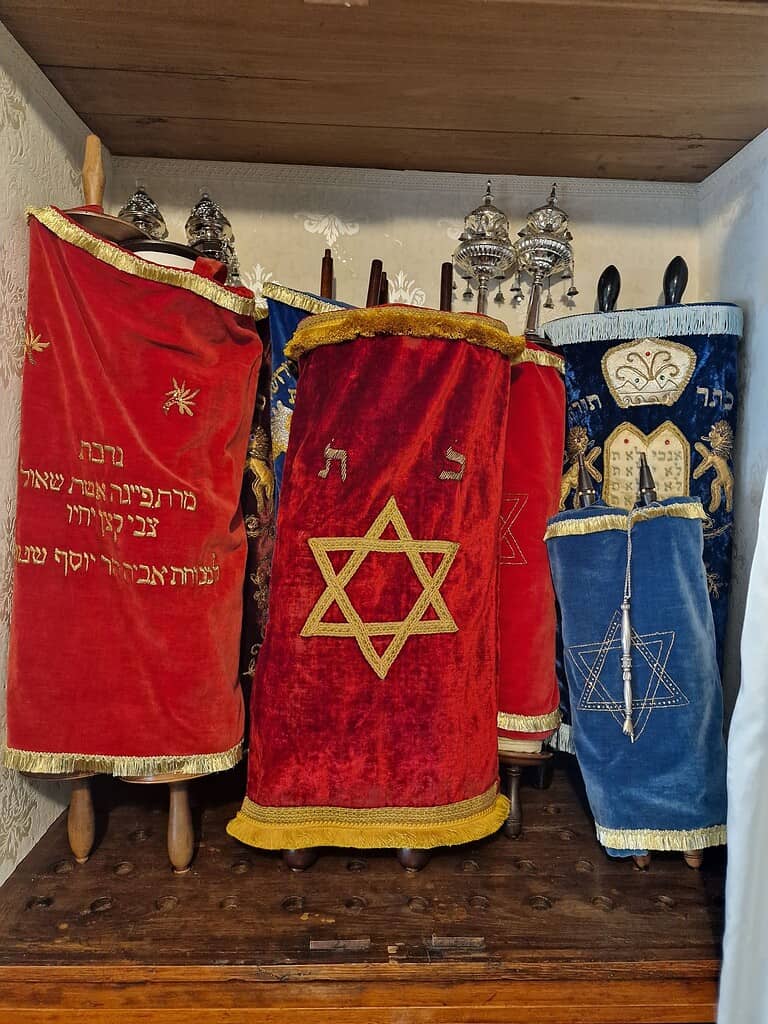
One material detail often stays with visitors: the synagogue’s Torah scroll collection, associated by the community with Jewish refugees from Nazi Europe, includes a fragment linked to survival during Kristallnacht. In parallel, the community has documented efforts to rehabilitate and preserve its Torah scrolls so they can remain in active ritual use, not only as objects of memory.
From a heritage perspective, Ohel Jacob matters precisely because it is not a showpiece building. It is a living record of Lisbon as a place of arrival, refuge, and religious reconstruction. Its modest setting, its role in welcoming b’nei anusim, and its continued ritual life make it a key reference point for understanding modern Jewish presence in Portugal.
Gallery


Sources & Bibliography
Article researched and curated by Jew Where.
The Jew Where project is collaborative. Do you have additional information, found an inaccuracy, or have historical photos of this location? Contact our team.
Community notes
Comments
Logged-in visitors can submit comments for moderation before they appear publicly.
No comments yet.
Log in to leave a comment. Go to Account.