Skip to content

"A Christian cathedral whose chapter records help document Braga’s medieval Jewish quarters, property leases and communal relocation."

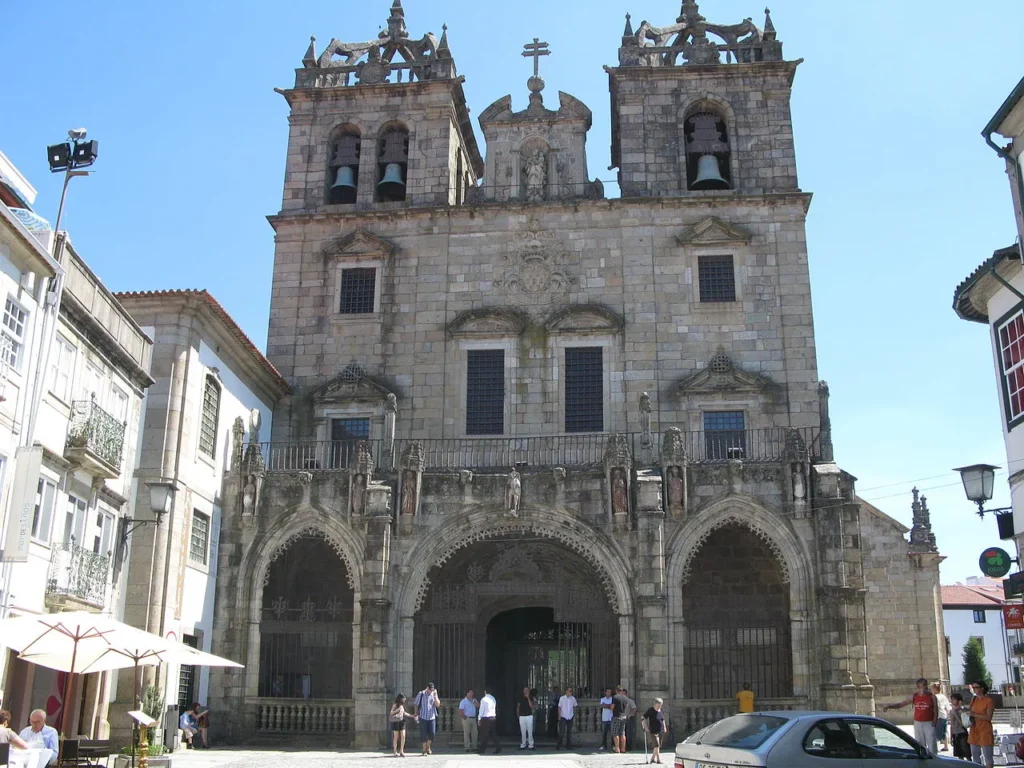
The Sé de Braga is not a Jewish monument, but it is essential for understanding the Jewish history of medieval Braga. Its importance lies in the Cathedral Chapter, the ecclesiastical institution that controlled a large part of the city’s urban property and produced the records through which Braga’s Jewish presence can still be traced. Built from the late eleventh century and consecrated in 1089, the cathedral became one of the city’s central religious, political and documentary powers before the formation of Portugal as a kingdom.

Sé de Braga and the Cathedral Chapter

The documentary connection between the Sé de Braga and the Jewish community is especially strong in the Cartório do Cabido da Sé de Braga. This archival fonds, now held by the Arquivo Distrital de Braga, contains medieval property records, emphyteusis contracts and inventories that document how Jews lived, rented, negotiated and moved through the city. The Western Sephardic Diaspora Roadmap identifies this fonds as fundamental for studying Braga’s Jewish community and its urban implantation in the fourteenth and fifteenth centuries.

The Old and New Jewish Quarters

The records of the Cathedral Chapter show that the Jewish presence in Braga was not abstract or merely traditional. It was materially embedded in streets, houses, contracts and rents. The old Jewish quarter was connected to the area of Rua da Erva, later remembered as the Judiaria Velha, while the community was transferred in the fifteenth century to the Judiaria Nova, in the area of today’s Rua de Santo António das Travessas. A contract of 1466 between the Cabido and the Jewish comuna marks this transfer, showing how ecclesiastical authority shaped the geography of Jewish life in Braga.

Property, Synagogue and Urban Control

The Cathedral Chapter’s Livro de Prazos records leases involving Jewish residents and properties in both the old and new quarters. António Losa’s study notes references in 1466 to houses in the Judiaria Velha, to a contract between the Cabido and the Jewish community, and to property connected with the synagogue. From 1467, houses in Rua de Santo António, already associated with the Judiaria Nova, began to be leased to Jewish residents. These records make the Sé de Braga a crucial archival gateway into the physical history of Braga’s medieval Jewish community.

A Christian Monument with Jewish Documentary Value

The cathedral itself remained a Christian sacred and institutional space. However, its chapter preserved the written infrastructure through which Jewish Braga can be studied today. This distinction matters. The Jewish relevance of the Sé de Braga is not liturgical, but documentary, urban and patrimonial. Through the Cabido’s records, it becomes possible to reconstruct the location of the judiarias, the transfer of the community, the occupation of houses, the role of Jewish craftsmen and merchants, and the later disappearance or transformation of Jewish spaces after the expulsion decree of 1496.

Historical Significance

The Sé de Braga should therefore be read as a site of indirect but major Jewish significance. It stands at the center of the ecclesiastical power that governed much of medieval Braga’s urban fabric. At the same time, its archives preserve some of the most concrete evidence for the city’s Jewish topography. The Sé de Braga does not tell the story of Jewish worship directly, but it helps document where Jews lived, how they held property, how they were relocated, and how their presence remained inscribed in the city’s records long after the medieval Jewish quarters were altered or absorbed into later urban layers.

Gallery
Community notes

Comments

Logged-in visitors can submit comments for moderation before they appear publicly.

No comments yet.

Article researched and curated by Jew Where.

The Jew Where project is collaborative. Do you have additional information, found an inaccuracy, or have historical photos of this location? Contact our team.
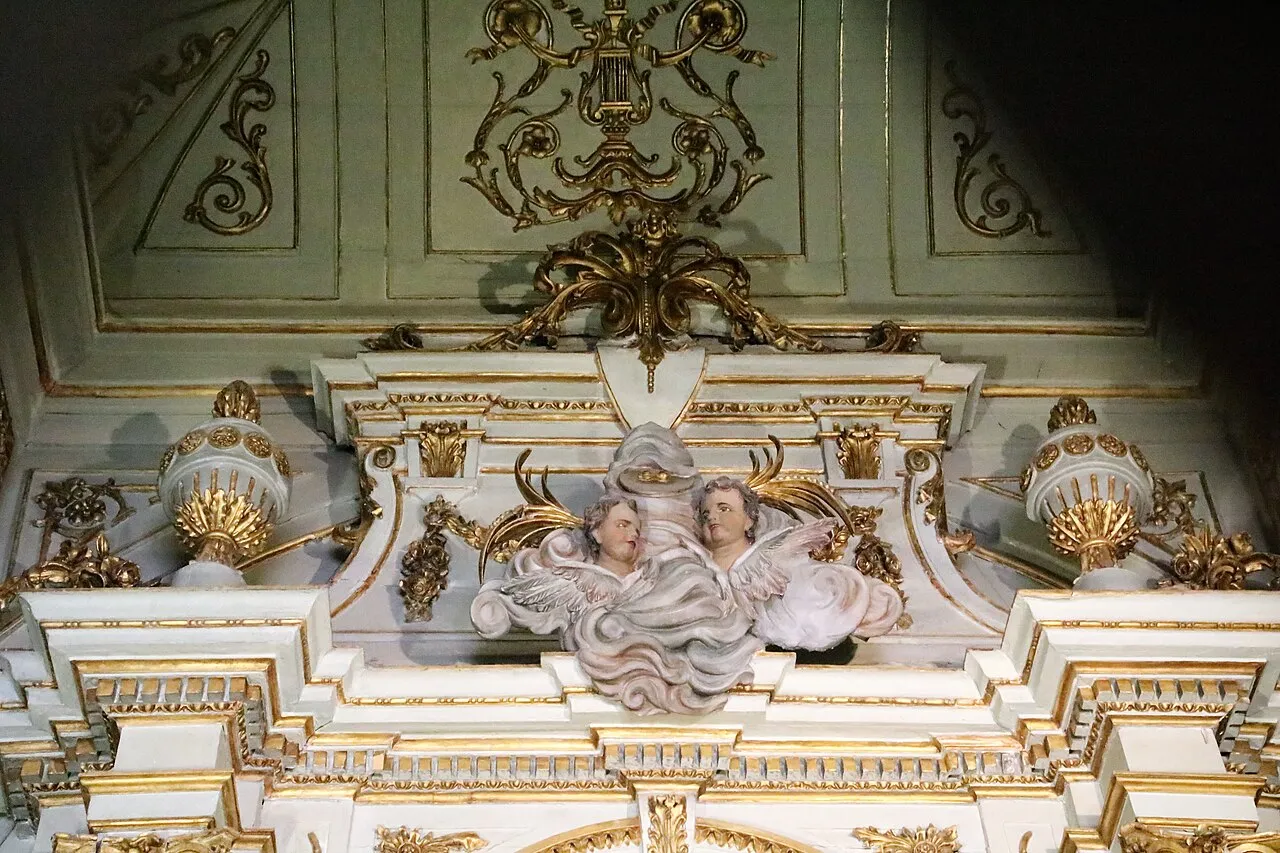
Sé de Braga
Portugal / Braga / History & Archaeology

Sé de Braga

"A Christian cathedral whose chapter records help document Braga’s medieval Jewish quarters, property leases and communal relocation."

Location
Rua do Cabido / Rua D. Paio Mendes, 4700-424 Braga, Portugal
Opening Hours
Monday-Sunday: 09:30-13:00, 14:30-18:00 January 1, Easter Sunday, Easter Monday, December 25: Closed

The Sé de Braga is not a Jewish monument, but it is essential for understanding the Jewish history of medieval Braga. Its importance lies in the Cathedral Chapter, the ecclesiastical institution that controlled a large part of the city’s urban property and produced the records through which Braga’s Jewish presence can still be traced. Built from the late eleventh century and consecrated in 1089, the cathedral became one of the city’s central religious, political and documentary powers before the formation of Portugal as a kingdom.

Sé de Braga and the Cathedral Chapter

The documentary connection between the Sé de Braga and the Jewish community is especially strong in the Cartório do Cabido da Sé de Braga. This archival fonds, now held by the Arquivo Distrital de Braga, contains medieval property records, emphyteusis contracts and inventories that document how Jews lived, rented, negotiated and moved through the city. The Western Sephardic Diaspora Roadmap identifies this fonds as fundamental for studying Braga’s Jewish community and its urban implantation in the fourteenth and fifteenth centuries.

The Old and New Jewish Quarters

The records of the Cathedral Chapter show that the Jewish presence in Braga was not abstract or merely traditional. It was materially embedded in streets, houses, contracts and rents. The old Jewish quarter was connected to the area of Rua da Erva, later remembered as the Judiaria Velha, while the community was transferred in the fifteenth century to the Judiaria Nova, in the area of today’s Rua de Santo António das Travessas. A contract of 1466 between the Cabido and the Jewish comuna marks this transfer, showing how ecclesiastical authority shaped the geography of Jewish life in Braga.

Property, Synagogue and Urban Control

The Cathedral Chapter’s Livro de Prazos records leases involving Jewish residents and properties in both the old and new quarters. António Losa’s study notes references in 1466 to houses in the Judiaria Velha, to a contract between the Cabido and the Jewish community, and to property connected with the synagogue. From 1467, houses in Rua de Santo António, already associated with the Judiaria Nova, began to be leased to Jewish residents. These records make the Sé de Braga a crucial archival gateway into the physical history of Braga’s medieval Jewish community.

A Christian Monument with Jewish Documentary Value

The cathedral itself remained a Christian sacred and institutional space. However, its chapter preserved the written infrastructure through which Jewish Braga can be studied today. This distinction matters. The Jewish relevance of the Sé de Braga is not liturgical, but documentary, urban and patrimonial. Through the Cabido’s records, it becomes possible to reconstruct the location of the judiarias, the transfer of the community, the occupation of houses, the role of Jewish craftsmen and merchants, and the later disappearance or transformation of Jewish spaces after the expulsion decree of 1496.

Historical Significance

The Sé de Braga should therefore be read as a site of indirect but major Jewish significance. It stands at the center of the ecclesiastical power that governed much of medieval Braga’s urban fabric. At the same time, its archives preserve some of the most concrete evidence for the city’s Jewish topography. The Sé de Braga does not tell the story of Jewish worship directly, but it helps document where Jews lived, how they held property, how they were relocated, and how their presence remained inscribed in the city’s records long after the medieval Jewish quarters were altered or absorbed into later urban layers.

Timeline

  • 1089 The cathedral was consecrated and became a central ecclesiastical institution in Braga.
  • 14th-15th centuries The Cathedral Chapter held major urban property records that help document Braga’s Jewish community.
  • 1466 A contract between the Cabido and the Jewish comuna marked the transfer toward the Judiaria Nova.
  • 1467 Houses in Rua de Santo António, associated with the Judiaria Nova, began to be leased to Jewish residents.
  • 1496 The royal measures against Jews in Portugal ended open Jewish communal life.
  • 1910 The Sé de Braga was classified as a National Monument.

Sources & Bibliography

  1. DIREÇÃO-GERAL DO PATRIMÓNIO CULTURAL. Sé de Braga, compreendendo os túmulos, designadamente os do Conde D. Henrique e D. Teresa, do Infante D. Afonso e do arcebispo D. Gonçalo Pereira. Local: Braga. Editora: Direção-Geral do Património Cultural. Ano: n.d. https://imovel.patrimoniocultural.gov.pt/detalhes.php?code=70462
  2. SÉ DE BRAGA. Catedral de Braga. Local: Braga. Editora: Sé de Braga. Ano: n.d. https://se-braga.pt/catedral-de-santa-maria-de-braga
  3. VIEIRA, Carla. Cartório do Cabido da Sé de Braga. Western Sephardic Diaspora Roadmap. Local: Lisbon. Editora: DHLAB, NOVA FCSH. Ano: n.d. https://projetos.dhlab.fcsh.unl.pt/s/wsdroadmap/item/5082
  4. ARQUIVO DISTRITAL DE BRAGA. Cabido da Sé de Braga. Código de referência PT/UM-ADB/DIO/CSB. Local: Braga. Editora: Arquivo Distrital de Braga. Ano: n.d. https://pesquisa.adb.uminho.pt/details?id=1613204
  5. RIBEIRO, Maria do Carmo. Expressões físicas da inclusão e exclusão dos judeus no urbanismo medieval, a partir do caso de Braga. In Inclusão e exclusão na Europa urbana medieval. Local: Castelo de Vide. Editora: Instituto de Estudos Medievais / Câmara Municipal de Castelo de Vide. Ano: 2019. https://www.researchgate.net/publication/367168000_Expressoes_fisicas_da_inclusao_e_exclusao_dos_judeus_no_urbanismo_medieval_a_partir_do_caso_de_Braga
  6. LOSA, António. Subsídios para o estudo dos judeus de Braga no séc. XV. Congresso Histórico de Guimarães e sua Colegiada, vol. V. Local: Guimarães. Editora: Congresso Histórico de Guimarães e sua Colegiada. Ano: 1982. https://chi.guimaraes.pt/actas/1CH/vol5/1ch-vol5-007.pdf
  7. MARQUES, José. O judeu brigantino Baruc Cavaleiro e o Cabido de Braga, em 1482. Revista da Faculdade de Letras: História. Local: Porto. Editora: Universidade do Porto. Ano: n.d. https://ler.letras.up.pt/uploads/ficheiros/2043.pdf

Additional Information

Official website: https://se-braga.pt
Email: [email protected]
Phone: +351 253 263 317
Current use of the address: Active Roman Catholic cathedral and museum complex; the Jewish relevance is documentary and archival, not liturgical.

Article researched and curated by Jew Where.

The Jew Where project is collaborative. Do you have additional information, found an inaccuracy, or have historical photos of this location? Contact our team.