

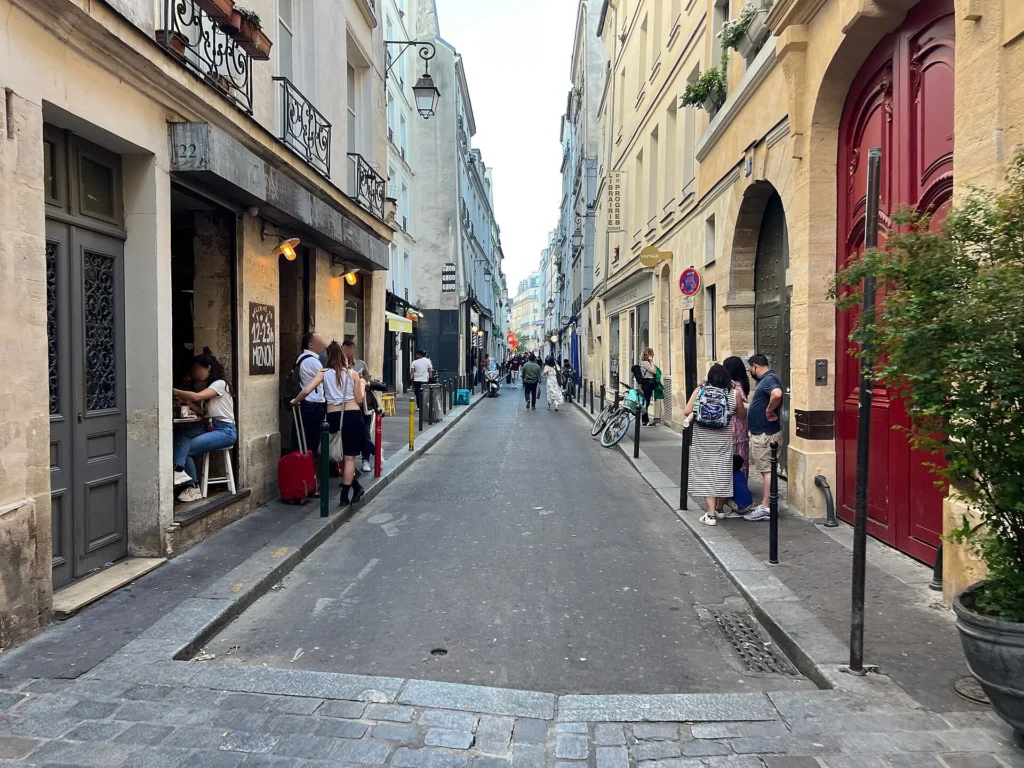
Rue des Écouffes is a short street in the Marais, in the 4th arrondissement of Paris. It runs into Rue des Rosiers and forms part of the area known as the Pletzl, the Yiddish word for “little place”. In the modern Jewish history of Paris, Rue des Écouffes belongs to the dense network of streets where immigrant Jewish life took shape between the late nineteenth century and the Second World War.
An old Paris street inside the Jewish Marais
The street is older than the modern Jewish neighbourhood. Historical dictionaries of Paris streets record earlier forms of its name, including Écofle, Escoufle, Escoufles and Escoffles. The origin of the name is usually linked to an old French word associated with a bird of prey, although later explanations connecting it to pawnbrokers should be treated with caution.
Its Jewish importance does not come from a single monument. It comes from its position inside the Jewish Marais. Around Rue des Rosiers, Rue des Écouffes and Rue Pavée, Jewish immigrants from Central and Eastern Europe settled in large numbers from the 1880s onward. They came to Paris in search of work, safety, family contacts and a recognizable Jewish environment.
Rue des Écouffes and working-class Jewish life
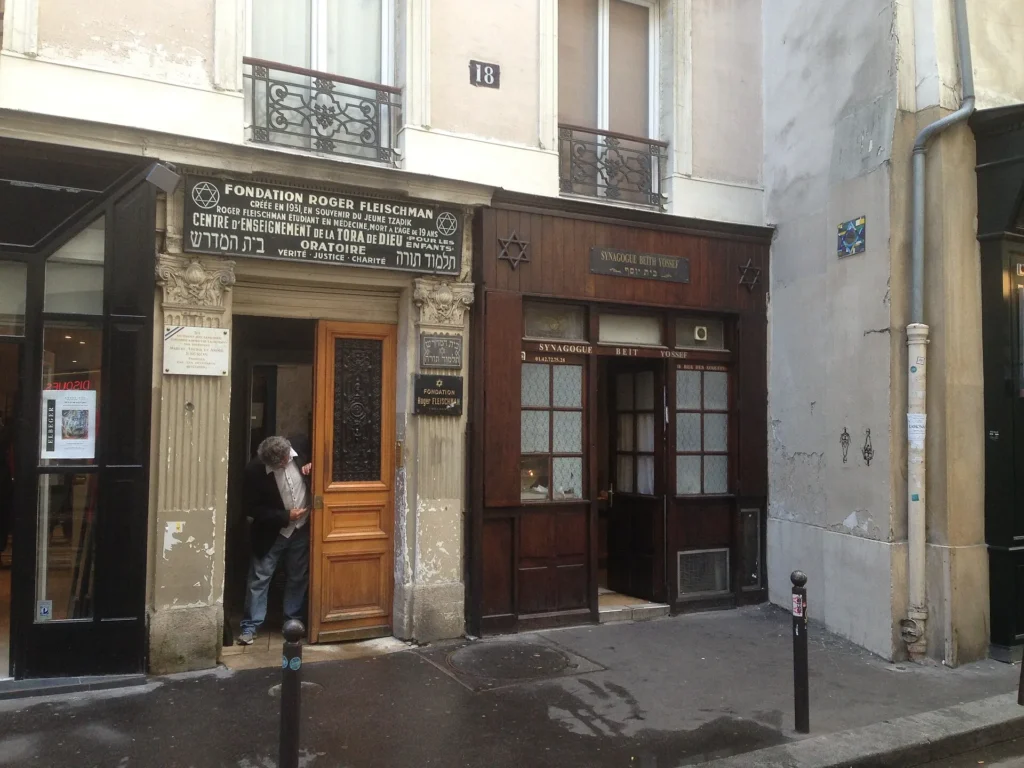
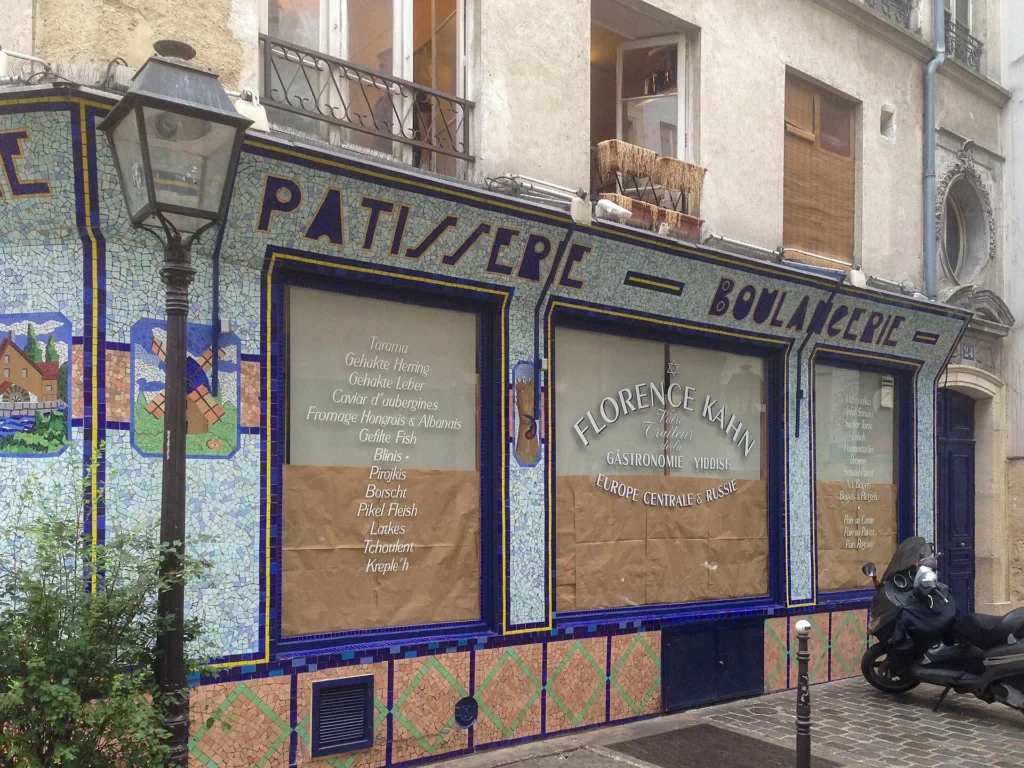
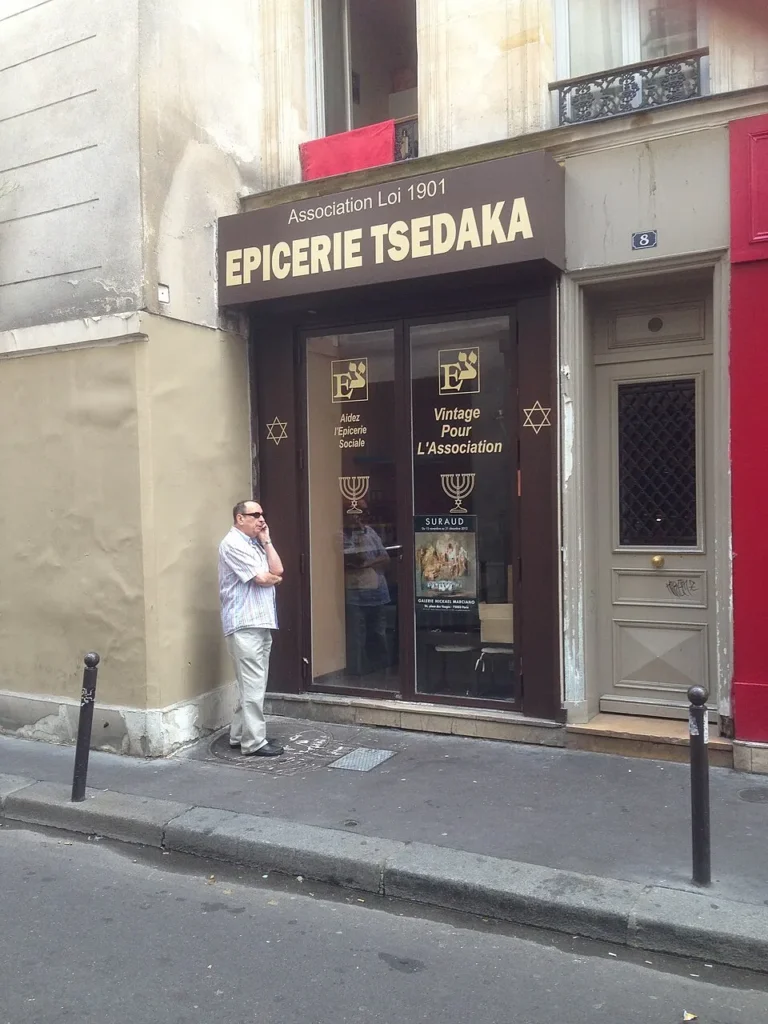
Rue des Écouffes was part of the working-class geography of the Pletzl. This was not a monumental Jewish quarter built around grand public institutions. It was a neighbourhood of workshops, modest shops, food businesses, small prayer spaces, crowded housing, Yiddish-speaking families and immigrant labour.
Nancy L. Green’s study of the Pletzl places this world within the broader history of East European Jewish migration to France and the labour conditions of immigrant workers in Belle Époque Paris. Yad Vashem also identifies Rue des Écouffes, together with Rue des Rosiers and Rue Pavée, as one of the streets around which Jewish immigrants lived in the Marais before the Shoah.
Shoah, return and transformation
During the Second World War, the Jewish Marais was devastated by arrests, deportations and murder. Yad Vashem describes the Marais in 1942 as a busy Jewish neighbourhood, mainly composed of Eastern European immigrants, and records the impact of the Vel d’Hiv roundup on Jewish families in the fourth arrondissement.
After the war, Jewish life returned to the neighbourhood. Survivors, Orthodox families, Hasidic groups, Jews from North Africa and later Jewish businesses reshaped the area. At the same time, the Marais changed through tourism, restaurants, real estate pressure and commercial transformation.
The value of Rue des Écouffes for Jew Where is precisely this less monumental dimension. Rue des Rosiers became the symbolic street of the Pletzl, while Rue des Écouffes helps preserve the memory of everyday Jewish Paris: work, language, food, prayer, migration, survival and post-war reconstruction.
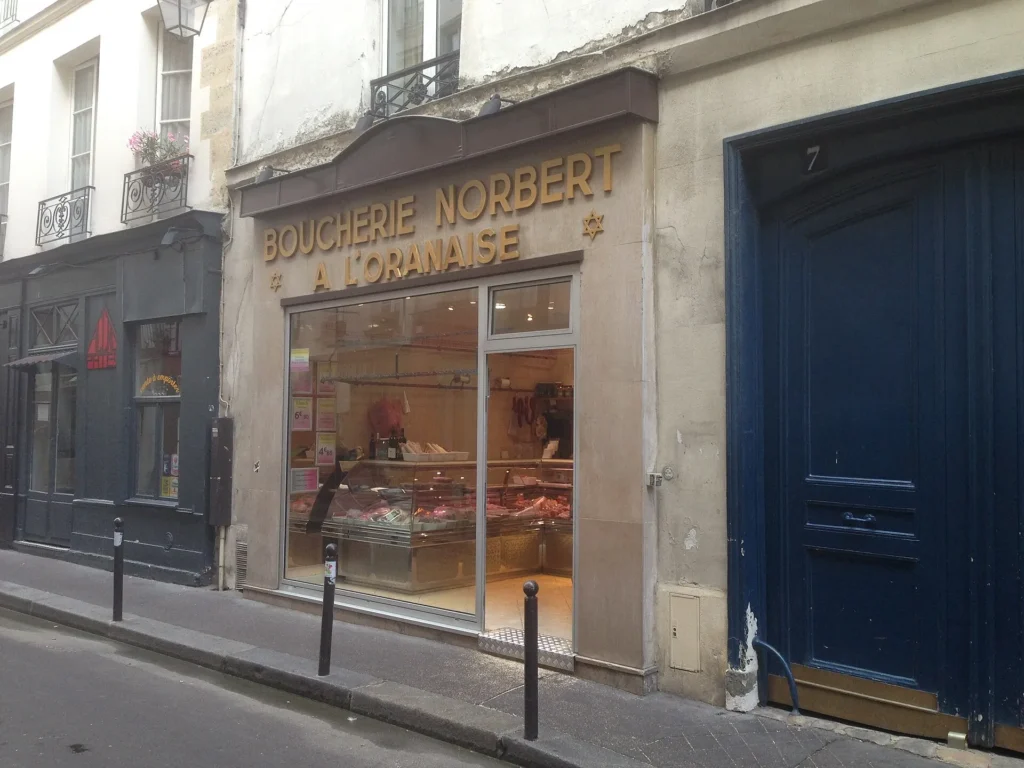
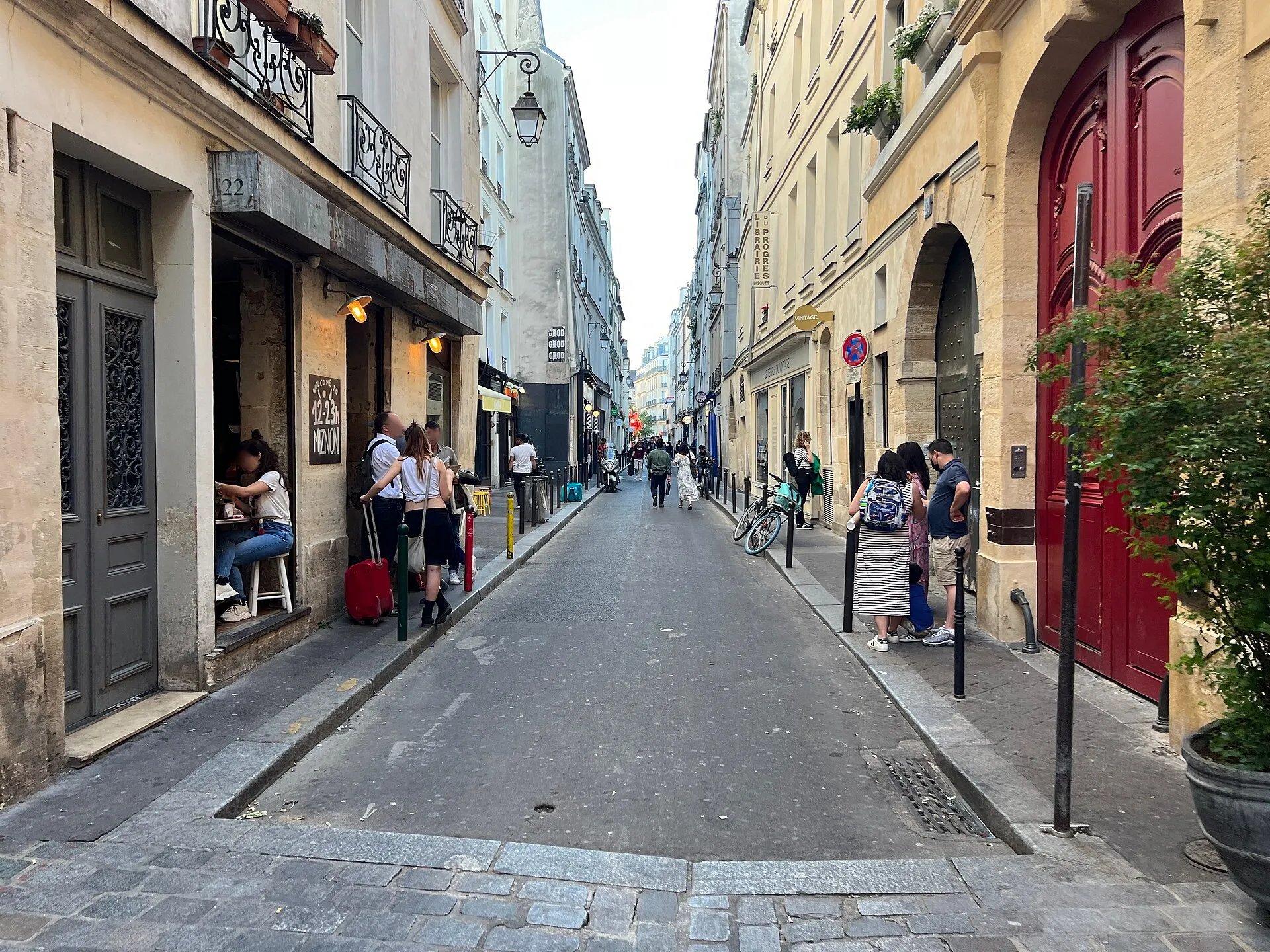
Gallery
Sources & Bibliography
- Musée d’Art et d’Histoire du Judaïsme. The Jewish Marais. Local: Paris. Editora: Musée d’Art et d’Histoire du Judaïsme. Ano: n.d
- Yad Vashem. Letters to 43 Vieille du Temple Street. The Story of Three Jewish Families in Paris during the Holocaust. Local: Jerusalem. Editora: Yad Vashem. Ano: 2025
- GREEN, Nancy L. The Pletzl of Paris. Jewish Immigrant Workers in the Belle Epoque. Editora: Holmes & Meier Publishers. Ano: 1986
- BRODY, Jeanne. La rue des Rosiers ou la mémoire réappropriée. Espace, populations, sociétés, no. 2-3, pp. 355-365. Ano: 1996
- HILLAIRET, Jacques. Dictionnaire historique des rues de Paris. Local: Paris. Editora: Les Éditions de Minuit. Ano: 1960.
- JARASSÉ, Dominique. Guide du patrimoine juif parisien. Local: Paris. Editora: Parigramme. Ano: 2003.
Article researched and curated by Jew Where.
The Jew Where project is collaborative. Do you have additional information, found an inaccuracy, or have historical photos of this location? Contact our team.
Community notes
Comments
Logged-in visitors can submit comments for moderation before they appear publicly.
No comments yet.
Log in to leave a comment. Go to Account.