Skip to content
Rashkov Great Synagogue Ruins

Rashkov Great Synagogue Ruins

"Roofless 1749 synagogue ruin on the left bank of the Dniester, documented in 1993 and conserved in 2022; now presented as a heritage attraction."

Back to Map

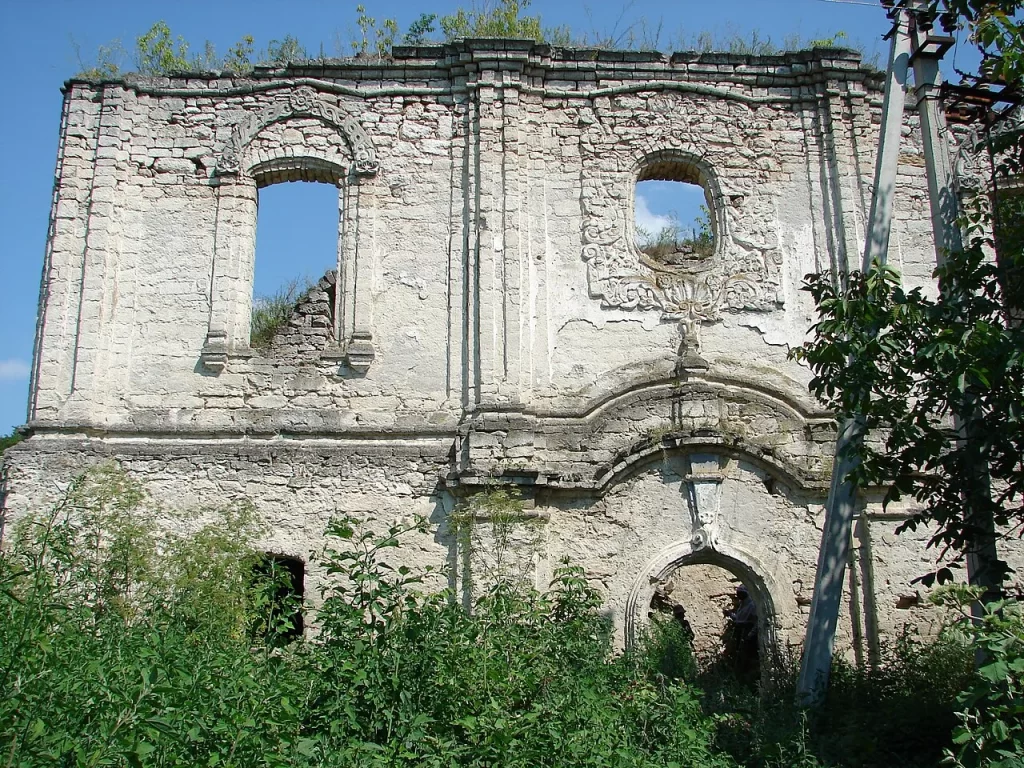
The monumental synagogue associated with Vadul-Rașcov is in fact located across the river, in Rașcov, on the left bank of the Dniester. The two localities form a historical pair, with remains of Jewish cemeteries on both sides, and the great synagogue in ruins stands as one of the most striking landmarks of Jewish heritage along the Dniester.

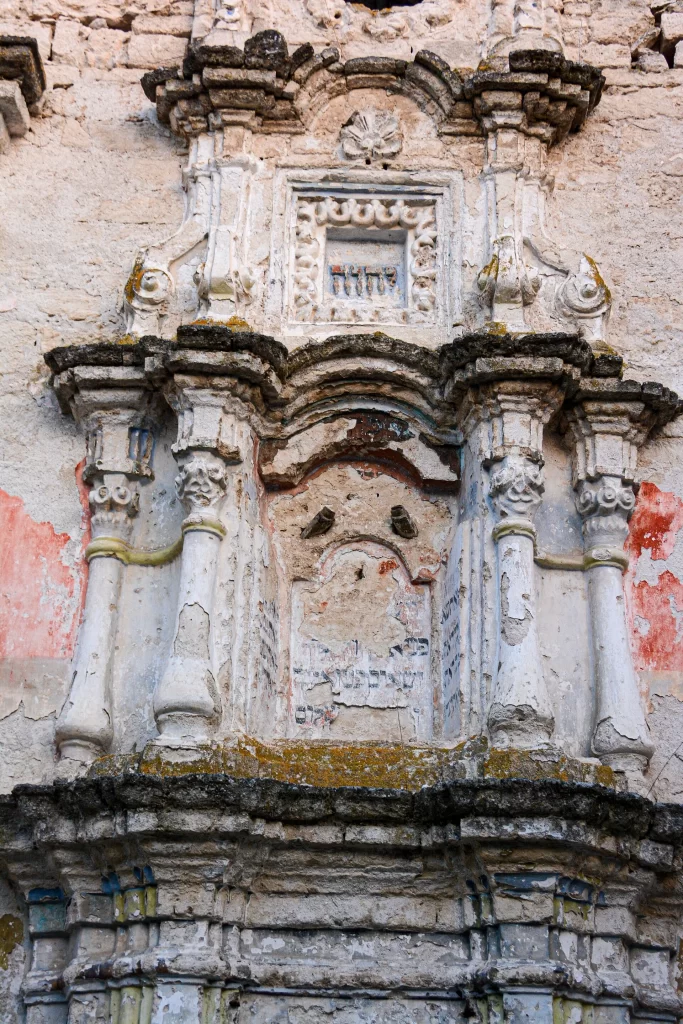
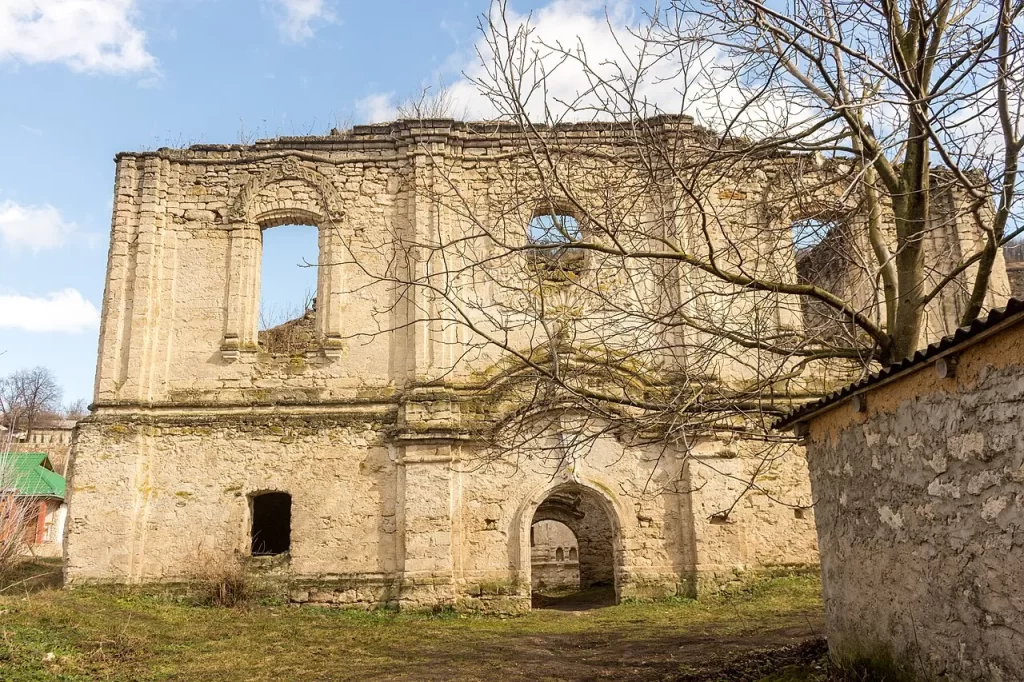
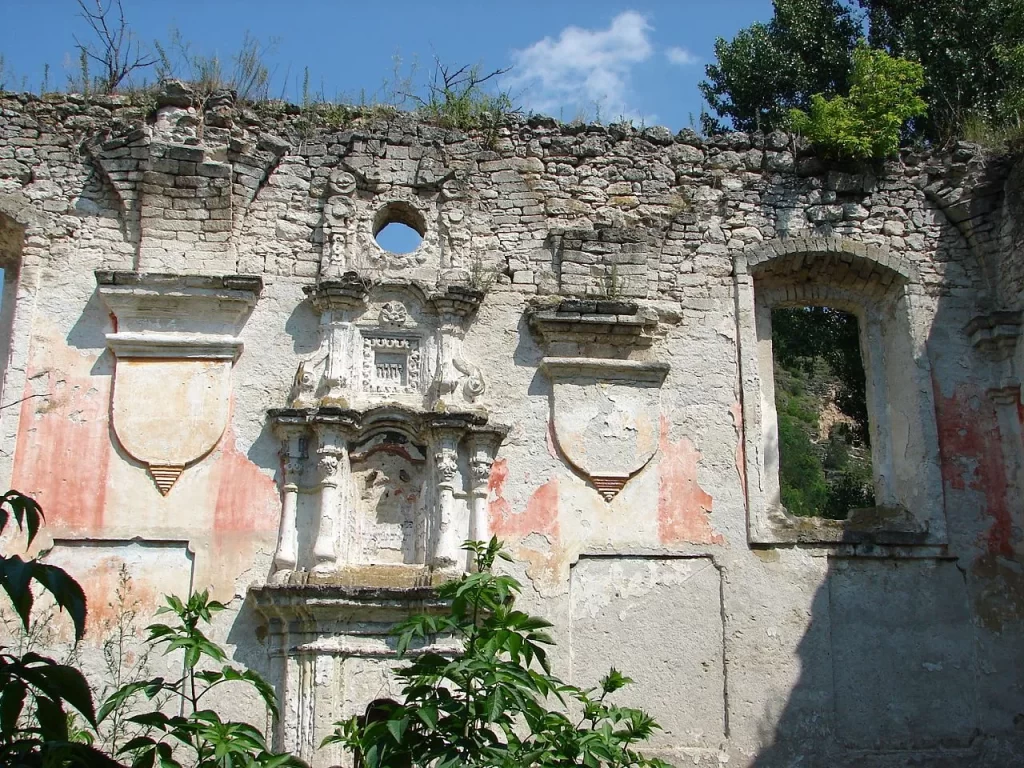
Built in 1749, the Great Synagogue of Rașcov is a regional example of Baroque architecture, with finely carved stonework that would endure even if everything else had vanished. Documentary and research sources describe the ruin as a roofless building, with its external walls preserved and parts of the Aron haKodesh still recognizable, a rare case in which the sacred space remains legible despite collapse.

What gives the site particular weight is the quality of its sculptural repertoire: cartouches, window frames, elements of the Aron, ritual niches, and, according to researchers associated with the Center for Jewish Art, a decorative ensemble that allows the synagogue to be virtually reconstructed from historical photographs and memories. There is also the harsher history of looting, including the removal of a menorah relief reportedly taken by a collector.

The building fell into ruin during the Soviet period, described as the result of anti-religious campaigns in the 1930s, and for decades remained exposed and vulnerable. A recent turning point came with conservation works supported by the European Union and the United Nations, completed in 2022, involving minimal interventions to stabilize the walls and preserve what remained of the Baroque and Rococo stone carving. Today, the conserved ruin functions as a heritage attraction and visiting point, including for pilgrims seeking the graves of rabbis in the local Jewish cemetery.

Gallery
Article researched and curated by Jew Where.

The Jew Where project is collaborative. Do you have additional information, found an inaccuracy, or have historical photos of this location? Contact our team.
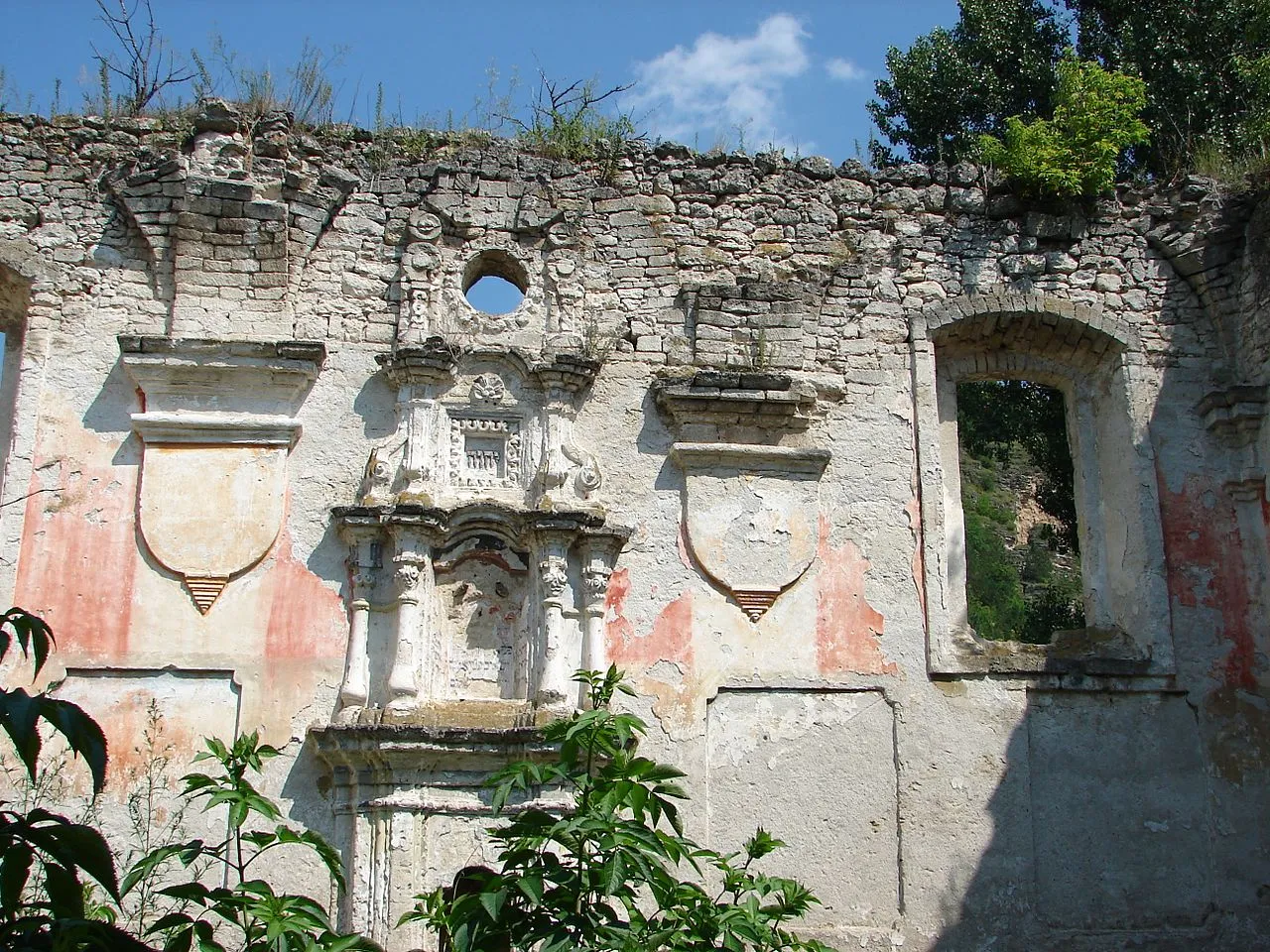
Rashkov Great Synagogue Ruins
Moldova / Șoldănești / Faith & Ritual

Rashkov Great Synagogue Ruins

"Roofless 1749 synagogue ruin on the left bank of the Dniester, documented in 1993 and conserved in 2022; now presented as a heritage attraction."

Location
Great Synagogue ruins, Rașcov, Transnistria region, Republic of Moldova.

The monumental synagogue associated with Vadul-Rașcov is in fact located across the river, in Rașcov, on the left bank of the Dniester. The two localities form a historical pair, with remains of Jewish cemeteries on both sides, and the great synagogue in ruins stands as one of the most striking landmarks of Jewish heritage along the Dniester.

Built in 1749, the Great Synagogue of Rașcov is a regional example of Baroque architecture, with finely carved stonework that would endure even if everything else had vanished. Documentary and research sources describe the ruin as a roofless building, with its external walls preserved and parts of the Aron haKodesh still recognizable, a rare case in which the sacred space remains legible despite collapse.

What gives the site particular weight is the quality of its sculptural repertoire: cartouches, window frames, elements of the Aron, ritual niches, and, according to researchers associated with the Center for Jewish Art, a decorative ensemble that allows the synagogue to be virtually reconstructed from historical photographs and memories. There is also the harsher history of looting, including the removal of a menorah relief reportedly taken by a collector.

The building fell into ruin during the Soviet period, described as the result of anti-religious campaigns in the 1930s, and for decades remained exposed and vulnerable. A recent turning point came with conservation works supported by the European Union and the United Nations, completed in 2022, involving minimal interventions to stabilize the walls and preserve what remained of the Baroque and Rococo stone carving. Today, the conserved ruin functions as a heritage attraction and visiting point, including for pilgrims seeking the graves of rabbis in the local Jewish cemetery.

Timeline

  • 1749 The Great Synagogue of Rașcov was constructed.
  • 1930s The building was ruined during Soviet anti-religious campaigns.
  • 1993 The synagogue was thoroughly documented for the Center for Jewish Art.
  • 2022 EU and UNDP-supported conservation works stabilized and preserved the surviving structure.
  • 2025 The conserved ruin was presented as a tourist and heritage attraction, with on-site signage and online materials.

Sources & Bibliography

  1. KRAVTSOV, Sergey R.; LEVIN, Vladimir. Will (or can) the great synagogue in Rașcov be conserved? Editora: Jewish Heritage Europe. Ano: 2017. https://jewish-heritage-europe.eu/2017/02/26/will-or-can-the-great-synagogue-in-rascov
  2. UNITED NATIONS DEVELOPMENT PROGRAMME MOLDOVA. Rașcov synagogue and church were conserved, thanks to EU and UNDP support. Ano: 2022. https://www.undp.org/moldova/news/rascov-synagogue-and-church-were-conserved-thanks-eu-and-undp-support
  3. JEWISH HERITAGE EUROPE. Moldova/Transnistria Update: The preserved ruins of the 18th century synagogue in Raşcov (Rashkov) is a tourist attraction - watch a video. Ano: 2025. https://jewish-heritage-europe.eu/2025/07/18/moldova-update-rashkov-synagogue-video
  4. CENTER FOR JEWISH ART. Great Synagogue in Rashkov, Moldova. Editora: Hebrew University of Jerusalem. Ano: n.d. https://cja.huji.ac.il/browser.php?id=10802&mode=set
  5. KOGAN, Yefim. The Jewish Cemetery of Raskov (Rashkov). Phase 2. Ano: 2018. https://www.jewishgen.org/Bessarabia/files/cemetery/rashkov/RashkovCemetery.pdf

Additional Information

Official website: https://synagogue.md/en/rashkov-eng/

Related heritage website: https://rashkov.club/en/

Article researched and curated by Jew Where.

The Jew Where project is collaborative. Do you have additional information, found an inaccuracy, or have historical photos of this location? Contact our team.