

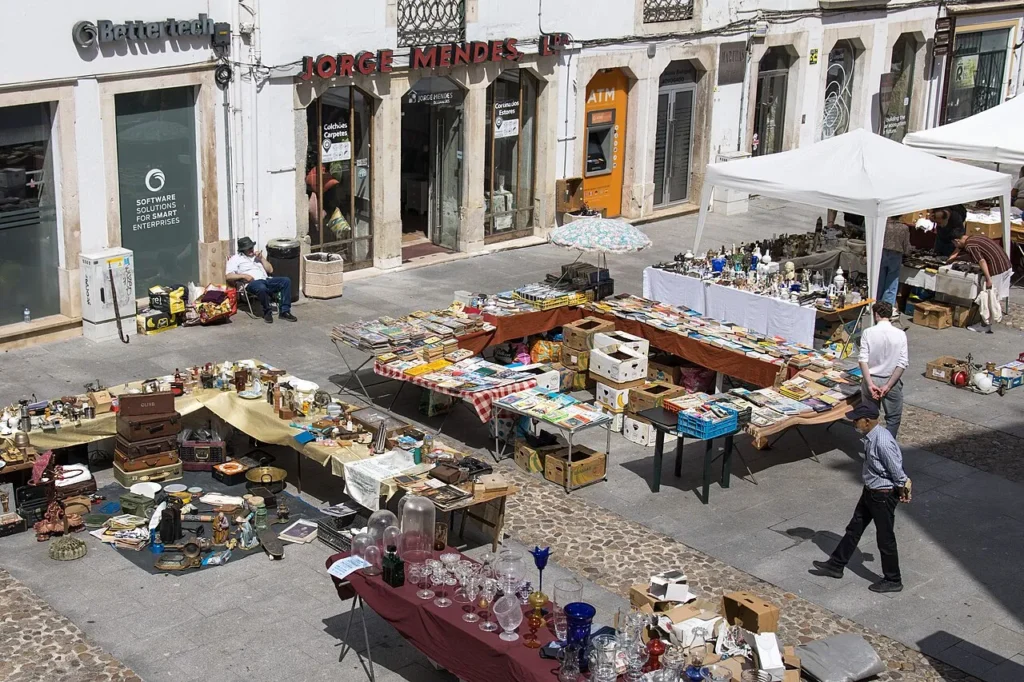
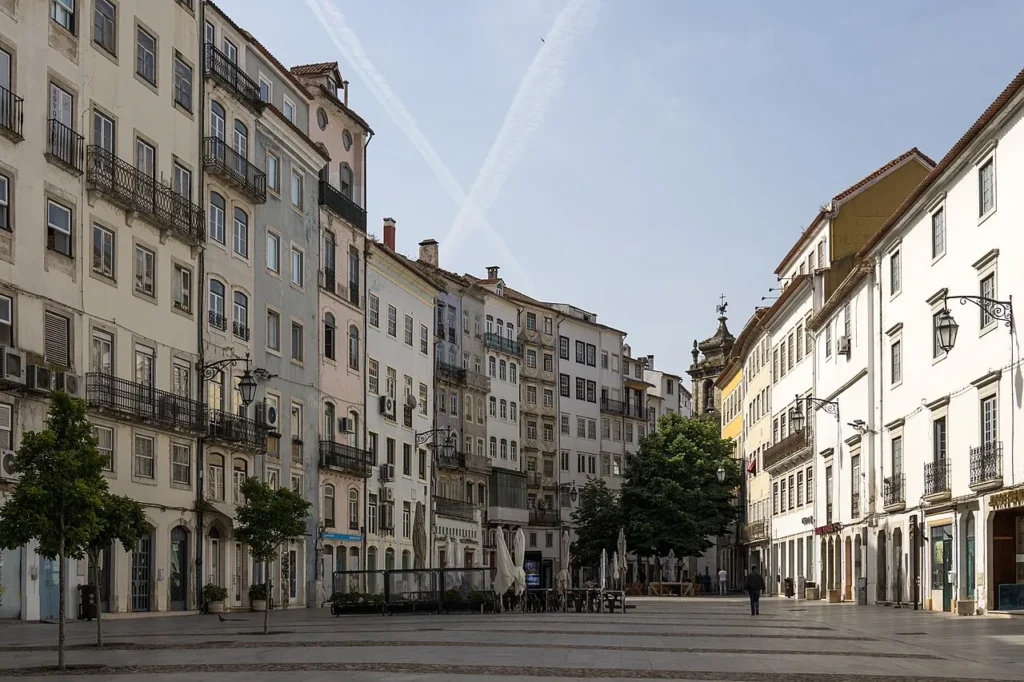
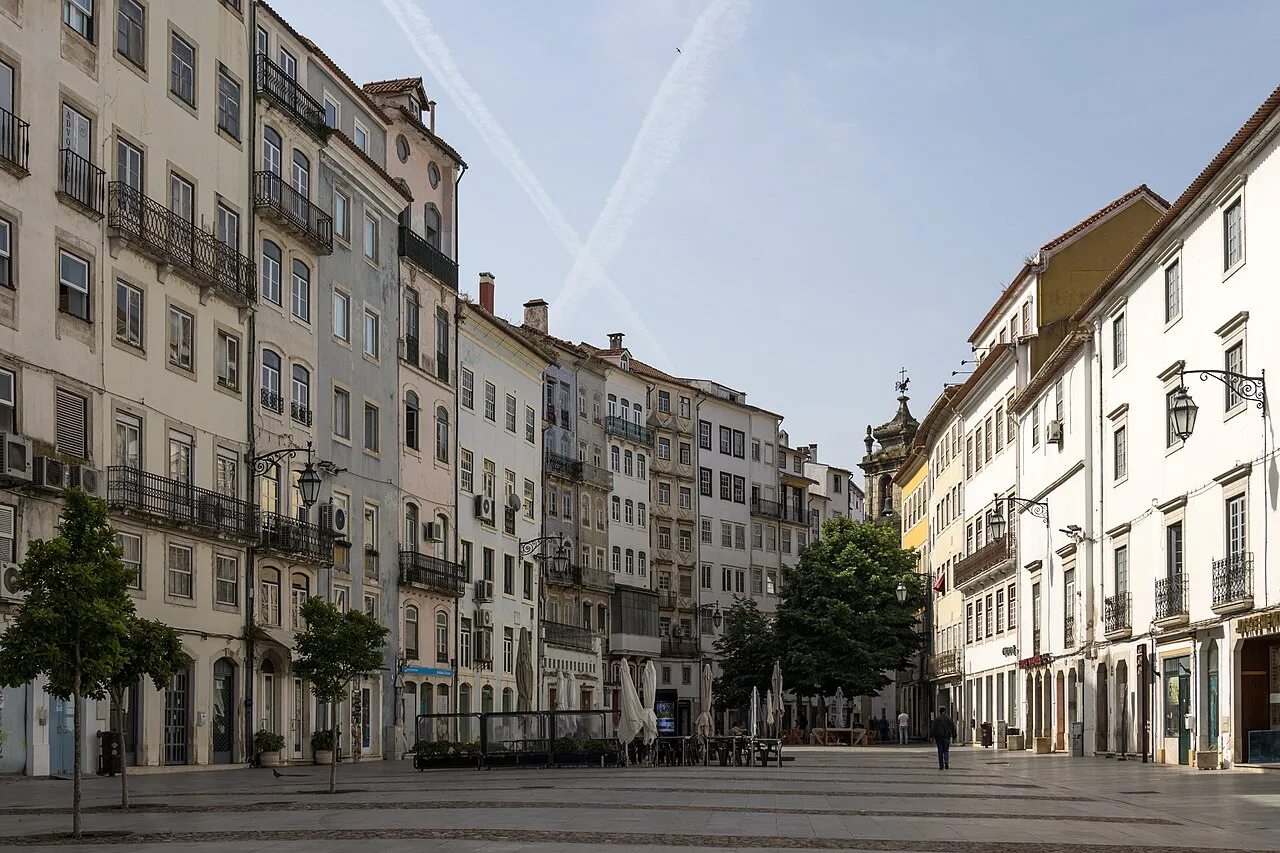
Praça do Comércio, also known as Praça Velha or Praça de São Bartolomeu, was one of the central public spaces of Coimbra’s lower city. Its Jewish relevance is not linked to a preserved Jewish building, but to the history of the Inquisition and the persecution of New Christians, many of whom were accused of Judaizing.
The first public auto-da-fé of Coimbra took place here on 5 October 1567. Contemporary records indicate around 93 penitents and 6 people “relaxed in person,” meaning handed over to secular justice for execution. The auto-da-fé was a public ceremony of sentencing, religious punishment, and humiliation. Executions could occur separately, so Praça do Comércio should be understood primarily as a stage of public judgment and inquisitorial power.
Inquisition and Public Judgment
Between 1567 and 1599, the Coimbra Inquisition held 21 autos-da-fé, involving around 1,765 penitents. Among them, 65 people were relaxed in person and 69 were condemned in effigy, usually because they had died, fled, or were absent. These figures refer to the activity of the Coimbra Inquisition during that period, not only to this square.
Today, Praça do Comércio / Praça Velha is important as a site of memory. It marks the rupture between the medieval Jewish presence in Coimbra and the later persecution of New Christians under the Portuguese Inquisition.
Gallery
Sources & Bibliography
Article researched and curated by Jew Where.
The Jew Where project is collaborative. Do you have additional information, found an inaccuracy, or have historical photos of this location? Contact our team.
Community notes
Comments
Logged-in visitors can submit comments for moderation before they appear publicly.
No comments yet.
Log in to leave a comment. Go to Account.