Skip to content
Pedreira Jewish Nucleus

Pedreira Jewish Nucleus

"Documentary location of a small elite Jewish nucleus created under D. Dinis near today’s Largo do Carmo, active c. 1303-1317 and later extinguished."

Back to Map

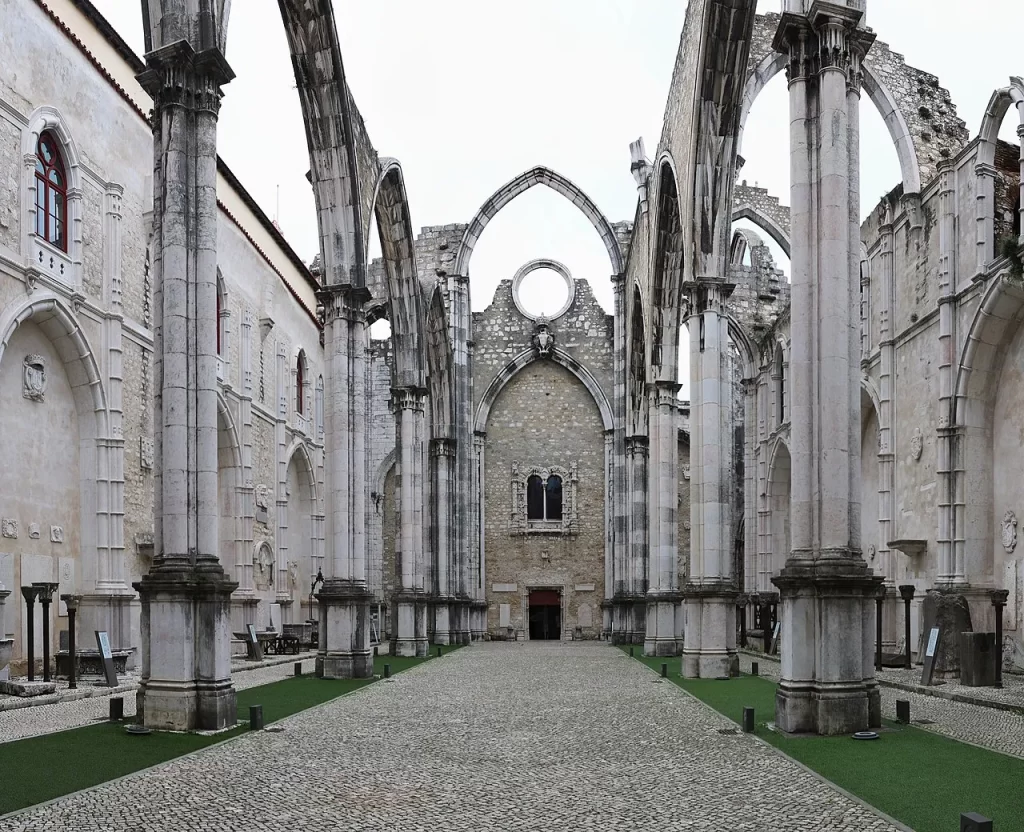
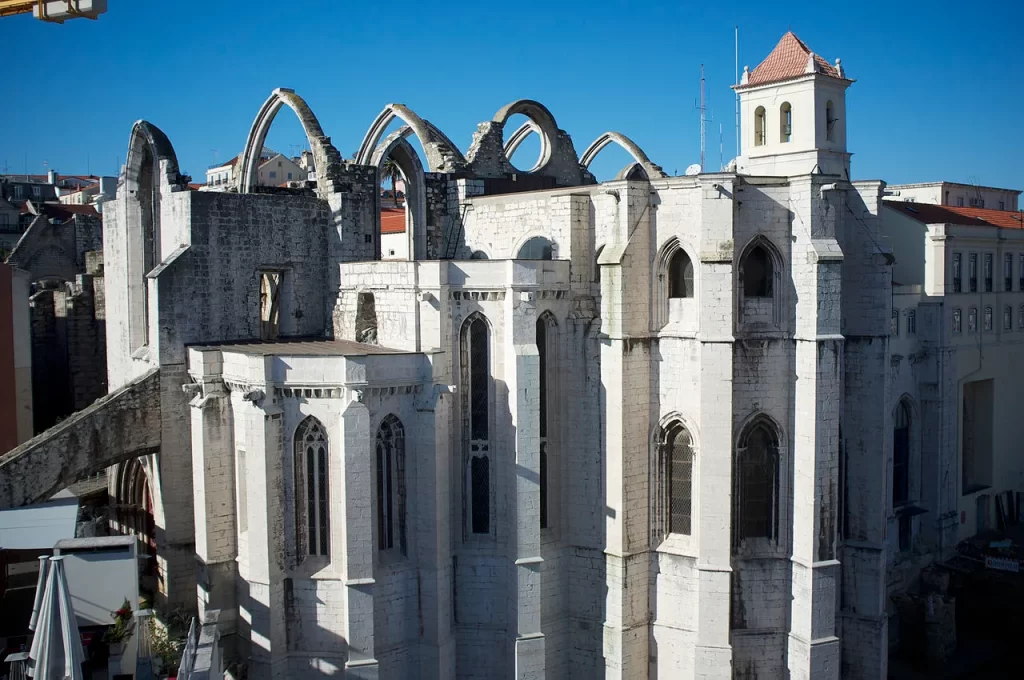
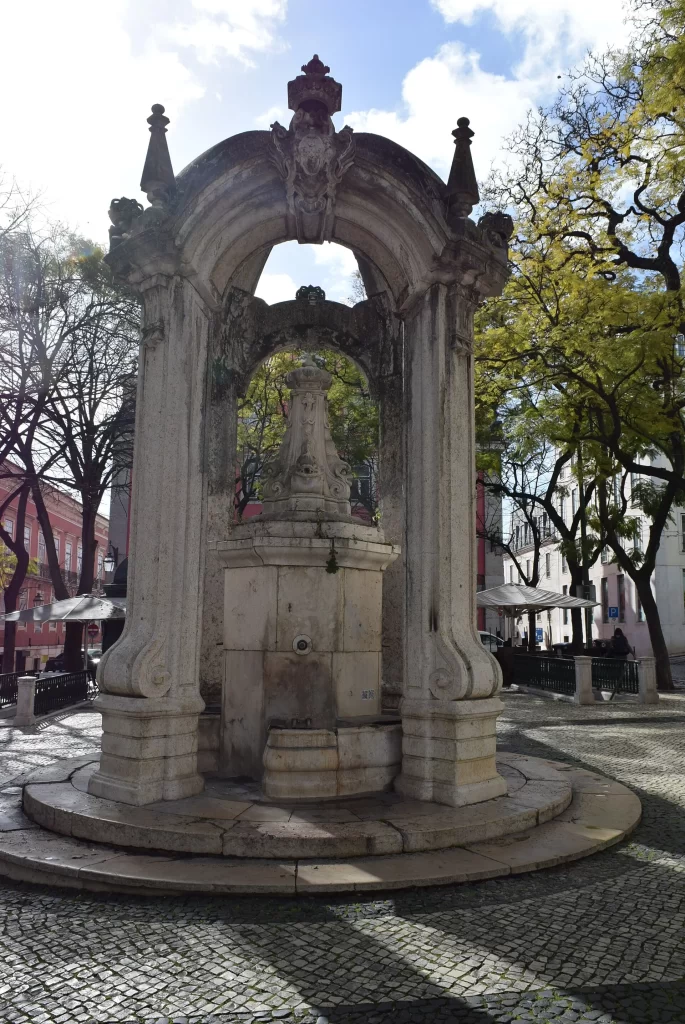
The Judiaria da Pedreira, literally the “Jewry of the Quarry,” designates a small Jewish residential nucleus associated with the medieval toponym Pedreira, in the western outskirts of Lisbon’s old urban core. In modern terms, scholarship places this nucleus in the area between Rua Garrett and the Convento do Carmo, close to today’s Largo do Carmo, within the Baixa-Chiado and Bairro Alto hillside.

Pedreira was a peri-urban zone that began to urbanize more intensively from the 13th century onward, tied to Lisbon’s westward expansion beyond the valley of the Baixa. It combined rural properties (vineyards and fields) with new construction promoted by major institutional actors and, at key moments, by the Crown itself, including a short-lived association with facilities for the Estudo Geral (the medieval university) in Lisbon.

Within this setting, the “Pedreira nucleus” emerges in the reign of King D. Dinis (1279–1325). A focused study of Dinis-era documentation describes Jewish residence there as a short-lived enclave, dated roughly to 1303–1317, created and then extinguished under royal initiative. The same research links the nucleus to a high-status Jewish family (the Navarro), noting that the Crown granted them houses in Pedreira and that this was not a typical dense “walled” judiaria, but rather an extramural, privileged cluster near royal properties and close to the city’s commercial heart.

A crucial nuance is terminological. Contemporary records do not consistently label Pedreira as a formal “judiaria”; instead, they preserve phrases such as “the rents of the Jews of Pedreira,” alongside references to other recognized Jewish quarters. On this basis, the Pedreira enclave is interpreted as an elite Jewish nucleus, later remembered and described as the Judiaria da Pedreira in historiography.

In 1317, D. Dinis donated the houses and assets in Pedreira that had been associated with Jews to Micer Manuel Pessanha, the Genoese admiral tied to the organization of the Portuguese royal navy. This donation is treated as a decisive marker for the end of the Jewish residential nucleus in Pedreira.

The Pedreira enclave should be understood within the broader pattern of multiple Jewish quarters in medieval Lisbon, which were not necessarily all contemporaneous. A scholarly overview of Lisbon’s medieval Jewish geography lists several quarters and explicitly places the Judiaria da Pedreira near Largo do Carmo, noting its extinction under D. Dinis in 1317, while other quarters, such as the Judiaria Velha/Grande, the Taracenas (Judiaria Nova/Pequena), and later Alfama, structured Jewish residence in different phases.

Today, nothing above ground can be securely identified as a surviving “Judiaria da Pedreira.” Its significance is documentary and urban-historical: a case where royal planning, property policy, and the social stratification of Lisbon’s Jewish population intersected in a specific landscape that later became one of the city’s most emblematic areas, around the Carmo and Chiado.

Gallery
Article researched and curated by Jew Where.

The Jew Where project is collaborative. Do you have additional information, found an inaccuracy, or have historical photos of this location? Contact our team.
Pedreira Jewish Nucleus
Portugal / Lisbon / Neighborhoods & Settlements

Pedreira Jewish Nucleus

"Documentary location of a small elite Jewish nucleus created under D. Dinis near today’s Largo do Carmo, active c. 1303-1317 and later extinguished."

Location
Largo do Carmo, Lisbon, Portugal

The Judiaria da Pedreira, literally the “Jewry of the Quarry,” designates a small Jewish residential nucleus associated with the medieval toponym Pedreira, in the western outskirts of Lisbon’s old urban core. In modern terms, scholarship places this nucleus in the area between Rua Garrett and the Convento do Carmo, close to today’s Largo do Carmo, within the Baixa-Chiado and Bairro Alto hillside.

Pedreira was a peri-urban zone that began to urbanize more intensively from the 13th century onward, tied to Lisbon’s westward expansion beyond the valley of the Baixa. It combined rural properties (vineyards and fields) with new construction promoted by major institutional actors and, at key moments, by the Crown itself, including a short-lived association with facilities for the Estudo Geral (the medieval university) in Lisbon.

Within this setting, the “Pedreira nucleus” emerges in the reign of King D. Dinis (1279–1325). A focused study of Dinis-era documentation describes Jewish residence there as a short-lived enclave, dated roughly to 1303–1317, created and then extinguished under royal initiative. The same research links the nucleus to a high-status Jewish family (the Navarro), noting that the Crown granted them houses in Pedreira and that this was not a typical dense “walled” judiaria, but rather an extramural, privileged cluster near royal properties and close to the city’s commercial heart.

A crucial nuance is terminological. Contemporary records do not consistently label Pedreira as a formal “judiaria”; instead, they preserve phrases such as “the rents of the Jews of Pedreira,” alongside references to other recognized Jewish quarters. On this basis, the Pedreira enclave is interpreted as an elite Jewish nucleus, later remembered and described as the Judiaria da Pedreira in historiography.

In 1317, D. Dinis donated the houses and assets in Pedreira that had been associated with Jews to Micer Manuel Pessanha, the Genoese admiral tied to the organization of the Portuguese royal navy. This donation is treated as a decisive marker for the end of the Jewish residential nucleus in Pedreira.

The Pedreira enclave should be understood within the broader pattern of multiple Jewish quarters in medieval Lisbon, which were not necessarily all contemporaneous. A scholarly overview of Lisbon’s medieval Jewish geography lists several quarters and explicitly places the Judiaria da Pedreira near Largo do Carmo, noting its extinction under D. Dinis in 1317, while other quarters, such as the Judiaria Velha/Grande, the Taracenas (Judiaria Nova/Pequena), and later Alfama, structured Jewish residence in different phases.

Today, nothing above ground can be securely identified as a surviving “Judiaria da Pedreira.” Its significance is documentary and urban-historical: a case where royal planning, property policy, and the social stratification of Lisbon’s Jewish population intersected in a specific landscape that later became one of the city’s most emblematic areas, around the Carmo and Chiado.

Timeline

  • 13th century Pedreira developed within Lisbon’s western urban expansion, combining peri-urban properties with growing construction and institutional occupation.
  • 21 August 1303 The Navarro family received houses in Pedreira, marking the documented start of the Jewish nucleus there.
  • 1303-1317 The Pedreira nucleus functioned briefly as a small elite Jewish residential cluster created under D. Dinis.
  • 1317 D. Dinis donated the former Jewish houses of Pedreira to Micer Manuel Pessanha, marking the end of the nucleus.
  • 14th-15th centuries Later overviews of Lisbon’s Jewish topography list Pedreira among several quarters that were not all contemporaneous.

Sources & Bibliography

  1. SILVA, Manuel Fialho. A população judaica da Lisboa de D. Dinis. In As cidades na História: População. Local: Guimarães. Editora: Câmara Municipal de Guimarães. Ano: 2013. https://chi.guimaraes.pt/actas/1CHI/vol2/1chi-vol2-007.pdf
  2. ASSIS, Angelo Adriano Faria de. O Medievo Português em tempos de livre crença. Relações entre judeus e cristãos em Portugal antes do monopólio católico iniciado em 1497. Local: n.d. Editora: Revista Mirabilia. Ano: 2003. https://dialnet.unirioja.es/descarga/articulo/2226977.pdf
  3. SILVA, Manuel Fialho. Mutação urbana na Lisboa medieval. Das taifas a D. Dinis. Local: Lisboa. Editora: Centro de História da Universidade de Lisboa. Ano: 2022. http://hdl.handle.net/10451/56430
  4. TAVIM, José Alberto Rodrigues da Silva. Judeus e judiarias de Lisboa nos alvores dos Descobrimentos. Perspectivas dos espaços e das gentes. Local: Lisboa. Editora: IEM - Instituto de Estudos Medievais. Ano: 2017. https://run.unl.pt/bitstream/10362/34446/1/NovaLisboaMedieval3_09_JAO.pdf

Article researched and curated by Jew Where.

The Jew Where project is collaborative. Do you have additional information, found an inaccuracy, or have historical photos of this location? Contact our team.