

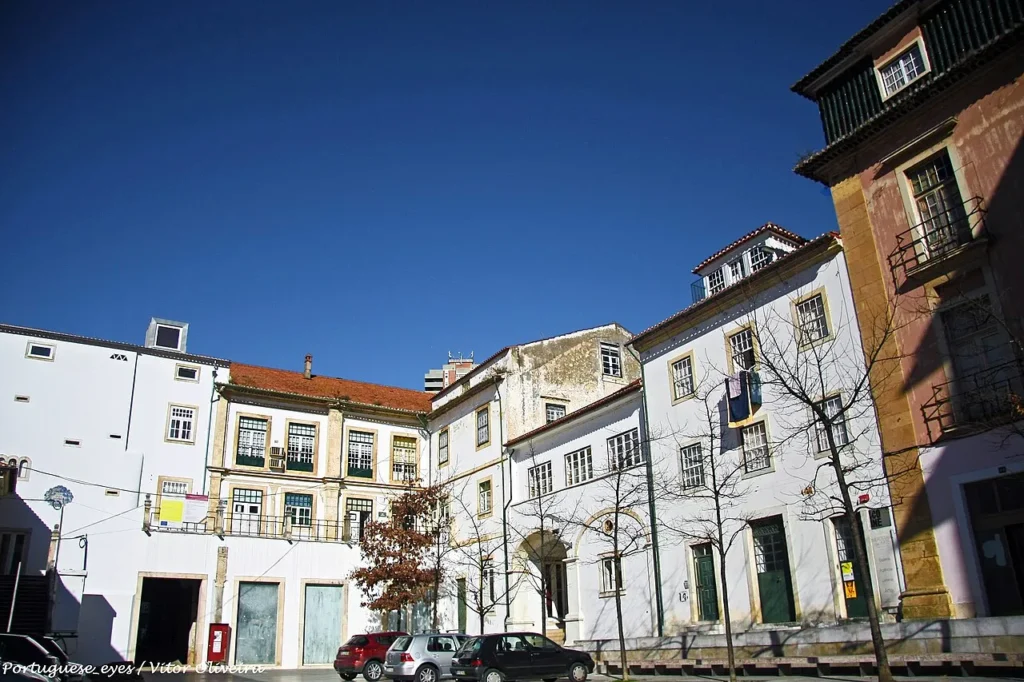
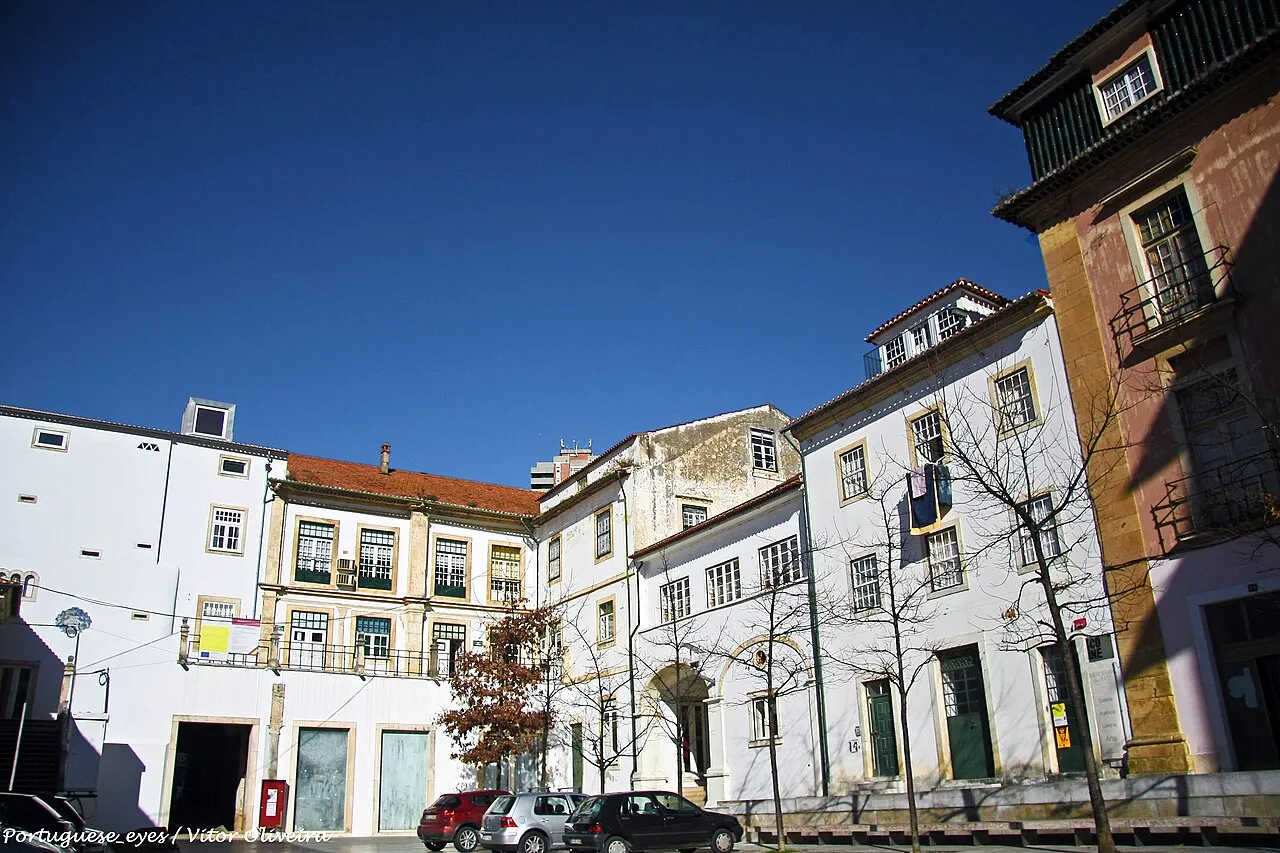
The Pátio da Inquisição / Edifício da Inquisição is one of the most severe places in Coimbra’s Jewish and New Christian memory. It was not a Jewish institution. It was the seat of the tribunal that investigated, imprisoned, judged, and punished generations of New Christians, many of them accused of secretly preserving Jewish beliefs and practices after forced conversion.
The Portuguese Inquisition was established in 1536, during the reign of King João III, through the papal bull Cum ad nihil magis. The Tribunal of Coimbra was first created in 1541, with jurisdiction over Entre Douro e Minho, Trás-os-Montes, and much of Beira. In this context, Coimbra became one of the main centers of the Holy Office in Portugal.
The Coimbra Inquisition
The building had earlier belonged to the Colégio das Artes. In 1566, however, it was handed over to the Tribunal of the Holy Office. From then until the abolition of the Inquisition in 1821, this complex functioned as the seat of the Coimbra Inquisition.
This was where accusation became procedure. Denunciations were received, interrogations were conducted, prisoners were held, records were produced, and sentences were prepared. The public autos-da-fé took place elsewhere in the city. Even so, the institutional machinery that made them possible operated from here.
Prison, Fear and Public Punishment
The Inquisition was not only a religious court. It was a system of surveillance and coercion, supported by law, theology, bureaucracy, prison, censorship, torture, confiscation of property, and public humiliation.
In Coimbra, the former college buildings were adapted to inquisitorial use. They included prison spaces and areas connected with interrogation and punishment. Therefore, the Pátio da Inquisição Coimbra must be understood as a place of institutional power, not only as an architectural complex.
The scale of the tribunal is clear from the early records. Between 1567 and 1599, the Coimbra Inquisition held 21 autos-da-fé, involving around 1,765 penitents. Among them, 65 people were relaxed in person, meaning handed over to secular justice for execution. Another 69 were condemned in effigy, usually because they had died, fled, or were absent.
These figures refer to the activity of the Coimbra court in that period, not only to this building. Even so, they show the force of the institution that operated from this place.
What Exists Today
After the abolition of the Holy Office on 31 March 1821, the building had several uses, including public services, housing, theatre, cultural activity, and museum functions. Today, part of the former complex houses the Centro de Artes Visuais and remains connected to the exhibition of Coimbra’s Jewish and inquisitorial memory.
The Pátio da Inquisição Coimbra matters because it exposes the institutional side of persecution. It shows that the destruction of Jewish life in Portugal was not only the result of street violence or isolated acts of intolerance. It was organized through offices, archives, cells, interrogations, sentences, confiscations, and public rituals of fear.
Gallery
Sources & Bibliography
- Câmara Municipal de Coimbra. Pátio da Inquisição. Local: Coimbra. Editora: Câmara Municipal de Coimbra. Ano: n.d
- Museu Municipal de Coimbra. Edifício da Inquisição. Local: Coimbra. Editora: Museu Municipal de Coimbra. Ano: n.d
- Arquivo Nacional da Torre do Tombo. Extinção do Tribunal do Santo Ofício e da Inquisição. Local: Lisboa. Editora: Arquivo Nacional da Torre do Tombo. Ano: n.d
- Centro de Artes Visuais. Contactos. Local: Coimbra. Editora: Centro de Artes Visuais. Ano: n.d
- Pereira, Isaías da Rosa. Notas sobre a Inquisição em Portugal no século XVI. Lusitania Sacra, n.º 10, 259–300. Local: Lisboa. Editora: Universidade Católica Portuguesa. Ano: 1978
Article researched and curated by Jew Where.
The Jew Where project is collaborative. Do you have additional information, found an inaccuracy, or have historical photos of this location? Contact our team.
Community notes
Comments
Logged-in visitors can submit comments for moderation before they appear publicly.
No comments yet.
Log in to leave a comment. Go to Account.