

The Inquisition of Évora was one of the main tribunals of the Portuguese Holy Office. The Portuguese Inquisition was established in 1536, under King João III, through the papal bull Cum ad nihil magis of Pope Paul III. The Évora tribunal became autonomous in 1541, with the licenciado Pedro Álvares de Paredes as its first inquisitor.
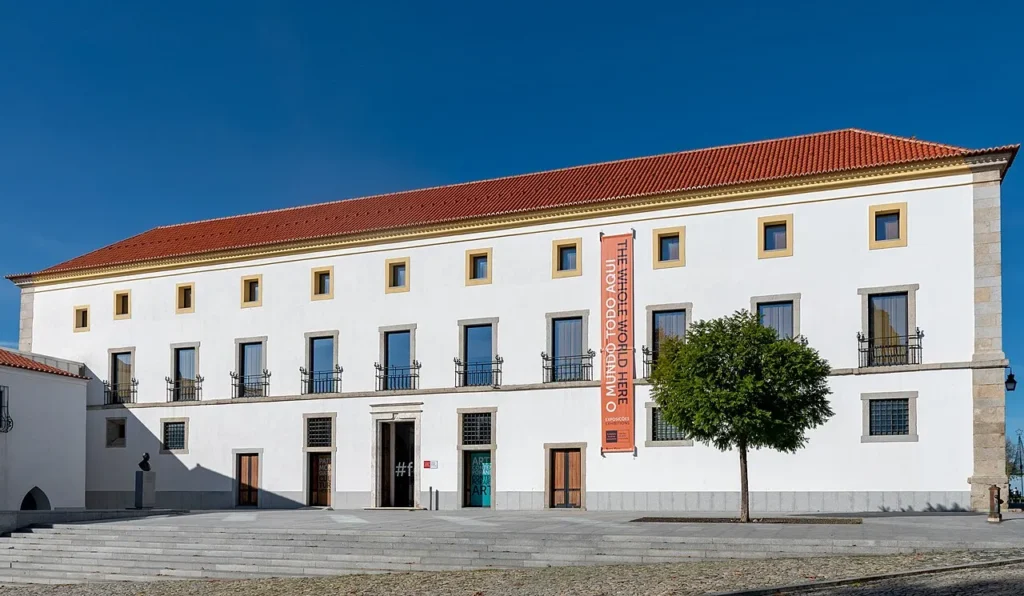
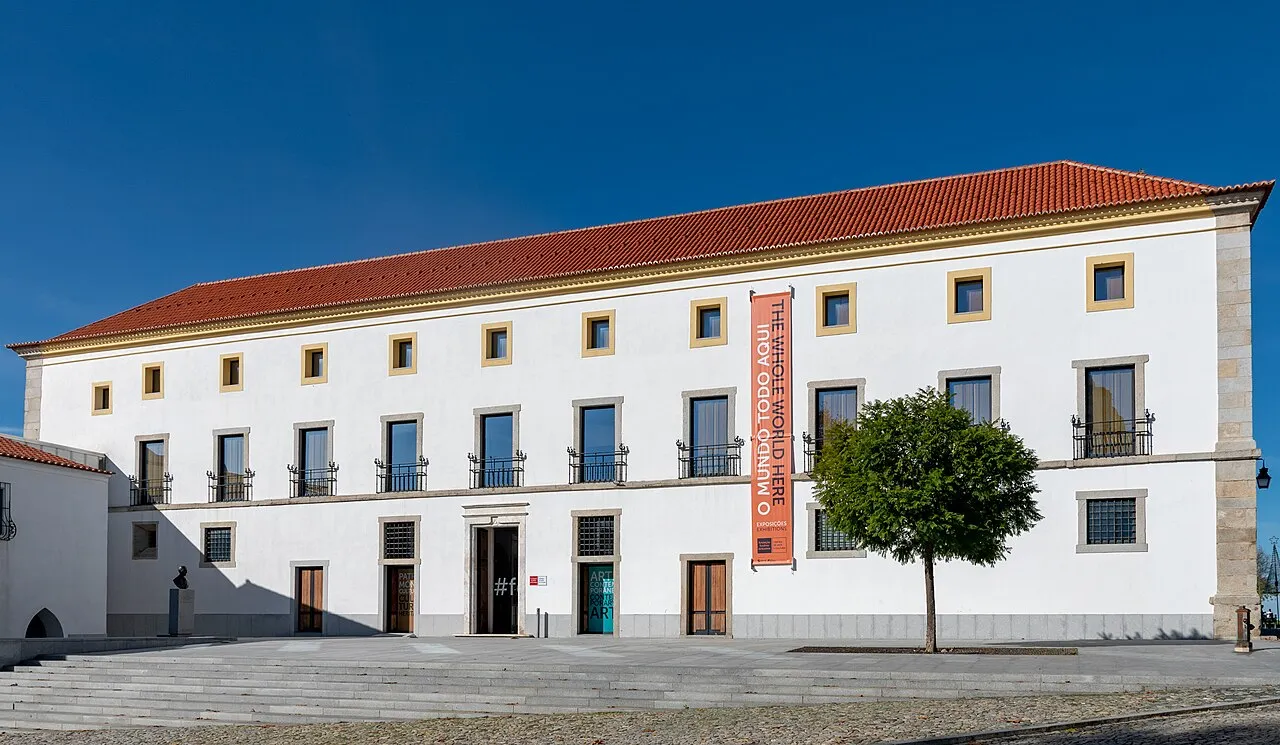
The Inquisition of Évora and its palace
The present building, now part of the Centro de Arte e Cultura of the Fundação Eugénio de Almeida, housed the Tribunal do Santo Ofício from 1655 to 1821. The palace was later altered and adapted for different uses, including residence, hotel and university functions.
Inside the former palace, the main surviving spaces associated with the inquisitorial period are the Sala do Tribunal and the Cubículo do Inquisidor. The Sala do Tribunal preserves a seventeenth-century baroque oak ceiling with coffers and the emblem of the Holy Office: a cross flanked by an olive tree and a dagger.
Prison area and archaeological evidence
Archaeological research connected to the former prison area identified human remains deposited in a rubbish context associated with the Inquisition’s jail. The excavation revealed twelve adult skeletons in articulation and dispersed bones belonging to at least sixteen additional individuals, mixed with domestic refuse. The context has been dated approximately between 1568 and 1634. It has been interpreted as evidence of prisoners placed without formal burial within a disposal area known in the research as the Jail Cleaning Yard of the Inquisition Court of Évora.
The individuals have not been identified by name. The historical records show that many prisoners of the Évora tribunal were prosecuted for Judaism, heresy and apostasy. Even so, the remains cannot be assigned individually to specific trials, names or accusations.
Records of the Inquisition of Évora
The records of the Inquisition of Évora are preserved in the Arquivo Nacional da Torre do Tombo as part of the Tribunal do Santo Ofício fonds. Around 14,000 processes survive, together with extensive related documentation. These records include trial processes, prisoner records, denunciations, sentences, documentation on ministers and officials, and the Juízo do Fisco, responsible for confiscated property and financial administration. The Tribunal do Santo Ofício was abolished on 31 March 1821.
Gallery
Sources & Bibliography
- ARQUIVO NACIONAL DA TORRE DO TOMBO. Extinção do Tribunal do Santo Ofício e da Inquisição. Local: Lisboa. Editora: Arquivo Nacional da Torre do Tombo. Ano: n.d
- FUNDAÇÃO EUGÉNIO DE ALMEIDA. Antigo Tribunal da Inquisição. Local: Évora. Editora: Fundação Eugénio de Almeida. Ano: n.d
- SIPA / DGPC. Palácio da Inquisição / Tribunal do Santo Ofício de Évora. Local: Évora. Editora: Direção-Geral do Património Cultural. Ano: n.d
- MAGALHÃES, Bruno M.; FERNANDES, Teresa Matos; SANTOS, Ana Luísa. The unburied prisoners from the jail of the Inquisition of Évora, Portugal. Journal of Anthropological Archaeology, 39, pp. 36-41. Ano: 2015
- MAGALHÃES, Bruno M.; FERNANDES, Teresa Matos; SANTOS, Ana Luísa. Os irreconciliados da fé da Inquisição de Évora: análise paleobiológica de uma amostra osteológica moderna proveniente do Quintal da Limpeza dos Cárceres. Ano: n.d
- COELHO, António Borges. Inquisição de Évora: dos primórdios a 1668. Local: Lisboa. Editora: Editorial Caminho. Ano: 1987.
- PINTO, Maria do Carmo Teixeira; RUNA, Lucília Maria Luís Ferreira. Inquisição de Évora: dez anos de funcionamento (1541-1550). Revista de História Económica e Social, 22, pp. 51-76. Ano: 1988.
Article researched and curated by Jew Where.
The Jew Where project is collaborative. Do you have additional information, found an inaccuracy, or have historical photos of this location? Contact our team.
Community notes
Comments
Logged-in visitors can submit comments for moderation before they appear publicly.
No comments yet.
Log in to leave a comment. Go to Account.