Skip to content

"Historic urban nucleus in Salzedas traditionally identified as a judiaria, but direct Jewish communal evidence remains limited."

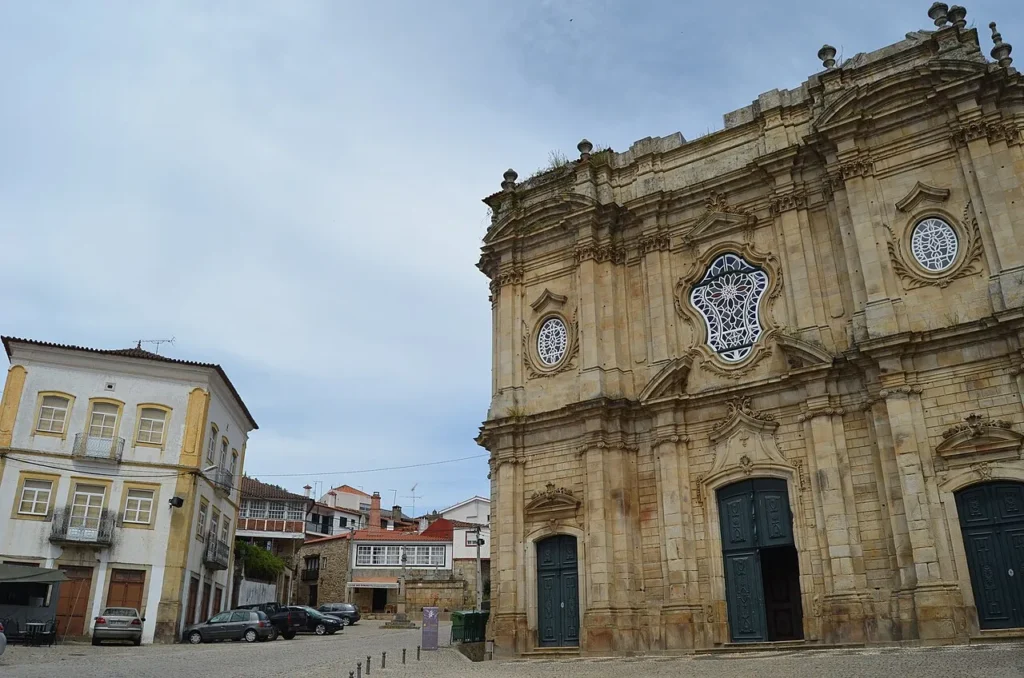
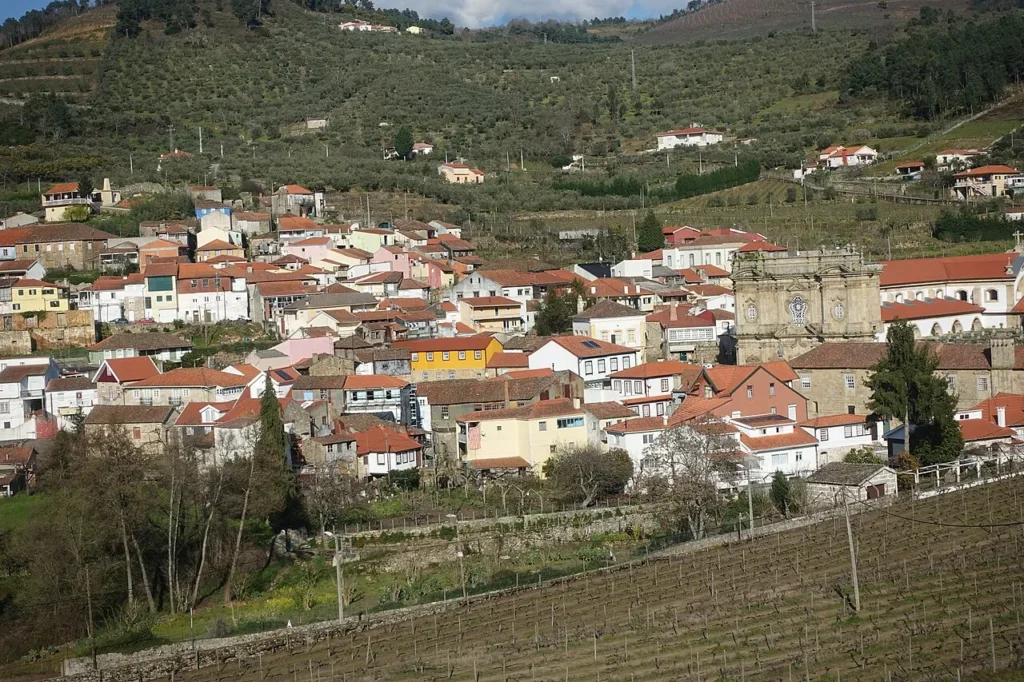
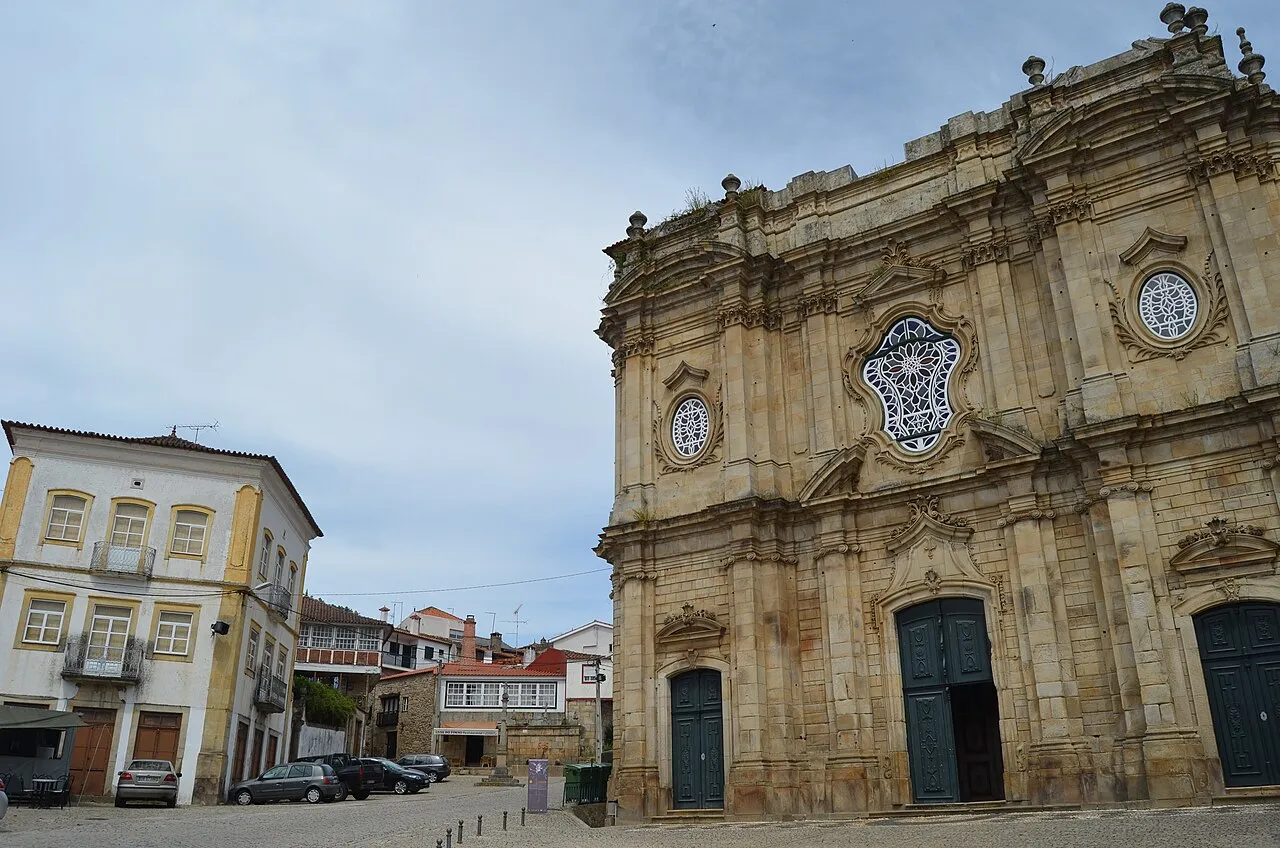
The Old Judiaria of Salzedas is the traditional designation associated with a compact historic area of Salzedas, in the municipality of Tarouca, often linked to the Bairro do Quelho. The identification must be handled with caution. Public heritage documentation preserves the designation “Bairro Judeu / Judiaria” for a group of buildings in Salzedas, and a parliamentary heritage description refers to the “núcleo antigo/antiga Judiaria” of Salzedas. However, these records do not, by themselves, confirm the existence of a synagogue, cemetery, Hebrew inscription, or a clearly documented medieval Jewish community at the site.

The Old Judiaria of Salzedas in the monastic landscape

Salzedas developed in close relation to the Monastery of Santa Maria de Salzedas, one of the major Cistercian houses of the region. The monastery is documented as a male Cistercian foundation whose construction began in 1168, linked to Teresa Afonso, wife of Egas Moniz. Its church was consecrated in 1225, and the complex later underwent major transformations, especially during the seventeenth and eighteenth centuries.

For this reason, the Old Judiaria of Salzedas cannot be read apart from the broader monastic territory. The settlement grew within a landscape shaped by Cistercian landholding, agricultural production, routes, dependent populations, and rural-urban forms of habitation. Within this framework, the possible Jewish association belongs to a layered historical environment, not to an isolated monument.

Urban fabric and material evidence

The strongest verifiable element is the urban fabric itself. The heritage description of Salzedas identifies an old nucleus, or antiga Judiaria, marked by an irregular street pattern, dense occupation, varied plots, buildings generally rising two or three floors, and upper wooden structures projecting over narrow streets.

These features are important, but they are not automatically Jewish. They belong to a broader vocabulary of medieval and vernacular architecture in northern Portugal. Therefore, the architectural evidence supports the patrimonial value of the area, but it does not prove a Jewish quarter on its own. The correct reading is more careful: Salzedas preserves a historic urban nucleus traditionally identified as a judiaria, but the available public documentation remains insufficient for stronger claims.

Caution, memory, and patrimonial meaning

The Old Judiaria of Salzedas is valuable precisely because it shows the difficulty of working with Jewish heritage in places where direct documentation is limited. In Portugal, the rupture caused by the forced conversion of Jews in 1496-1497 erased many visible structures of Jewish communal life and left later memory dependent on scattered records, inherited names, urban patterns, and local attributions.

For Jew Where, the site should therefore be presented as a place of cautious historical memory. Its importance lies not in proving more than the sources allow, but in preserving the question honestly. The Old Judiaria of Salzedas remains a meaningful patrimonial reference within the medieval landscape of Salzedas, especially when interpreted alongside the monastery, the old urban nucleus, and the long fragility of Jewish traces in the Portuguese interior.

Gallery
Community notes

Comments

Logged-in visitors can submit comments for moderation before they appear publicly.

No comments yet.

Article researched and curated by Jew Where.

The Jew Where project is collaborative. Do you have additional information, found an inaccuracy, or have historical photos of this location? Contact our team.
Old Judiaria of Salzedas
Portugal / Viseu / Neighborhoods & Settlements

Old Judiaria of Salzedas

"Historic urban nucleus in Salzedas traditionally identified as a judiaria, but direct Jewish communal evidence remains limited."

Location
Bairro do Quelho, Salzedas, Tarouca, Viseu, Portugal

The Old Judiaria of Salzedas is the traditional designation associated with a compact historic area of Salzedas, in the municipality of Tarouca, often linked to the Bairro do Quelho. The identification must be handled with caution. Public heritage documentation preserves the designation “Bairro Judeu / Judiaria” for a group of buildings in Salzedas, and a parliamentary heritage description refers to the “núcleo antigo/antiga Judiaria” of Salzedas. However, these records do not, by themselves, confirm the existence of a synagogue, cemetery, Hebrew inscription, or a clearly documented medieval Jewish community at the site.

The Old Judiaria of Salzedas in the monastic landscape

Salzedas developed in close relation to the Monastery of Santa Maria de Salzedas, one of the major Cistercian houses of the region. The monastery is documented as a male Cistercian foundation whose construction began in 1168, linked to Teresa Afonso, wife of Egas Moniz. Its church was consecrated in 1225, and the complex later underwent major transformations, especially during the seventeenth and eighteenth centuries.

For this reason, the Old Judiaria of Salzedas cannot be read apart from the broader monastic territory. The settlement grew within a landscape shaped by Cistercian landholding, agricultural production, routes, dependent populations, and rural-urban forms of habitation. Within this framework, the possible Jewish association belongs to a layered historical environment, not to an isolated monument.

Urban fabric and material evidence

The strongest verifiable element is the urban fabric itself. The heritage description of Salzedas identifies an old nucleus, or antiga Judiaria, marked by an irregular street pattern, dense occupation, varied plots, buildings generally rising two or three floors, and upper wooden structures projecting over narrow streets.

These features are important, but they are not automatically Jewish. They belong to a broader vocabulary of medieval and vernacular architecture in northern Portugal. Therefore, the architectural evidence supports the patrimonial value of the area, but it does not prove a Jewish quarter on its own. The correct reading is more careful: Salzedas preserves a historic urban nucleus traditionally identified as a judiaria, but the available public documentation remains insufficient for stronger claims.

Caution, memory, and patrimonial meaning

The Old Judiaria of Salzedas is valuable precisely because it shows the difficulty of working with Jewish heritage in places where direct documentation is limited. In Portugal, the rupture caused by the forced conversion of Jews in 1496-1497 erased many visible structures of Jewish communal life and left later memory dependent on scattered records, inherited names, urban patterns, and local attributions.

For Jew Where, the site should therefore be presented as a place of cautious historical memory. Its importance lies not in proving more than the sources allow, but in preserving the question honestly. The Old Judiaria of Salzedas remains a meaningful patrimonial reference within the medieval landscape of Salzedas, especially when interpreted alongside the monastery, the old urban nucleus, and the long fragility of Jewish traces in the Portuguese interior.

Timeline

  • 1168 Construction of the Monastery of Santa Maria de Salzedas began, linked to Teresa Afonso, wife of Egas Moniz.
  • 1225 The church of the monastery was consecrated.
  • 1496-1497 The forced conversion of Jews in Portugal ended open Jewish communal life and weakened visible Jewish traces.
  • 17th-18th centuries The monastery underwent major architectural transformations.

Sources & Bibliography

  1. PATRIMÓNIO CULTURAL, I.P. Mosteiro de Santa Maria de Salzedas. Local: Salzedas. Editora: Património Cultural, I.P. Ano: n.d. https://imovel.patrimoniocultural.gov.pt/detalhes.php?code=72577
  2. VALE DO VAROSA. Mosteiro de Santa Maria de Salzedas. Local: Salzedas. Editora: Vale do Varosa. Ano: n.d. https://www.valedovarosa.gov.pt/monumentos/mosteiro-de-santa-maria-de-salzedas
  3. PATRIMÓNIO CULTURAL, I.P. Santa Maria de Salzedas Monastery. Local: Salzedas. Editora: Património Cultural, I.P. Ano: n.d. https://bilheteira.patrimoniocultural.gov.pt/en/monument/10
  4. SOYER, François. The Persecution of the Jews and Muslims of Portugal: King Manuel I and the End of Religious Tolerance, 1496-7. Local: Leiden. Editora: Brill. Ano: 2007. https://eprints.soton.ac.uk/58890

Additional Information

Current use of the address: Historic residential urban nucleus; no confirmed active Jewish function or surviving synagogue was identified in the consulted public documentation.

Article researched and curated by Jew Where.

The Jew Where project is collaborative. Do you have additional information, found an inaccuracy, or have historical photos of this location? Contact our team.