

The Old Jewish Cemetery Prague is located in Josefov, the former Jewish Town of Prague, beside the Pinkas Synagogue and close to the Old-New Synagogue. It is one of the oldest surviving Jewish burial grounds in Europe and one of the most important material records of Jewish life in Prague.
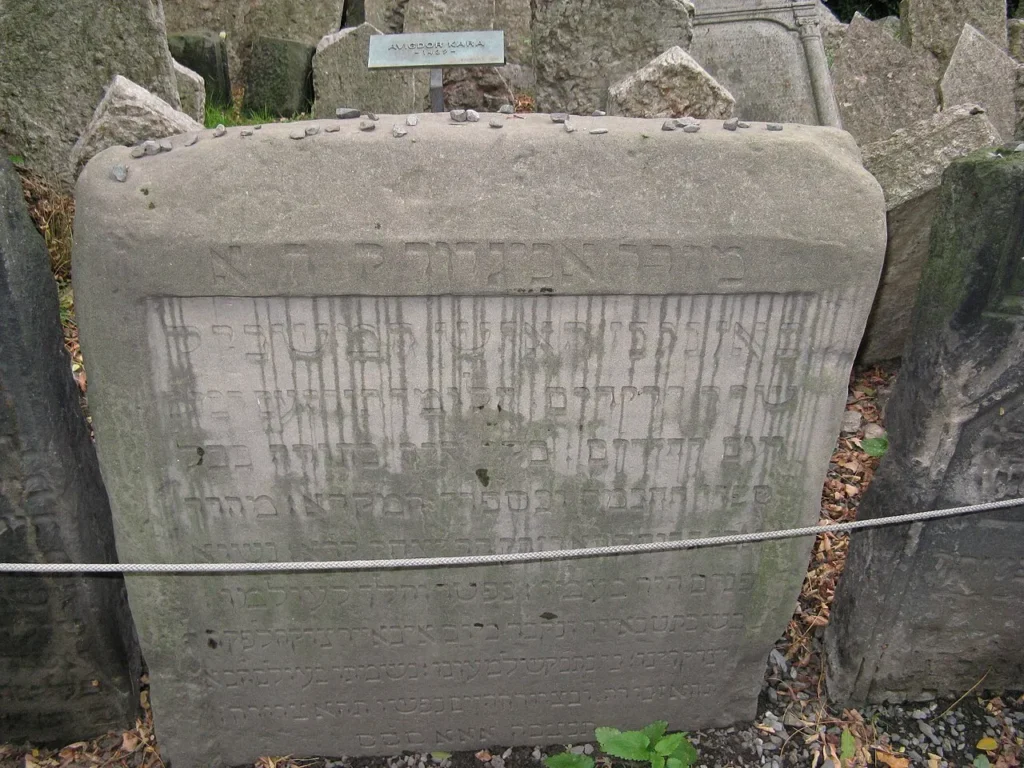
The cemetery was probably established in the first half of the fifteenth century. Its exact foundation date is not known. The oldest preserved tombstone belongs to Rabbi and poet Avigdor Kara, also known as Avigdor Karo, and is dated 1439.
The Old Jewish Cemetery Prague as a burial ground
From the fifteenth century onward, the cemetery became the main burial ground of the Jewish community of Prague. It served this function for more than three centuries, until burials there ended in 1787.
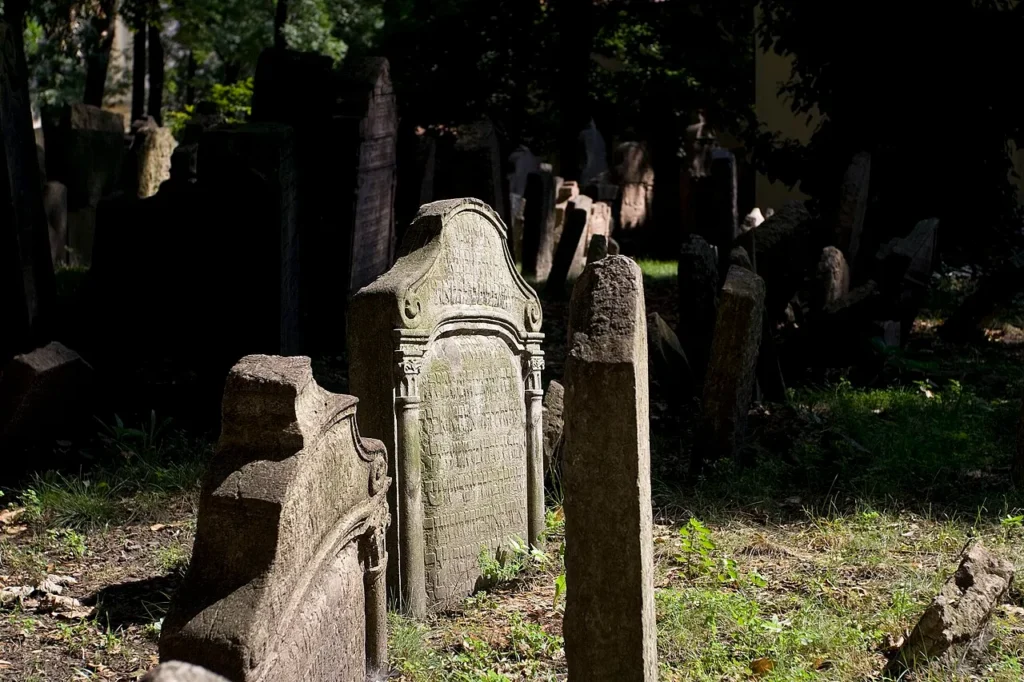
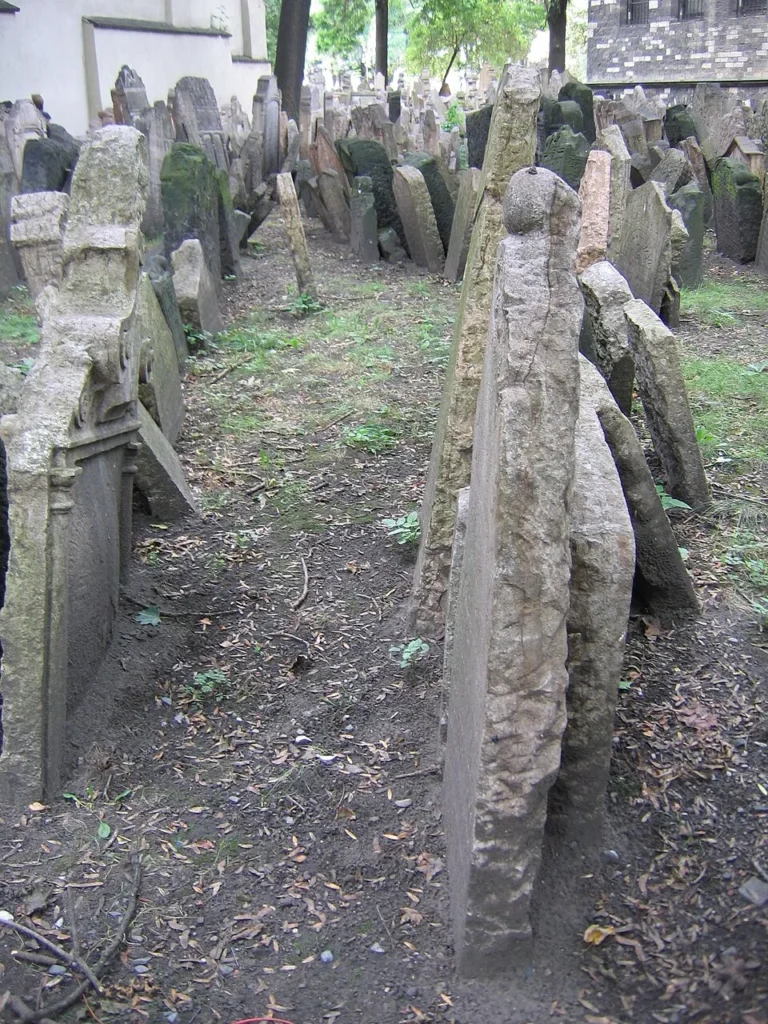
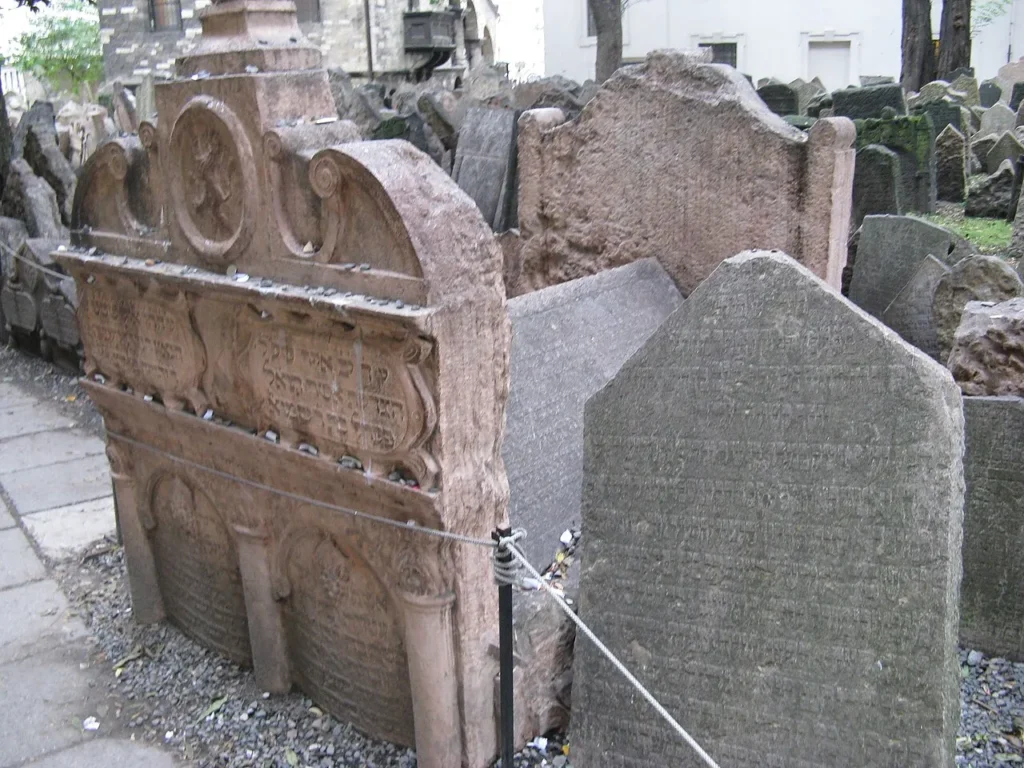
Its unusual appearance is the result of restricted space inside the Jewish Town and the religious prohibition against disturbing graves. When no more room was available, layers of earth were added above older burials. New tombstones were then placed on the higher surface, while earlier graves remained below.
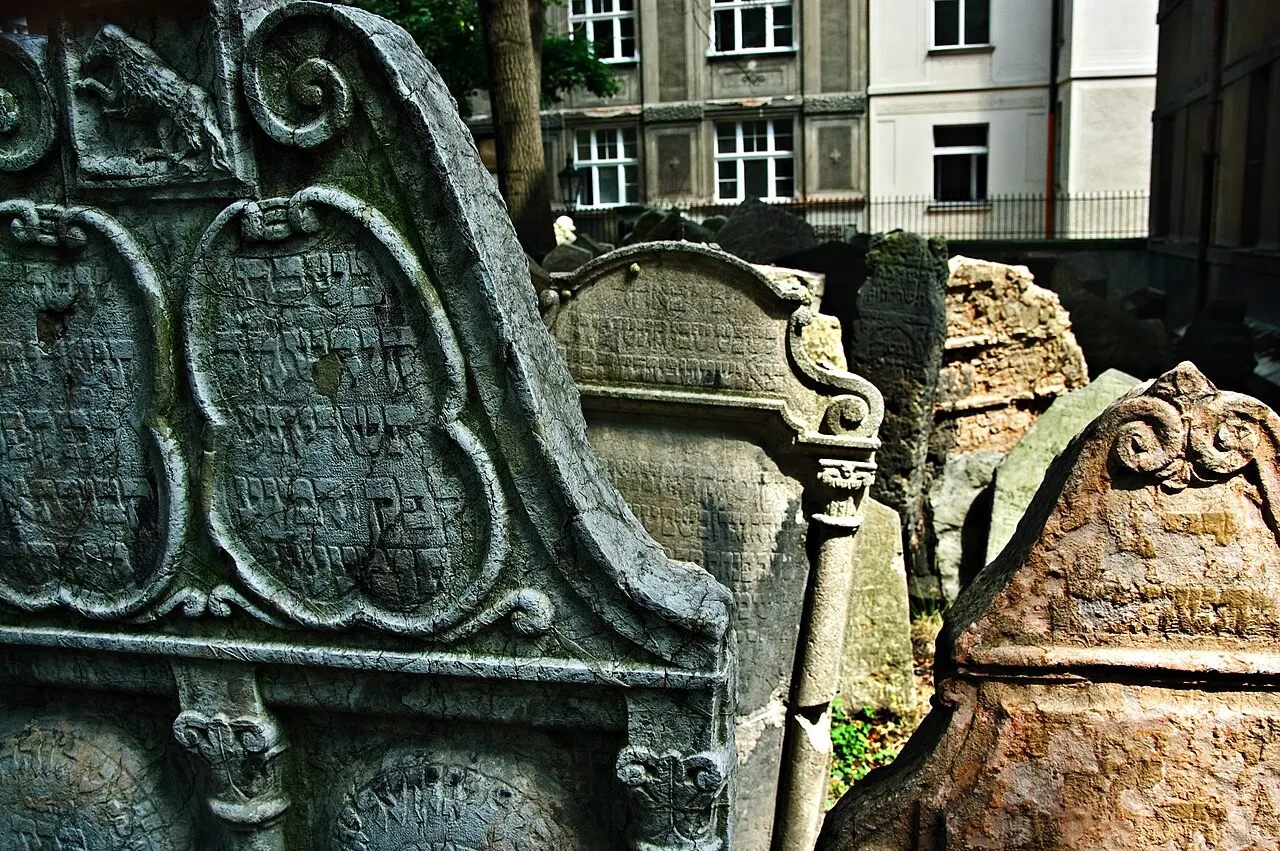
For this reason, the cemetery contains several burial layers. According to some researchers, the burials may reach up to ten levels deep. More than 12,000 tombstones survive above ground, but the number of people buried there is much higher.
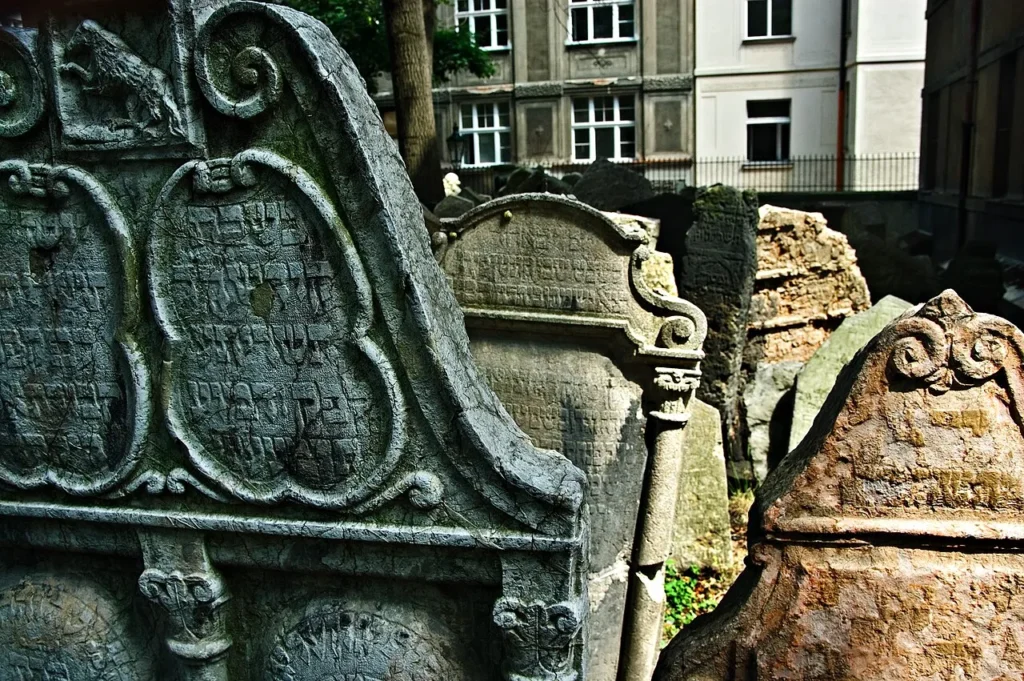
The stones preserve Hebrew inscriptions, dates, family names, professions, symbols and references to communal status. Earlier tombstones are generally simpler. Later seventeenth- and eighteenth-century monuments often include richer decoration, relief lettering and symbolic imagery.
Rabbis, scholars and communal leaders
The cemetery records the history of Prague’s Jewish elite, including scholars, printers, physicians, rabbis and communal leaders. Mordecai Maisel, one of the great benefactors of the Jewish Town, enlarged the cemetery in the late sixteenth century by purchasing adjoining property. He died in 1601 and was buried there.
Rabbi Judah Loew ben Bezalel, known as the Maharal of Prague, died in 1609 and was also buried in the cemetery. His grave became one of the most visited places in the site, connected to his religious and philosophical writings and to later traditions surrounding the Golem of Prague.
Other major figures buried in the cemetery include David Gans, who died in 1613. He was a Jewish historian, mathematician and astronomer connected to the intellectual world of Rudolfine Prague. David Oppenheim, who died in 1736, was Chief Rabbi of Prague and an important collector of Hebrew manuscripts and books. His library later became part of the Bodleian Library in Oxford.
From Josefov to the Jewish Museum in Prague
After burials in the Old Jewish Cemetery ended in 1787, the main burial activity of the Prague Jewish community shifted to Žižkov. A Jewish cemetery had already been established there in 1680 as a plague burial ground. It continued in use until 1890, when the New Žižkov Jewish Cemetery opened at the Olšany Cemeteries.
At the turn of the nineteenth and twentieth centuries, Josefov underwent major urban redevelopment. Much of the old Jewish Town was demolished. However, the Old Jewish Cemetery survived, together with several synagogues and communal buildings that later became central to the Jewish Museum in Prague.
The Jewish Museum in Prague was founded in 1906 by Salomon Hugo Lieben and August Stein. Its early collection was formed from objects preserved from synagogues demolished during the clearance of the Prague Jewish ghetto. The cemetery itself remained a burial ground and historical monument, not a museum building, but it later became part of the preserved ensemble of Jewish monuments in Josefov.
During the Nazi occupation, the Jewish Museum Association was abolished, and the museum’s collections were taken over by the Prague Jewish community. In 1942, the Central Jewish Museum was created. Although approved by the Nazi authorities for their own purposes, it preserved liturgical objects, books and archival documents from destroyed Jewish communities during the war.
After the war, the museum came under state control and was nationalized in 1950. It remained restricted under the Communist regime. In 1994, after the fall of Communism, the Jewish Museum in Prague regained independence from the state, and its buildings and collections were returned to Jewish communal ownership and administration.
Today, the Old Jewish Cemetery Prague is part of the Prague Jewish Town circuit of the Jewish Museum in Prague. It is visitable together with the historic synagogues and exhibitions of Josefov, preserving the burial record of Prague’s Jewish community from the fifteenth to the eighteenth century.
Gallery
Videos
Sources & Bibliography
- JEWISH MUSEUM IN PRAGUE. Old Jewish Cemetery. Local: Prague. Editora: Jewish Museum in Prague. Ano: n.d
- JEWISH MUSEUM IN PRAGUE. History of the Museum. Local: Prague. Editora: Jewish Museum in Prague. Ano: n.d
- JEWISH MUSEUM IN PRAGUE. Opening Hours. Local: Prague. Editora: Jewish Museum in Prague. Ano: n.d
- JEWISH MUSEUM IN PRAGUE. Admission. Local: Prague. Editora: Jewish Museum in Prague. Ano: n.d
- PRAHA 3. Old Jewish Cemetery. Local: Prague. Editora: Praha 3. Ano: n.d
- YIVO ENCYCLOPEDIA OF JEWS IN EASTERN EUROPE. Maisel, Mordecai. Editora: YIVO Institute for Jewish Research. Ano: n.d
- MUNELES, Otto. Ktovot mi-beit-ha-almin ha-yehudi he-atik be-Prag. Local: Jerusalem. Editora: Israel Academy of Sciences and Humanities. Ano: 1988.
- GIUSTINO, Cathleen M. Tearing Down Prague’s Jewish Town. Ghetto Clearance and the Legacy of Middle-Class Ethnic Politics around 1900. Editora: East European Monographs. Ano: 2003.
Article researched and curated by Jew Where.
The Jew Where project is collaborative. Do you have additional information, found an inaccuracy, or have historical photos of this location? Contact our team.
Community notes
Comments
Logged-in visitors can submit comments for moderation before they appear publicly.
No comments yet.
Log in to leave a comment. Go to Account.