

The New Christians of Viseu are documented above all through the records of the Portuguese Inquisition. The surviving evidence is not architectural. No building in the city can be securely identified today as the place where these men and women were judged, imprisoned or condemned. The evidence is archival: proceedings, visitation records, denunciations, testimonies, sentences and names.
Documentary evidence after 1498
After the forced conversion of the Jews in Portugal, the Jewish population of Viseu appears in the sources under the legal category of New Christians. The former Jewish street names changed after 1498, but families of Jewish origin remained in the city.
In the sixteenth and seventeenth centuries, these families were prosecuted under the accusation then described as “Judaism”. Research on Viseu identifies about three hundred inquisitorial proceedings connected to this accusation.
A published table records 279 entries between 1542 and 1746. Of these, 231 refer to people born in Viseu and 212 to residents of the city.
The highest concentration belongs to the first half of the seventeenth century. Between 1601 and 1640, 167 entries were recorded. Between 1621 and 1630, there were 117. In 1629 alone, 38 New Christians from Viseu were processed.
Names, streets and occupations
The records preserve several groups of names. In the inquisitorial proceedings, surnames such as Mendes, Gomes, Fonseca, Henriques, Rodrigues, Dias, Gil, Fernandes and Nunes appear among New Christians connected to Viseu.
Historical studies also connect some families from Viseu to older Jewish names, including Moscatel, Adida, Navarro, Franco, Justo, Coimbrão, Longo, Baruch, Sovi, Caro, Aniele, Pérmica and Laborado. Other names indicate Castilian links, especially Navarro, Cáceres, Ximenes and Reinoso.
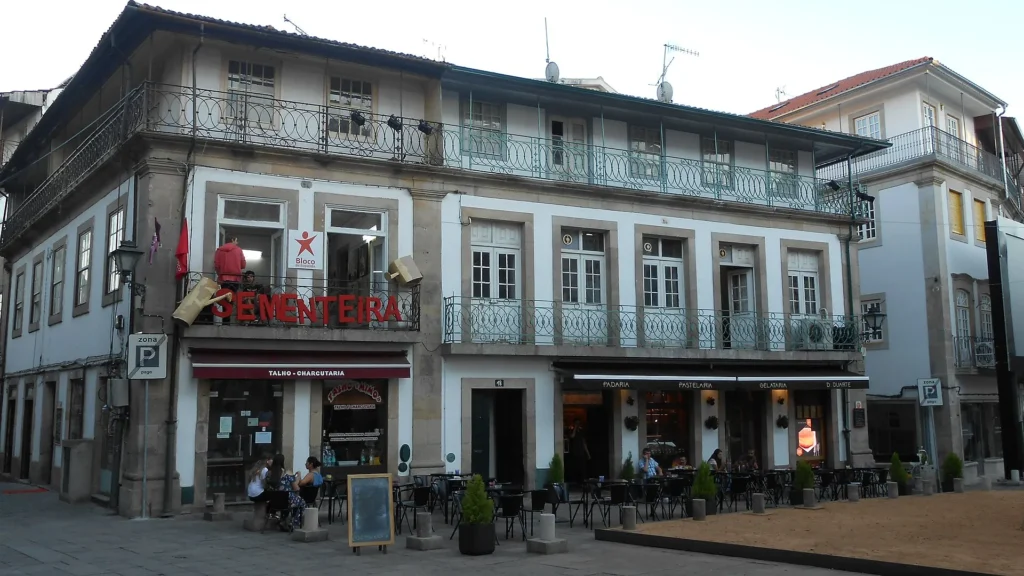
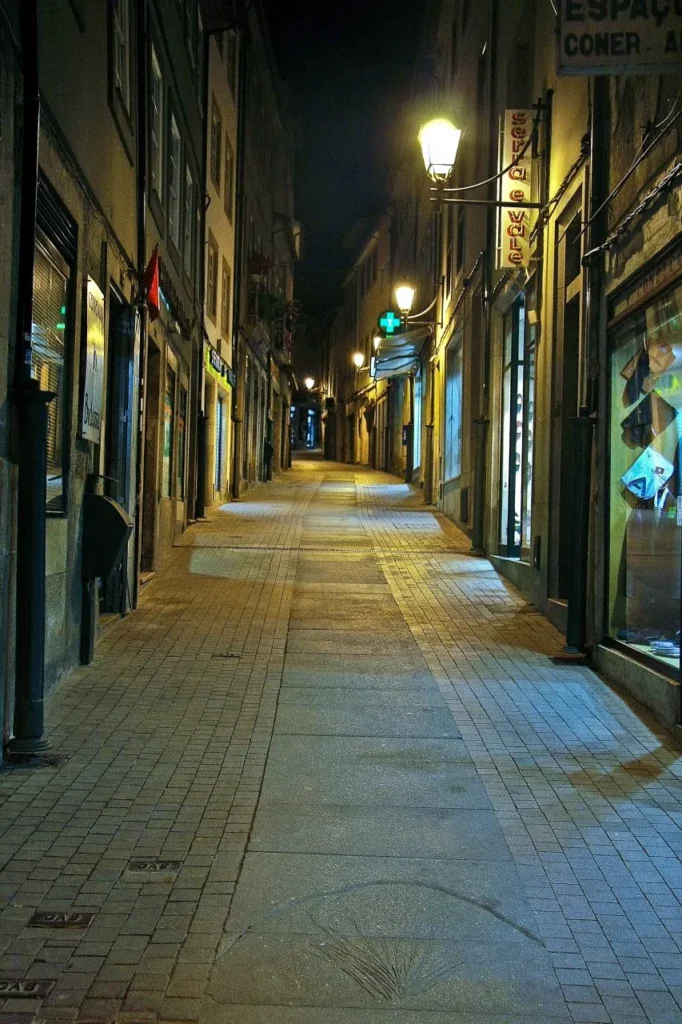
The accused were concentrated in central areas of the city. The records place them in streets connected to the former judiaria, especially Rua Nova, and also in Rua Direita and the central Praça, today Praça D. Duarte.
Their documented occupations include merchants, renters of revenues, landholders, shopkeepers, artisans and other urban professionals. The sources therefore place the New Christians of Viseu inside the economic and social structure of the city.
The visitation of 1637
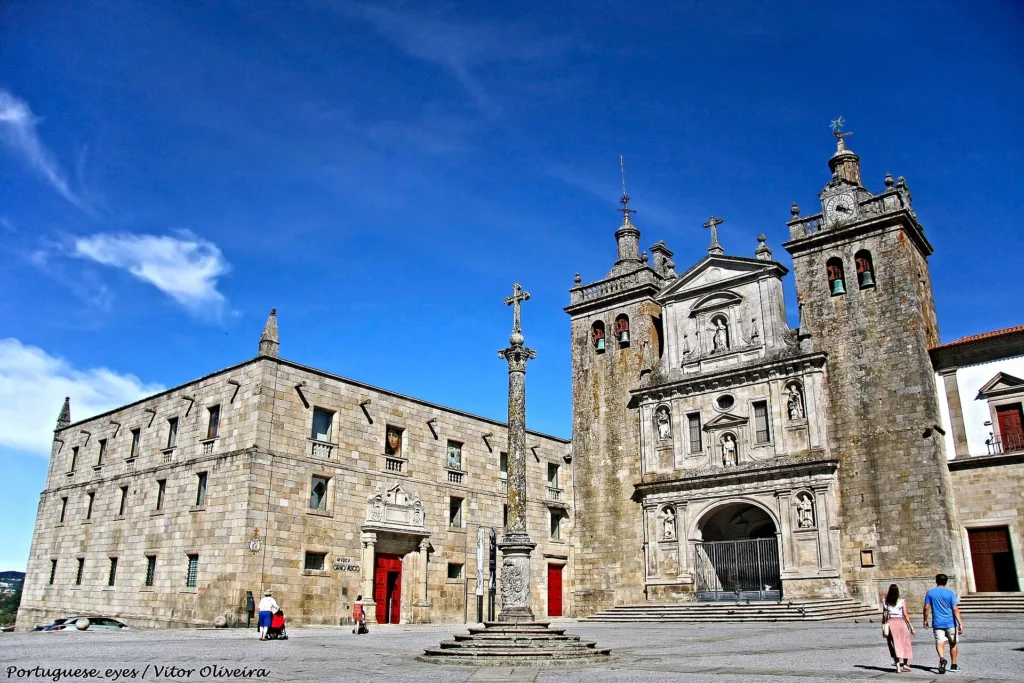
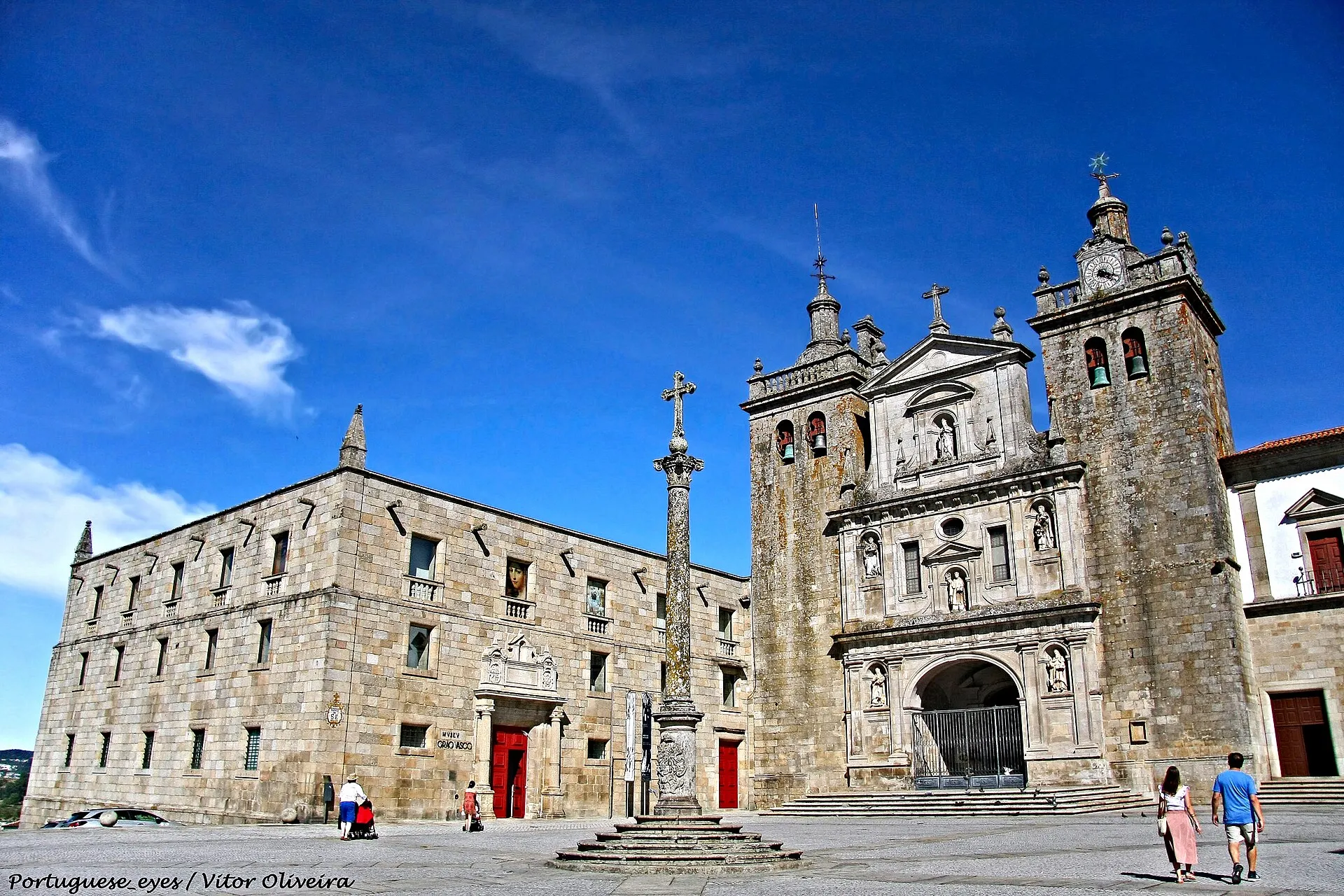
The link with Largo da Sé comes from the visitation of the Holy Office in 1637. The inquiry was conducted from the ecclesiastical centre of Viseu, in the area of the cathedral and the Seminary. This makes Largo da Sé a cautious reference point for the event. The connection is documentary and institutional, not architectural.
The visitation of 1637 was an inquisitorial inquiry carried out in Viseu by the Holy Office. In Portuguese documentation, this type of inquiry could be described as a devassa: a formal investigation that collected denunciations, testimonies and suspicions before the Mesa of the Inquisition.
The visitation is preserved in the records of the Inquisition of Coimbra, including the visitation book held by the Arquivo Nacional da Torre do Tombo. The inquisitor Diogo de Sousa arrived in Viseu with royal and inquisitorial documents, officials and officers of the Inquisition of Coimbra.
Between 12 August and 10 September 1637, 127 sessions were held at the Mesa. During these sessions, denunciations and testimonies were recorded against New Christians from Viseu and from connected local networks.
Proceedings, sentences and flight
The cases related to Viseu were judged mainly by the Inquisition of Coimbra. The documentation also includes proceedings from Lisbon and Évora.
The penalties recorded in these processes include imprisonment, penitential habit, spiritual penalties, galley service, confiscation of goods, public shame and death after the accused was handed over to secular justice.
Several individual cases are documented. Filipa Carvalho, a midwife and widow who lived in Rua Nova and kept a mercery shop, was handed over to secular justice in 1562. Branca Dias, about seventy years old, died in the prison of the Inquisition of Coimbra before her sentence was completed. Her bones were later brought out in the auto-da-fé of 1571. Maria Lopes was handed over to secular justice in 1573.
The records continue into the seventeenth century. António da Costa Reinoso died in the prison of the Inquisition of Coimbra during his process. Henrique Dias was condemned for relapse in Coimbra in 1634. His daughter Leonor Nunes, later known as Leonor do Amaral, was executed by fire in Lisbon in 1654.
The same documentation records absence and flight. Some accused left before arrest and were condemned in absence through relaxation in effigy. Others crossed or attempted to cross into Castile, or moved through Iberian routes connected to Ciudad Rodrigo, Plasencia, Cáceres, Madrid, Toledo, Seville and Granada.
Gallery
Sources & Bibliography
- CORDEIRO, Maria Teresa Gomes. Cristãos-Novos da cidade de Viseu e A Devassa Inquisitorial: Entendimentos sobre uma comunidade específica (sécs. XVI-XVII). Revista Portuguesa de História, t. XLVII, p. 55-74. Coimbra: Universidade de Coimbra. Ano: 2016
- CORDEIRO, Maria Teresa Gomes. Inquisição e cristãos-novos na cidade de Viseu (Portugal): morfologia, identidades e integração sociocultural (séculos XVI-XVII). Tese de doutoramento. Salamanca: Universidade de Salamanca. Ano: 2015
- CORDEIRO, Maria Teresa Gomes. A visitação do Santo Ofício à cidade de Viseu. Viseupédia, n.º 22. Viseu: Antropodomus - Projecto Património. Ano: 2012
- ARQUIVO NACIONAL DA TORRE DO TOMBO. Tribunal do Santo Ofício, Inquisição de Coimbra, Visitações, Livro 669. Lisboa: Arquivo Nacional da Torre do Tombo. Ano: 1637
- ARQUIVO NACIONAL DA TORRE DO TOMBO. Tribunal do Santo Ofício, Inquisição de Coimbra, processos relativos a cristãos-novos de Viseu. Lisboa: Arquivo Nacional da Torre do Tombo. Ano: n.d
- ARQUIVO NACIONAL DA TORRE DO TOMBO. Tribunal do Santo Ofício, Inquisição de Lisboa, Processo de Leonor do Amaral, n.º 10386. Lisboa: Arquivo Nacional da Torre do Tombo. Ano: n.d
Article researched and curated by Jew Where.
The Jew Where project is collaborative. Do you have additional information, found an inaccuracy, or have historical photos of this location? Contact our team.
Community notes
Comments
Logged-in visitors can submit comments for moderation before they appear publicly.
No comments yet.
Log in to leave a comment. Go to Account.