

Béjar, a charming town south of the city of Salamanca, is very well known in the Hebrew world, above all because many Jews bear this city as a surname. Apparently, as Samuel Francés, president of the Bulgarian Jewish community, once told me, it was very common in the Jewish world during the Middle Ages, more specifically among the Sephardim scattered across the planet after the decree of expulsion by the Catholic Monarchs in 1492, to adopt as a surname the city from which the parents and grandparents of those unfortunate descendants originally came. Most of the Sephardim expelled, first from Spain and then from Portugal, settled in the Balkans, North Africa, the Ottoman Empire, the Netherlands, the United Kingdom, and some even reached the Caribbean islands.
As we can read on the pages of the Museo Judío David Melul, “Tens of thousands of people in the world bear the surnames Béjar, Behar, Bejarano, Becerano, or any of the different variations of the name, modified over time and by its use in places with different alphabets and phonetic systems. Many of them are Jews or descendants of Sephardic Jews who left Spain, but who preserved not only the name of their native place, but also the language, the customs, and the affection for a longed-for life that led them to preserve and transmit that intangible legacy during the following five centuries.”
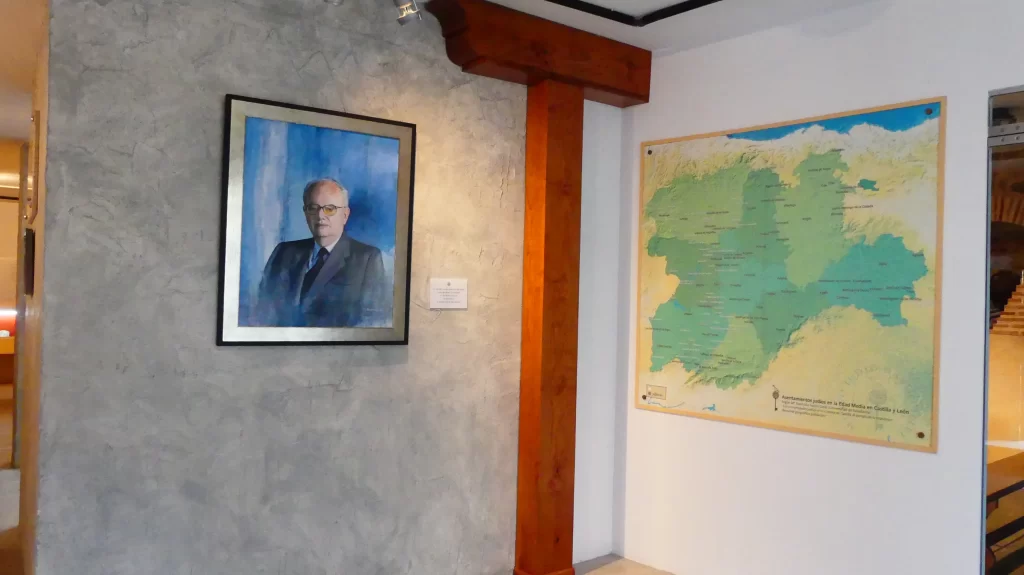
But before continuing with this account, it is worth reviewing the history of this singular institution and the origin of its name. The Museo Judío de Béjar was the initiative of a very singular man, curious, hardworking, and a great philanthropist, David Melul, who, with the help of its current director, Antonio Avilés, gave life to this dream of creating this center of Jewish culture in the heart of the Salamanca mountains.
On the museum’s pages, we found this short biography of Melul, which we reproduce here in translation: “David Melul, creator and patron of the museum that bears his name, was born in Melilla on April 20, 1928. In 1946 he arrived in Béjar to study at what was then called the School of Industrial Experts, today the Higher Technical School of Industrial Engineering of the University of Salamanca. He spent several years in the city and completed his textile engineering studies in Tarrasa. He settled in Barcelona, specifically in the building where the headquarters of the Jewish community was located, on Avenida de Roma. There he met his wife, Adelina Nacmías, with whom he had five children: Daniel, Rafael, Raquel, Mario, and Víctor. It was also in this city that he launched his first industrial projects through a pioneering and innovative textile company focused on household products: Hispano Tex.”
Later, throughout his long life, Melul remained linked to Béjar and visited the city on many occasions, and apparently, “on one of those trips, at the end of the 1990s, he promoted the creation of this museum based on his knowledge of the city’s Hebrew past and on his interest in contributing, through his help, to the dissemination of Jewish culture and history,” as the museum’s website continues to inform us.
THE SECOND JEWISH MUSEUM IN SPAIN, AFTER THE ONE IN TOLEDO
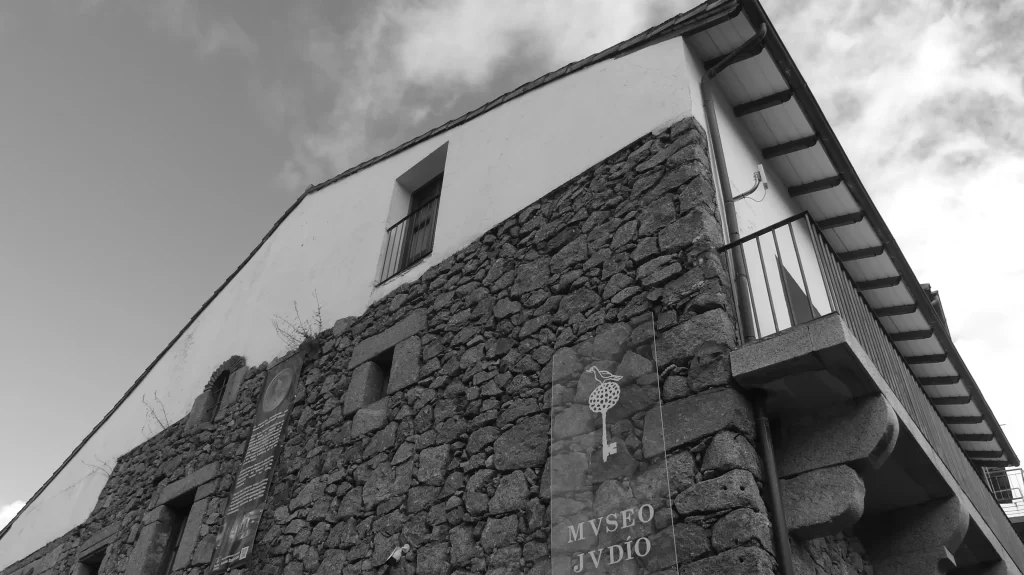
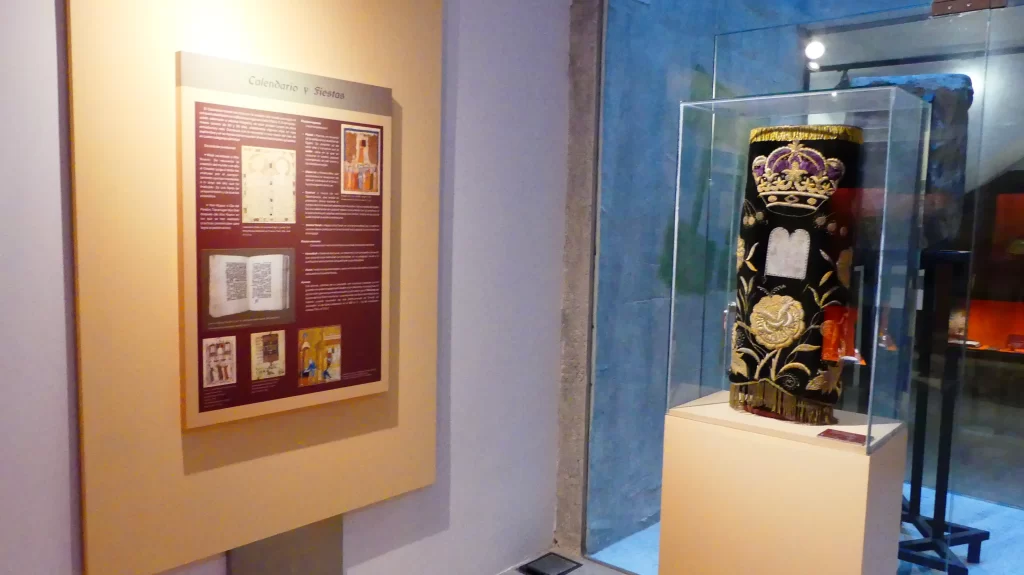
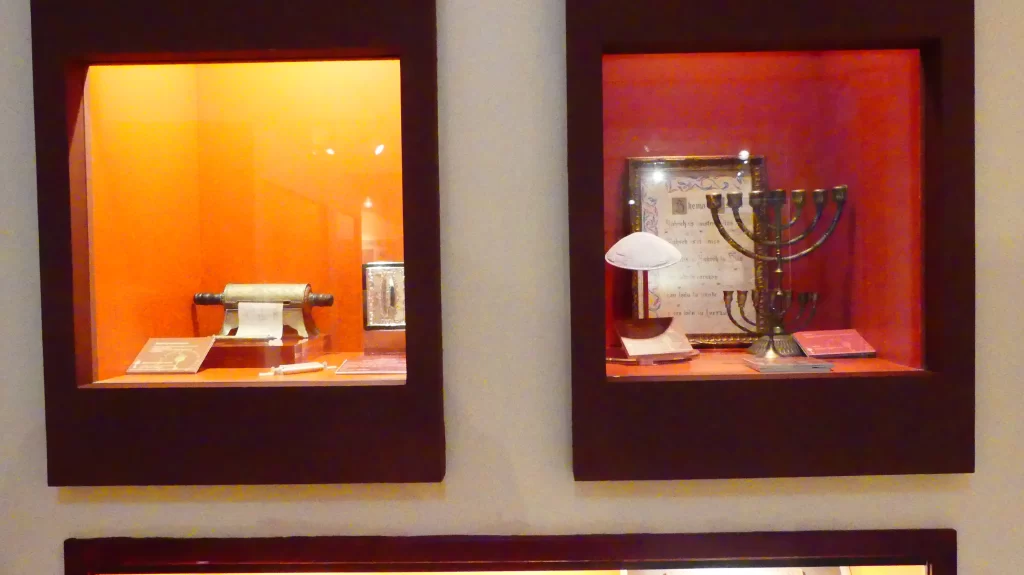
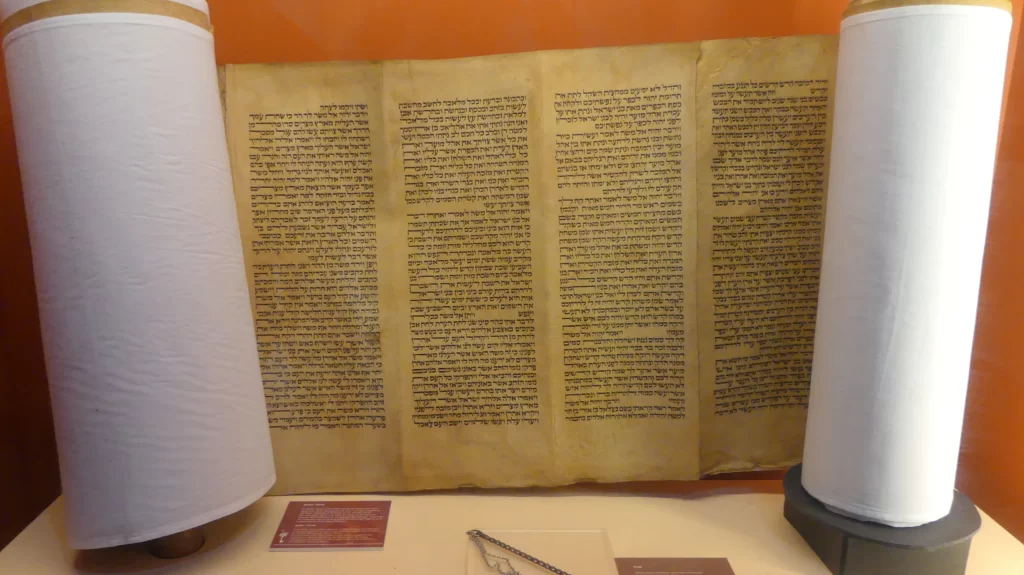
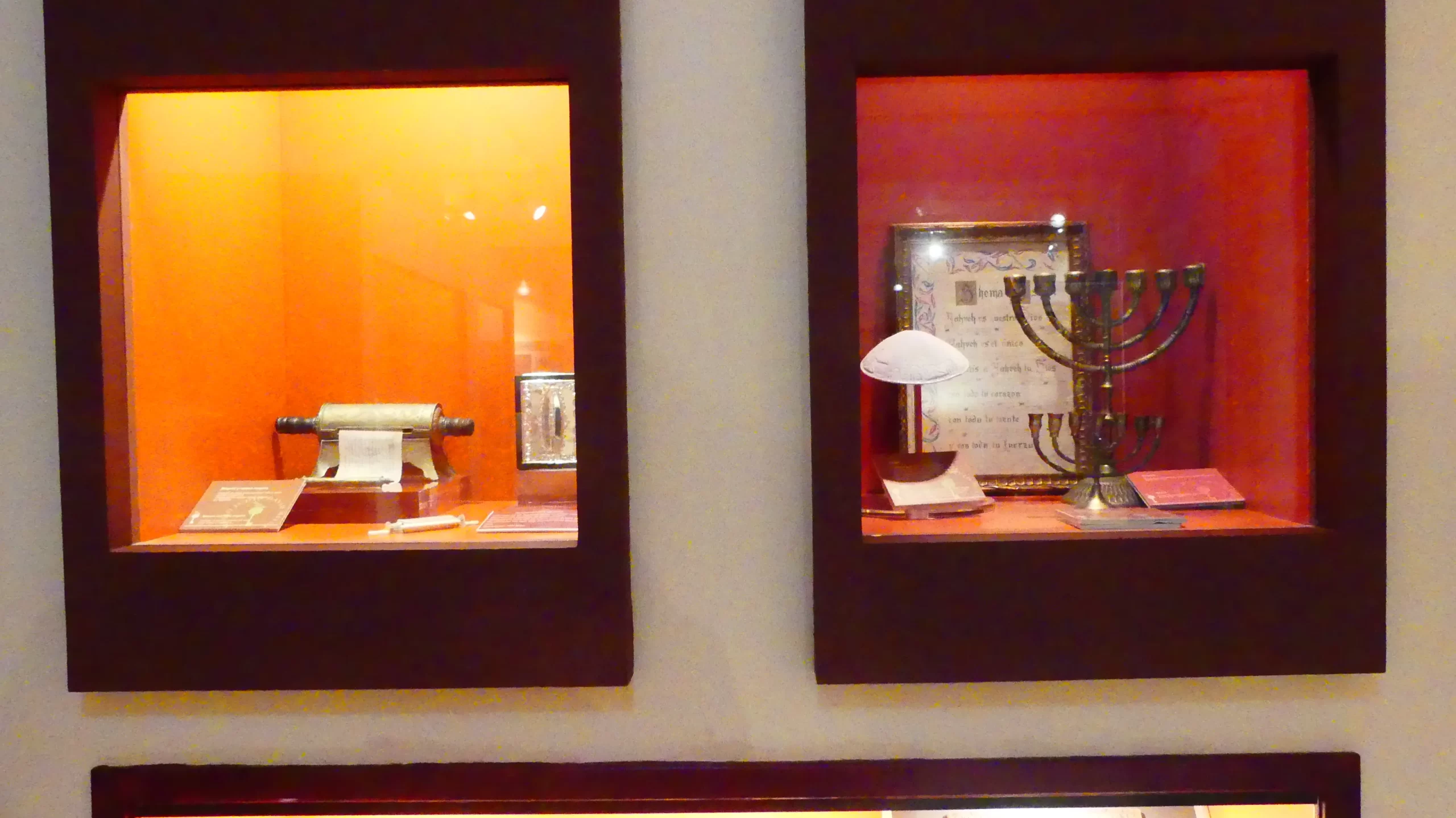
With Melul’s financial support, after he purchased the house where the project is located, and with the invaluable help of the Ayuntamiento de Béjar, the museum opened its doors as the second Jewish museum in Spain, the first and best known being that of Toledo. The museum is spread over three floors, with several sections distributed across them: on the first level the visitor will find information on the history of the Jews in Spain; on the first floor there is a section dedicated to the conversos in Spain after the expulsion; and finally, on the second floor, completing the cycle of those who decided to remain in their faith and leave Spain, there is the section dedicated to the Sephardim. The museum also has a lecture hall, a small library, closed, and a researchers’ room, as well as toilets on the ground floor and a small shop with some objects and books relating to Jewish culture. The place opened its doors for the first time in 2006, and thousands of visitors have already passed through this peaceful space dedicated to our Hebrew roots.
Regarding the beautiful house that hosts this important institution in a city that once had an important and representative Jewish quarter, the museum’s website tells us that it is located in “a manor house from the mid or late fifteenth century, situated within a monumental ensemble made up of the Church of Santa María la Mayor, with a thirteenth-century Mudéjar apse, several interesting bourgeois houses, an old eighteenth-century textile factory with the coat of arms of Charles III on its façade, as well as the glove factory building, dating from the mid nineteenth century.”
Béjar, according to the chronicles and what we have been able to see in the museum, was a city that had an important Jewish quarter during the Middle Ages until, in 1492, the famous edict of the Catholic Monarchs abruptly ended forever that peaceful coexistence among Jews, Christians, and Muslims in what the Sephardim, still today, continue to call Sefarad. The Hebrew presence in this town, known for its past linked to an important textile industry that declined in the 1980s, dates back to the thirteenth century and gives it major importance in an area where significant Jewish life also existed in several nearby settlements, such as Hervás, which has one of the most important and best preserved Jewish quarters in Spain, and Plasencia, also regarded as an important Jewish center in that period.
This Museo Judío de Béjar, located very close to the Ducal Palace that once housed the Dukes of Béjar, invites us to learn about a past so closely tied to our heritage and identity that it is worth visiting, knowing, and learning a little more about our distant and also close origins, since without understanding our rich history we cannot understand the present. For all these reasons, these lines invite you to come to Béjar and learn something more about our history in this small museum, yet one great in knowledge, the Museo Judío David Melul.
Gallery
Article researched and curated by Ricardo Angoso.
The Jew Where project is collaborative. Do you have additional information, found an inaccuracy, or have historical photos of this location? Contact our team.
Community notes
Comments
Logged-in visitors can submit comments for moderation before they appear publicly.
No comments yet.
Log in to leave a comment. Go to Account.