

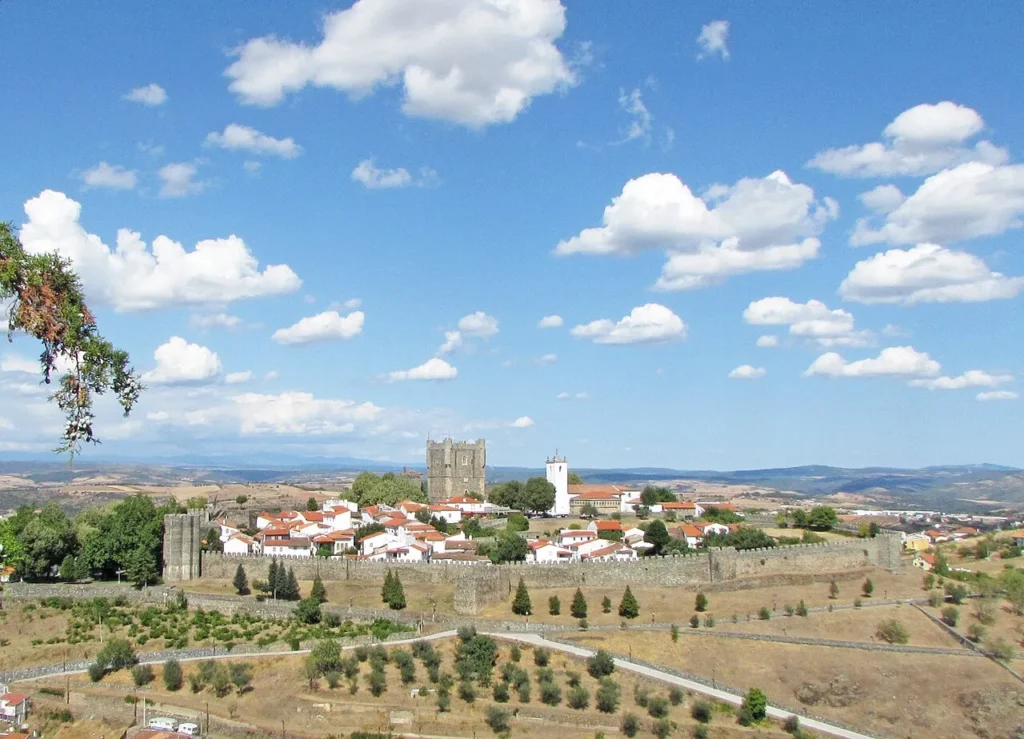
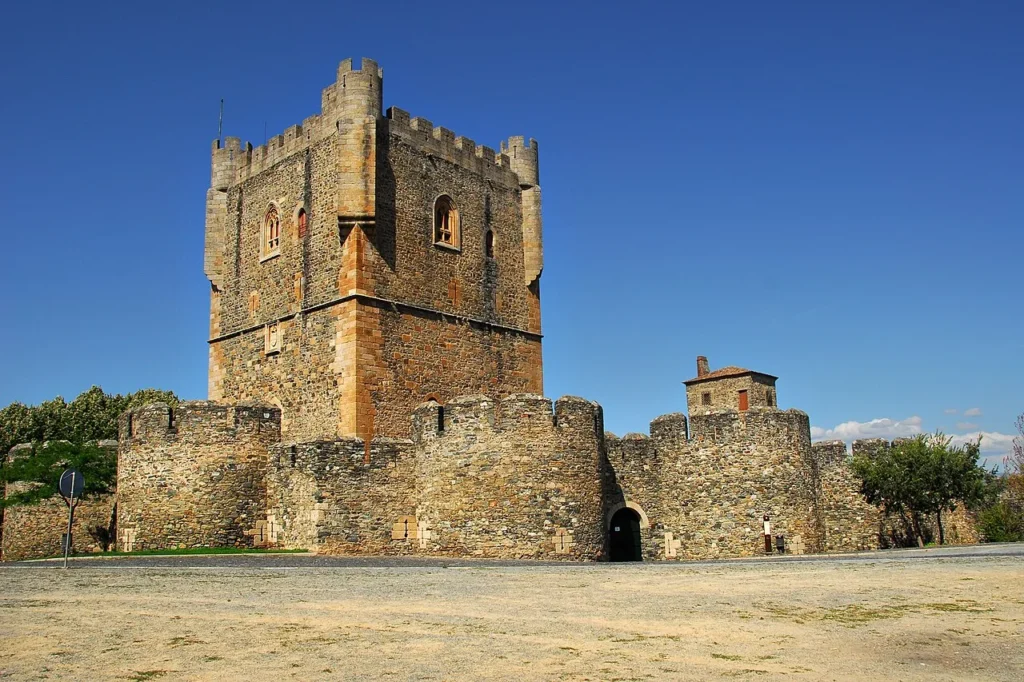
The Medieval Synagogue of Bragança is one of the documented traces of the Jewish community that lived in Bragança before the forced conversion of Portuguese Jews at the end of the fifteenth century. Its exact location cannot be securely identified today. However, the surviving references place the former synagogue inside the intramural area of the castle, within the older walled nucleus of the city.
The Medieval Synagogue of Bragança in the Sources
A relevant reference appears in the Tombo dos Bens do Mosteiro de Castro de Avelãs, made in 1501. It mentions a Rua da Synogua and a synagogue that, by then, was already associated with Lopo de Sousa, alcaide-mor of Bragança. This does not preserve a modern address. Even so, it confirms that the synagogue belonged to the documented urban topography of the old town.
The clearest municipal record dates from 25 July 1503. On that date, the Municipality of Bragança bought from Lopo de Sousa the houses that had been the synagogue of the Jews, together with their yard. The purpose was to transform the former synagogue into the town’s civil jail, since the existing jail was no longer adequate. On 8 August 1503, the transaction was completed through the exchange of the old jail houses and the transfer of the former synagogue to municipal use.
From Synagogue to Jail
This change is historically significant. It shows how a building once connected to organized Jewish religious life was absorbed into the civic structures of the post-conversion town. The synagogue did not survive as a place of worship. It was converted into a prison, reflecting the broader destruction of public Jewish life in Portugal after the royal measures of 1496-1497.
A later inquisitorial reference also preserves the memory of the site. In the 1599 process of Brites Pires, from Bragança, the former Jewish synagogue is associated with the house of Gonçalo Aires de Sá, described as a place that had once been the “mesquita dos judeus.” This reference should be read with caution. It comes from an inquisitorial context and should not be treated as precise topographical proof. However, it indicates that the memory of the medieval synagogue still circulated in Bragança at the end of the sixteenth century.
A Documented Site, Not a Preserved Building
By 1721, the houses of the old synagogue no longer existed. The sources state that only a well remained on the site. For this reason, the Medieval Synagogue of Bragança should be presented as a documented historical site with an approximate intramural location, not as a preserved synagogue.
Its importance lies in the strength of the documentary record. The Medieval Synagogue of Bragança helps identify the place of Jewish communal life inside the walled town and shows, with unusual clarity, how a communal Jewish space was transformed into part of the municipal infrastructure of a Christian city.
Gallery
Sources & Bibliography
- PIGNATELLI, Marina. Cadernos de Orações Cripto-Judaicas e Notas Etnográficas dos Judeus e Cristãos-Novos de Bragança. Local: Lisbon. Editora: Etnográfica Press. Ano: 2019
- ARQUIVO NACIONAL DA TORRE DO TOMBO. Tribunal do Santo Ofício, Inquisição de Coimbra, processo n.º 7933. Fol. 68, Auto de Fé de 19/12/1599, cited in Marina Pignatelli. Local: Lisbon. Editora: Arquivo Nacional da Torre do Tombo. Ano: 1599
- NOÉ, Paula. Cadeia Civil de Bragança. IPA Antigo PT010402420387. Local: Bragança. Editora: IHRU / SIPA. Ano: 2011
- ANDRADE, António Júlio; MARTINS, Henrique. Nós Transmontanos, Sefarditas e Marranos: Os Ledesma. Editora: Jornal Nordeste. Ano: n.d
Article researched and curated by Jew Where.
The Jew Where project is collaborative. Do you have additional information, found an inaccuracy, or have historical photos of this location? Contact our team.
Community notes
Comments
Logged-in visitors can submit comments for moderation before they appear publicly.
No comments yet.
Log in to leave a comment. Go to Account.