Skip to content
Maisel Synagogue

Maisel Synagogue

"Founded by Mordecai Maisel in 1592, the Maisel Synagogue preserves the memory of Renaissance Prague Jewry and now houses a Jewish Museum exhibition."

Back to Map

The Maisel Synagogue stands on Maiselova Street, in Josefov, the former Jewish Town of Prague. It is one of the historic synagogues of Prague and is today part of the Jewish Museum in Prague.

Mordecai Maisel and Renaissance Prague

The Maisel Synagogue was founded by Mordecai ben Samuel Maisel, one of the leading Jewish figures of Prague in the late sixteenth century. Maisel was a financier, merchant, court Jew, community leader and benefactor of the Jewish Town during the reign of Emperor Rudolf II.

In 1591, Rudolf II granted Maisel a special privilege allowing him to build a private synagogue. Construction took place between 1590 and 1592, under Judah Tzoref de Herz and Josef Wahl. The synagogue was ceremonially opened on Simchat Torah in 1592.

The original building was a large Renaissance prayer house with three naves, twenty pillars and women’s side aisles. For about a century, it was one of the largest and most prominent buildings in the Prague ghetto. Jewish memory associated it with Maisel’s wealth, his social position and his role as a builder of the Jewish Town.

Maisel’s importance was not limited to this synagogue. He used his fortune to support communal institutions, charity, education and public works. His patronage was connected to the Jewish Town Hall, the High Synagogue, public baths, an alms-house, communal buildings and the paving of streets in the Jewish Town.

After Maisel’s death in 1601, his estate became the object of confiscation and long legal disputes. The synagogue, which he had intended for the Prague Jewish community, was also caught within these conflicts over inheritance, imperial privilege and communal ownership.

Fire, reconstruction and the redevelopment of Josefov

The Maisel Synagogue was severely damaged in the great fire of the Prague ghetto in 1689. Its vaulting collapsed, and the building was later shortened and rebuilt. Further alterations followed in the nineteenth century.

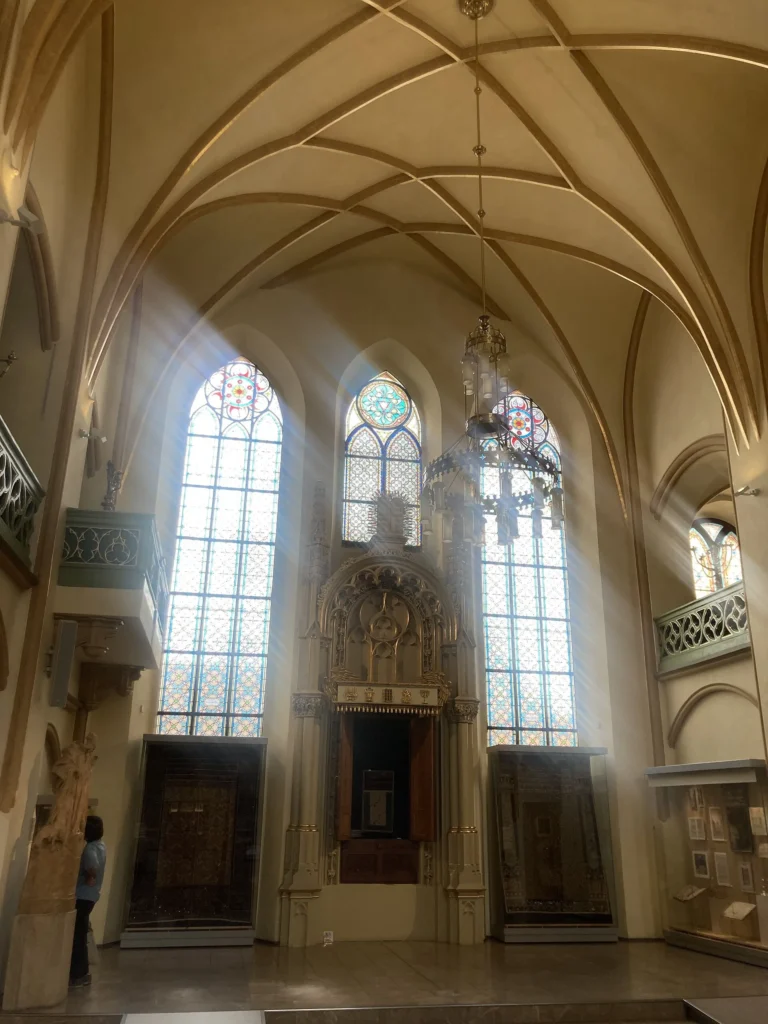
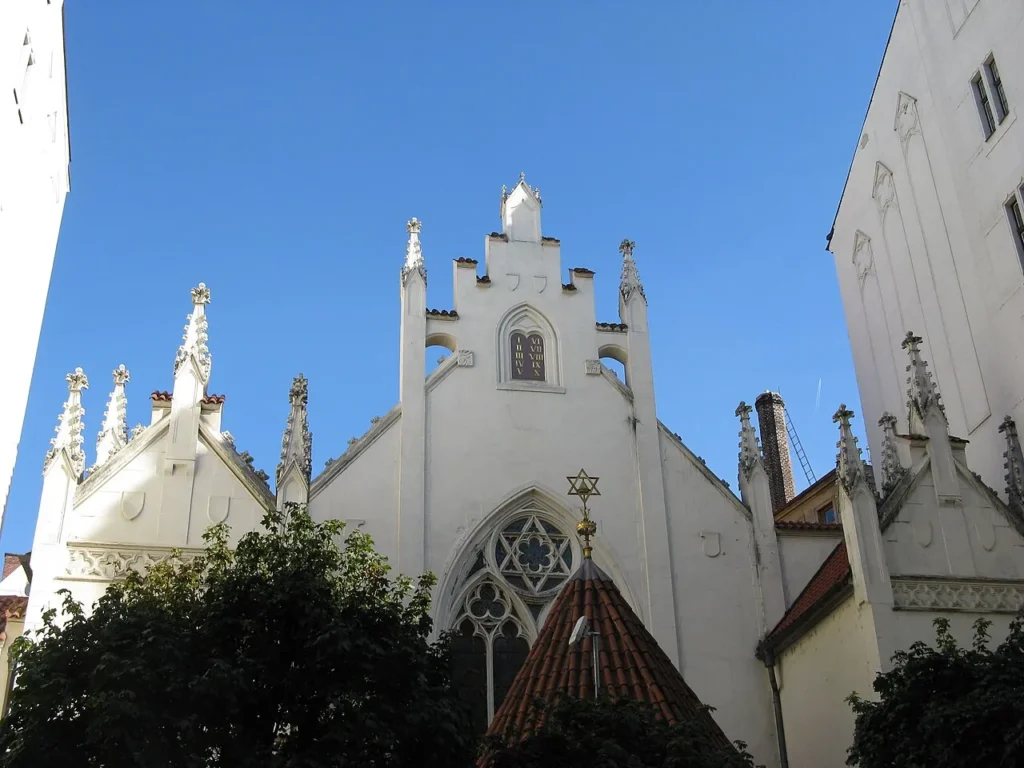
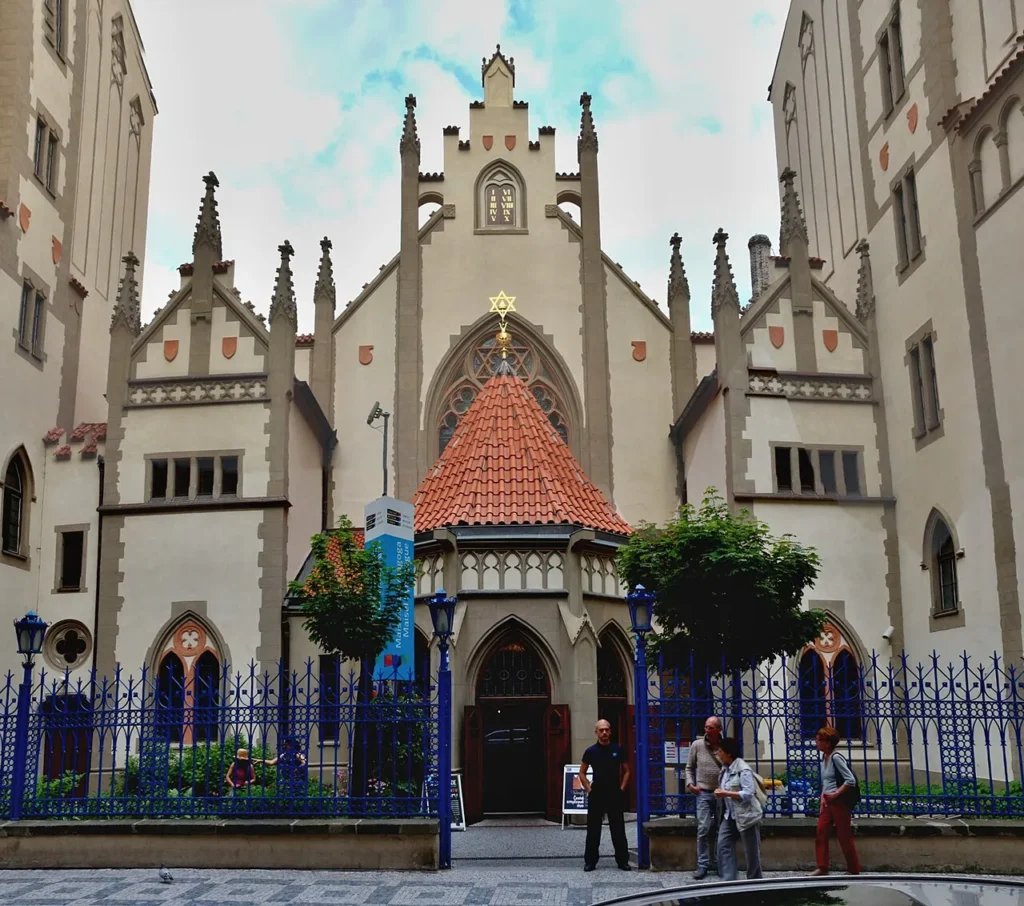
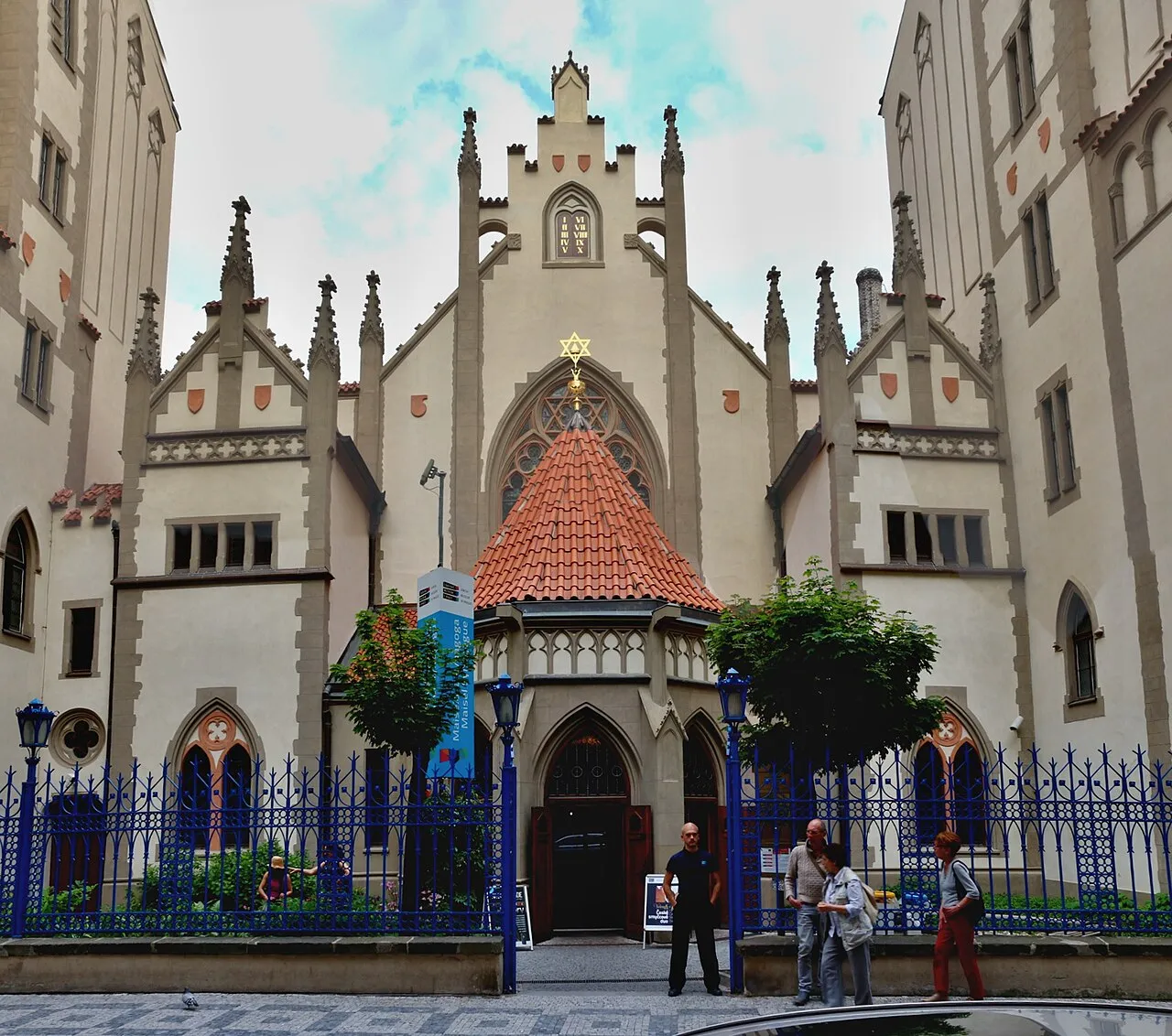
The original Renaissance form did not survive. The present Neo-Gothic appearance belongs mainly to the redevelopment of the Jewish Town at the turn of the nineteenth and twentieth centuries, when Josefov was transformed through large-scale urban clearance and reconstruction.

Within this altered urban setting, the Maisel Synagogue lost the dominant position it had held in the older ghetto. Even so, the building remained one of the main material references to the early modern Jewish Town and to the memory of Mordecai Maisel.

Maisel Synagogue and the Jewish Museum in Prague

During the Second World War, the Maisel Synagogue was used by the Nazis as a warehouse for confiscated Jewish property. After the war, the building passed into the care of the Jewish Museum in Prague and was used as a depository. In 1965, a permanent exhibition of synagogue silver opened there.

Today, the Maisel Synagogue houses the exhibition Jews in the Bohemian Lands, 10th-18th Centuries. The exhibition presents Jewish settlement, communal life, scholarship, legal status, social relations, discrimination, anti-Jewish violence and early modern Jewish culture in Bohemia and Moravia.

The central part of the exhibition focuses on Renaissance Prague Jewry, including Mordecai Maisel, the Jewish Town, the Golem legend and the urban world of Prague’s Jews before the modern redevelopment of Josefov.

Gallery
Videos

Sources & Bibliography

Article researched and curated by Jew Where.

The Jew Where project is collaborative. Do you have additional information, found an inaccuracy, or have historical photos of this location? Contact our team.
Maisel Synagogue
Czech Republic / Prague / Civic & Cultural

Maisel Synagogue

"Founded by Mordecai Maisel in 1592, the Maisel Synagogue preserves the memory of Renaissance Prague Jewry and now houses a Jewish Museum exhibition."

Location
Maiselova 10, 110 00 Prague 1, Josefov, Czechia
Opening Hours
1 January 2026: 11:00-16:30; 2 January-31 March 2026: 09:00-16:30; 1 April-30 April 2026: 09:00-18:00; 1 May-31 August 2026: 09:00-19:00; 1 September-17 October 2026: 09:00-18:00; 18 October-23 December 2026, 25 December-31 December 2026: 09:00-16:30; 24 December 2026: 09:00-14:00; Saturdays and Jewish holidays: Closed

The Maisel Synagogue stands on Maiselova Street, in Josefov, the former Jewish Town of Prague. It is one of the historic synagogues of Prague and is today part of the Jewish Museum in Prague.

Mordecai Maisel and Renaissance Prague

The Maisel Synagogue was founded by Mordecai ben Samuel Maisel, one of the leading Jewish figures of Prague in the late sixteenth century. Maisel was a financier, merchant, court Jew, community leader and benefactor of the Jewish Town during the reign of Emperor Rudolf II.

In 1591, Rudolf II granted Maisel a special privilege allowing him to build a private synagogue. Construction took place between 1590 and 1592, under Judah Tzoref de Herz and Josef Wahl. The synagogue was ceremonially opened on Simchat Torah in 1592.

The original building was a large Renaissance prayer house with three naves, twenty pillars and women’s side aisles. For about a century, it was one of the largest and most prominent buildings in the Prague ghetto. Jewish memory associated it with Maisel’s wealth, his social position and his role as a builder of the Jewish Town.

Maisel’s importance was not limited to this synagogue. He used his fortune to support communal institutions, charity, education and public works. His patronage was connected to the Jewish Town Hall, the High Synagogue, public baths, an alms-house, communal buildings and the paving of streets in the Jewish Town.

After Maisel’s death in 1601, his estate became the object of confiscation and long legal disputes. The synagogue, which he had intended for the Prague Jewish community, was also caught within these conflicts over inheritance, imperial privilege and communal ownership.

Fire, reconstruction and the redevelopment of Josefov

The Maisel Synagogue was severely damaged in the great fire of the Prague ghetto in 1689. Its vaulting collapsed, and the building was later shortened and rebuilt. Further alterations followed in the nineteenth century.

The original Renaissance form did not survive. The present Neo-Gothic appearance belongs mainly to the redevelopment of the Jewish Town at the turn of the nineteenth and twentieth centuries, when Josefov was transformed through large-scale urban clearance and reconstruction.

Within this altered urban setting, the Maisel Synagogue lost the dominant position it had held in the older ghetto. Even so, the building remained one of the main material references to the early modern Jewish Town and to the memory of Mordecai Maisel.

Maisel Synagogue and the Jewish Museum in Prague

During the Second World War, the Maisel Synagogue was used by the Nazis as a warehouse for confiscated Jewish property. After the war, the building passed into the care of the Jewish Museum in Prague and was used as a depository. In 1965, a permanent exhibition of synagogue silver opened there.

Today, the Maisel Synagogue houses the exhibition Jews in the Bohemian Lands, 10th-18th Centuries. The exhibition presents Jewish settlement, communal life, scholarship, legal status, social relations, discrimination, anti-Jewish violence and early modern Jewish culture in Bohemia and Moravia.

The central part of the exhibition focuses on Renaissance Prague Jewry, including Mordecai Maisel, the Jewish Town, the Golem legend and the urban world of Prague’s Jews before the modern redevelopment of Josefov.

Timeline

  • 1590-1592 The Maisel Synagogue was built in Renaissance form for Mordecai ben Samuel Maisel.
  • 1591 Emperor Rudolf II granted Maisel a privilege allowing him to build a private synagogue.
  • 1592 The synagogue was ceremonially opened on Simchat Torah.
  • 1601 Mordecai Maisel died, and his estate became the object of confiscation and legal disputes.
  • 1689 The great fire of the Prague ghetto severely damaged the synagogue and caused the collapse of its vaulting.
  • 1862-1864 Alterations were carried out according to plans by J. W. Wertmüller.
  • Turn of the 19th and 20th centuries During the redevelopment of Josefov, the synagogue received its Neo-Gothic appearance.
  • Nazi occupation The building was used as a warehouse for confiscated Jewish property.
  • 1955 The Jewish Museum in Prague acquired the synagogue for use as a repository.
  • 1965 A permanent exhibition of synagogue silver opened in the building.
  • 2014-2015 The synagogue underwent refurbishment and modernization.
  • 2016 The exhibition Jews in the Bohemian Lands, 10th-18th Centuries opened to the public.
  • Present The Maisel Synagogue is part of the Jewish Museum in Prague and houses an exhibition on Jewish history in Bohemia and Moravia.

Sources & Bibliography

  1. Jewish Museum in Prague. Maisel Synagogue. Local: Prague. Editora: Jewish Museum in Prague. Ano: n.d. https://www.jewishmuseum.cz/en/explore/sites/maisel-synagogue
  2. Jewish Museum in Prague. Jews in the Bohemian Lands, 10th-18th Centuries. Local: Prague. Editora: Jewish Museum in Prague. Ano: n.d. https://www.jewishmuseum.cz/en/explore/permanent-exhibitions/jews-in-the-bohemians-lands-10th-to-18th-century
  3. Jewish Museum in Prague. New permanent exhibition in the Maisel Synagogue opens to the public. Local: Prague. Editora: Jewish Museum in Prague. Ano: 2016. https://www.jewishmuseum.cz/news-detail/83-430/new-permanent-exhibition-in-the-maisel-synagogue
  4. Jewish Museum in Prague. Opening hours. Local: Prague. Editora: Jewish Museum in Prague. Ano: 2026. https://www.jewishmuseum.cz/en/info/visit/opening-hours
  5. Jewish Museum in Prague. Accessibility. Local: Prague. Editora: Jewish Museum in Prague. Ano: n.d. https://www.jewishmuseum.cz/en/info/visit/accessibility
  6. YIVO Institute for Jewish Research. Maisel, Mordecai. The YIVO Encyclopedia of Jews in Eastern Europe. Editora: YIVO Institute for Jewish Research. Ano: n.d. https://encyclopedia.yivo.org/article.aspx/Maisel_Mordecai
  7. YIVO Institute for Jewish Research. Prague. The YIVO Encyclopedia of Jews in Eastern Europe. Editora: YIVO Institute for Jewish Research. Ano: n.d. https://encyclopedia.yivo.org/article/361
  8. Pavlát, Leo. The Jewish Museum in Prague During the Second World War. European Judaism, vol. 41, no. 1. Editora: Berghahn Books. Ano: 2008. https://www.jstor.org/stable/41444625
  9. Kieval, Hillel J. Jewish Prague, Christian Prague, and the Castle in the City’s Golden Age. Jewish Studies Quarterly, vol. 18, no. 2. Editora: Mohr Siebeck. Ano: 2011. https://www.mohrsiebeck.com/artikel/jewish-prague-christian-prague-and-the-castle-in-the-citys-golden-age-101628094457011796019692
  10. Greenblatt, Rachel L. To Tell Their Children: Jewish Communal Memory in Early Modern Prague. Local: Stanford. Editora: Stanford University Press. Ano: 2014. https://scholarworks.brandeis.edu/esploro/outputs/book/To-tell-their-children-Jewish-communal/9924033022101921
  11. Giustino, Cathleen M. Tearing Down Prague’s Jewish Town: Ghetto Clearance and the Legacy of Middle-Class Ethnic Politics around 1900. Editora: East European Monographs. Ano: 2003. https://books.google.com/books?id=RMxtAAAAMAAJ

Additional Information

Official website: https://www.jewishmuseum.cz/en/explore/sites/maisel-synagogue
Email: [email protected]
Phone: +420 222 749 460
Instagram: https://www.instagram.com/jewishmuseum_prague
Facebook: https://www.facebook.com/zidovskemuzeumvpraze
YouTube: https://www.youtube.com/channel/UCZrtwb3aubXq0new6Rz7FzQ
Current use of the address: The building no longer functions as an active synagogue; it is administered by the Jewish Museum in Prague and houses the exhibition Jews in the Bohemian Lands, 10th-18th Centuries.

Article researched and curated by Jew Where.

The Jew Where project is collaborative. Do you have additional information, found an inaccuracy, or have historical photos of this location? Contact our team.