

Jewish presence in Loulé is secure and well documented from the fourteenth century onward, when municipal sources and historiography begin to record the community with clarity. For earlier periods, the reference bibliography used for Loulé does not provide consolidated direct mentions, so the historically “secure” narrative effectively begins in the Late Middle Ages.
An important milestone appears in 1359, during the reign of King Pedro I, associated with a policy of urban segregation that imposed separate quarters for Jews and Muslims, a clear sign that the Jewish community existed and was recognized as a social body within the town.
In the fifteenth century, the documentation becomes particularly concrete. On 7 April 1402, Jews took part in a municipal council meeting, demonstrating a degree of civic integration that is relatively rare in the Portuguese context. On 12 March 1409, the synagogue of Loulé appears explicitly as the setting for a formal act: the rabbi of the community, Isaac Cofem, appointed guardians for two orphans, Ester and Rica (or Rainha), daughters of the late Rabbi Moom. The oath was taken “on a book of their law”, with named Jewish witnesses. The same episode also reveals real tensions with municipal justice, including the seizure of household goods, showing how town authority could override the internal jurisdiction of the Jewish community.
The community is also visible in the local economy through municipal supply records. The so-called Book of the Distribution of Fruit (1450) is one of the most expressive documents, preserving signatures in Hebrew and Arabic alongside Portuguese. This provides a direct image of practical coexistence and of identities recognized within everyday administrative life.
Judiaria Velha and Judiaria Nova
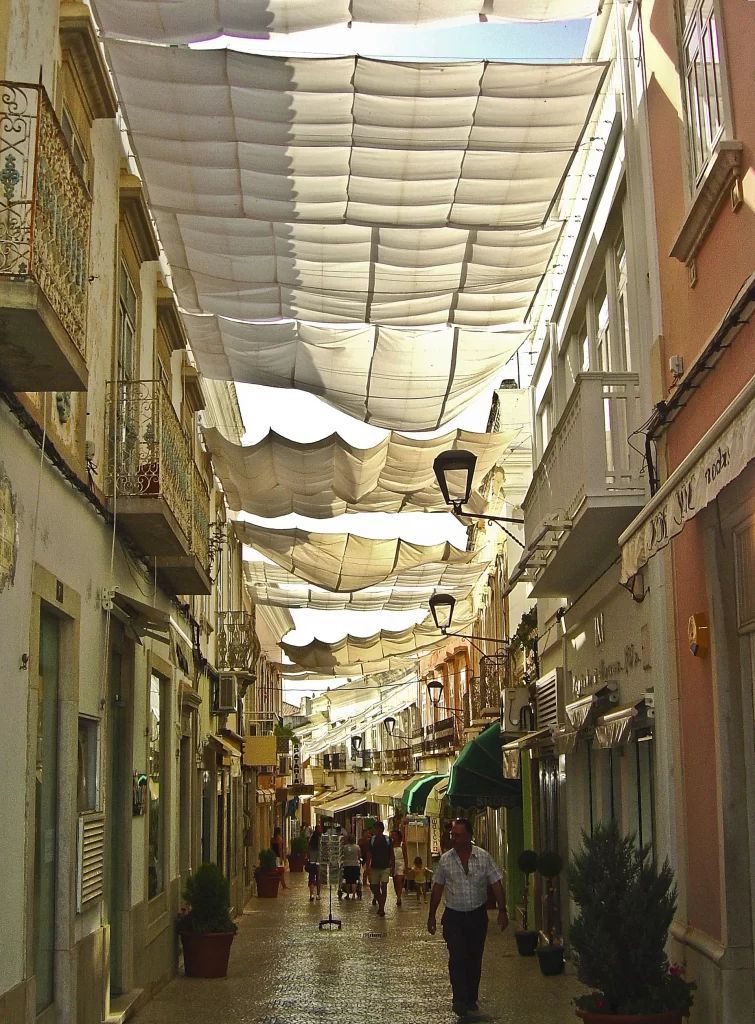
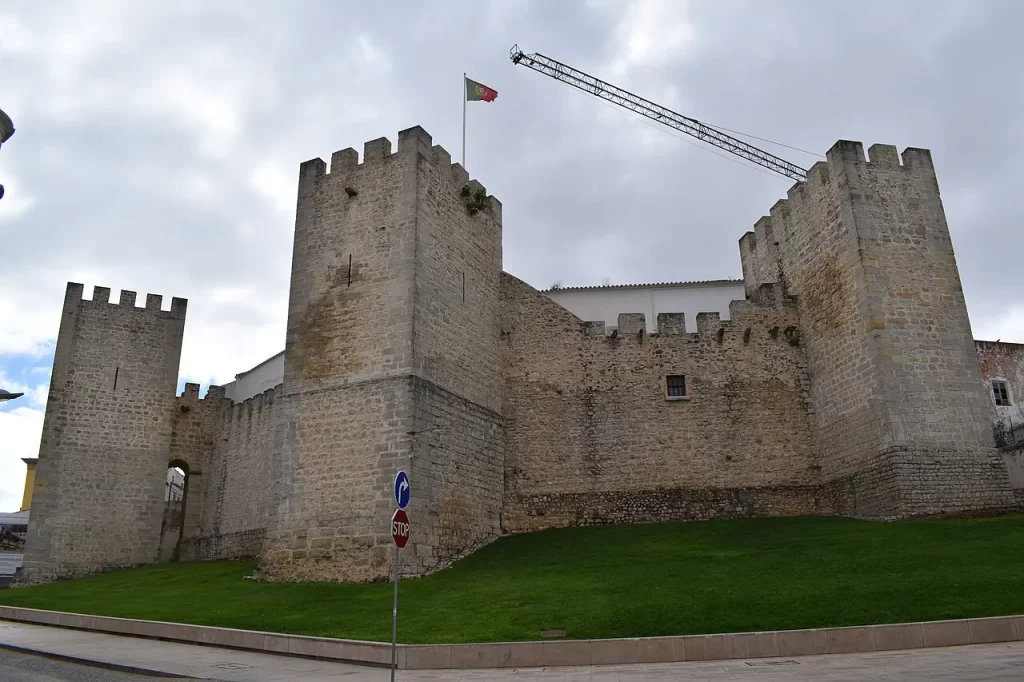
Urban reconstruction places the Judiaria Velha within the town walls, between the Porta de Silves and the Porta Nova, with its synagogue associated with this sector. In 1492, the community requested a new, more segregated quarter, and the documentation describes the transition to a Judiaria Nova. On 26 November 1492, the corregedor of the Algarve, Vasco Pereira, met “at the door of the old judiaria”, granted the Jews a street “more cleared of Christians”, and ordered the construction of a clearly marked portal, with a brick arch, a gable, and doors.
The same line of urban reconstruction indicates that the new quarter was organized between the former residential area and Rua de João Boto, which led south to the Porta de Faro. The community living there had a strong presence of Jewish craftsmen, artisans and people of the trades, such as blacksmiths, shoemakers, tailors, shearers, and weavers, alongside individuals connected to agriculture and to more prestigious activities, including medicine.
Gallery
Sources & Bibliography
- TAVIM, José Alberto Rodrigues da Silva. Judeus de Loulé nos séculos XIV-XV. No prolongamento do al-Andaluz. Local: Loulé. Editora: Câmara Municipal de Loulé, Arquivo Municipal. Ano: 2018
- TAVIM, José Alberto Rodrigues da Silva; MUCZNIK, Lúcia Liba. Jóias da documentação judaica medieval portuguesa. In Os judeus na Península Ibérica durante a Idade Média: análise das suas fontes. Local: Coimbra. Editora: Almedina. Ano: 2018
- BOTÃO, Maria de Fátima. A paisagem urbana de Loulé nos finais da Idade Média. In Actas do III Congresso Histórico de Guimarães, D. Manuel e a sua época. Local: Guimarães. Editora: Câmara Municipal de Guimarães. Ano: 2004
- Município de Loulé. História. Local: Loulé. Editora: Câmara Municipal de Loulé. Ano: n.d
- PESQUISA GERAL - Património Cultural. Banhos Islâmicos de Loulé. Local: n.d. Editora: Património Cultural, I.P. Ano: n.d
Article researched and curated by Jew Where.
The Jew Where project is collaborative. Do you have additional information, found an inaccuracy, or have historical photos of this location? Contact our team.
Community notes
Comments
Logged-in visitors can submit comments for moderation before they appear publicly.
No comments yet.
Log in to leave a comment. Go to Account.