

Inaugurated on May 18, 1904, the Lisbon Synagogue, known as Shaaré Tikvá (Gates of Hope), is the principal synagogue in Lisbon and the first synagogue built from scratch in Portugal since the forced conversions and the official extinction of Portuguese Judaism at the end of the 15th century.
The building was the result of a long communal effort to move from modest, improvised houses of prayer to a purpose-built temple. Community records mention several prayer spaces operating in private houses from at least 1810, and they situate the long path toward institutional consolidation in the 19th century, including efforts to unify different congregational groups and services.
A decisive organizational step came in 1897, with the “Inaugural Session of the Israeli Committee of Lisbon” (Comité Israelita de Lisboa), chaired by Leão Amzalak and led by figures such as Simão Anahory and Abraham Bensaúde. A commission for the construction of a single synagogue was created, aiming to serve the whole community.
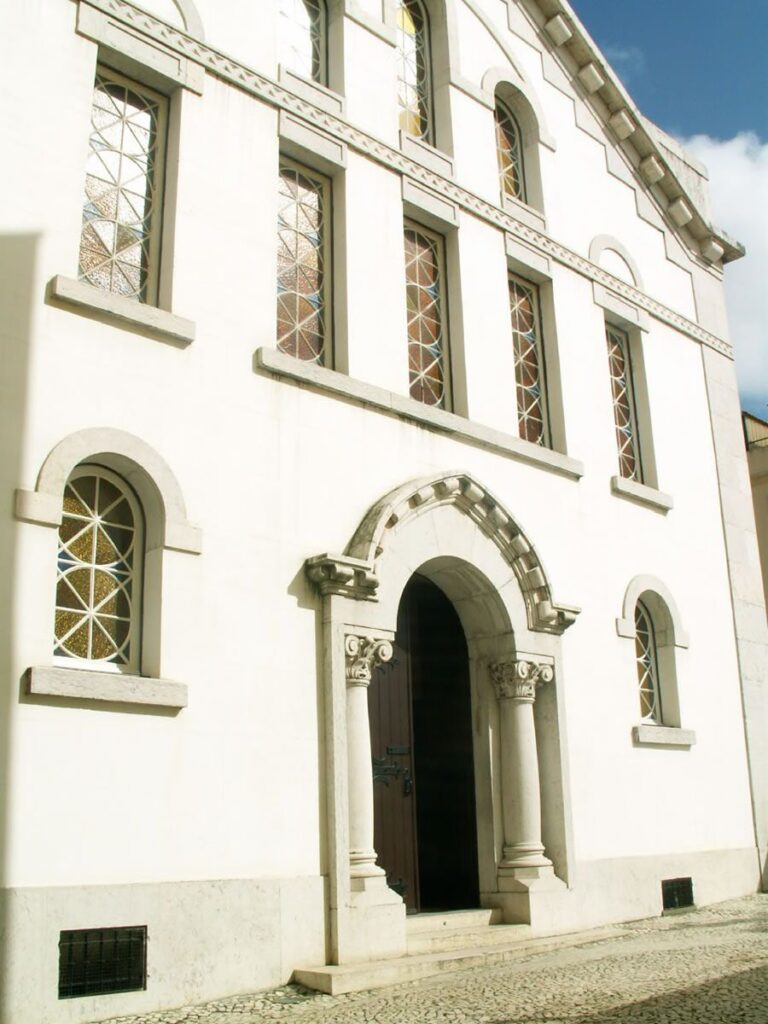
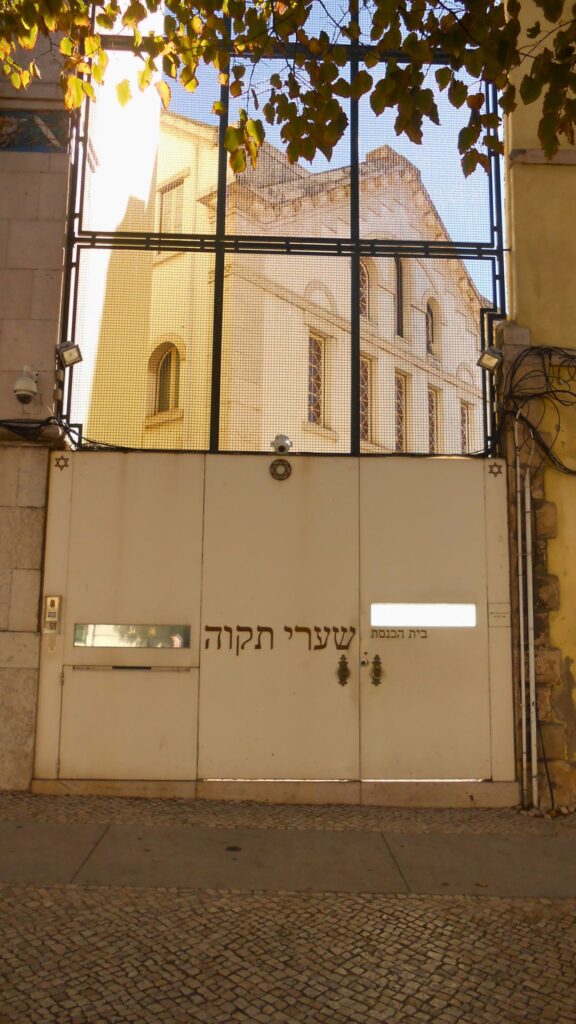
The architectural project was commissioned to Miguel Ventura Terra, one of the most prominent Portuguese architects of his time. The synagogue was built at no. 59 Rua Alexandre Herculano, but not as a street-facing monument. Portuguese law then restricted non-Catholic temples from having a façade directly visible from the public road, so the building was constructed inside a walled courtyard, accessed through a gate to the street, a spatial solution that became part of its identity.
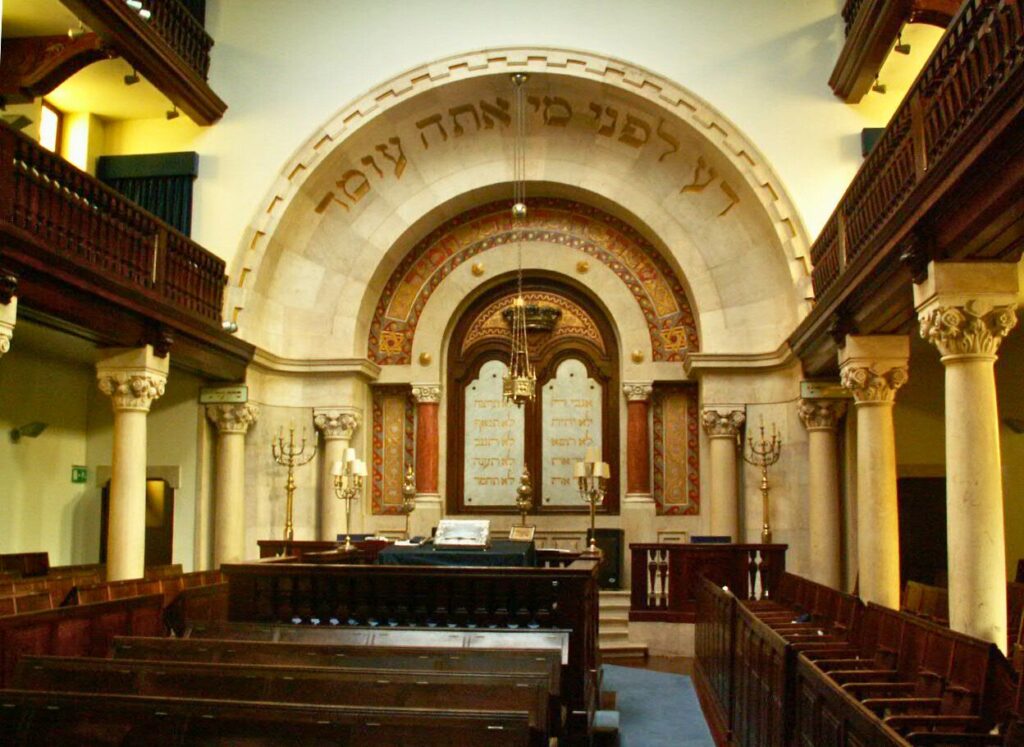
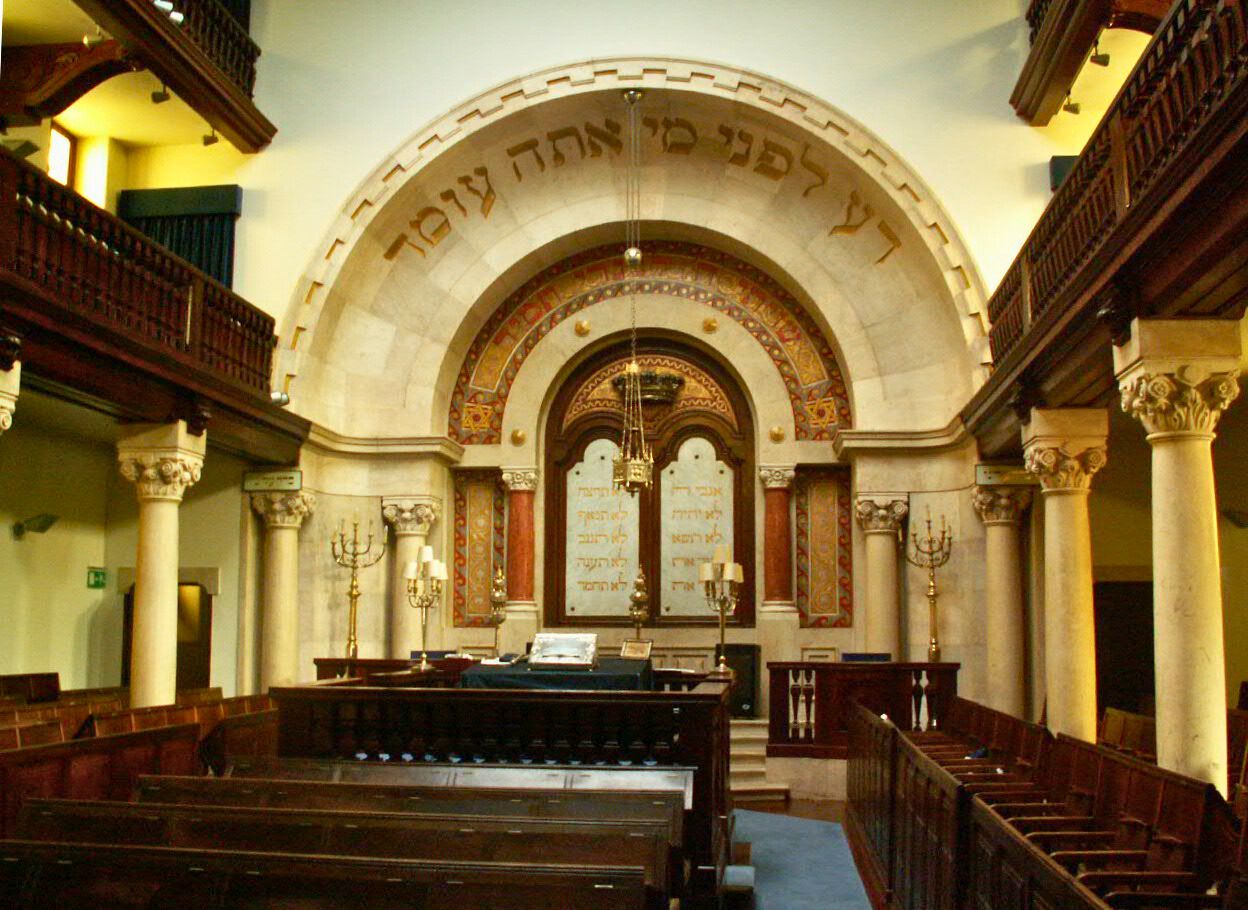
In plan and ritual orientation, Shaaré Tikvá follows a rectangular, symmetrical layout and faces Jerusalem. Heritage and tourism descriptions often emphasize its austere and eclectic language, combining historicist references and frequently described as drawing on Roman, Byzantine, and Romantic vocabularies.
The construction process itself is unusually well documented in communal memory. The cornerstone was laid on May 25, 1902, and the work proceeded under the direction of Abílio Pereira de Campos. The inauguration in 1904 gathered the Jewish community of Lisbon and included the Rabbi of Gibraltar, Moisés Benazim.
The building’s 20th-century life included significant transformation. The synagogue’s records describe restoration works and a major expansion directed by architect Carlos Ramos in 1948; other heritage summaries place this intervention in 1948–1949, reflecting a wider postwar phase of repair and enlargement.
A second decisive cycle came in the early 2000s. The synagogue has been classified as a Property of Public Interest (Imóvel de Interesse Público) since 2002. Around the centenary, extensive restoration and improvement works were carried out between 2002 and 2004, including changes to the boundary wall and updates to interior color and lighting, under architects João Seabra and Ricardo Gordon, with support from Portuguese state bodies, Lisbon City Council, and community-linked donors.
One heritage moment highlighted in the synagogue’s own narrative was the centenary commemoration held on September 9, 2004, attended by Israel’s Sephardic Chief Rabbi Shlomo Moshe Amar, the President of Portugal Jorge Sampaio, and representatives of other faith communities.
From a heritage perspective, Shaaré Tikvá is a document of modern Jewish reappearance in Lisbon, not only through its ritual life but also through its architecture of constrained visibility, a synagogue intentionally set back from the street. Its classification as Imóvel de Interesse Público places it within Portugal’s protected built heritage framework.
Gallery
Sources & Bibliography
- Comunidade Israelita de Lisboa. SYNAGOGUE. The construction of the Shaaré Tikvá Synagogue. Ano: n.d
- Câmara Municipal de Lisboa. Sinagoga portuguesa Shaare Tikva. Diretório da Cidade. Ano: n.d
- Visit Lisboa. Shaaré Tikvah Synagogue. Ano: n.d
- Câmara Municipal de Lisboa. Anexo III, Regulamento do PDM. Carta Municipal do Património Edificado e Arqueológico. Ano: 2010
- Trienal de Arquitectura de Lisboa. Sinagoga Shaaré Tikvá. Open House Lisboa. Ano: n.d
- e-cultura. Sinagoga Portuguesa Shaaré Tikvah. Ano: n.d
Article researched and curated by Jew Where.
The Jew Where project is collaborative. Do you have additional information, found an inaccuracy, or have historical photos of this location? Contact our team.
Community notes
Comments
Logged-in visitors can submit comments for moderation before they appear publicly.
No comments yet.
Log in to leave a comment. Go to Account.