Skip to content
Klausen Synagogue

Klausen Synagogue

"Largest synagogue of the former Prague ghetto, linked to the Klausen, the Chevra Kadisha, the wartime museum and Jewish customs exhibitions."

Back to Map

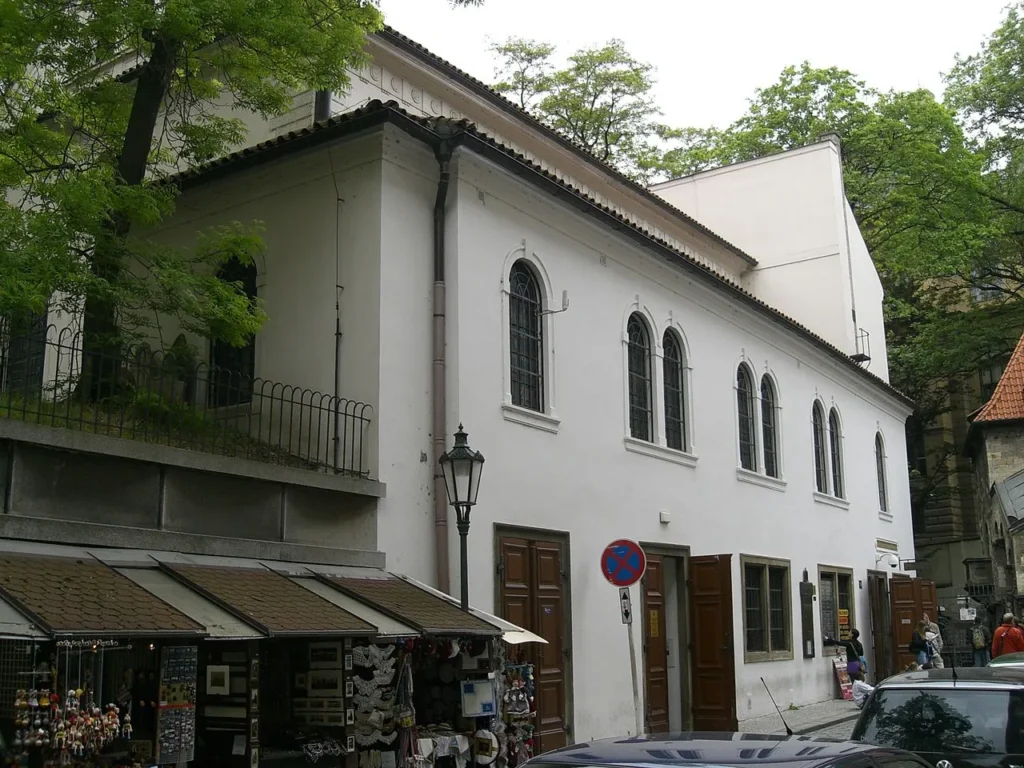
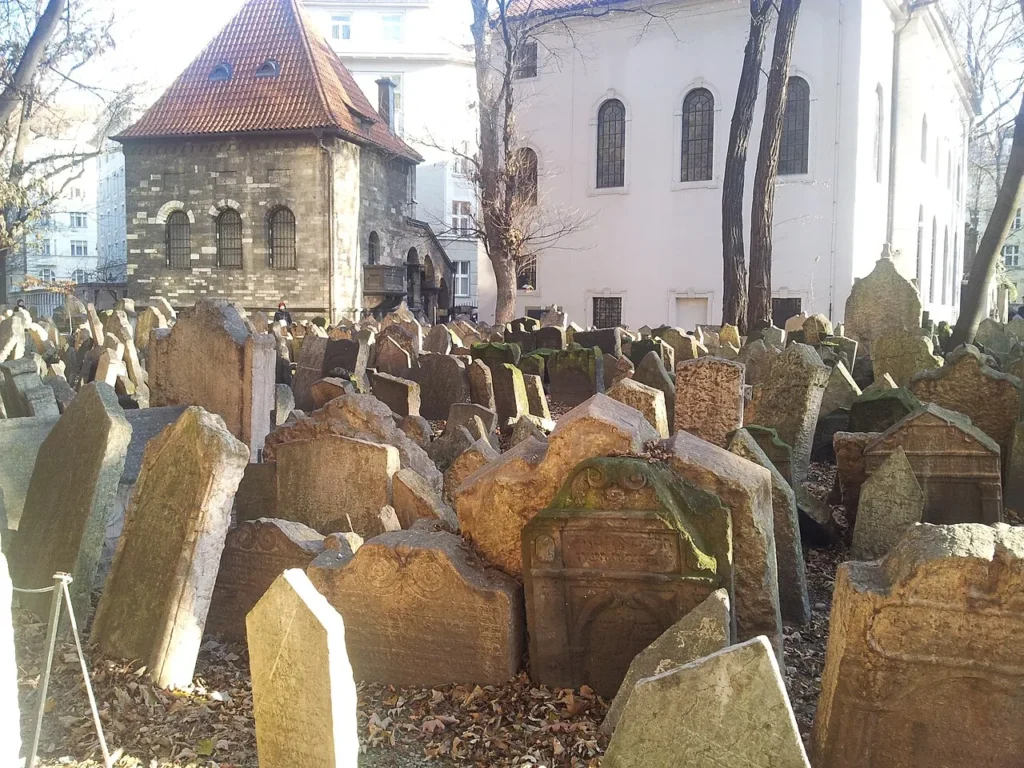
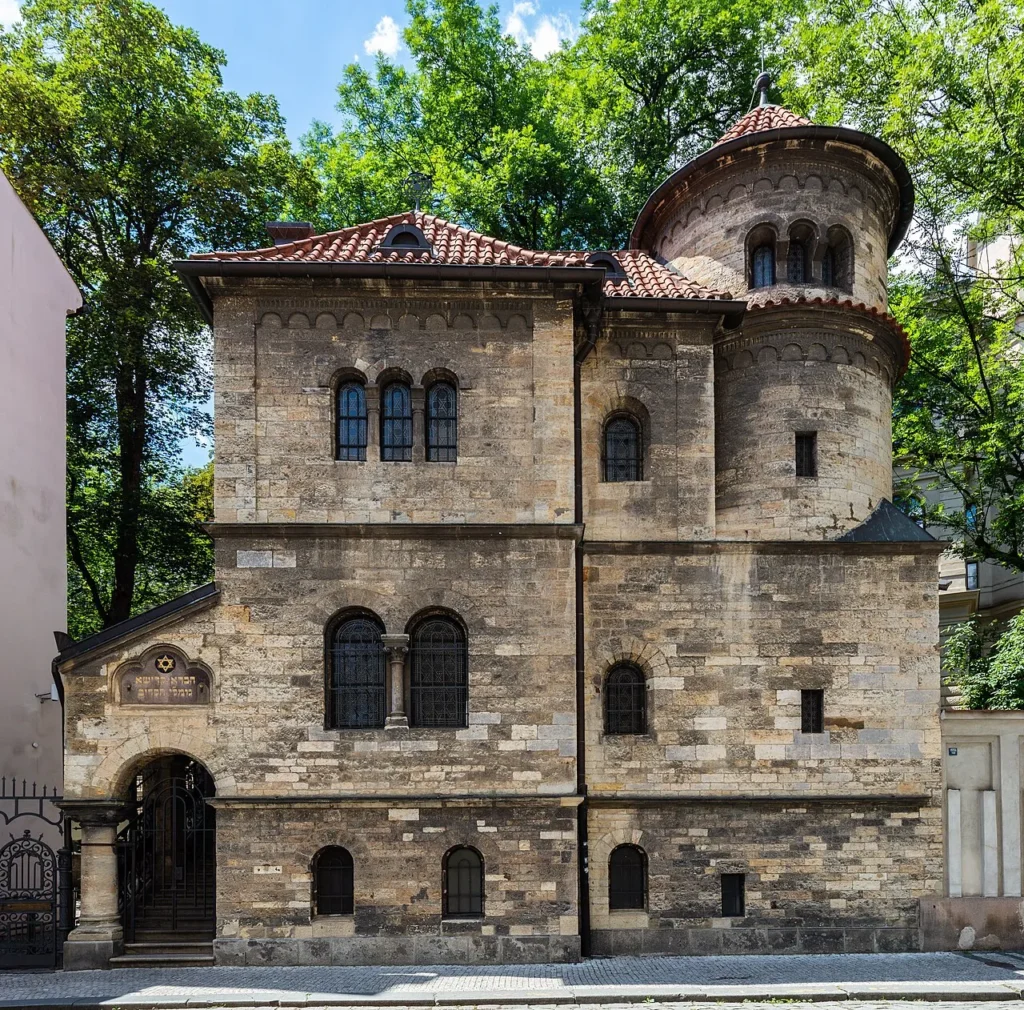
The Klausen Synagogue stands beside the Old Jewish Cemetery in Josefov, the former Jewish Town of Prague. It is the largest surviving synagogue of the former Prague ghetto and the only preserved example of early Baroque synagogue architecture in this part of the city.

From the Klausen to the Baroque synagogue

The importance of the site begins before the present building. In the sixteenth century, three smaller buildings stood here, known as the Klausen. The name refers to earlier enclosed or separate spaces used for study, prayer and communal functions. One of them was a yeshiva, a Talmudic school, associated with Rabbi Judah Loew ben Bezalel, the Maharal of Prague.

This means that the place was already connected to rabbinic study and Jewish learning before the Baroque synagogue was built. Its position beside the Old Jewish Cemetery also placed it close to one of the most sensitive communal spaces of the Prague Jewish Town.

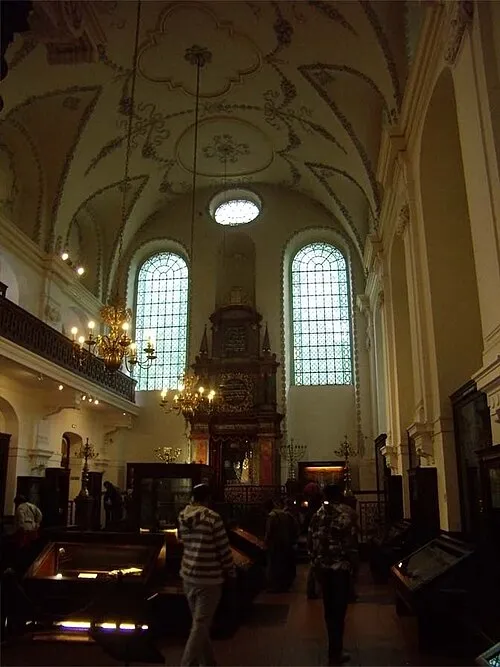
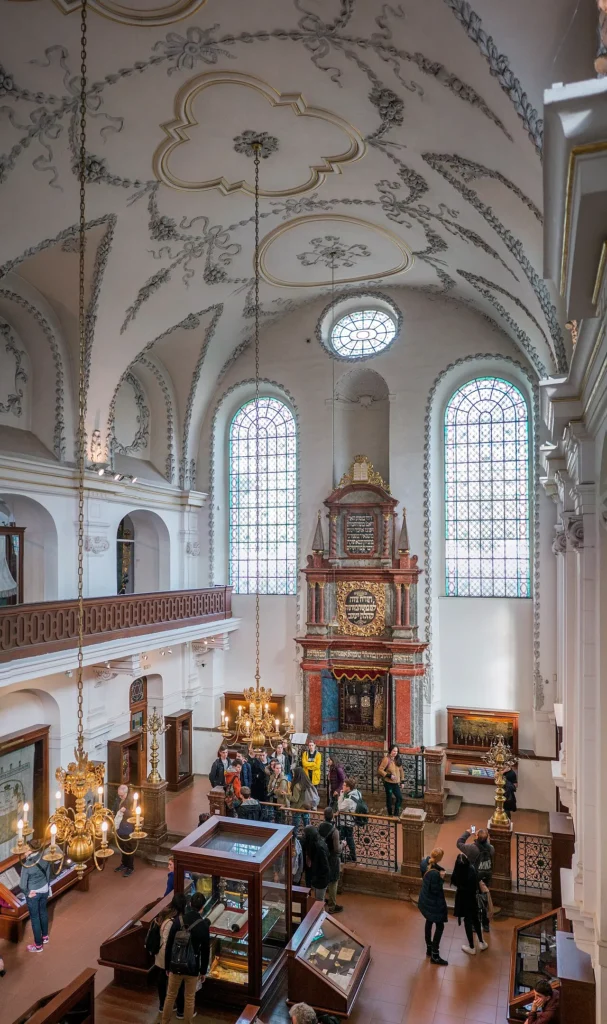
In 1689, a major fire devastated the Prague ghetto and destroyed the earlier Klausen buildings. After the fire, the community rebuilt the site as a larger synagogue. The present Klausen Synagogue was completed in 1694 in the early Baroque style.

The new building became the largest synagogue in Prague’s Jewish Town. It was also the second main synagogue of the Prague Jewish community, after the Old-New Synagogue. Several prominent Prague rabbis served there, which shows that the building had a central communal role and was not merely a local prayer hall.

Klausen Synagogue and the Prague Burial Society

The Klausen Synagogue was closely connected to the Prague Burial Society, the Chevra Kadisha. Because the building stood next to the Old Jewish Cemetery, the Burial Society used it as a place of prayer. This gave the synagogue a specific role in the religious life surrounding illness, death, burial and memorial practice.

The nearby Ceremonial Hall later continued this funerary association. Built between 1906 and 1908, it served the Prague Burial Society and was later used by the Jewish Museum in Prague for exhibitions on Jewish burial customs. Together, the synagogue, cemetery and Ceremonial Hall formed one of the clearest surviving spatial connections between prayer, burial care and communal memory in Josefov.

The Klausen Synagogue survived the large-scale redevelopment of Josefov at the turn of the nineteenth and twentieth centuries, when much of the old Jewish Town was demolished. Its survival preserved one of the major religious buildings of early modern Prague Jewry, together with the Old-New, Pinkas, Maisel and Spanish synagogues.

The Jewish Museum and the Nazi occupation

The Jewish Museum in Prague was founded in 1906 by Salomon Hugo Lieben and August Stein. Its early collection included objects from synagogues demolished during the clearance of the Prague Jewish ghetto.

During the Nazi occupation, the museum entered a different and deeply violent historical context. The Jewish Museum Association was abolished in 1939, after the establishment of the Protectorate of Bohemia and Moravia. Its collections were taken over by the Prague Jewish community. In 1942, the Central Jewish Museum was created under Nazi occupation.

The Nazi authorities approved the project for their own purposes. However, Jewish museum workers used it to preserve liturgical objects, books and archival records from Jewish communities in Bohemia and Moravia that were being dismantled, deported and destroyed.

In 1943, the Klausen Synagogue was used as an exhibition space of the wartime Central Jewish Museum. Displays there dealt with Jewish festivals, ceremonies and the course of life, including birth, wedding and death. Another exhibition presented works of modern art from the museum’s collection.

This wartime use gives the Klausen Synagogue a specific place in the history of the Jewish Museum in Prague. While Jews from the Czech lands were being deported and murdered, the synagogue became part of a forced museum structure in which Jewish objects and traditions were classified, displayed and preserved under Nazi control.

Jewish customs, renovation and present status

After the war, the museum came under state administration. In 1950, it was nationalized by the Communist regime. The Klausen Synagogue continued to function within the State Jewish Museum’s exhibition system.

For decades, the Klausen Synagogue housed the exhibition Jewish Customs and Traditions. It used ritual objects, manuscripts and ceremonial material to explain synagogue worship, Jewish holidays, the Jewish home and the course of life, including birth, circumcision, adulthood, marriage and divorce. Together with the Ceremonial Hall, it also presented illness, death, burial, memorial prayers, tombstone fragments and objects connected to burial societies.

In 1994, after the fall of Communism, the Jewish Museum in Prague regained independence from the state. Its buildings were returned to the Prague Jewish community, and most of its collections were returned to the Federation of Jewish Communities in the Czech Republic.

In July 2024, the long-standing exhibition was removed as part of a wider redevelopment of the museum circuit. The Klausen Synagogue and the Ceremonial Hall then entered a period of renovation and exhibition renewal. The museum has announced that the Klausen Synagogue is expected to reopen by 2028 at the latest, with a new core exhibition on Jewish customs and traditions. In the meantime, the building has also been used for special occasions and temporary exhibitions.

The Klausen Synagogue should therefore be understood through five connected layers: the sixteenth-century Klausen and yeshiva, the Baroque synagogue built after the fire of 1689, its role as a prayer space of the Prague Burial Society, its wartime use within the Central Jewish Museum, and its modern function as part of the Jewish Museum in Prague.

Gallery
Videos

Article researched and curated by Jew Where.

The Jew Where project is collaborative. Do you have additional information, found an inaccuracy, or have historical photos of this location? Contact our team.
Klausen Synagogue
Czech Republic / Prague / Civic & Cultural

Klausen Synagogue

"Largest synagogue of the former Prague ghetto, linked to the Klausen, the Chevra Kadisha, the wartime museum and Jewish customs exhibitions."

Location
U Starého hřbitova 3a, 110 00 Prague 1, Czechia

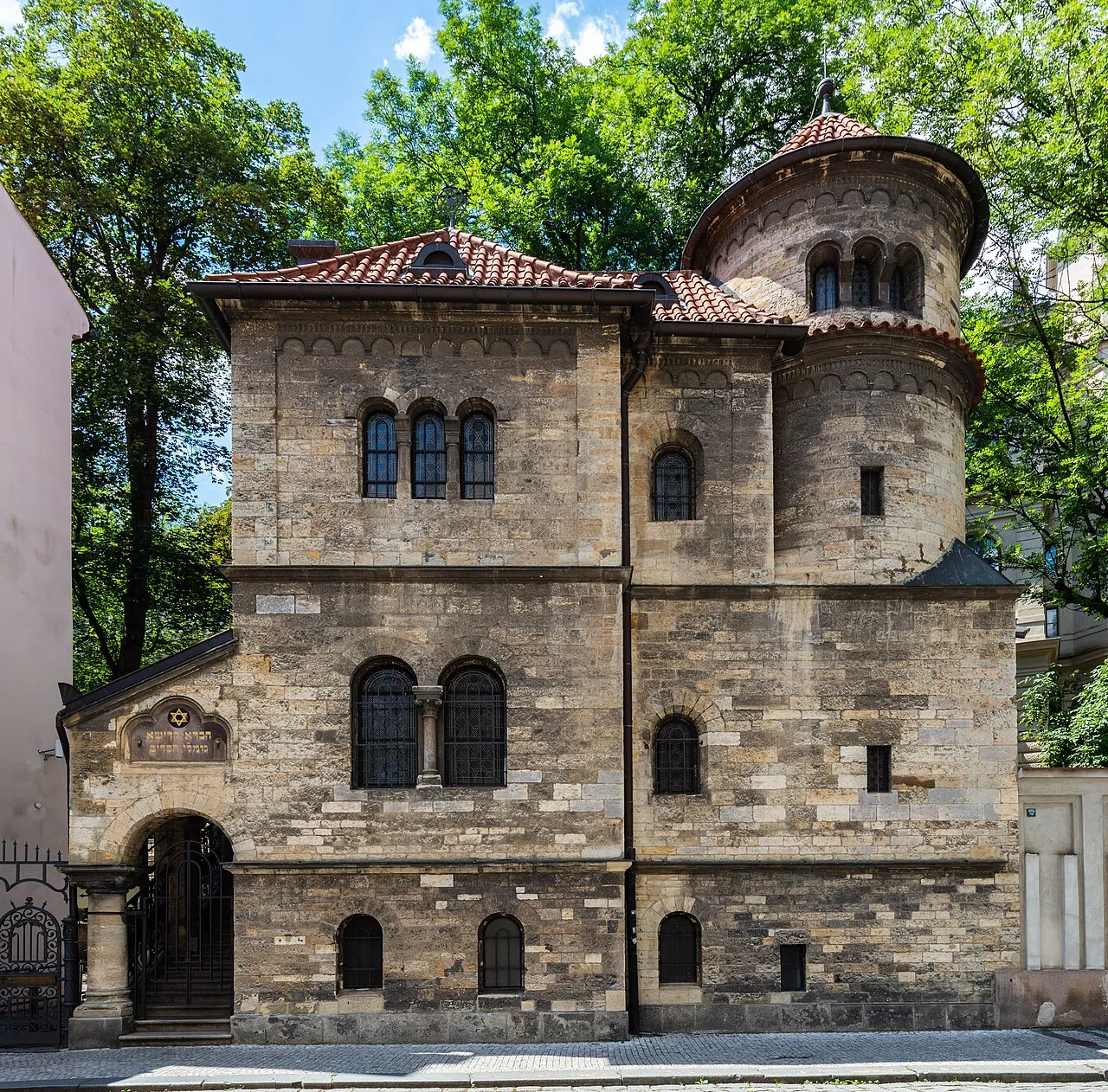
The Klausen Synagogue stands beside the Old Jewish Cemetery in Josefov, the former Jewish Town of Prague. It is the largest surviving synagogue of the former Prague ghetto and the only preserved example of early Baroque synagogue architecture in this part of the city.

From the Klausen to the Baroque synagogue

The importance of the site begins before the present building. In the sixteenth century, three smaller buildings stood here, known as the Klausen. The name refers to earlier enclosed or separate spaces used for study, prayer and communal functions. One of them was a yeshiva, a Talmudic school, associated with Rabbi Judah Loew ben Bezalel, the Maharal of Prague.

This means that the place was already connected to rabbinic study and Jewish learning before the Baroque synagogue was built. Its position beside the Old Jewish Cemetery also placed it close to one of the most sensitive communal spaces of the Prague Jewish Town.

In 1689, a major fire devastated the Prague ghetto and destroyed the earlier Klausen buildings. After the fire, the community rebuilt the site as a larger synagogue. The present Klausen Synagogue was completed in 1694 in the early Baroque style.

The new building became the largest synagogue in Prague’s Jewish Town. It was also the second main synagogue of the Prague Jewish community, after the Old-New Synagogue. Several prominent Prague rabbis served there, which shows that the building had a central communal role and was not merely a local prayer hall.

Klausen Synagogue and the Prague Burial Society

The Klausen Synagogue was closely connected to the Prague Burial Society, the Chevra Kadisha. Because the building stood next to the Old Jewish Cemetery, the Burial Society used it as a place of prayer. This gave the synagogue a specific role in the religious life surrounding illness, death, burial and memorial practice.

The nearby Ceremonial Hall later continued this funerary association. Built between 1906 and 1908, it served the Prague Burial Society and was later used by the Jewish Museum in Prague for exhibitions on Jewish burial customs. Together, the synagogue, cemetery and Ceremonial Hall formed one of the clearest surviving spatial connections between prayer, burial care and communal memory in Josefov.

The Klausen Synagogue survived the large-scale redevelopment of Josefov at the turn of the nineteenth and twentieth centuries, when much of the old Jewish Town was demolished. Its survival preserved one of the major religious buildings of early modern Prague Jewry, together with the Old-New, Pinkas, Maisel and Spanish synagogues.

The Jewish Museum and the Nazi occupation

The Jewish Museum in Prague was founded in 1906 by Salomon Hugo Lieben and August Stein. Its early collection included objects from synagogues demolished during the clearance of the Prague Jewish ghetto.

During the Nazi occupation, the museum entered a different and deeply violent historical context. The Jewish Museum Association was abolished in 1939, after the establishment of the Protectorate of Bohemia and Moravia. Its collections were taken over by the Prague Jewish community. In 1942, the Central Jewish Museum was created under Nazi occupation.

The Nazi authorities approved the project for their own purposes. However, Jewish museum workers used it to preserve liturgical objects, books and archival records from Jewish communities in Bohemia and Moravia that were being dismantled, deported and destroyed.

In 1943, the Klausen Synagogue was used as an exhibition space of the wartime Central Jewish Museum. Displays there dealt with Jewish festivals, ceremonies and the course of life, including birth, wedding and death. Another exhibition presented works of modern art from the museum’s collection.

This wartime use gives the Klausen Synagogue a specific place in the history of the Jewish Museum in Prague. While Jews from the Czech lands were being deported and murdered, the synagogue became part of a forced museum structure in which Jewish objects and traditions were classified, displayed and preserved under Nazi control.

Jewish customs, renovation and present status

After the war, the museum came under state administration. In 1950, it was nationalized by the Communist regime. The Klausen Synagogue continued to function within the State Jewish Museum’s exhibition system.

For decades, the Klausen Synagogue housed the exhibition Jewish Customs and Traditions. It used ritual objects, manuscripts and ceremonial material to explain synagogue worship, Jewish holidays, the Jewish home and the course of life, including birth, circumcision, adulthood, marriage and divorce. Together with the Ceremonial Hall, it also presented illness, death, burial, memorial prayers, tombstone fragments and objects connected to burial societies.

In 1994, after the fall of Communism, the Jewish Museum in Prague regained independence from the state. Its buildings were returned to the Prague Jewish community, and most of its collections were returned to the Federation of Jewish Communities in the Czech Republic.

In July 2024, the long-standing exhibition was removed as part of a wider redevelopment of the museum circuit. The Klausen Synagogue and the Ceremonial Hall then entered a period of renovation and exhibition renewal. The museum has announced that the Klausen Synagogue is expected to reopen by 2028 at the latest, with a new core exhibition on Jewish customs and traditions. In the meantime, the building has also been used for special occasions and temporary exhibitions.

The Klausen Synagogue should therefore be understood through five connected layers: the sixteenth-century Klausen and yeshiva, the Baroque synagogue built after the fire of 1689, its role as a prayer space of the Prague Burial Society, its wartime use within the Central Jewish Museum, and its modern function as part of the Jewish Museum in Prague.

Timeline

  • 16th century Three smaller Klausen buildings stood on the site, including a yeshiva associated with Rabbi Judah Loew ben Bezalel.
  • 1689 A major fire devastated the Prague ghetto and destroyed the earlier Klausen buildings.
  • 1694 The present Klausen Synagogue was completed in early Baroque style.
  • 1696 A monumental Torah ark was added with support from Samuel Oppenheim.
  • 1883–1884 The synagogue was repaired and altered according to designs by Bedřich Münzberger.
  • 1906 The Jewish Museum in Prague was founded by Salomon Hugo Lieben and August Stein.
  • 1906–1908 The nearby Ceremonial Hall was built for the Prague Burial Society.
  • 1939 The Jewish Museum Association was abolished after the establishment of the Protectorate of Bohemia and Moravia.
  • 1942 The Central Jewish Museum was created under Nazi occupation.
  • 1943 The Klausen Synagogue was used as an exhibition space of the wartime Central Jewish Museum.
  • 1950 The museum was nationalized under the Communist regime.
  • 1994 The Jewish Museum in Prague regained independence from the state after the fall of Communism.
  • July 2024 The long-standing Jewish Customs and Traditions exhibition was removed, and the Klausen Synagogue entered renovation.
  • 2028 The Jewish Museum in Prague plans to reopen the Klausen Synagogue by 2028 at the latest.

Sources & Bibliography

  1. Jewish Museum in Prague. Klausen Synagogue. Prague: Jewish Museum in Prague. Year: n.d. https://www.jewishmuseum.cz/en/explore/sites/klausen-synagogue
  2. Jewish Museum in Prague. Klausová synagoga. Prague: Jewish Museum in Prague. Year: n.d. https://www.jewishmuseum.cz/pamatky-a-expozice/pamatky/klausova-synagoga
  3. Jewish Museum in Prague. History of the Museum. Prague: Jewish Museum in Prague. Year: n.d. https://www.jewishmuseum.cz/en/info/about-us/history-of-the-museum
  4. Jewish Museum in Prague. Ceremonial Hall. Prague: Jewish Museum in Prague. Year: n.d. https://www.jewishmuseum.cz/en/explore/sites/ceremonial-hall
  5. Jewish Museum in Prague. Židovské tradice a zvyky I. Prague: Jewish Museum in Prague. Year: n.d. https://www.jewishmuseum.cz/pamatky-a-expozice/expozice/zidovske-tradice-a-zvyky-1
  6. Jewish Museum in Prague. Židovské tradice a zvyky II. Prague: Jewish Museum in Prague. Year: n.d. https://www.jewishmuseum.cz/pamatky-a-expozice/expozice/zidovske-tradice-a-zvyky-2
  7. Pavlát, Leo. The Jewish Museum in Prague during the Nazi Occupation. European Judaism, vol. 41, no. 1. Year: 2008. https://www.jstor.org/stable/41444625
  8. Greenblatt, Rachel L. To Tell Their Children: Jewish Communal Memory in Early Modern Prague. Stanford: Stanford University Press. Year: 2014. https://www.sup.org/books/jewish-studies/tell-their-children
  9. Kieval, Hillel J. Jewish Prague, Christian Prague, and the Castle in the City’s Golden Age. Jewish Studies Quarterly, vol. 18, no. 2. Year: 2011. https://www.jstor.org/stable/41289133
  10. Center for Jewish Art, Hebrew University of Jerusalem. Klausen Synagogue in Prague, Czech Republic. Jerusalem: Hebrew University of Jerusalem. Year: n.d. https://cja.huji.ac.il/browser.php?id=9432&mode=set
  11. Národní památkový ústav. Klausová synagoga. Památkový katalog. Prague: Národní památkový ústav. Year: n.d. https://www.pamatkovykatalog.cz/klausova-synagoga-18559630
  12. Jewish Heritage Europe. Czech Republic: Last chance to visit the longstanding exhibits in the Prague Jewish Museum’s Klausen synagogue and Ceremonial hall. Year: 2024. https://jewish-heritage-europe.eu/2024/06/25/czech-republic-klausen

Additional Information

Official website: https://www.jewishmuseum.cz/en/explore/sites/klausen-synagogue
Email: [email protected]
Phone: +420 222 749 460
Facebook: https://www.facebook.com/zidovskemuzeumvpraze
Instagram: https://www.instagram.com/jewishmuseumprague
YouTube: https://www.youtube.com/@JewishMuseumPrague
Current use of the address: The former synagogue is part of the Jewish Museum in Prague and is currently closed for renovation and exhibition renewal. It may open only on special occasions or for short-term exhibitions.

Article researched and curated by Jew Where.

The Jew Where project is collaborative. Do you have additional information, found an inaccuracy, or have historical photos of this location? Contact our team.