

The Judiaria Velha de Coimbra was one of the earliest documented Jewish quarters in medieval Portugal. Its existence is attested from the first half of the twelfth century, when documents already refer to a Jewish urban area in Coimbra. In 1130, the expression “arravalde de ilis judeis” appears in relation to the quarter. In 1137, references such as “ripam de Judeorum” and “Viccus Judeorum” also point to the same Jewish space. By 1139, documentation connected to the demarcation of the parish of Santa Cruz referred to the Jewish slope, confirming that this was already a recognized part of the city’s medieval topography.
The Old Jewish Quarter
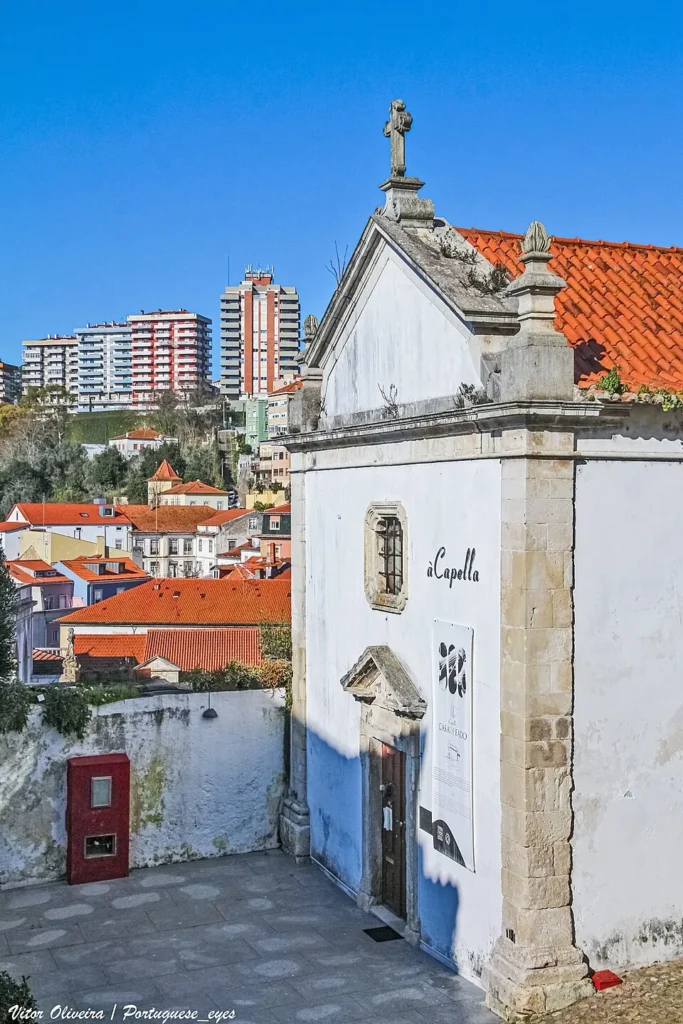
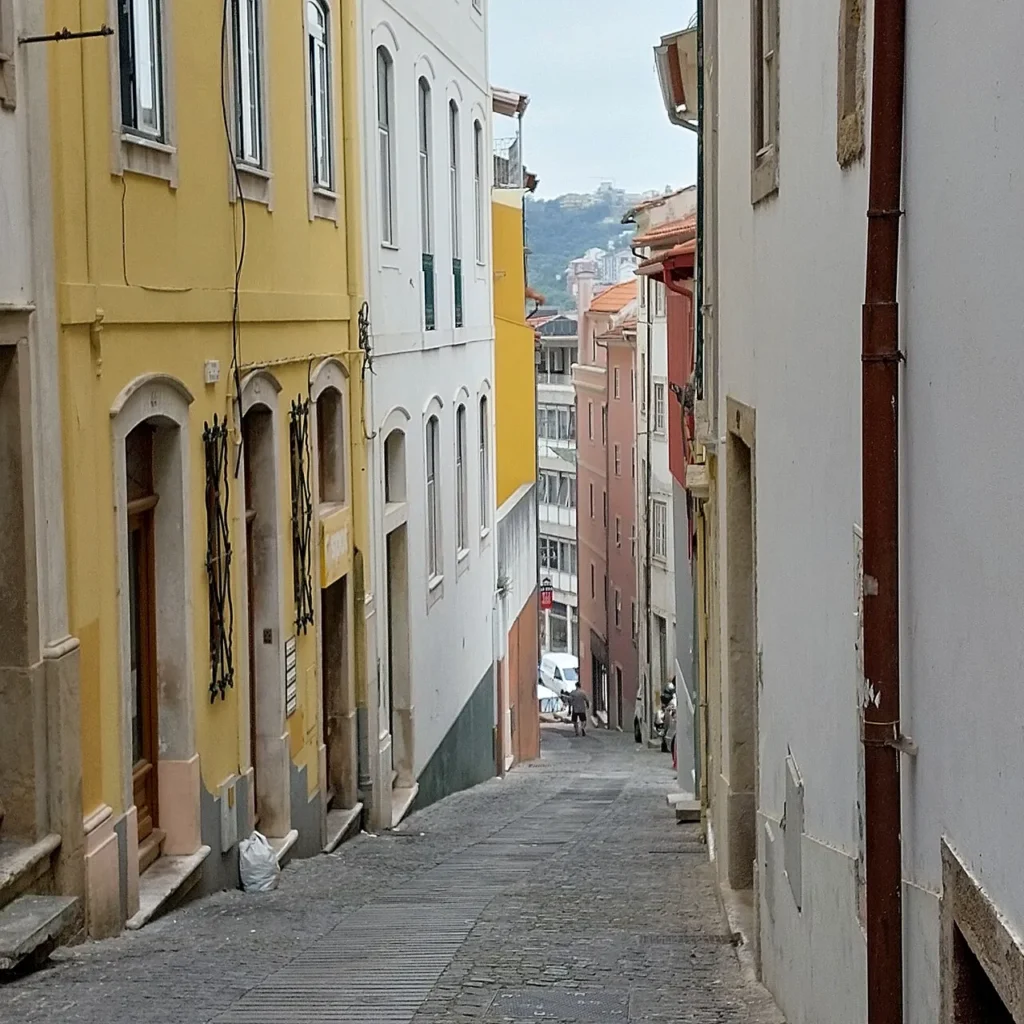
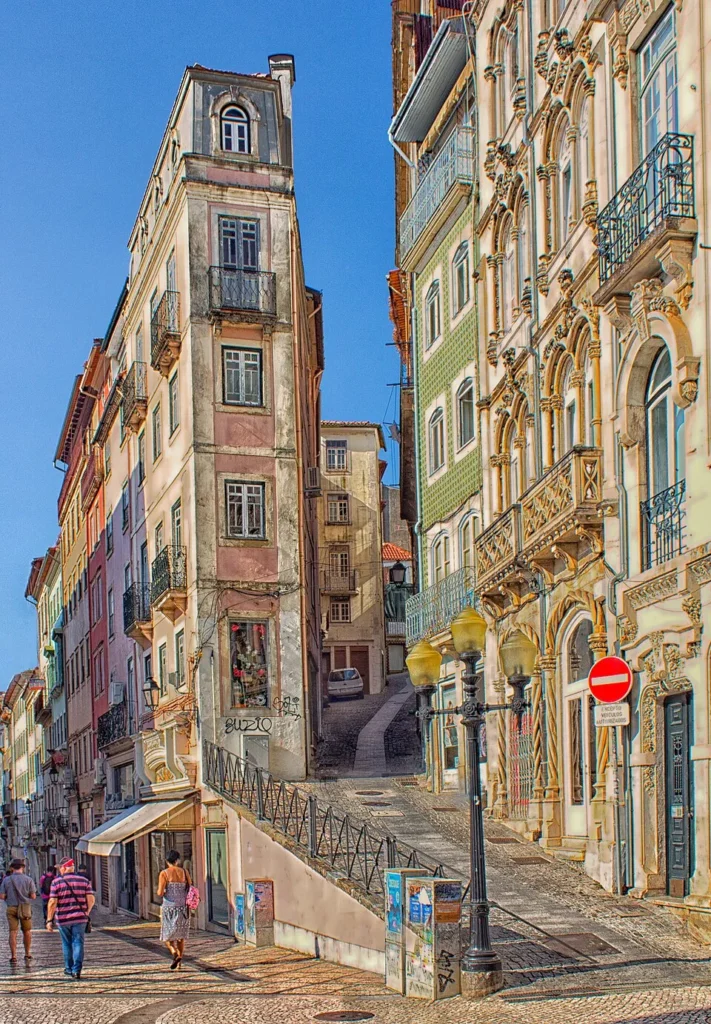
The Judiaria Velha de Coimbra was located in the area of today’s Rua Corpo de Deus and its surroundings, on the slope between the medieval walls and the zone connected to Santa Cruz. This was not a vague or isolated Jewish presence. The early documentation identifies a structured communal landscape, with a synagogue, ritual baths, cemetery, butcher’s space, and albergaria.
That combination is important because it shows that the Jewish community of Coimbra already had the essential institutions of organized communal life in the twelfth century. The quarter occupied a sloping area with a strong urban identity. Written sources place it near the route of Rua Corpo de Deus, in a zone associated with the Jewish neighborhood, the albergaria of the Jews, the synagogue, and the almocávar, the Jewish cemetery.
Synagogue and Archaeological Evidence
The strongest material evidence connected with the Judiaria Velha de Coimbra comes from archaeological work carried out in Rua Corpo de Deus and Largo de Nossa Senhora da Vitória. These interventions identified medieval structures dating from between the twelfth and the fourteenth or fifteenth centuries. Part of these remains has been cautiously associated with the medieval synagogue.
This does not mean that the synagogue can be reconstructed in full. However, it gives rare archaeological weight to the documentary references. In many Portuguese towns, medieval Jewish life survives mainly through documents or place-names. In Coimbra, the Judiaria Velha combines written references, urban memory, and archaeological remains in the same area.
The Mikveh of Coimbra
The Mikveh of Coimbra gives the Judiaria Velha exceptional patrimonial value. Discovered in 2013 at Rua Visconde da Luz, 21, it is situated within the territory of the first Jewish quarter, in the area later delimited by Rua Martins de Carvalho, formerly Rua das Figueirinhas, Rua Corpo de Deus, and Rua Visconde da Luz, formerly Rua do Coruche.
The structure was carved into the rock at about three meters below the present street level. It preserves the essential spaces of a ritual bath, including an antechamber for preparation and a pool accessed by seven steps. The mikveh confirms that the Jewish presence in Coimbra cannot be reduced to names in documents. It also had a ritual and architectural dimension.
Together with the references to the synagogue, cemetery, butcher’s space, and albergaria, the mikveh shows a community with religious, social, and practical institutions rooted in the medieval city.
The End of the Judiaria Velha
The Judiaria Velha de Coimbra seems to have lost its communal function around 1370, during a process of urban and administrative reorganization of Jewish space in the city. Its disappearance was not the end of Jewish life in Coimbra. Rather, it marked the transition from the old Jewish quarter to a new area of settlement and communal organization, later known as the Judiaria Nova.
The importance of the Judiaria Velha de Coimbra lies in the depth of its evidence. It preserves one of the earliest documented Jewish quarters in the kingdom, supported by references from 1130, 1137, and 1139, by archaeological remains in Rua Corpo de Deus, and by the rare survival of a medieval mikveh within the old Jewish territory.
Gallery
Sources & Bibliography
- CÂMARA MUNICIPAL DE COIMBRA. Judeus de Coimbra: da tolerância à perseguição, memórias e materialidades. Local: Coimbra. Editora: Câmara Municipal de Coimbra. Ano: 2021
- ALMEIDA, Sara Oliveira; TEMUDO, Susana. A sinagoga Medieval de Coimbra, à luz dos novos achados na Rua Corpo de Deus: notícia preliminar. Ano: n.d
- MUSEU MUNICIPAL DE COIMBRA. Mikveh / Banhos de Purificação Judaicos. Local: Coimbra. Editora: Museu Municipal de Coimbra. Ano: n.d
- CÂMARA MUNICIPAL DE COIMBRA. Catálogo sobre exposição “Judeus de Coimbra” apresentado no Edifício da Inquisição. Local: Coimbra. Editora: Câmara Municipal de Coimbra. Ano: 2023
- GOMES, Saul António. A Comunidade Judaica de Coimbra Medieval. Local: Coimbra. Editora: INATEL. Ano: 2003
- CENTER OF PORTUGAL. Coimbra judaica. Ano: n.d
- UNIVERSIDADE DE COIMBRA. Igreja do Corpo de Deus. Local: Coimbra. Editora: Universidade de Coimbra. Ano: n.d
Article researched and curated by Jew Where.
The Jew Where project is collaborative. Do you have additional information, found an inaccuracy, or have historical photos of this location? Contact our team.
Community notes
Comments
Logged-in visitors can submit comments for moderation before they appear publicly.
No comments yet.
Log in to leave a comment. Go to Account.