Skip to content
Judiaria Pequena

Judiaria Pequena

"Secondary medieval Jewish quarter linked to the Tarraçenas, reconstructed through archival and archaeological evidence in the São Julião and Banco de Portugal area."

Back to Map

The Judiaria Pequena, also referred to in historical sources as the Judiaria das Tarraçenas, was one of the minor Jewish quarters of medieval Lisbon. It was located in the lower part of the city, within the area of today’s Baixa, close to zones of intense commercial, artisanal, and industrial activity connected to the riverfront and the medieval port.

Unlike the Judiaria Velha, which functioned as Lisbon’s principal and formally regulated Jewish quarter, the Judiaria Pequena corresponded to a secondary nucleus of Jewish residence. Its designation is associated with the Tarraçenas, medieval workshops and production spaces linked to metalworking, storage, and craft activities. This context helps explain the presence of Jewish artisans, traders, and service providers in this area, integrated into the city’s economic infrastructure.

Medieval documentation reveals that Jewish habitation in Lisbon was not confined to a single enclosed quarter. Instead, it extended across several urban nuclei, reflecting demographic growth, economic specialization, and the permeability of the medieval city. The Judiaria das Tarraçenas illustrates this pattern, showing how Jewish life unfolded in direct contact with productive and commercial zones.

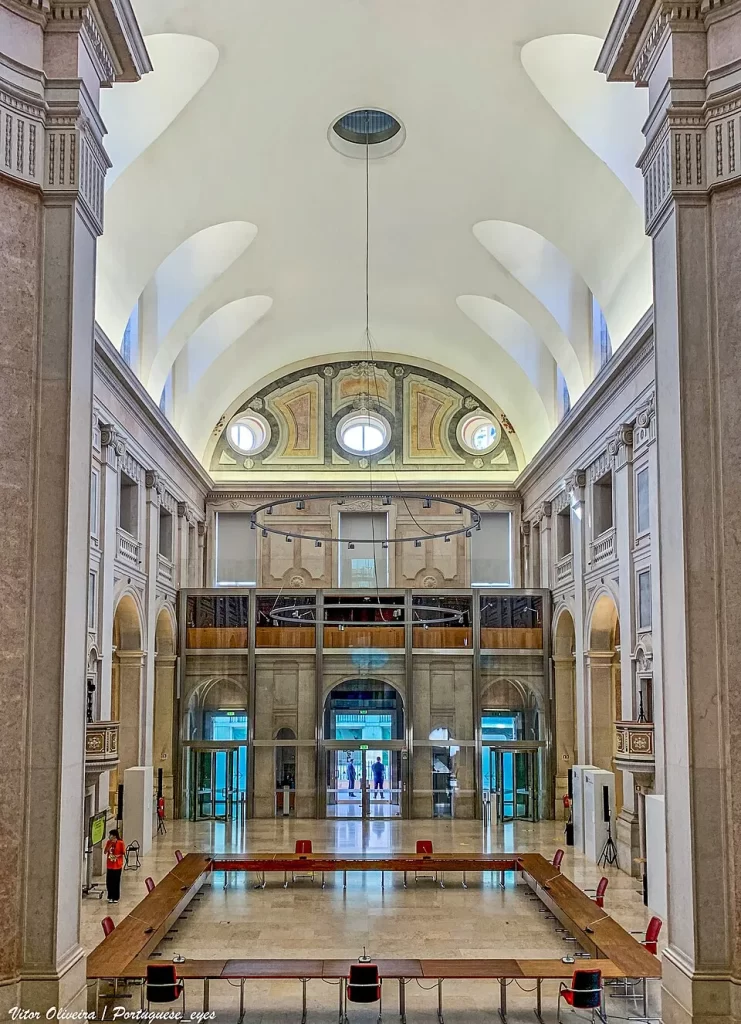
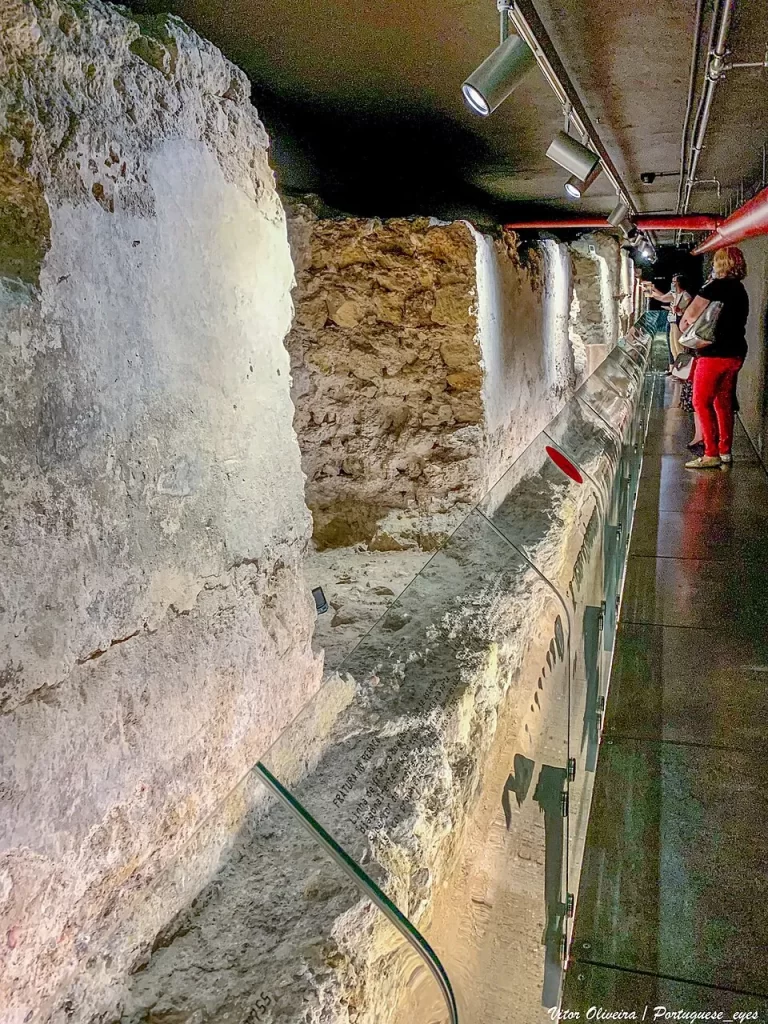
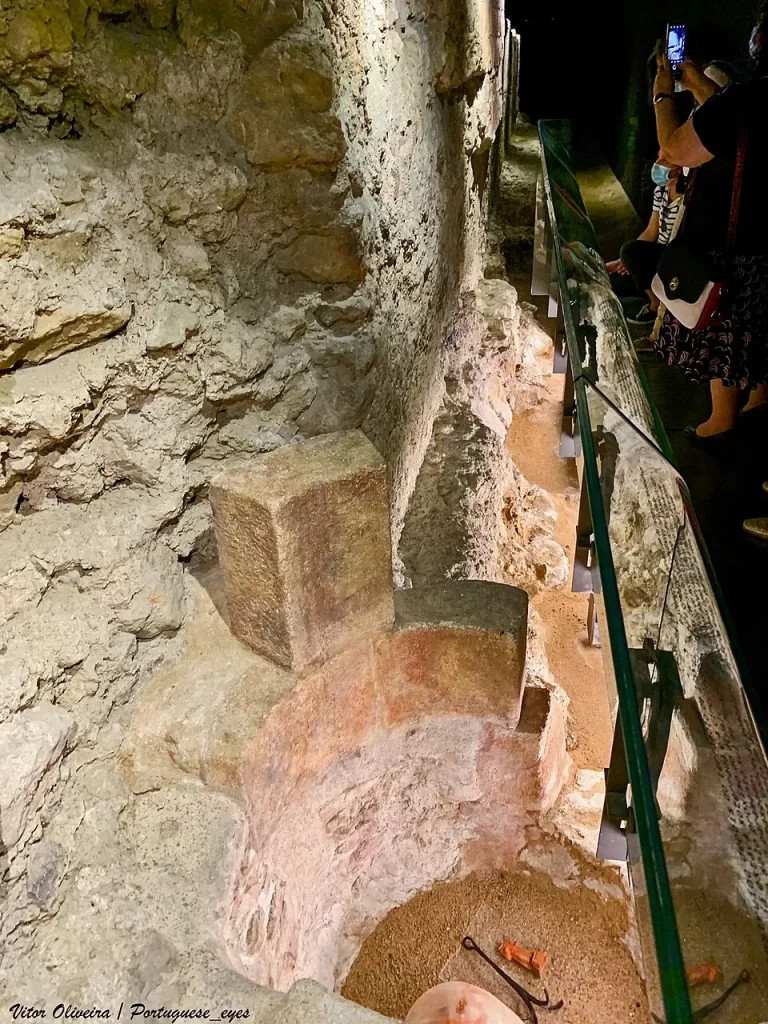
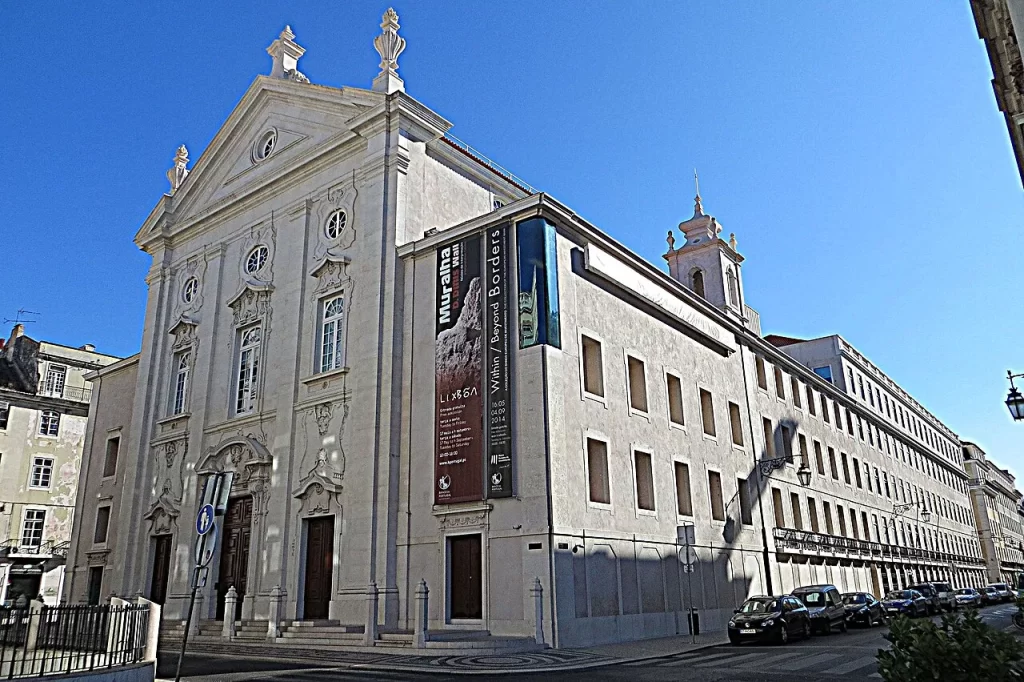
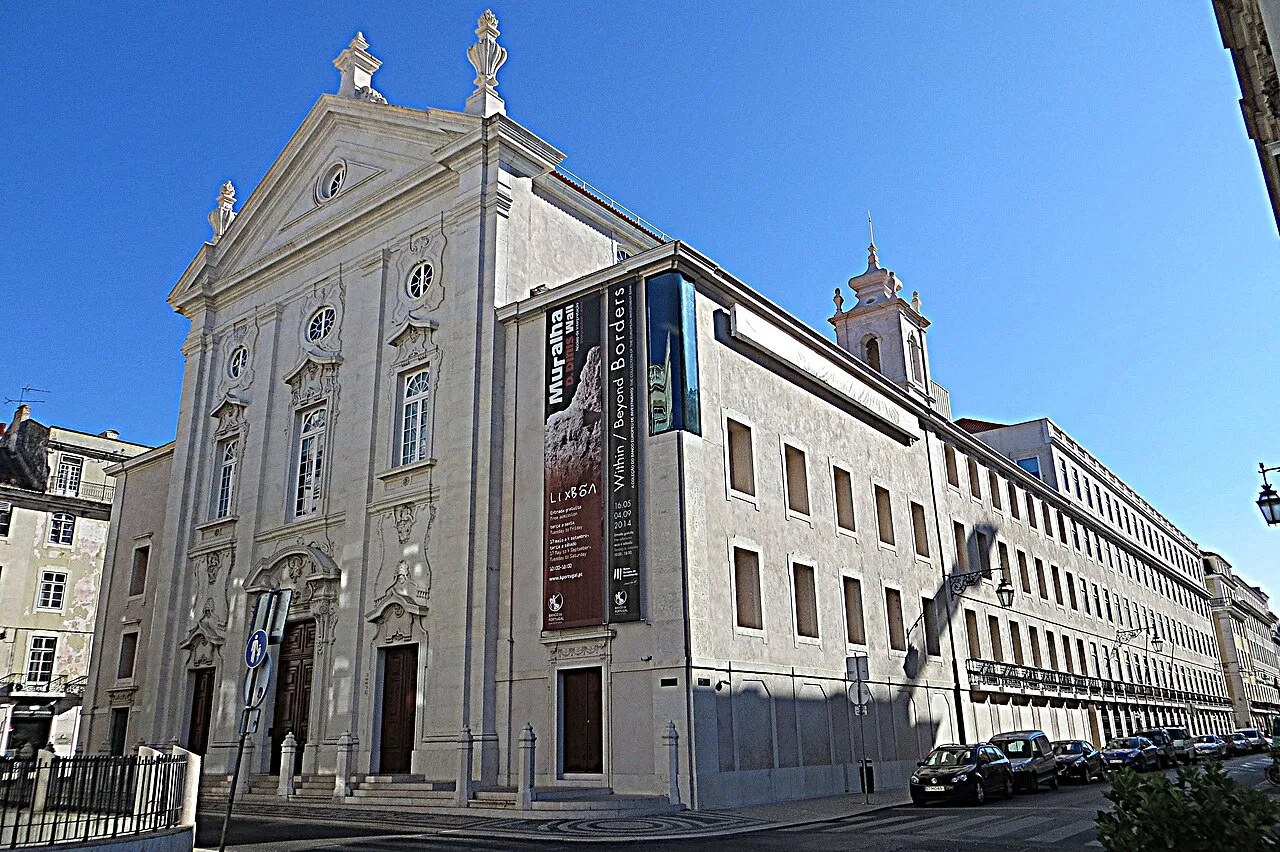
Archaeological evidence preserved today inside the Museu do Dinheiro, housed in the former church of São Julião, provides important material context for this area. Within the museum are visible sections of Lisbon’s medieval defensive walls. These walls marked limits within the urban fabric and correspond to the boundary structures that framed and constrained parts of the Judiaria Pequena. Their preservation allows the relationship between Jewish residential space and the city’s fortifications to be physically understood.

Following the expulsion decree of 1496 and the subsequent forced conversions, the Judiaria Pequena, like all Jewish quarters in Lisbon, lost its social and religious function. The area was absorbed into the expanding Christian city, its urban fabric reconfigured, and its Jewish memory gradually erased from the visible landscape. No standing architectural remains of the judiaria survive above ground, but its location and limits are reconstructed through archival sources, archaeology, and urban continuity.

The Judiaria Pequena stands as evidence of the spatial complexity of Jewish Lisbon in the late Middle Ages, highlighting both the integration of Jewish residents into key economic areas and the role of urban boundaries, such as city walls, in shaping Jewish space within the medieval city.

Gallery
Article researched and curated by Jew Where.

The Jew Where project is collaborative. Do you have additional information, found an inaccuracy, or have historical photos of this location? Contact our team.
Judiaria Pequena
Portugal / Lisbon / History & Archaeology

Judiaria Pequena

"Secondary medieval Jewish quarter linked to the Tarraçenas, reconstructed through archival and archaeological evidence in the São Julião and Banco de Portugal area."

Location
Praça do Município, Lisbon, Portugal

The Judiaria Pequena, also referred to in historical sources as the Judiaria das Tarraçenas, was one of the minor Jewish quarters of medieval Lisbon. It was located in the lower part of the city, within the area of today’s Baixa, close to zones of intense commercial, artisanal, and industrial activity connected to the riverfront and the medieval port.

Unlike the Judiaria Velha, which functioned as Lisbon’s principal and formally regulated Jewish quarter, the Judiaria Pequena corresponded to a secondary nucleus of Jewish residence. Its designation is associated with the Tarraçenas, medieval workshops and production spaces linked to metalworking, storage, and craft activities. This context helps explain the presence of Jewish artisans, traders, and service providers in this area, integrated into the city’s economic infrastructure.

Medieval documentation reveals that Jewish habitation in Lisbon was not confined to a single enclosed quarter. Instead, it extended across several urban nuclei, reflecting demographic growth, economic specialization, and the permeability of the medieval city. The Judiaria das Tarraçenas illustrates this pattern, showing how Jewish life unfolded in direct contact with productive and commercial zones.

Archaeological evidence preserved today inside the Museu do Dinheiro, housed in the former church of São Julião, provides important material context for this area. Within the museum are visible sections of Lisbon’s medieval defensive walls. These walls marked limits within the urban fabric and correspond to the boundary structures that framed and constrained parts of the Judiaria Pequena. Their preservation allows the relationship between Jewish residential space and the city’s fortifications to be physically understood.

Following the expulsion decree of 1496 and the subsequent forced conversions, the Judiaria Pequena, like all Jewish quarters in Lisbon, lost its social and religious function. The area was absorbed into the expanding Christian city, its urban fabric reconfigured, and its Jewish memory gradually erased from the visible landscape. No standing architectural remains of the judiaria survive above ground, but its location and limits are reconstructed through archival sources, archaeology, and urban continuity.

The Judiaria Pequena stands as evidence of the spatial complexity of Jewish Lisbon in the late Middle Ages, highlighting both the integration of Jewish residents into key economic areas and the role of urban boundaries, such as city walls, in shaping Jewish space within the medieval city.

Timeline

  • 13th–14th centuries Formation of a secondary Jewish quarter in Lisbon near the Tarraçenas and the riverside working zone.
  • 14th–15th centuries Jewish artisans and merchants remained active in the lower city, in an area structured by walls and productive spaces.
  • 1496 Expulsion decree of Jews from Portugal.
  • Late 15th–early 16th centuries The Judiaria Pequena lost its communal function and was absorbed into the Christian urban fabric.
  • 21st century Medieval walls and archaeological remains associated with this area became publicly visible at the Museu do Dinheiro.

Sources & Bibliography

  1. SILVA, Manuel Fialho; ROCHA, Artur Jorge Ferreira. A génese da Judiaria Pequena de Lisboa no século XIV. In Lisboa Medieval: Gentes, Espaços e Poderes. Local: Lisboa. Editora: Instituto de Estudos Medievais. Ano: 2016. https://run.unl.pt/bitstream/10362/34446/1/NovaLisboaMedieval3_09_JAO.pdf
  2. TAVIM, José Alberto Rodrigues da Silva. Judeus e judiarias de Lisboa nos alvores dos Descobrimentos. Perspectivas dos espaços e das gentes. In Lisboa Medieval: Gentes, Espaços e Poderes. Local: Lisboa. Editora: Instituto de Estudos Medievais. Ano: 2016. https://repositorioaberto.uab.pt/bitstream/10400.2/13302/1/LISBOA_MEDIEVAL_Gentes_Espacos_e_Poderes%20%281%29.pdf
  3. ROCHA, Artur Jorge Ferreira; REPREZAS, Jessica Levy; MIGUEZ, João Nuno; INOCÊNCIO, Joana Rosa Correia. Edifício Sede do Banco de Portugal em Lisboa. Um primeiro balanço dos trabalhos arqueológicos. In Arqueologia em Portugal, 150 anos. Local: Lisboa. Editora: Associação dos Arqueólogos Portugueses. Ano: 2013. https://museuarqueologicodocarmo.pt/publicacoes/outras_publicacoes/I_congresso_actas/artigos/artigo_117c.pdf
  4. MUSEU DO DINHEIRO. King Dinis' Wall. Local: Lisboa. Editora: Museu do Dinheiro. Ano: n.d. https://www.museudodinheiro.pt/en/know/king-dinis-wall

Article researched and curated by Jew Where.

The Jew Where project is collaborative. Do you have additional information, found an inaccuracy, or have historical photos of this location? Contact our team.