Skip to content
Judiaria of Castelo Rodrigo

Judiaria of Castelo Rodrigo

"Documented Jewish quarter in walled Castelo Rodrigo, linked to Rua da Cadeia, a 1508 Hebrew inscription, New Christian memory and Ephraim Bueno."

Back to Map

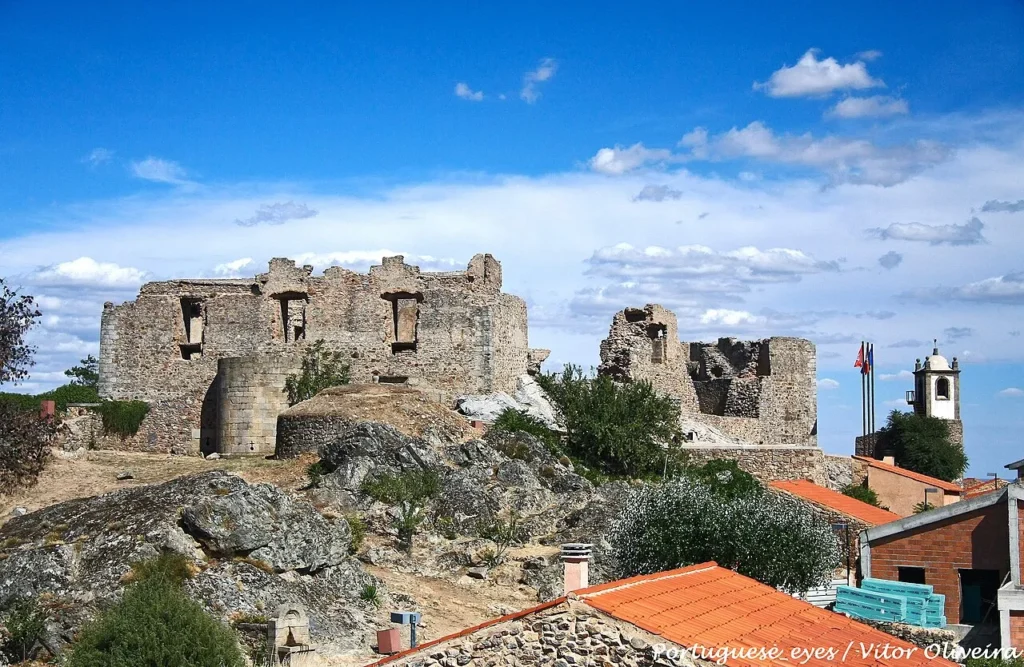
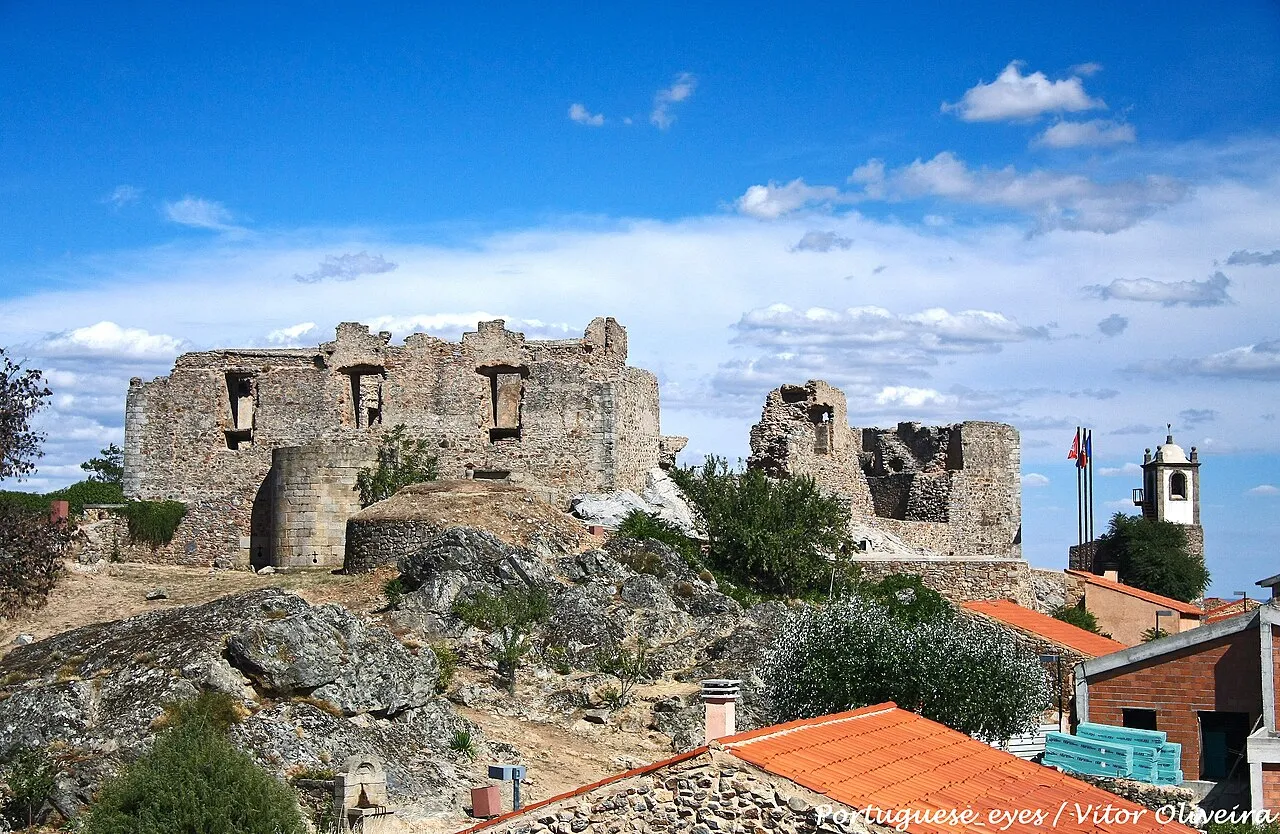
The Jewish Quarter of Castelo Rodrigo belongs to the medieval Jewish geography of the Beira Interior, a frontier region where Jewish settlement was shaped by royal administration, trade routes and proximity to Castile. Although the modern municipality is Figueira de Castelo Rodrigo, the historically documented Jewish quarter is associated with the walled village of Castelo Rodrigo. The evidence is more limited than in Guarda, Trancoso or Belmonte. For that reason, the Judiaria of Castelo Rodrigo should be read through a precise set of documentary references, urban traces and later New Christian memory.

Jewish Quarter of Castelo Rodrigo

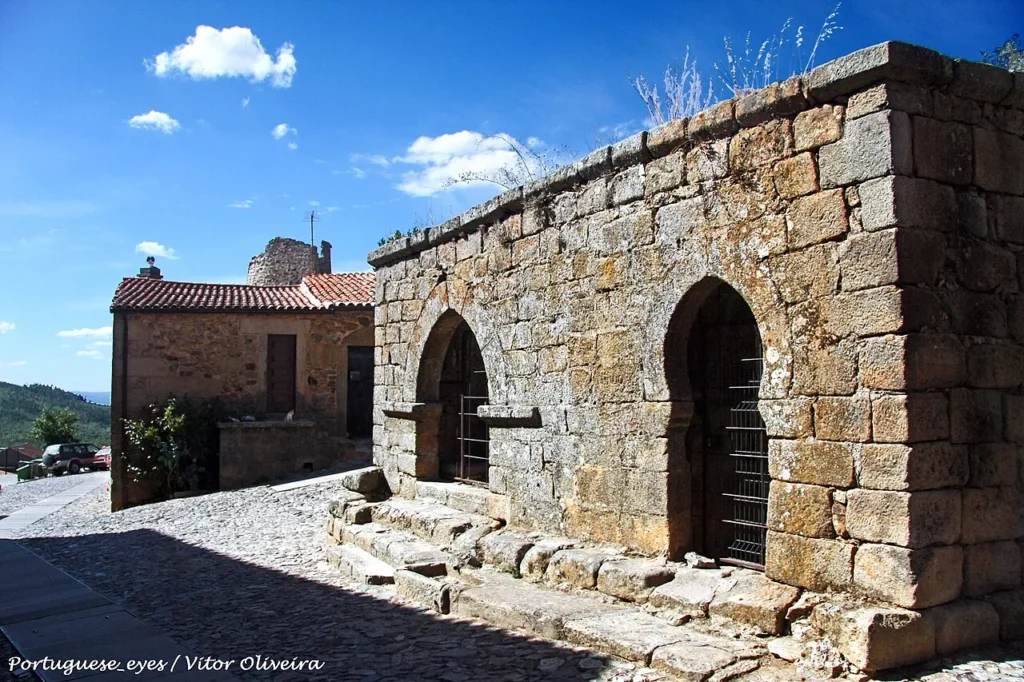
Late-medieval research places the Jewish quarter near Rua da Cadeia. Isaura Luísa Cabral Miguel, in her study on Jewish communities in the Beira Interior, notes that the judiaria in Figueira de Castelo Rodrigo was located next to Rua da Cadeia. The same study records only one Jewish inhabitant clearly identified in the royal documentation for this local context: Abraão Rua, resident in Escarigo, in the termo of Castelo Rodrigo, in 1491. This scarcity does not mean absence. It means that the surviving documentation allows only a cautious reconstruction.

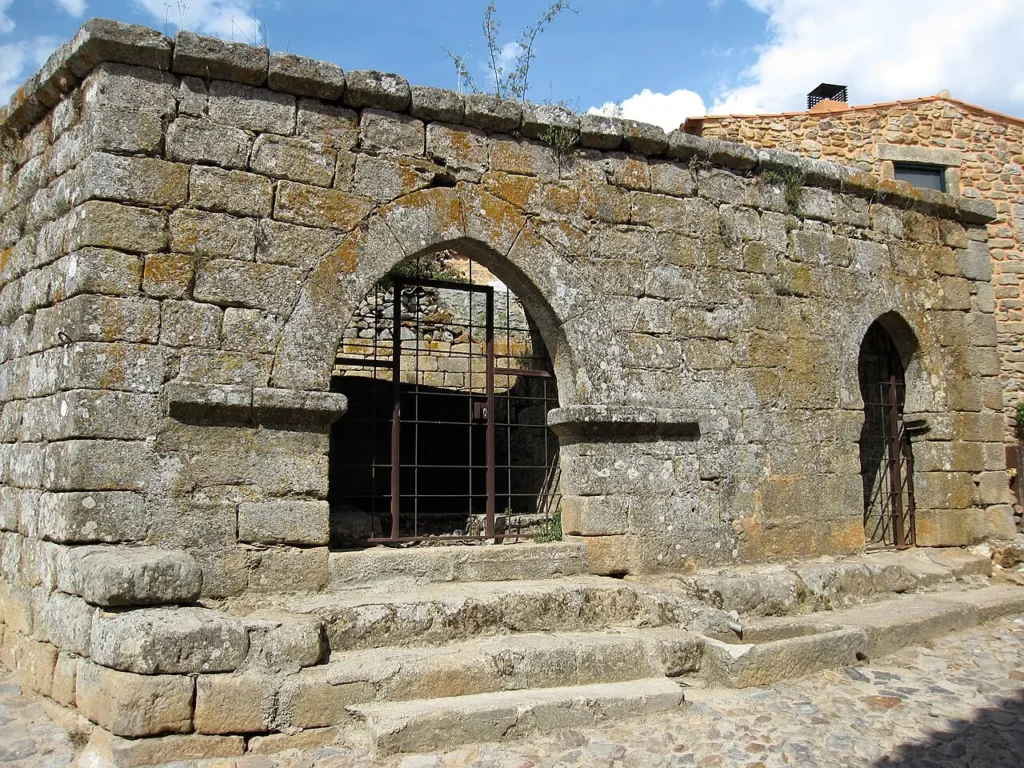
The urban reading is reinforced by local heritage documentation. Aldeias Históricas de Portugal places the medieval Jewish quarter within the walls, west of the present Rua da Sinagoga. It also suggests that the Hebrew community would have had the basic institutional structures expected of a medieval Jewish community, such as a synagogue, mikveh and cemetery. However, this should be treated carefully. The toponym Rua da Sinagoga and the location near Rua da Cadeia are important indicators, but they are not, by themselves, archaeological proof for every institution attributed to the former community.

Frontier, Refuge and Conversion

Castelo Rodrigo’s frontier position became especially significant after the expulsion of the Jews from Spain in 1492. According to Miguel’s synthesis, King João II allowed Castilian Jewish refugees to enter Portugal through a restricted group of frontier towns, including Castelo Rodrigo, Olivença, Arronches, Bragança and Melgaço. Entry was conditioned by payment and by a limited period of stay. Within this framework, Castelo Rodrigo was not an isolated village memory. It formed part of the wider geography of forced movement, temporary refuge and political control that affected the Jewish communities of the Beira Interior.

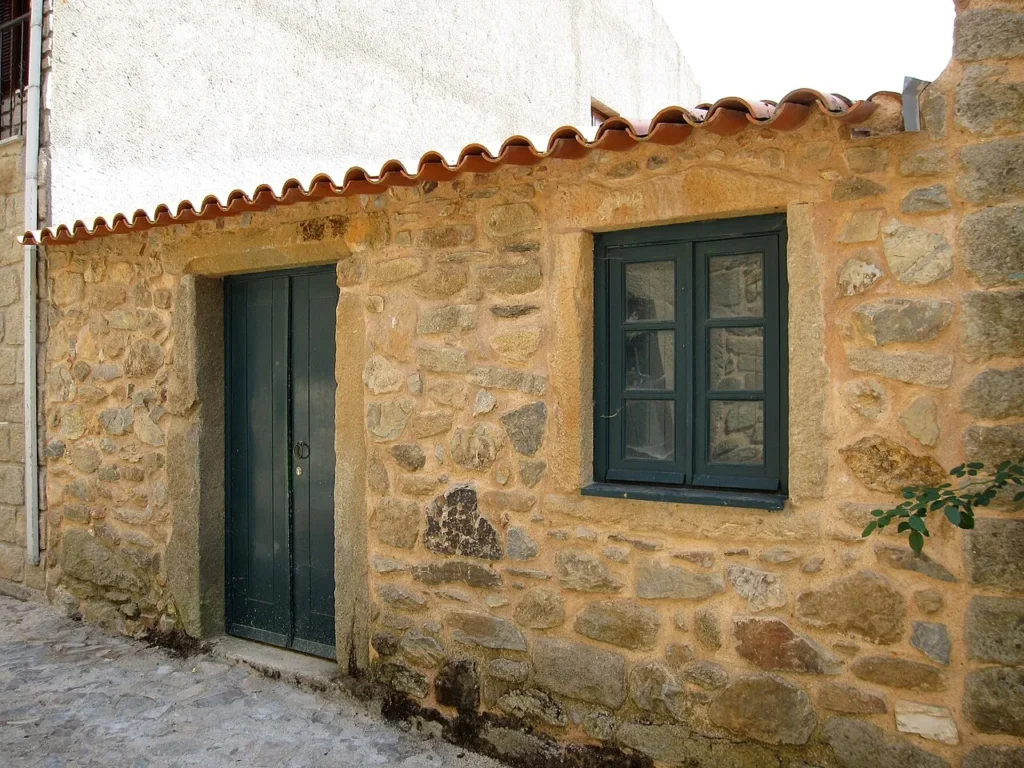
A particularly important trace is the lintel of a house on Rua da Cadeia no. 32, where a Hebrew inscription dated 1508 is recorded. This date matters. By 1508, Judaism no longer existed legally in Portugal as a recognized public communal life, after the expulsion decree of 1496 and the forced conversions of 1497. Therefore, the inscription should not be read simplistically as evidence of an untouched medieval Jewish community. It belongs to the difficult threshold between Jewish memory, New Christian identity and the persistence of signs in a society that had officially erased Judaism from public life.

Memory, Ephraim Bueno and the Diaspora

The Jewish memory of Figueira de Castelo Rodrigo is today also connected to the Centro Interpretativo Ephraim Bueno. The municipality presents the center as a place where the Jewish presence in the concelho is inventoried and documented through royal chanceries and Inquisition processes. Its name recalls Ephraim Bueno, born in Castelo Rodrigo in 1599, later known in Amsterdam as a Jewish physician, writer, poet and translator. The Rijksmuseum identifies him as a Portuguese Jewish physician linked to Rembrandt’s circle, whose portrait was painted by Rembrandt between 1645 and 1647.

For this reason, the Judiaria of Castelo Rodrigo should be understood as a compact but meaningful site of Sephardic memory. Its importance does not depend on monumental remains. It depends on the convergence of frontier history, a documented Jewish quarter, a Hebrew inscription, New Christian continuity and the later diaspora represented by Ephraim Bueno. The Judiaria of Castelo Rodrigo is therefore valuable precisely because it shows how smaller Jewish places can preserve major historical processes in modest and fragile traces.

Gallery
Article researched and curated by Jew Where.

The Jew Where project is collaborative. Do you have additional information, found an inaccuracy, or have historical photos of this location? Contact our team.
Judiaria of Castelo Rodrigo
Portugal / Guarda / Neighborhoods & Settlements

Judiaria of Castelo Rodrigo

"Documented Jewish quarter in walled Castelo Rodrigo, linked to Rua da Cadeia, a 1508 Hebrew inscription, New Christian memory and Ephraim Bueno."

Location
Area west of Rua da Sinagoga, near Rua da Cadeia, 6440-031 Castelo Rodrigo, Figueira de Castelo Rodrigo, Portugal

The Jewish Quarter of Castelo Rodrigo belongs to the medieval Jewish geography of the Beira Interior, a frontier region where Jewish settlement was shaped by royal administration, trade routes and proximity to Castile. Although the modern municipality is Figueira de Castelo Rodrigo, the historically documented Jewish quarter is associated with the walled village of Castelo Rodrigo. The evidence is more limited than in Guarda, Trancoso or Belmonte. For that reason, the Judiaria of Castelo Rodrigo should be read through a precise set of documentary references, urban traces and later New Christian memory.

Jewish Quarter of Castelo Rodrigo

Late-medieval research places the Jewish quarter near Rua da Cadeia. Isaura Luísa Cabral Miguel, in her study on Jewish communities in the Beira Interior, notes that the judiaria in Figueira de Castelo Rodrigo was located next to Rua da Cadeia. The same study records only one Jewish inhabitant clearly identified in the royal documentation for this local context: Abraão Rua, resident in Escarigo, in the termo of Castelo Rodrigo, in 1491. This scarcity does not mean absence. It means that the surviving documentation allows only a cautious reconstruction.

The urban reading is reinforced by local heritage documentation. Aldeias Históricas de Portugal places the medieval Jewish quarter within the walls, west of the present Rua da Sinagoga. It also suggests that the Hebrew community would have had the basic institutional structures expected of a medieval Jewish community, such as a synagogue, mikveh and cemetery. However, this should be treated carefully. The toponym Rua da Sinagoga and the location near Rua da Cadeia are important indicators, but they are not, by themselves, archaeological proof for every institution attributed to the former community.

Frontier, Refuge and Conversion

Castelo Rodrigo’s frontier position became especially significant after the expulsion of the Jews from Spain in 1492. According to Miguel’s synthesis, King João II allowed Castilian Jewish refugees to enter Portugal through a restricted group of frontier towns, including Castelo Rodrigo, Olivença, Arronches, Bragança and Melgaço. Entry was conditioned by payment and by a limited period of stay. Within this framework, Castelo Rodrigo was not an isolated village memory. It formed part of the wider geography of forced movement, temporary refuge and political control that affected the Jewish communities of the Beira Interior.

A particularly important trace is the lintel of a house on Rua da Cadeia no. 32, where a Hebrew inscription dated 1508 is recorded. This date matters. By 1508, Judaism no longer existed legally in Portugal as a recognized public communal life, after the expulsion decree of 1496 and the forced conversions of 1497. Therefore, the inscription should not be read simplistically as evidence of an untouched medieval Jewish community. It belongs to the difficult threshold between Jewish memory, New Christian identity and the persistence of signs in a society that had officially erased Judaism from public life.

Memory, Ephraim Bueno and the Diaspora

The Jewish memory of Figueira de Castelo Rodrigo is today also connected to the Centro Interpretativo Ephraim Bueno. The municipality presents the center as a place where the Jewish presence in the concelho is inventoried and documented through royal chanceries and Inquisition processes. Its name recalls Ephraim Bueno, born in Castelo Rodrigo in 1599, later known in Amsterdam as a Jewish physician, writer, poet and translator. The Rijksmuseum identifies him as a Portuguese Jewish physician linked to Rembrandt’s circle, whose portrait was painted by Rembrandt between 1645 and 1647.

For this reason, the Judiaria of Castelo Rodrigo should be understood as a compact but meaningful site of Sephardic memory. Its importance does not depend on monumental remains. It depends on the convergence of frontier history, a documented Jewish quarter, a Hebrew inscription, New Christian continuity and the later diaspora represented by Ephraim Bueno. The Judiaria of Castelo Rodrigo is therefore valuable precisely because it shows how smaller Jewish places can preserve major historical processes in modest and fragile traces.

Timeline

  • Reign of King Dinis The Jewish quarter is associated in local heritage documentation with the period of King Dinis, inside the walled village west of present Rua da Sinagoga.
  • 1491 Royal documentation records Abraão Rua, resident in Escarigo, in the termo of Castelo Rodrigo.
  • 1492 Castilian Jewish refugees were allowed to enter Portugal through selected frontier towns, including Castelo Rodrigo.
  • 1496-1497 King Manuel I’s measures ended open Jewish communal life in Portugal through expulsion and forced conversion.
  • 1508 A Hebrew inscription dated 1508 is recorded on the lintel of a house at Rua da Cadeia no. 32.
  • 1599 Ephraim Bueno was born in Castelo Rodrigo.
  • 1645-1647 Rembrandt painted the Portrait of Ephraim Bueno in Amsterdam.

Sources & Bibliography

  1. ALDEIAS HISTÓRICAS DE PORTUGAL. Judiaria medieval. Local: Castelo Rodrigo. Editora: Aldeias Históricas de Portugal. Ano: n.d. https://aldeiashistoricasdeportugal.com/local/judiaria-medieval
  2. ALDEIAS HISTÓRICAS DE PORTUGAL. Inscrição Medieval e Arquitetura Quinhentista. Local: Castelo Rodrigo. Editora: Aldeias Históricas de Portugal. Ano: n.d. https://aldeiashistoricasdeportugal.com/local/portal-com-inscricao-hebraica
  3. MUNICÍPIO DE FIGUEIRA DE CASTELO RODRIGO. Centro Interpretativo Ephraim Bueno. Local: Figueira de Castelo Rodrigo. Editora: Município de Figueira de Castelo Rodrigo. Ano: n.d. https://www.cm-fcr.pt/visitar/museus/centro-interpretativo-ephraim-bueno
  4. RIJKSMUSEUM. Portrait of Ephraim Bueno. Local: Amsterdam. Editora: Rijksmuseum. Ano: n.d. https://www.rijksmuseum.nl/en/collection/object/Portrait-of-Ephraim-Bueno--de32778990f7ea84951038afa906c8dd
  5. SOYER, François. The Persecution of the Jews and Muslims of Portugal. King Manuel I and the End of Religious Tolerance (1496-7). Local: Leiden. Editora: Brill. Ano: 2007. https://eprints.soton.ac.uk/58890

Additional Information

Official website: https://aldeiashistoricasdeportugal.com/local/judiaria-medieval
Related institution: Centro Interpretativo Ephraim Bueno, Rua Dr. Ricardo Machado, nº13, 6440-135 Figueira de Castelo Rodrigo
Email: [email protected]
Phone: 351 271 311 365
Related institution opening hours: Daily: 09:00-12:30, 14:00-17:30
Location note: The coordinates mark the Rua da Cadeia / Rua da Sinagoga area; the exact limits of the medieval Jewish quarter are not securely delimited.
Current condition: Historic street area inside the walled village; individual buildings may be private or commercial.

Article researched and curated by Jew Where.

The Jew Where project is collaborative. Do you have additional information, found an inaccuracy, or have historical photos of this location? Contact our team.