Skip to content

Jewish Quarter of Braga

"Braga’s Jewish quarter developed from dispersed residences to the Old and New Judiarias, documented through Cabido records and synagogue traces."

The Jewish Quarter of Braga should not be understood as a single fixed street, but as a documented urban sequence. The Jewish presence in Braga is especially important because it can be followed through the property records of the Cabido da Sé de Braga, the Cathedral Chapter, which held much of the city’s urban property in the late Middle Ages. By the late fourteenth century, Jewish residents appear in scattered houses and streets, including Rua da Sapataria, Rua Travessa or Rua do Postigo, and the area of Rua da Erva. This suggests that, before the formal concentration of the community, Jewish life in Braga was embedded within the wider urban fabric.

From dispersed residence to the Old Jewish Quarter

The first clearly documented Jewish quarter of Braga was associated with Rua da Erva, today Rua D. Gonçalo Pereira. From 1466 onward, the records of the Cabido refer to a contract made with the Jewish community for its transfer to another area, confirming the existence of two Jewish quarters: the Judiaria Velha and the Judiaria Nova.

The Old Jewish Quarter occupied a central and economically active part of the city, close to the Cathedral, the Praça da Cidade, the butcheries, the prison, and the archiepiscopal palace. This location matters. It shows that the Jewish community lived under strong ecclesiastical control, but not in complete urban isolation. The first synagogue appears in the documentation as a modest adapted house, without evidence of an ostentatious exterior. It was located in the shadow of the Cathedral and seems to have remained in use for some time after the transfer agreement.

The New Jewish Quarter of Braga

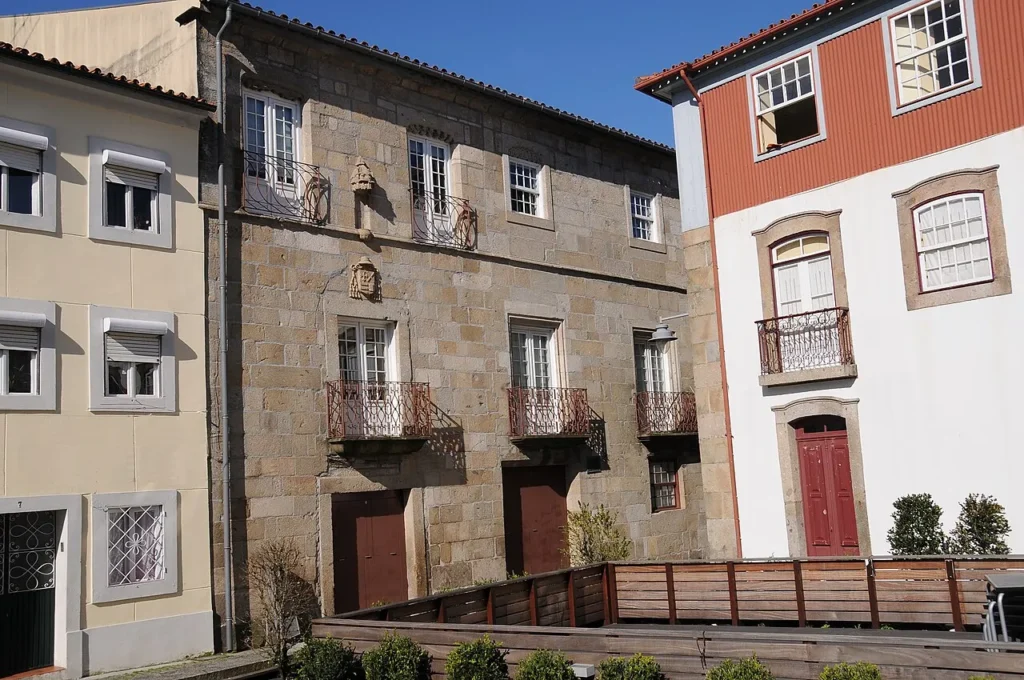
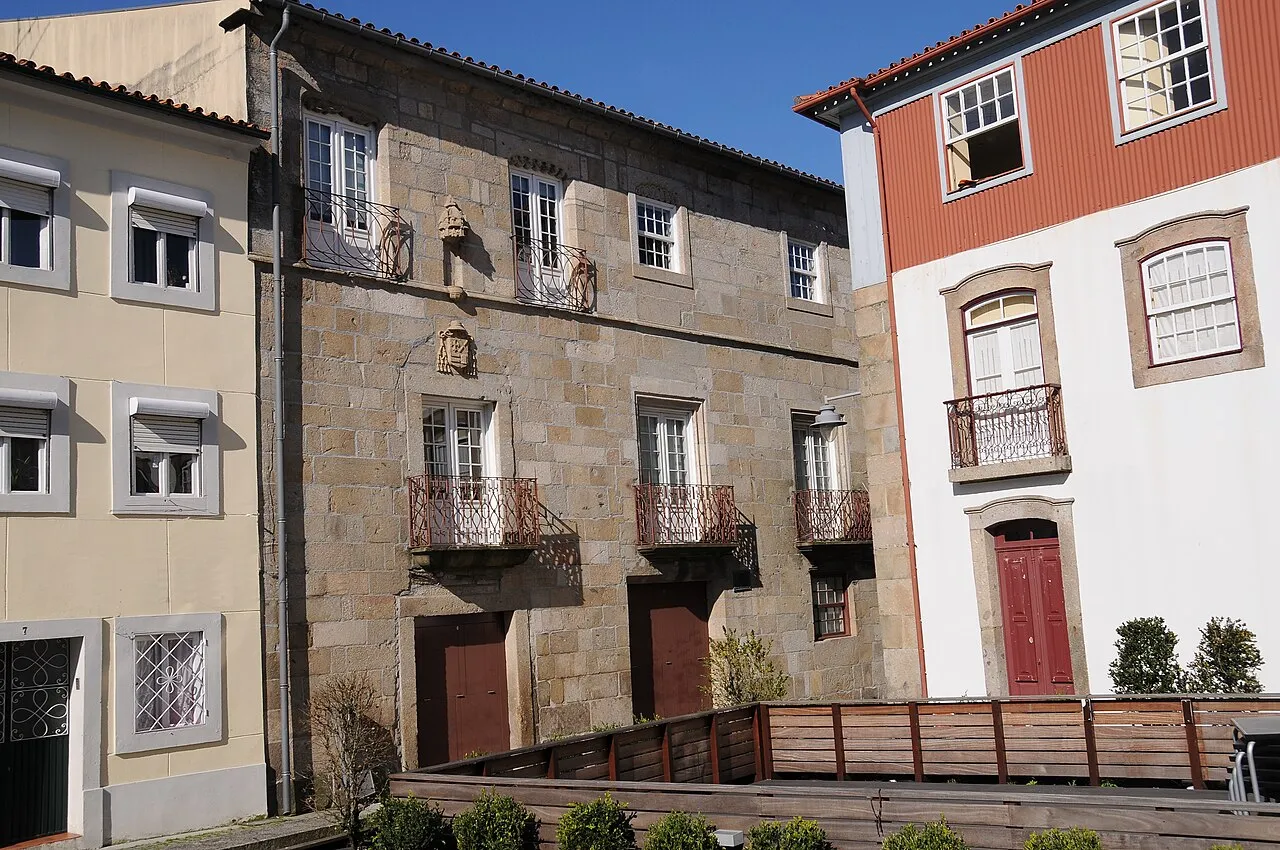
The New Jewish Quarter of Braga was established in 1466 in the southern stretch of Rua da Triparia, now Rua de Santo António das Travessas. Unlike the older quarter, this new space had more clearly defined limits. It occupied only part of one street and was associated with gates, including a southern gate already documented in 1467.

This relocation moved the community away from the central religious and political heart of Braga. At the same time, the documents reveal a dense Jewish urban presence there, with houses, shops, yards, wells, and properties leased from the Cabido. The records preserve names such as Almeida, Montesinho, Brafanes, Galego, Cema, and others, as well as professional profiles that included physicians, goldsmiths, and craftsmen. Braga’s Jewish quarter was therefore not only a residential enclave. It was also a working urban environment shaped by contracts, trades, family networks, and religious life.

Synagogue, inscription, and documentary memory

The synagogue of the New Jewish Quarter occupied one of the most significant houses of the street, near the southern end of the quarter. The building was used as a synagogue sometime after July 1466 and before November 1467. After the expulsion and forced conversion process initiated under King Manuel I, it ceased to function as a Jewish house of worship. By 1502, the former synagogue had already been leased to a Christian ecclesiastical figure.

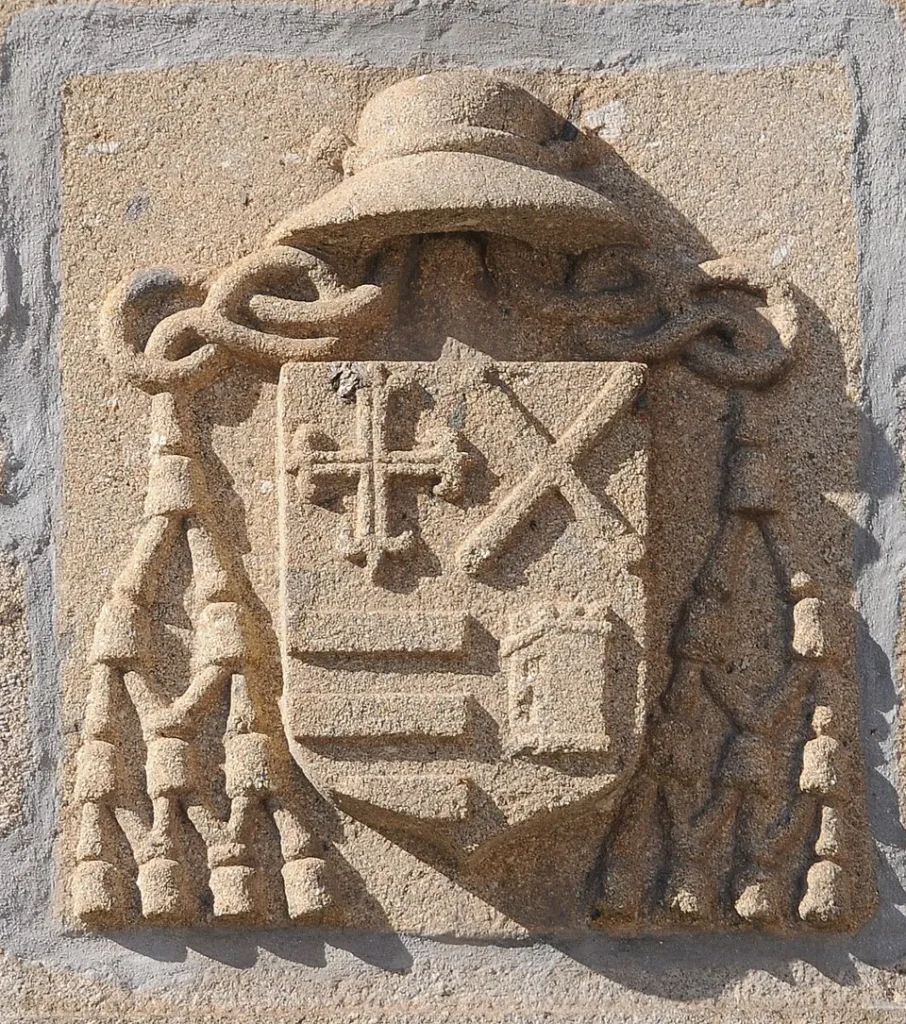
Later alterations changed the building, as happened to many former Jewish spaces in Portugal. Even so, the memory of the synagogue did not disappear completely. A Hebrew inscription preserved in the building associated with the former New Jewish Quarter provides rare material confirmation of Braga’s medieval Jewish presence. The persistence of place names, property descriptions, and references to streets “that had been” the Judiaria also shows how Jewish memory remained embedded in the city’s documentary language.

The Jewish Quarter of Braga is therefore a strong case study in both inclusion and exclusion. Its history shows a community first dispersed through the city, then concentrated near the Cathedral, and finally transferred to a more peripheral but still active urban zone. Its importance lies not only in surviving traces, but in the exceptional documentary record that allows the Jewish topography of medieval Braga to be reconstructed with unusual precision.

Gallery
Community notes

Comments

Logged-in visitors can submit comments for moderation before they appear publicly.

No comments yet.

Article researched and curated by Jew Where.

The Jew Where project is collaborative. Do you have additional information, found an inaccuracy, or have historical photos of this location? Contact our team.
Jewish Quarter of Braga
Portugal / Braga / Neighborhoods & Settlements

Jewish Quarter of Braga

"Braga’s Jewish quarter developed from dispersed residences to the Old and New Judiarias, documented through Cabido records and synagogue traces."

Location
Rua de Santo António das Travessas, Braga, Portugal

The Jewish Quarter of Braga should not be understood as a single fixed street, but as a documented urban sequence. The Jewish presence in Braga is especially important because it can be followed through the property records of the Cabido da Sé de Braga, the Cathedral Chapter, which held much of the city’s urban property in the late Middle Ages. By the late fourteenth century, Jewish residents appear in scattered houses and streets, including Rua da Sapataria, Rua Travessa or Rua do Postigo, and the area of Rua da Erva. This suggests that, before the formal concentration of the community, Jewish life in Braga was embedded within the wider urban fabric.

From dispersed residence to the Old Jewish Quarter

The first clearly documented Jewish quarter of Braga was associated with Rua da Erva, today Rua D. Gonçalo Pereira. From 1466 onward, the records of the Cabido refer to a contract made with the Jewish community for its transfer to another area, confirming the existence of two Jewish quarters: the Judiaria Velha and the Judiaria Nova.

The Old Jewish Quarter occupied a central and economically active part of the city, close to the Cathedral, the Praça da Cidade, the butcheries, the prison, and the archiepiscopal palace. This location matters. It shows that the Jewish community lived under strong ecclesiastical control, but not in complete urban isolation. The first synagogue appears in the documentation as a modest adapted house, without evidence of an ostentatious exterior. It was located in the shadow of the Cathedral and seems to have remained in use for some time after the transfer agreement.

The New Jewish Quarter of Braga

The New Jewish Quarter of Braga was established in 1466 in the southern stretch of Rua da Triparia, now Rua de Santo António das Travessas. Unlike the older quarter, this new space had more clearly defined limits. It occupied only part of one street and was associated with gates, including a southern gate already documented in 1467.

This relocation moved the community away from the central religious and political heart of Braga. At the same time, the documents reveal a dense Jewish urban presence there, with houses, shops, yards, wells, and properties leased from the Cabido. The records preserve names such as Almeida, Montesinho, Brafanes, Galego, Cema, and others, as well as professional profiles that included physicians, goldsmiths, and craftsmen. Braga’s Jewish quarter was therefore not only a residential enclave. It was also a working urban environment shaped by contracts, trades, family networks, and religious life.

Synagogue, inscription, and documentary memory

The synagogue of the New Jewish Quarter occupied one of the most significant houses of the street, near the southern end of the quarter. The building was used as a synagogue sometime after July 1466 and before November 1467. After the expulsion and forced conversion process initiated under King Manuel I, it ceased to function as a Jewish house of worship. By 1502, the former synagogue had already been leased to a Christian ecclesiastical figure.

Later alterations changed the building, as happened to many former Jewish spaces in Portugal. Even so, the memory of the synagogue did not disappear completely. A Hebrew inscription preserved in the building associated with the former New Jewish Quarter provides rare material confirmation of Braga’s medieval Jewish presence. The persistence of place names, property descriptions, and references to streets “that had been” the Judiaria also shows how Jewish memory remained embedded in the city’s documentary language.

The Jewish Quarter of Braga is therefore a strong case study in both inclusion and exclusion. Its history shows a community first dispersed through the city, then concentrated near the Cathedral, and finally transferred to a more peripheral but still active urban zone. Its importance lies not only in surviving traces, but in the exceptional documentary record that allows the Jewish topography of medieval Braga to be reconstructed with unusual precision.

Timeline

  • c. 1369–1380 The Tombo do Cabido de Braga records Jewish residents living in houses and properties belonging to the Cathedral Chapter before formal concentration in a specific quarter.
  • 1400 King João I ordered the constitution of Braga’s Jewish quarter, later known as the Judiaria Velha, in the area of Rua da Erva, today Rua D. Gonçalo Pereira.
  • 1466 The Jewish community was transferred from the Old Jewish Quarter to the New Jewish Quarter in Rua da Triparia, now Rua de Santo António das Travessas.
  • 1467 A southern gate of the New Jewish Quarter was already documented, showing the more clearly delimited character of the new urban space.
  • 1496 The expulsion and forced conversion process under King Manuel I ended open medieval Jewish communal life in Portugal.
  • 1502 The former synagogue of Braga had already been leased to a Christian ecclesiastical figure.
  • 1981 A Hebrew inscription was identified in the building associated with the former New Jewish Quarter, reinforcing the documentary evidence for Braga’s medieval Jewish presence.

Sources & Bibliography

  1. RIBEIRO, Maria do Carmo. Expressões físicas da inclusão e exclusão dos judeus no urbanismo medieval, a partir do caso de Braga. In Inclusão e Exclusão na Europa Urbana Medieval. Local: Castelo de Vide / Lisboa. Editora: Instituto de Estudos Medievais / Câmara Municipal de Castelo de Vide. Ano: 2019. https://www.academia.edu/97026307/INCLUS%C3%83O_E_EXCLUS%C3%83O_NA_EUROPA_URBANA_MEDIEVAL_Inclusion_and_Exclusion_in_Medieval_Urban_Europe
  2. DHLAB / NOVA FCSH / CHAM. Cartório do Cabido da Sé de Braga. Western Sephardic Diaspora Roadmap. Ano: 2021. https://projetos.dhlab.fcsh.unl.pt/s/wsdroadmap/item/5082
  3. LOSA, António. Subsídios para o estudo dos judeus de Braga no séc. XV. Congresso Histórico de Guimarães e Sua Colegiada, vol. V. Local: Guimarães. Ano: 1982. https://chi.guimaraes.pt/actas/1CH/vol5/1ch-vol5-007.pdf
  4. MUNICÍPIO DE BRAGA. Roteiro Judaico em Braga. Local: Braga. Editora: Município de Braga. Ano: n.d. https://www.cm-braga.pt/archive/doc/Roteiro_Judaico_Portugues_PR.pdf
  5. MARQUES, José. A contenda do Cabido com os judeus de Braga, na segunda metade do século XV. Revista Altitude, 2.ª série, ano III, n.º 7–8. Ano: n.d. https://www.nli.org.il/he/articles/RAMBI990006439730705171/NLI
  6. MARQUES, José. Prof. Doutor José Amadeu Coelho Dias: obra histórica. Biblioteca Digital da Faculdade de Letras da Universidade do Porto. Ano: n.d. https://ler.letras.up.pt/uploads/ficheiros/4403.pdf

Additional Information

Current use of the address: Rua D. Gonçalo Pereira and Rua de Santo António das Travessas remain public urban streets; the former synagogue building no longer has a Jewish religious function.

Article researched and curated by Jew Where.

The Jew Where project is collaborative. Do you have additional information, found an inaccuracy, or have historical photos of this location? Contact our team.