Skip to content

"Later medieval Jewish quarter of Coimbra, linked to Santa Justa, Rua Nova, Rua Direita and Sansão until 1496-1497."

The Judiaria Nova de Coimbra was the later medieval Jewish quarter of Coimbra, also known as the Judiaria de Santa Justa. It was established in the second half of the fourteenth century, around 1370, when the Jewish community was relocated to a newly defined area of the lower city. The quarter became associated with Santa Justa, Sansão, Rua Nova, Rua Direita, and the northern arrabalde of Coimbra.

The Creation of the Judiaria Nova

The creation of the Judiaria Nova de Coimbra was not a simple consequence of population growth. It was the result of an organized and contested urban relocation. An earlier attempt to place the new Jewish quarter in the area of Pedreira, near the Colegiada de São Salvador, was rejected after opposition from clergy and local inhabitants.

As a result, the Jewish community was settled in the northern arrabalde, closer to Santa Justa and Sansão. This process shows how Jewish urban space in late medieval Coimbra was shaped by royal authority, local resistance, and the need to define where the community could live, worship, trade, and organize its internal life.

The Santa Justa Quarter

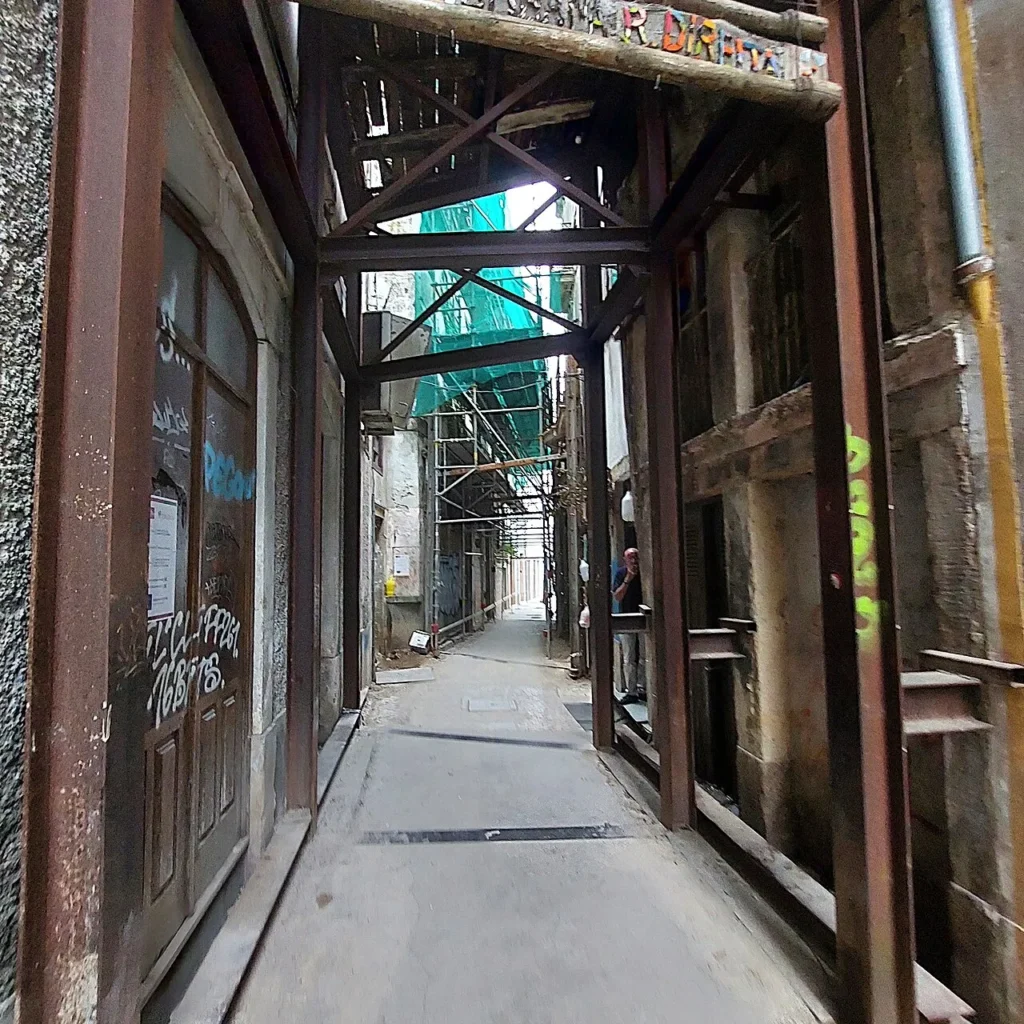
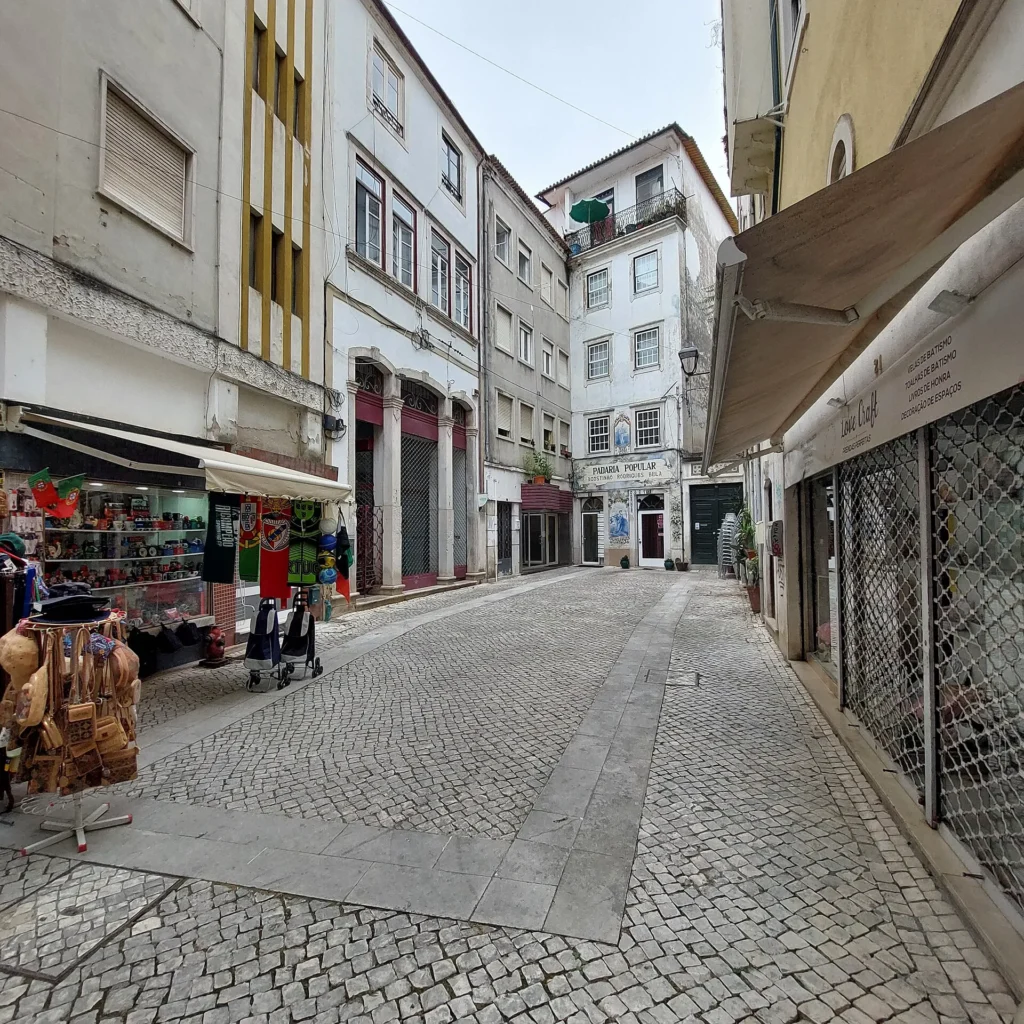
The Judiaria Nova occupied a sector of Coimbra’s Baixa connected to Rua Direita and the Colegiada de Santa Justa, extending toward Largo da Freiria. Other historical references associate the quarter with Rua Nova, Largo de Sansão, and expressions such as “judiaria do arravalde”, “judiaria de Sansam” and “judiaria acerca de Sansam”.

These names are important because they preserve the way the quarter was identified within the medieval city. The Judiaria Nova was not remembered through a single building alone, but through its relationship with streets, parish boundaries, commercial movement, and the suburban geography of Coimbra.

Urban and Social Context

The area of Santa Justa formed part of the lower city’s active urban fabric. Rua Direita was one of the main axes of circulation, while the surrounding Baixa was marked by trades, services, artisans, and commercial activity. Within this context, the Judiaria Nova should not be imagined as an isolated enclave.

It was a regulated Jewish quarter, but it was also part of the daily economic and social life of Coimbra. Its location placed the Jewish community within one of the city’s most active sectors, while still subjecting it to the spatial limits imposed on Jewish communal life in the late medieval kingdom.

Documentation and Memory

The Judiaria Nova de Coimbra is mainly reconstructed through written documentation, historical toponymy, and the study of the medieval urban structure. Its exact limits cannot be fixed with absolute certainty. Even so, the repeated association with Santa Justa, Rua Nova, Rua Direita, Sansão, and the northern arrabalde gives the quarter a coherent historical profile.

Its patrimonial value lies in this documented urban memory. The Judiaria Nova is not only a point on the map, but a historical layer of Coimbra’s Baixa. It records the presence of a Jewish community whose space was shaped by negotiation, pressure, and royal regulation.

The End of the Judiaria Nova

The Judiaria Nova remained the principal Jewish quarter of Coimbra until the rupture of 1496-1497. In 1496, King Manuel I ordered the expulsion of Jews from Portugal. In 1497, the policy led to forced conversion, ending legally recognized Jewish communal life in the kingdom.

After this rupture, the Judiaria Nova no longer functioned as a Jewish quarter. Its former residents either left, were forcibly converted, or continued under the fragile and often dangerous condition of New Christians. Today, the Judiaria Nova de Coimbra survives through documentation, street memory, and the historical structure of the lower city.

Gallery
Community notes

Comments

Logged-in visitors can submit comments for moderation before they appear publicly.

No comments yet.

Article researched and curated by Jew Where.

The Jew Where project is collaborative. Do you have additional information, found an inaccuracy, or have historical photos of this location? Contact our team.
Judiaria Nova de Coimbra
Portugal / Coimbra / Neighborhoods & Settlements

Judiaria Nova de Coimbra

"Later medieval Jewish quarter of Coimbra, linked to Santa Justa, Rua Nova, Rua Direita and Sansão until 1496-1497."

Location
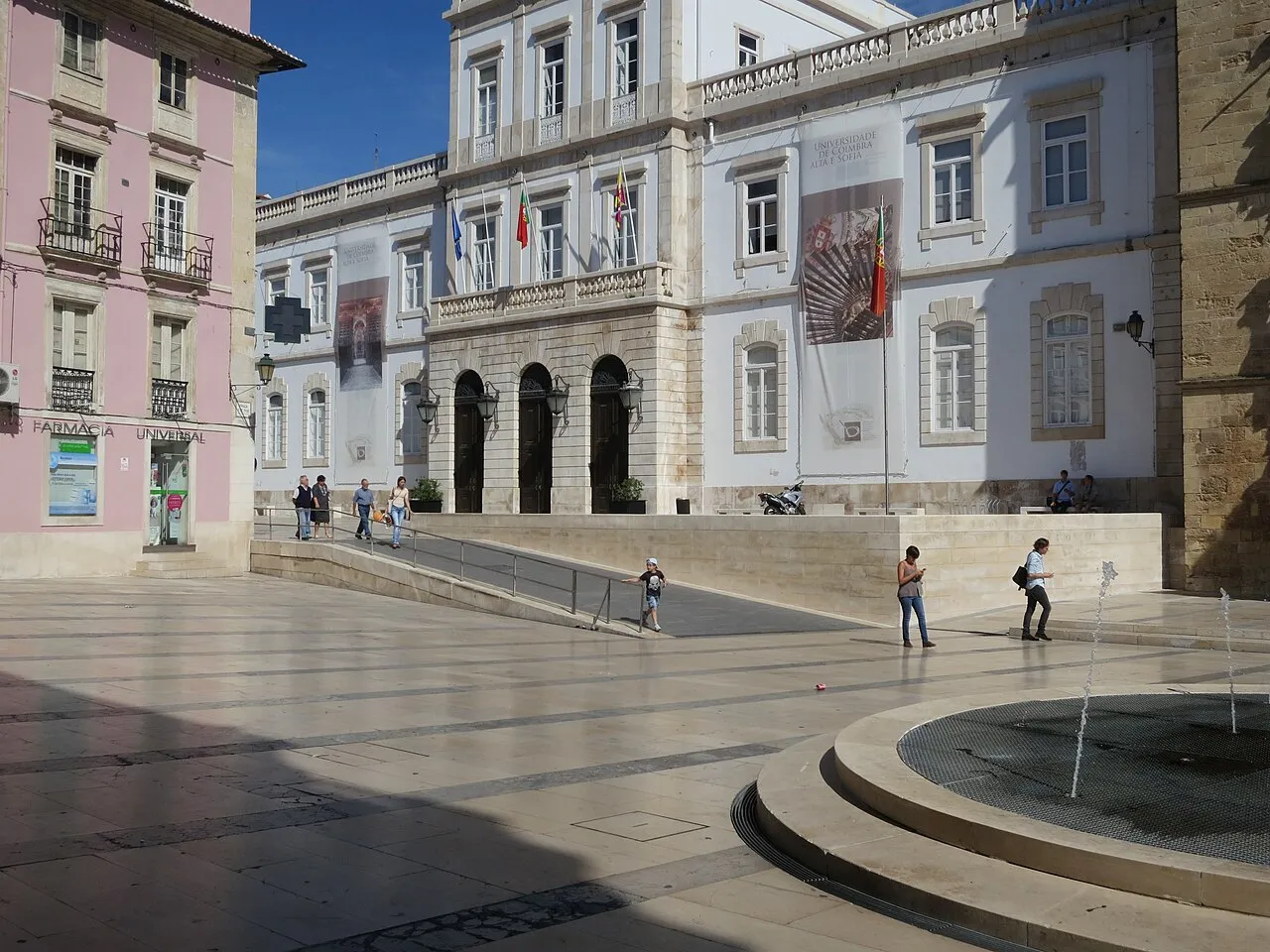
Rua Nova / Rua Direita / Largo da Freiria, Coimbra, Portugal

The Judiaria Nova de Coimbra was the later medieval Jewish quarter of Coimbra, also known as the Judiaria de Santa Justa. It was established in the second half of the fourteenth century, around 1370, when the Jewish community was relocated to a newly defined area of the lower city. The quarter became associated with Santa Justa, Sansão, Rua Nova, Rua Direita, and the northern arrabalde of Coimbra.

The Creation of the Judiaria Nova

The creation of the Judiaria Nova de Coimbra was not a simple consequence of population growth. It was the result of an organized and contested urban relocation. An earlier attempt to place the new Jewish quarter in the area of Pedreira, near the Colegiada de São Salvador, was rejected after opposition from clergy and local inhabitants.

As a result, the Jewish community was settled in the northern arrabalde, closer to Santa Justa and Sansão. This process shows how Jewish urban space in late medieval Coimbra was shaped by royal authority, local resistance, and the need to define where the community could live, worship, trade, and organize its internal life.

The Santa Justa Quarter

The Judiaria Nova occupied a sector of Coimbra’s Baixa connected to Rua Direita and the Colegiada de Santa Justa, extending toward Largo da Freiria. Other historical references associate the quarter with Rua Nova, Largo de Sansão, and expressions such as “judiaria do arravalde”, “judiaria de Sansam” and “judiaria acerca de Sansam”.

These names are important because they preserve the way the quarter was identified within the medieval city. The Judiaria Nova was not remembered through a single building alone, but through its relationship with streets, parish boundaries, commercial movement, and the suburban geography of Coimbra.

Urban and Social Context

The area of Santa Justa formed part of the lower city’s active urban fabric. Rua Direita was one of the main axes of circulation, while the surrounding Baixa was marked by trades, services, artisans, and commercial activity. Within this context, the Judiaria Nova should not be imagined as an isolated enclave.

It was a regulated Jewish quarter, but it was also part of the daily economic and social life of Coimbra. Its location placed the Jewish community within one of the city’s most active sectors, while still subjecting it to the spatial limits imposed on Jewish communal life in the late medieval kingdom.

Documentation and Memory

The Judiaria Nova de Coimbra is mainly reconstructed through written documentation, historical toponymy, and the study of the medieval urban structure. Its exact limits cannot be fixed with absolute certainty. Even so, the repeated association with Santa Justa, Rua Nova, Rua Direita, Sansão, and the northern arrabalde gives the quarter a coherent historical profile.

Its patrimonial value lies in this documented urban memory. The Judiaria Nova is not only a point on the map, but a historical layer of Coimbra’s Baixa. It records the presence of a Jewish community whose space was shaped by negotiation, pressure, and royal regulation.

The End of the Judiaria Nova

The Judiaria Nova remained the principal Jewish quarter of Coimbra until the rupture of 1496-1497. In 1496, King Manuel I ordered the expulsion of Jews from Portugal. In 1497, the policy led to forced conversion, ending legally recognized Jewish communal life in the kingdom.

After this rupture, the Judiaria Nova no longer functioned as a Jewish quarter. Its former residents either left, were forcibly converted, or continued under the fragile and often dangerous condition of New Christians. Today, the Judiaria Nova de Coimbra survives through documentation, street memory, and the historical structure of the lower city.

Timeline

  • c. 1360-1380 The Judiaria Nova was delimited in the lower city, near Santa Justa, Sansão, Rua Direita and Largo da Freiria.
  • c. 1370 The Jewish community was transferred from the older Jewish quarter to the Judiaria de Santa Justa.
  • 1496 King Manuel I ordered the expulsion of Jews from Portugal.
  • 1497 Forced conversion ended legally recognized Jewish communal life in the kingdom.

Sources & Bibliography

  1. CAMPOS, Maria Amélia Álvaro de. População e família na freguesia de Santa Justa de Coimbra nos séculos XIII a XV. I Congresso Histórico Internacional. As cidades na História: População. Ano: n.d. https://chi.guimaraes.pt/actas/1CHI/vol2/1chi-vol2-009.pdf
  2. CAMPOS, Maria Amélia Álvaro de. Cidade e Religião: A Colegiada de Santa Justa de Coimbra na Idade Média. Local: Coimbra. Editora: Imprensa da Universidade de Coimbra. Ano: 2017. https://doi.org/10.14195/978-989-26-1316-1
  3. GOMES, Saul António. A Comunidade Judaica de Coimbra Medieval. Local: Coimbra. Editora: INATEL. Ano: 2003. https://www.academia.edu/43144119/Comunidade_judaica_de_coimbra_medieval_livro
  4. MONTEIRO, Ana Margarida Miranda Milhinhos. A Judiaria Nova de Coimbra no século XV: Entre a Integração e a Expulsão. Local: Coimbra. Editora: Universidade de Coimbra. Ano: 2025. https://estudogeral.uc.pt/handle/10316/121487
  5. CENTER OF PORTUGAL. Coimbra judaica. Ano: n.d. https://www.centerofportugal.com/pt/artigo/coimbra-judaica
  6. SOYER, François. The Persecution of the Jews and Muslims of Portugal: King Manuel I and the End of Religious Tolerance, 1496-7. Local: Leiden. Editora: Brill. Ano: 2007. https://eprints.soton.ac.uk/58890

Additional Information

Current use of the address: The former Jewish quarter no longer functions as a Jewish communal area; the documented area is now part of Coimbra’s ordinary urban fabric.
Historical location note: The coordinates mark an approximate central point within the documented area associated with Rua Nova, Rua Direita, Largo da Freiria and the Santa Justa/Sansão sector.

Article researched and curated by Jew Where.

The Jew Where project is collaborative. Do you have additional information, found an inaccuracy, or have historical photos of this location? Contact our team.