Skip to content
Rua da Judiaria of Lisbon

Rua da Judiaria of Lisbon

"Rua da Judiaria is one of the last visible traces of Lisbon’s medieval Jewish neighborhood, preserving the name and location of Alfama’s old Jewish quarter."

Back to Map

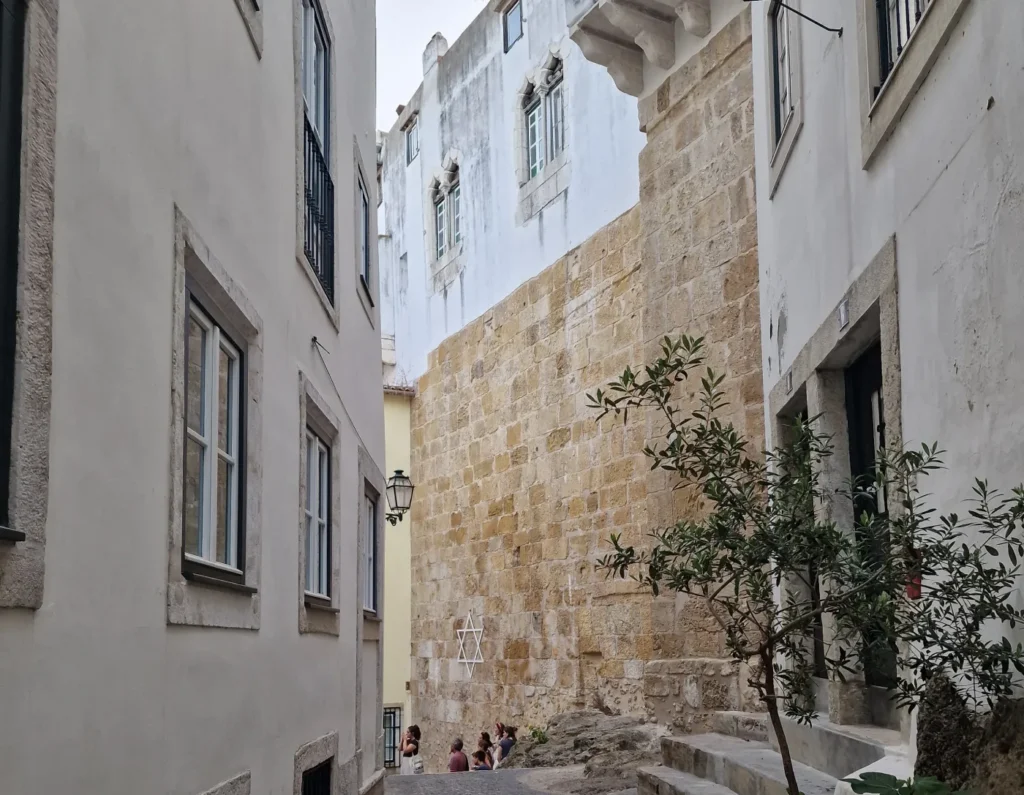
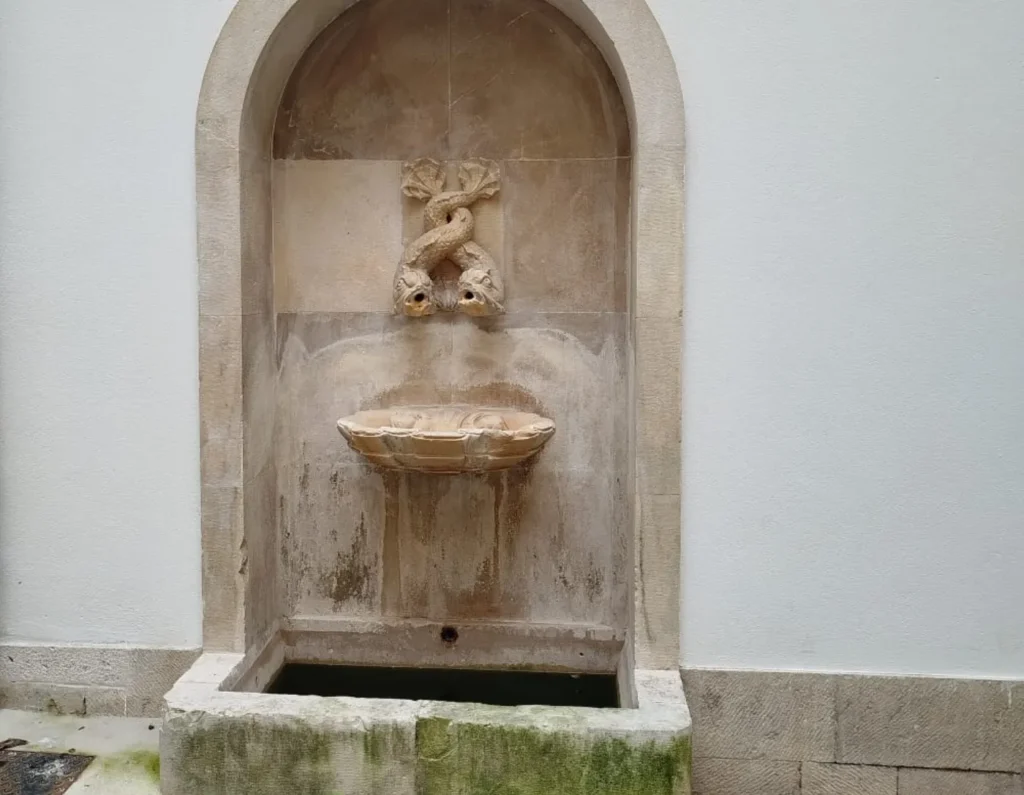
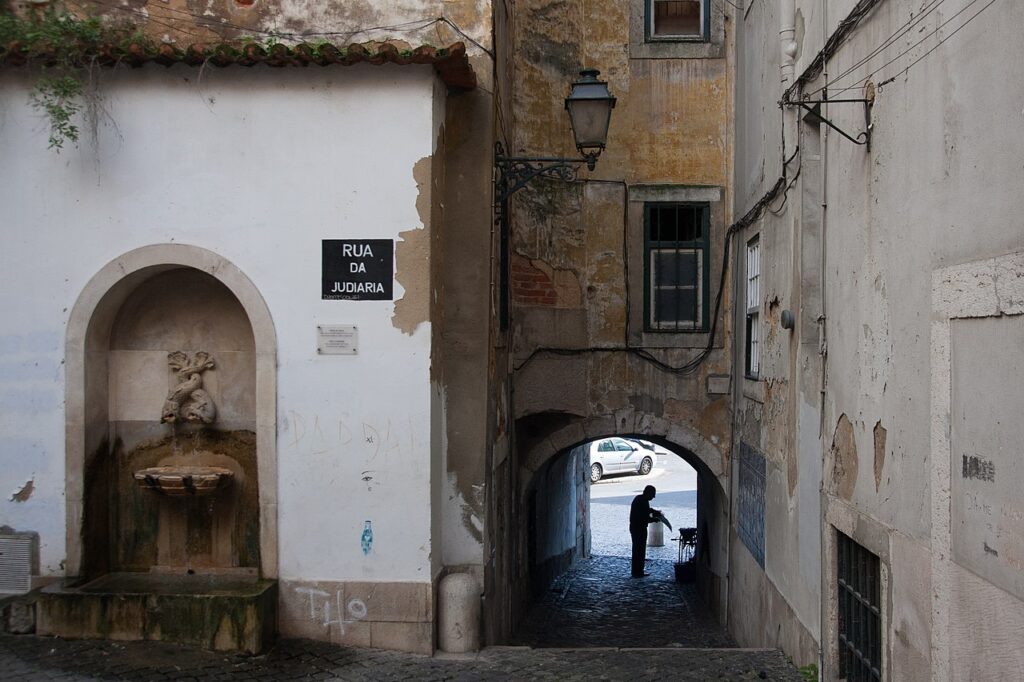
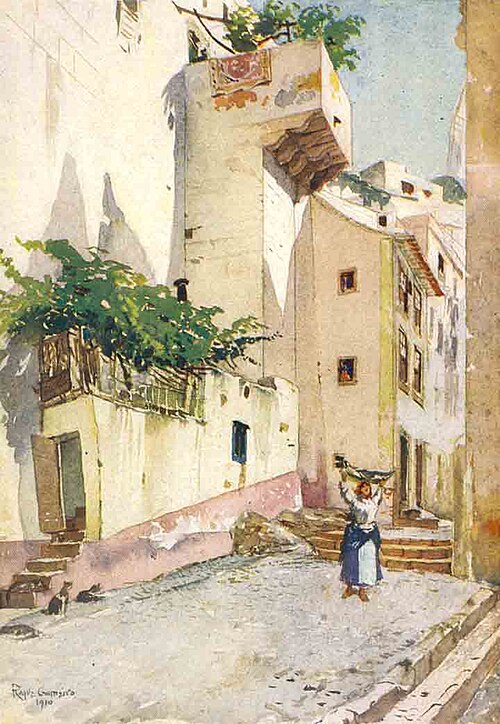
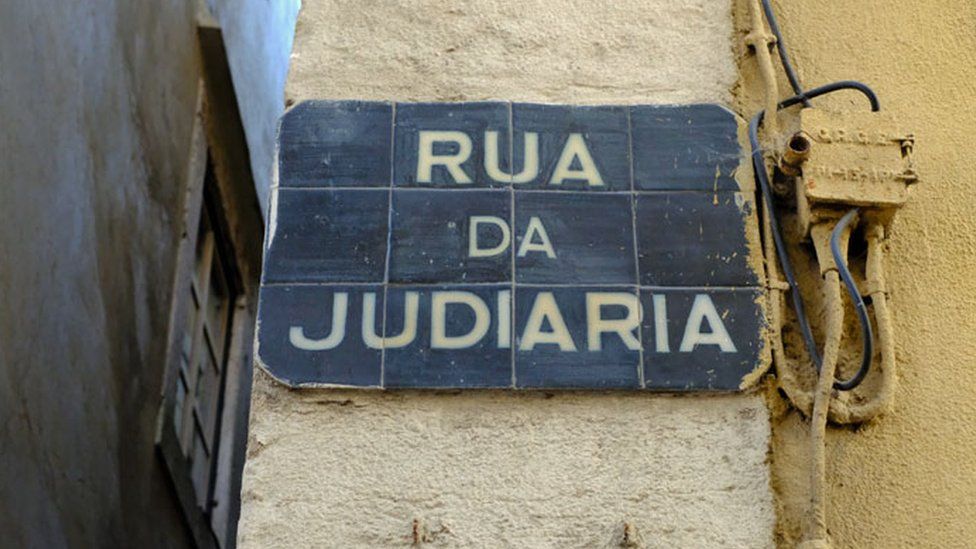
Rua da Judiaria, in Alfama, is one of Lisbon’s most direct surviving urban references to the city’s medieval Jewish presence. Its importance does not lie in a monumental building that has remained intact, but in the persistence of a name attached to a specific street, a rare toponymic trace of the Judiaria Pequena, also known as the Judiaria de Alfama. In this sense, Rua da Judiaria preserves a fragment of Jewish Lisbon within the dense medieval fabric of the eastern slope above the Tagus.

Rua da Judiaria and the Judiaria Pequena

Historical and archaeological studies connect this area to the late medieval Jewish quarter of Alfama. The street links the zone of Beco das Barrelas to the Largo do Terreiro do Trigo, within a landscape shaped by the old defensive structures of Lisbon and by the riverfront economy. In this context, the formation of the Jewish quarter appears to have been reinforced in the 14th century, when documentary tradition places the construction of a synagogue in or near this urban setting around 1373. However, the exact identification of that synagogue must be treated with caution, since the evidence depends on historical references and later archaeological interpretation rather than on a fully preserved building.

From Jewish quarter to transformed urban space

The end of the 15th century radically changed the meaning of this place. In 1496, King Manuel I issued the decree ordering Jews and Muslims to leave Portugal, with the deadline extending into 1497. As a result, public Jewish life was dismantled, and the former judiarias lost their legal, religious and administrative function. Even so, urban memory did not disappear at once. Former Jewish quarters were gradually absorbed into the Christian city, while some houses continued to be occupied by New Christians in the years after the forced conversions.

Memory, absence and continuity

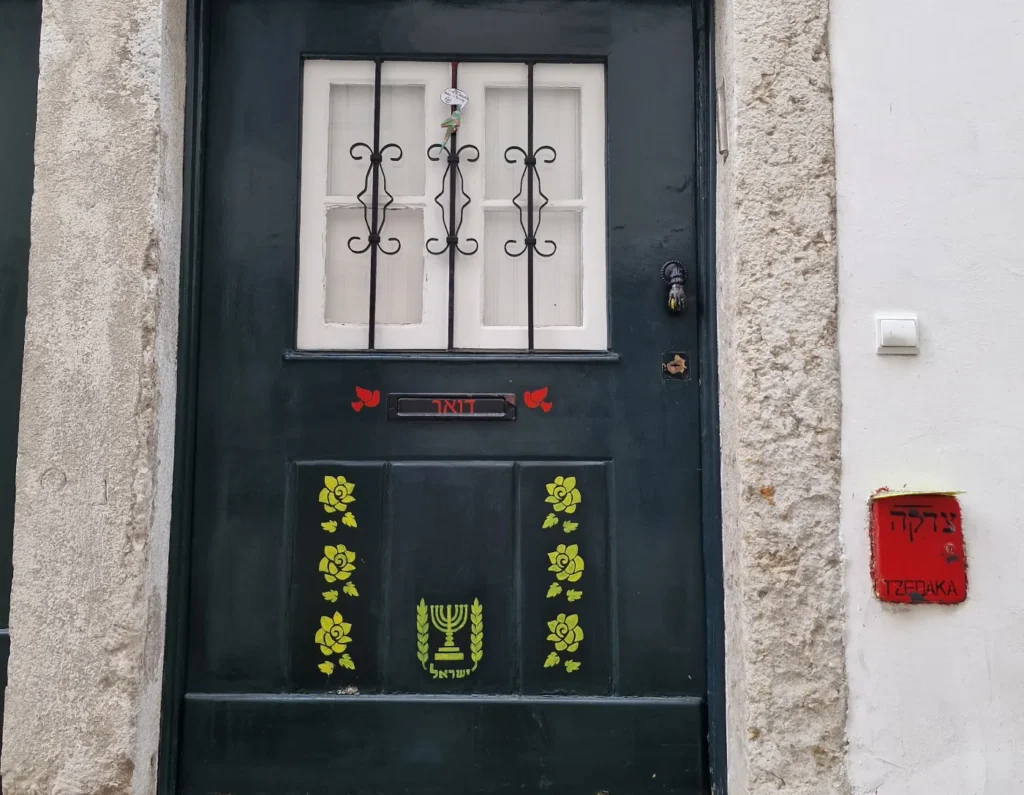
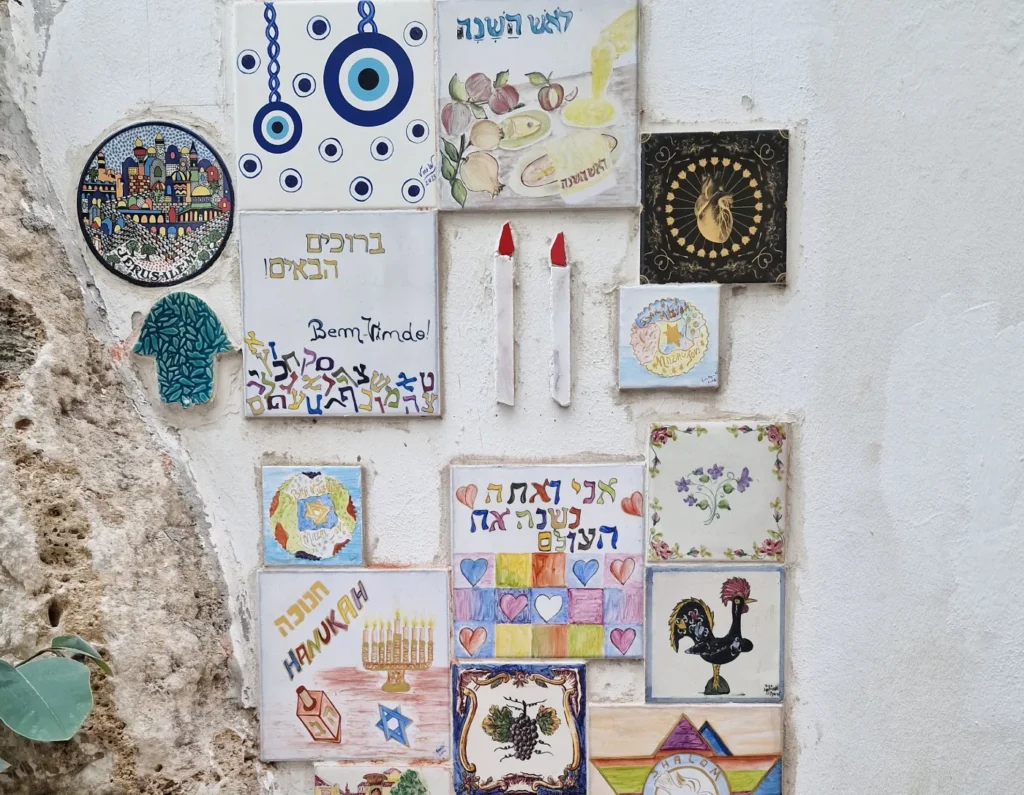
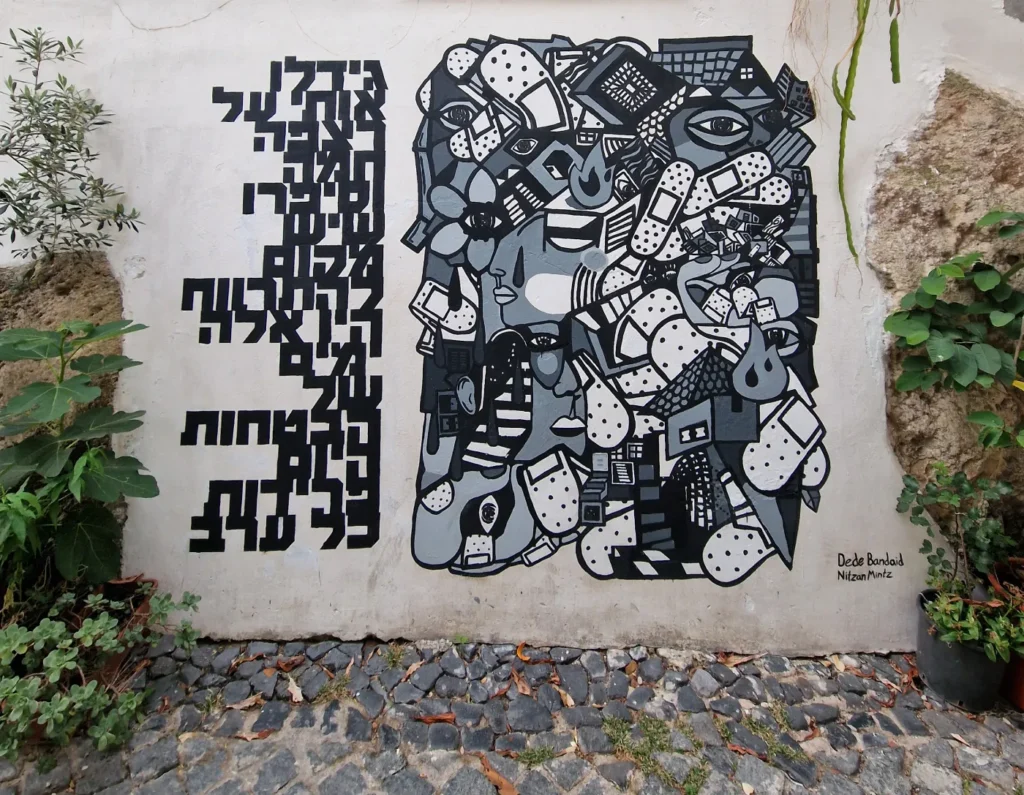
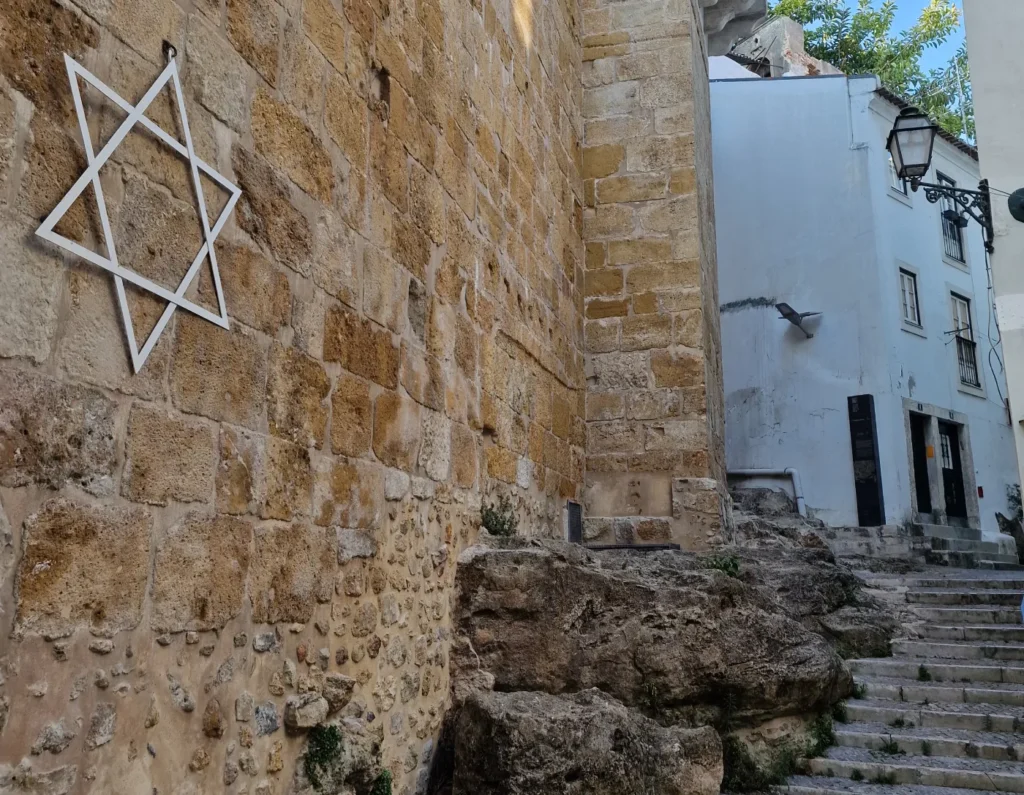
Today, Rua da Judiaria should be read as both presence and absence. It is not a preserved Jewish quarter in the physical sense, nor should it be treated as a place where every stone can be confidently linked to Jewish life. Its value is more precise: it preserves the name, the location and the historical memory of a medieval Jewish space that was later transformed. The presence of the Centro Cultural Judaico Rua da Judiaria on the same street adds a contemporary layer to this memory, reconnecting the place with Jewish heritage, research and public interpretation in Lisbon.

Gallery
Article researched and curated by Jew Where.

The Jew Where project is collaborative. Do you have additional information, found an inaccuracy, or have historical photos of this location? Contact our team.
Rua da Judiaria of Lisbon
Portugal / Lisbon / Neighborhoods & Settlements

Rua da Judiaria of Lisbon

"Rua da Judiaria is one of the last visible traces of Lisbon’s medieval Jewish neighborhood, preserving the name and location of Alfama’s old Jewish quarter."

Location
Rua da Judiaria, Alfama, Lisbon, Portugal

Rua da Judiaria, in Alfama, is one of Lisbon’s most direct surviving urban references to the city’s medieval Jewish presence. Its importance does not lie in a monumental building that has remained intact, but in the persistence of a name attached to a specific street, a rare toponymic trace of the Judiaria Pequena, also known as the Judiaria de Alfama. In this sense, Rua da Judiaria preserves a fragment of Jewish Lisbon within the dense medieval fabric of the eastern slope above the Tagus.

Rua da Judiaria and the Judiaria Pequena

Historical and archaeological studies connect this area to the late medieval Jewish quarter of Alfama. The street links the zone of Beco das Barrelas to the Largo do Terreiro do Trigo, within a landscape shaped by the old defensive structures of Lisbon and by the riverfront economy. In this context, the formation of the Jewish quarter appears to have been reinforced in the 14th century, when documentary tradition places the construction of a synagogue in or near this urban setting around 1373. However, the exact identification of that synagogue must be treated with caution, since the evidence depends on historical references and later archaeological interpretation rather than on a fully preserved building.

From Jewish quarter to transformed urban space

The end of the 15th century radically changed the meaning of this place. In 1496, King Manuel I issued the decree ordering Jews and Muslims to leave Portugal, with the deadline extending into 1497. As a result, public Jewish life was dismantled, and the former judiarias lost their legal, religious and administrative function. Even so, urban memory did not disappear at once. Former Jewish quarters were gradually absorbed into the Christian city, while some houses continued to be occupied by New Christians in the years after the forced conversions.

Memory, absence and continuity

Today, Rua da Judiaria should be read as both presence and absence. It is not a preserved Jewish quarter in the physical sense, nor should it be treated as a place where every stone can be confidently linked to Jewish life. Its value is more precise: it preserves the name, the location and the historical memory of a medieval Jewish space that was later transformed. The presence of the Centro Cultural Judaico Rua da Judiaria on the same street adds a contemporary layer to this memory, reconnecting the place with Jewish heritage, research and public interpretation in Lisbon.

Timeline

  • Late medieval period The area became associated with the Judiaria Pequena, also known as the Judiaria de Alfama.
  • c. 1373 Documentary tradition places the construction of a synagogue in or near this urban setting around this date.
  • 1496-1497 King Manuel I’s decree and the forced conversions dismantled public Jewish life in Portugal’s former judiarias.
  • Present day Rua da Judiaria remains as a toponymic and urban memory of medieval Jewish Lisbon.

Sources & Bibliography

  1. Filipe Alexandre Santos Oliveira, “Espólio de Idade Moderna, proveniente do Beco das Barrelas, Alfama, Lisboa,” Dissertação de Mestrado em Arqueologia, Universidade NOVA de Lisboa, 2012. https://run.unl.pt/bitstream/10362/9244/1/Tese%20de%20Mestrado%20-%20Filipe%20Oliveira.pdf
  2. Toponímia de Lisboa, “A Rua da Judiaria Pequena de Alfama.” https://toponimialisboa.wordpress.com/2015/06/02/a-rua-da-judiaria-pequena-de-alfama
  3. Gabinete de Estudos Olisiponenses, Câmara Municipal de Lisboa, Manuel Fialho, “A primeira judiaria de Lisboa.” https://geo.lisboa.pt/atividades-e-difusao/investigacao/detalhe/a-primeira-judiaria-de-lisboa
  4. Amélia Aguiar Andrade, “O Desaparecimento espacial das judiarias nos núcleos urbanos portugueses de finais da Idade Média: o caso de Lisboa,” Faculdade de Ciências Sociais e Humanas da Universidade Nova de Lisboa. https://ler.letras.up.pt/uploads/ficheiros/4804.pdf
  5. Marco Calado, Luís Almeida, Vasco Leitão, and Manuela Leitão, “Cronologias absolutas para a Iª Idade do Ferro em Olisipo: o exemplo de uma ocupação em ambiente cársico na actual Rua da Judiaria em Alfama,” CIRA Arqueologia II / ResearchGate. https://www.researchgate.net/publication/320841070_Cronologias_absolutas_para_a_1_idade_do_Ferro_em_Olisipo-O_exemplo_de_uma_ocupacao_em_ambiente_carsico_na_actual_Rua_da_judiaria_em_Alfama
  6. RTP Ensina, Paulo Sousa Pinto, “A expulsão dos judeus de Portugal.” https://ensina.rtp.pt/artigo/a-expulsao-dos-judeus-de-portugal
  7. Visit Lisboa, “Centro Cultural Judaico Rua da Judiaria.” https://www.visitlisboa.com/pt-pt/locais/centro-cultural-judaico-rua-da-judiaria

Article researched and curated by Jew Where.

The Jew Where project is collaborative. Do you have additional information, found an inaccuracy, or have historical photos of this location? Contact our team.