Skip to content
Judiaria Grande

Judiaria Grande

"Medieval Lisbon’s main Jewish quarter in the Baixa, a dense gated area with synagogue and communal facilities, dissolved after 1497 and absorbed into the city."

Back to Map

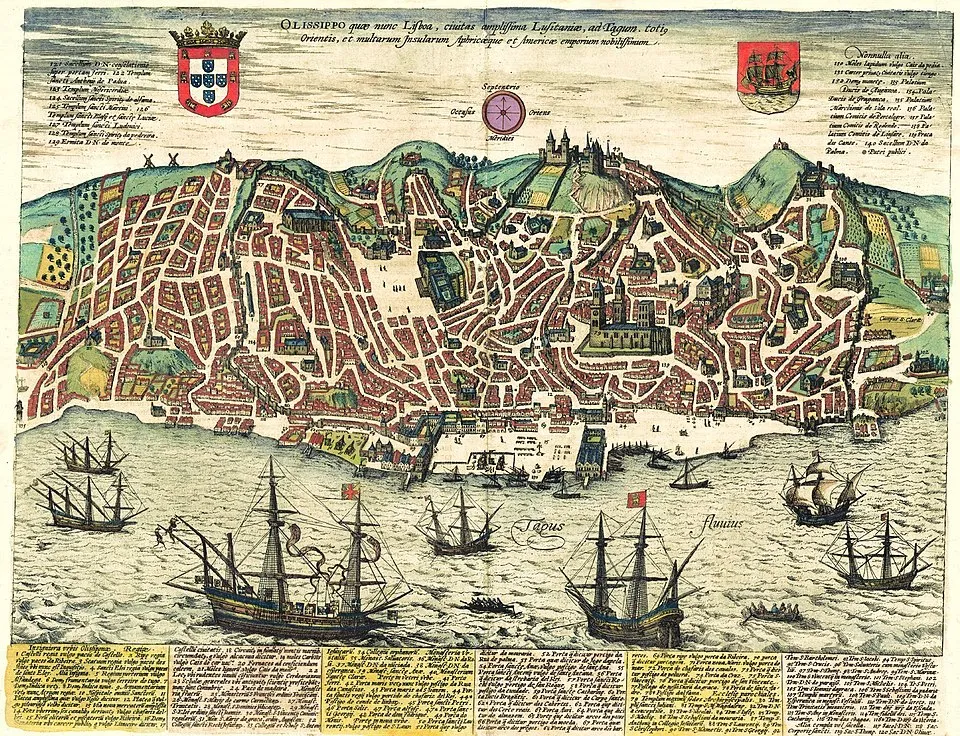
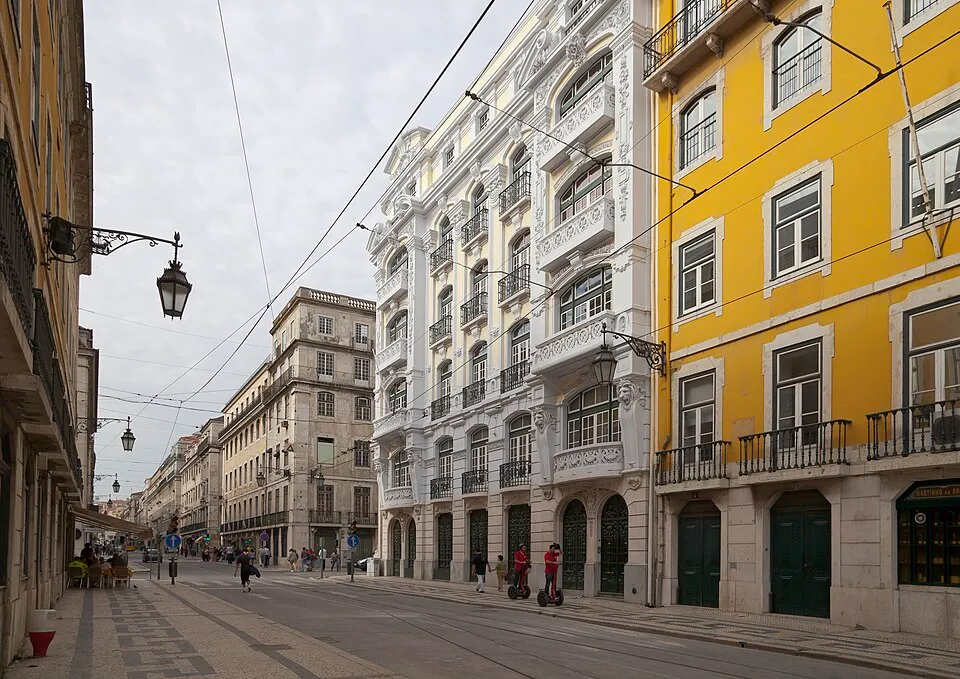
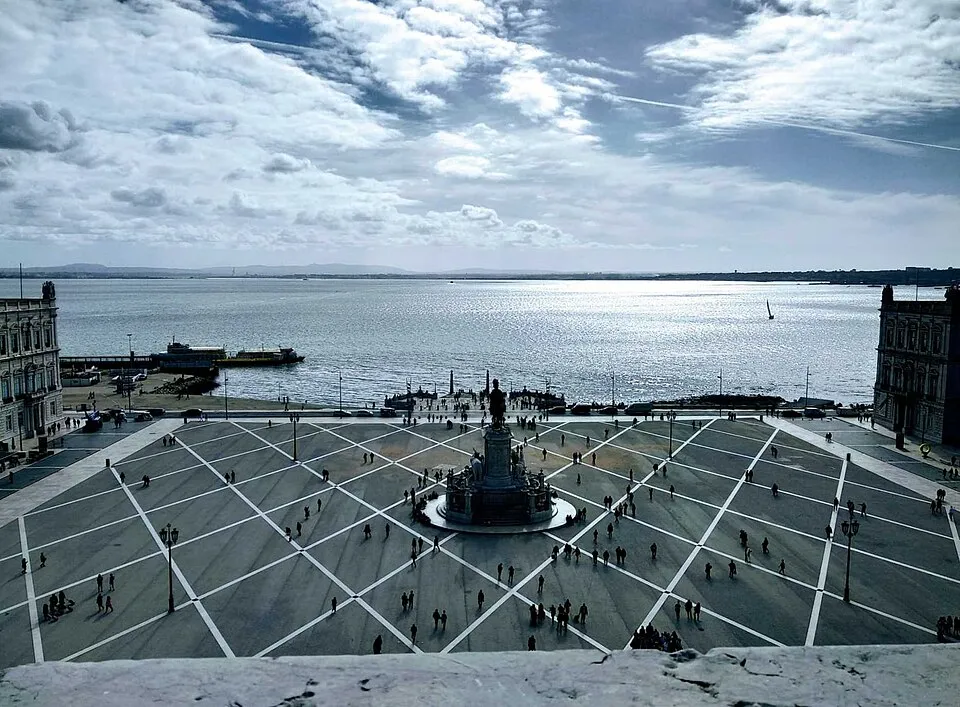
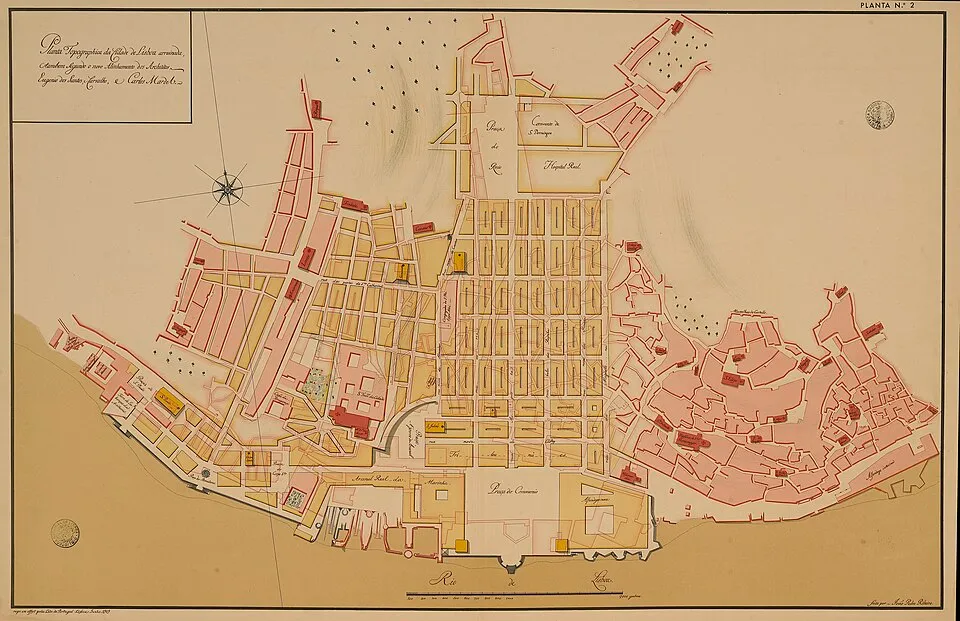
The Judiaria Grande was medieval Lisbon’s principal Jewish quarter and one of the city’s most central minority spaces, integrated into the commercial heart of the lower town. It stood in the area that later became the Baixa, close to the Rossio and the main market routes linking the riverside to the inner city. By the late Middle Ages it had become a dense, highly structured urban quarter, marked not only by housing and workshops but also by communal services and administrative facilities that allowed Jewish life to function as a self-organized community within the wider city.

How large was it, and how was it organized?

By the 15th century the Judiaria Grande reached its greatest extent and functioned as a compact, busy neighborhood of narrow streets, lanes, alleys, and cul-de-sacs, described in sources as a labyrinthine fabric shaped by property boundaries and intense occupation. Its main spine was the Rua do Picoto, also known as Rua dos Mercadores, running from the area of São Julião toward the Great Synagogue. The quarter was accessed through seven gates; they were closed at the Ave-Marias and opened at daybreak, a regulated rhythm that made the quarter a controlled space without implying a completely separate “city within a city.”

Institutions and communal facilities

The Judiaria Grande concentrated a full range of communal institutions. At its core stood the Great Synagogue of Lisbon, built in 1307 (according to its commemorative Hebrew inscription), whose forecourt was one of the quarter’s principal gathering points. The synagogue area anchored communal governance, public deliberation, and social life, and it remained the central institutional reference for Lisbon’s Jewish communes.

Beyond the synagogue, sources indicate an urban infrastructure typical of a mature medieval Jewish quarter, including:

  • Educational institutions, including a school in the Poio (recorded as operating on an upper floor of a building linked to Christian ecclesiastical property), showing how Jewish communal life and Christian lordship could overlap within the same urban blocks.
  • A named learned and administrative space, the Estudo of Guedelha (Guedaliah) Palaçano, situated near the synagogue precinct, reflecting the presence of scholarship and elite patronage in the quarter.
  • Kosher food and provisioning facilities, including a butchery (carniçaria) at the northern edge of the quarter, associated with inns and storage spaces such as an adega. More broadly, references to açougues and daily provisioning structures belong to the quarter’s routine urban economy.
  • Public baths (banhos), attested as part of the quarter’s daily life and urban services.
  • Administrative and judicial facilities, including a jail (cadeia) and the house of the rabbi (casa do rabi), indicating internal authority structures and local governance functions.
  • A socially regulated zone such as a mancebia (brothel), recorded on Rua do Picoto with access toward major thoroughfares, illustrating how the quarter also contained spaces of marginal or controlled activity, as in Christian urban districts.

These institutions sat within a broader urban landscape of shops, artisanal production, and mixed property ownership, where Jewish communal bodies, prominent Jewish families, the Crown, and Christian churches all held real estate interests that shaped the quarter’s street geometry and density.

1449: the assault on the Judiaria Grande

In December 1449, the Judiaria Grande was violently attacked by a Christian mob. Accounts describe looting and violence against Jews, followed by Crown intervention aimed at restoring order and punishing participants. The episode is a key marker of late medieval tension in Lisbon’s urban society and a warning sign of the vulnerabilities that could erupt even in a long-established, central quarter.

End of the quarter and later transformation

The quarter’s institutional life ended with the forced conversion of Portugal’s Jews in 1497 under King Manuel I. The Judiaria Grande ceased to exist as a Jewish space, and major communal buildings were seized and repurposed. In particular, the Great Synagogue site was transformed into a Christian church dedicated to Nossa Senhora da Conceição, a change that became part of the symbolic remaking of the city after 1497.

Gallery
Article researched and curated by Jew Where.

The Jew Where project is collaborative. Do you have additional information, found an inaccuracy, or have historical photos of this location? Contact our team.

Judiaria Grande
Portugal / Lisbon / History & Archaeology

Judiaria Grande

"Medieval Lisbon’s main Jewish quarter in the Baixa, a dense gated area with synagogue and communal facilities, dissolved after 1497 and absorbed into the city."

Location
Rua da Prata, Lisbon, Portugal

The Judiaria Grande was medieval Lisbon’s principal Jewish quarter and one of the city’s most central minority spaces, integrated into the commercial heart of the lower town. It stood in the area that later became the Baixa, close to the Rossio and the main market routes linking the riverside to the inner city. By the late Middle Ages it had become a dense, highly structured urban quarter, marked not only by housing and workshops but also by communal services and administrative facilities that allowed Jewish life to function as a self-organized community within the wider city.

How large was it, and how was it organized?

By the 15th century the Judiaria Grande reached its greatest extent and functioned as a compact, busy neighborhood of narrow streets, lanes, alleys, and cul-de-sacs, described in sources as a labyrinthine fabric shaped by property boundaries and intense occupation. Its main spine was the Rua do Picoto, also known as Rua dos Mercadores, running from the area of São Julião toward the Great Synagogue. The quarter was accessed through seven gates; they were closed at the Ave-Marias and opened at daybreak, a regulated rhythm that made the quarter a controlled space without implying a completely separate “city within a city.”

Institutions and communal facilities

The Judiaria Grande concentrated a full range of communal institutions. At its core stood the Great Synagogue of Lisbon, built in 1307 (according to its commemorative Hebrew inscription), whose forecourt was one of the quarter’s principal gathering points. The synagogue area anchored communal governance, public deliberation, and social life, and it remained the central institutional reference for Lisbon’s Jewish communes.

Beyond the synagogue, sources indicate an urban infrastructure typical of a mature medieval Jewish quarter, including:

  • Educational institutions, including a school in the Poio (recorded as operating on an upper floor of a building linked to Christian ecclesiastical property), showing how Jewish communal life and Christian lordship could overlap within the same urban blocks.
  • A named learned and administrative space, the Estudo of Guedelha (Guedaliah) Palaçano, situated near the synagogue precinct, reflecting the presence of scholarship and elite patronage in the quarter.
  • Kosher food and provisioning facilities, including a butchery (carniçaria) at the northern edge of the quarter, associated with inns and storage spaces such as an adega. More broadly, references to açougues and daily provisioning structures belong to the quarter’s routine urban economy.
  • Public baths (banhos), attested as part of the quarter’s daily life and urban services.
  • Administrative and judicial facilities, including a jail (cadeia) and the house of the rabbi (casa do rabi), indicating internal authority structures and local governance functions.
  • A socially regulated zone such as a mancebia (brothel), recorded on Rua do Picoto with access toward major thoroughfares, illustrating how the quarter also contained spaces of marginal or controlled activity, as in Christian urban districts.

These institutions sat within a broader urban landscape of shops, artisanal production, and mixed property ownership, where Jewish communal bodies, prominent Jewish families, the Crown, and Christian churches all held real estate interests that shaped the quarter’s street geometry and density.

1449: the assault on the Judiaria Grande

In December 1449, the Judiaria Grande was violently attacked by a Christian mob. Accounts describe looting and violence against Jews, followed by Crown intervention aimed at restoring order and punishing participants. The episode is a key marker of late medieval tension in Lisbon’s urban society and a warning sign of the vulnerabilities that could erupt even in a long-established, central quarter.

End of the quarter and later transformation

The quarter’s institutional life ended with the forced conversion of Portugal’s Jews in 1497 under King Manuel I. The Judiaria Grande ceased to exist as a Jewish space, and major communal buildings were seized and repurposed. In particular, the Great Synagogue site was transformed into a Christian church dedicated to Nossa Senhora da Conceição, a change that became part of the symbolic remaking of the city after 1497.

Timeline

  • 1205 A contract of sale mentions houses in the “Aljazaria dos judeus” in the Madalena parish, the earliest secure spatial reference for Lisbon’s first Jewish quarter.
  • 1307 Construction of the Great Synagogue of Lisbon, according to its commemorative Hebrew inscription.
  • 15th century The Judiaria Grande reaches its greatest extent and density, with seven gates regulating access and Rua do Picoto / Rua dos Mercadores as its main artery.
  • December 1449 The quarter is violently assaulted by a Christian mob, followed by royal intervention to restore order.
  • 1497 Forced conversion ends Jewish communal life in Portugal; the Judiaria Grande is dissolved and its communal buildings are confiscated.
  • 16th century The former quarter is absorbed into the wider city, and former public buildings are reused as housing and revenue properties.

Sources & Bibliography

  1. TAVIM, José Alberto Rodrigues da Silva. Judeus e judiarias de Lisboa nos alvores dos Descobrimentos. Perspectivas dos espaços e das gentes. In Lisboa Medieval: Gentes, Espaços e Poderes. Local: Lisboa. Editora: IEM. Ano: 2017. https://repositorioaberto.uab.pt/bitstream/10400.2/13302/1/LISBOA_MEDIEVAL_Gentes_Espacos_e_Poderes%20%281%29.pdf
  2. ANDRADE, Amélia Aguiar. O desaparecimento espacial das judiarias nos núcleos urbanos portugueses de finais da Idade Média. O caso de Lisboa. In Estudos em Homenagem ao Professor Doutor José Marques. Local: Porto. Editora: Faculdade de Letras da Universidade do Porto. Ano: 2006. https://ler.letras.up.pt/uploads/ficheiros/4804.pdf
  3. MORENO, Humberto Carlos Baquero. O assalto à Judiaria Grande de Lisboa em Dezembro de 1449. Revista de Ciências do Homem da Universidade de Lourenço Marques, vol. III, série A. Local: Lourenço Marques. Editora: Universidade de Lourenço Marques. Ano: 1970. https://catalogo.cm-penela.pt/Opac/Pages/Search/Results.aspx?Database=105107_GLOBAL&SearchText=AUT%3D%22MORENO%2C+Humberto+Baquero+%22
  4. SOYER, François. The Persecution of the Jews and Muslims of Portugal. King Manuel I and the End of Religious Tolerance (1496-7). Local: Leiden. Editora: Brill. Ano: 2007. https://brill.com/display/title/14251
  5. CÂMARA MUNICIPAL DE LISBOA. Igreja da Conceição-Velha. Diretório da Cidade. Local: Lisboa. Editora: Câmara Municipal de Lisboa. Ano: n.d. https://informacoeseservicos.lisboa.pt/contactos/diretorio-da-cidade/igreja-da-conceicao-velha
  6. GABINETE DE ESTUDOS OLISIPONENSES. A primeira judiaria de Lisboa. Local: Lisboa. Editora: Câmara Municipal de Lisboa. Ano: n.d. https://geo.lisboa.pt/atividades-e-difusao/investigacao/detalhe/a-primeira-judiaria-de-lisboa

Article researched and curated by Jew Where.

The Jew Where project is collaborative. Do you have additional information, found an inaccuracy, or have historical photos of this location? Contact our team.