

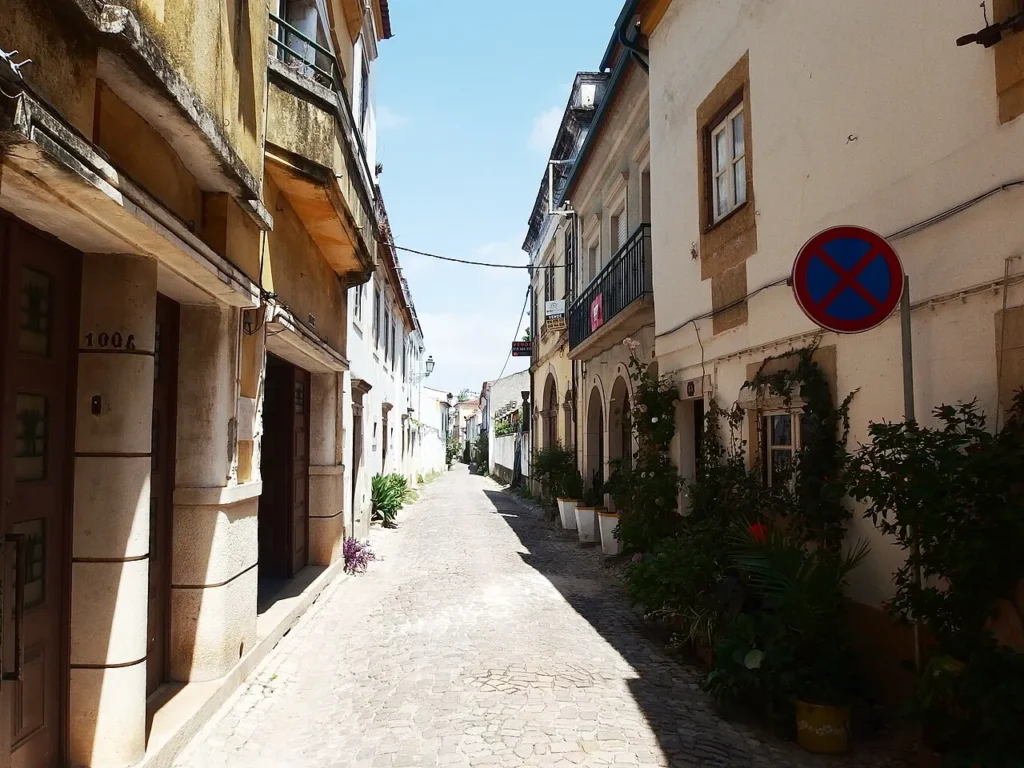
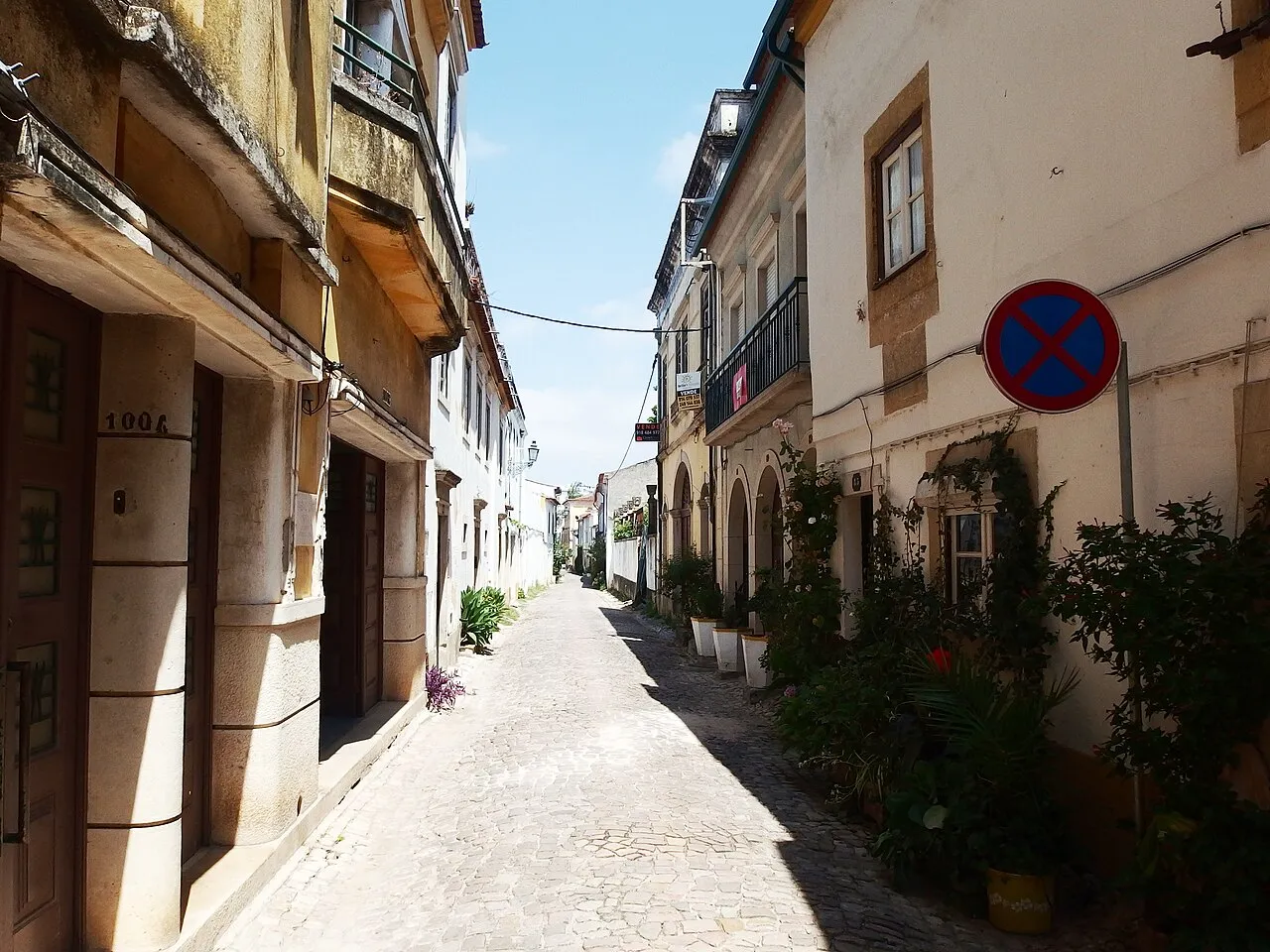
The Judiaria de Tomar occupied the area of today’s Rua Dr. Joaquim Jacinto, the old Rua da Judiaria, later called Rua Nova. It was a central street of the town, close to commercial activity and integrated into the urban core of Tomar rather than set apart on the margins.
First Evidence of the Jewish Community
The oldest evidence usually associated with the Jewish presence of Tomar is the epitaph of Rabbi José de Tomar, dated 1315. By the end of the fourteenth century the community was already institutionally visible. In 1384 there is reference to the serviço geral dos judeus de Tomar, which shows that the Jews of the town already formed a recognized and taxable communal body.
The Comuna of Tomar
The Judiaria de Tomar was the space of an organized comuna, not just a cluster of houses. The Jewish community of the town had enough stability and structure to maintain its own collective life, and by the fifteenth century it was large enough to sustain a defined quarter and a synagogue. Later historiography has estimated a population of around 150 to 200 Jews in mid-fifteenth-century Tomar, rising to about 250 to 300 by the time of the expulsion, with additional growth linked to Jews who arrived from Castile.
Why Jews Settled in Tomar
Tomar was one of the main political, administrative, and economic centers linked to the Order of Christ. That position helps explain the consolidation of a Jewish community there. The organization of the Judiaria is associated in local and historical tradition with the period of Infante D. Henrique, under whose protection Jews were settled in this central street. The quarter was therefore connected to the wider importance of Tomar itself and to the urban opportunities created by a town with strong commercial and institutional life.
Street and Limits
The Judiaria was organized around a single main street. Local historical interpretation places its limits near Rua Direita and Rua dos Moinhos and holds that the quarter had gates at its ends, closed at night. This gives the Judiaria de Tomar a clear urban form: a controlled Jewish street inside the town, but in a central and economically active area.
What Survives
The old street survives today as Rua Dr. Joaquim Jacinto. The former synagogue still stands there and remains the clearest material marker of the Judiaria. Even though the gates no longer survive, the location of the quarter is still easy to understand in the present city through the continuity of the street and the permanence of its main monument.
Gallery
Sources & Bibliography
- TAVARES, Maria José Ferro. A Judiaria de Tomar. In SANTOS SIMÕES, J. M., ed. Tomar e a sua Judiaria. Local: Tomar. Editora: Museu Luso-Hebraico de Abraham Zacuto. Ano: 1992.
- CÂMARA MUNICIPAL DE TOMAR. Sinagoga. Local: Tomar. Editora: Câmara Municipal de Tomar. Ano: n.d
- CENTRO NACIONAL DE CULTURA. Antiga Sinagoga de Tomar. Editora: e-cultura. Ano: n.d
- VISIT PORTUGAL. Museu Luso-Hebraico de Abraham Zacuto - Sinagoga. Editora: Visit Portugal. Ano: n.d
Article researched and curated by Jew Where.
The Jew Where project is collaborative. Do you have additional information, found an inaccuracy, or have historical photos of this location? Contact our team.
Community notes
Comments
Logged-in visitors can submit comments for moderation before they appear publicly.
No comments yet.
Log in to leave a comment. Go to Account.