

The Judiaria da Covilhã was one of the most important Jewish quarters of the Beira Interior in the late Middle Ages. Its history is preserved mainly through documents, royal records and historical reconstruction of the old arrabalde, rather than through a surviving monument.
No building in Covilhã can be securely identified today as the medieval synagogue, cemetery or communal structure of the Jewish community. The surviving evidence points instead to a large Jewish urban area, located outside the walls and integrated into the extramural life of the town.
The Judiaria da Covilhã in the Urban Record
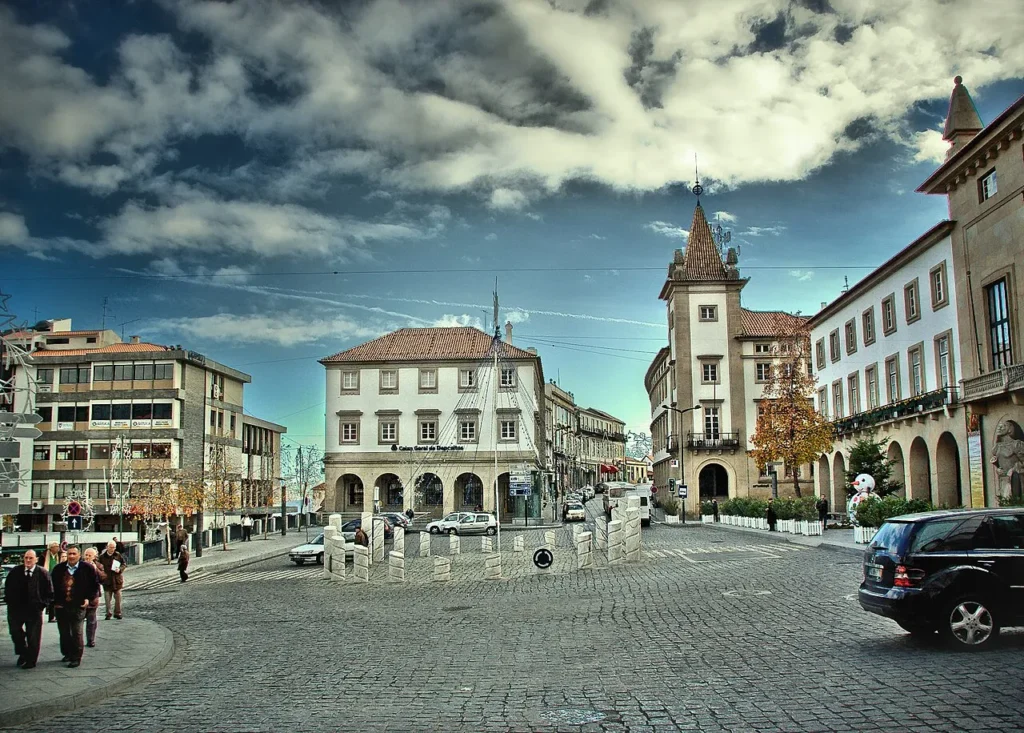
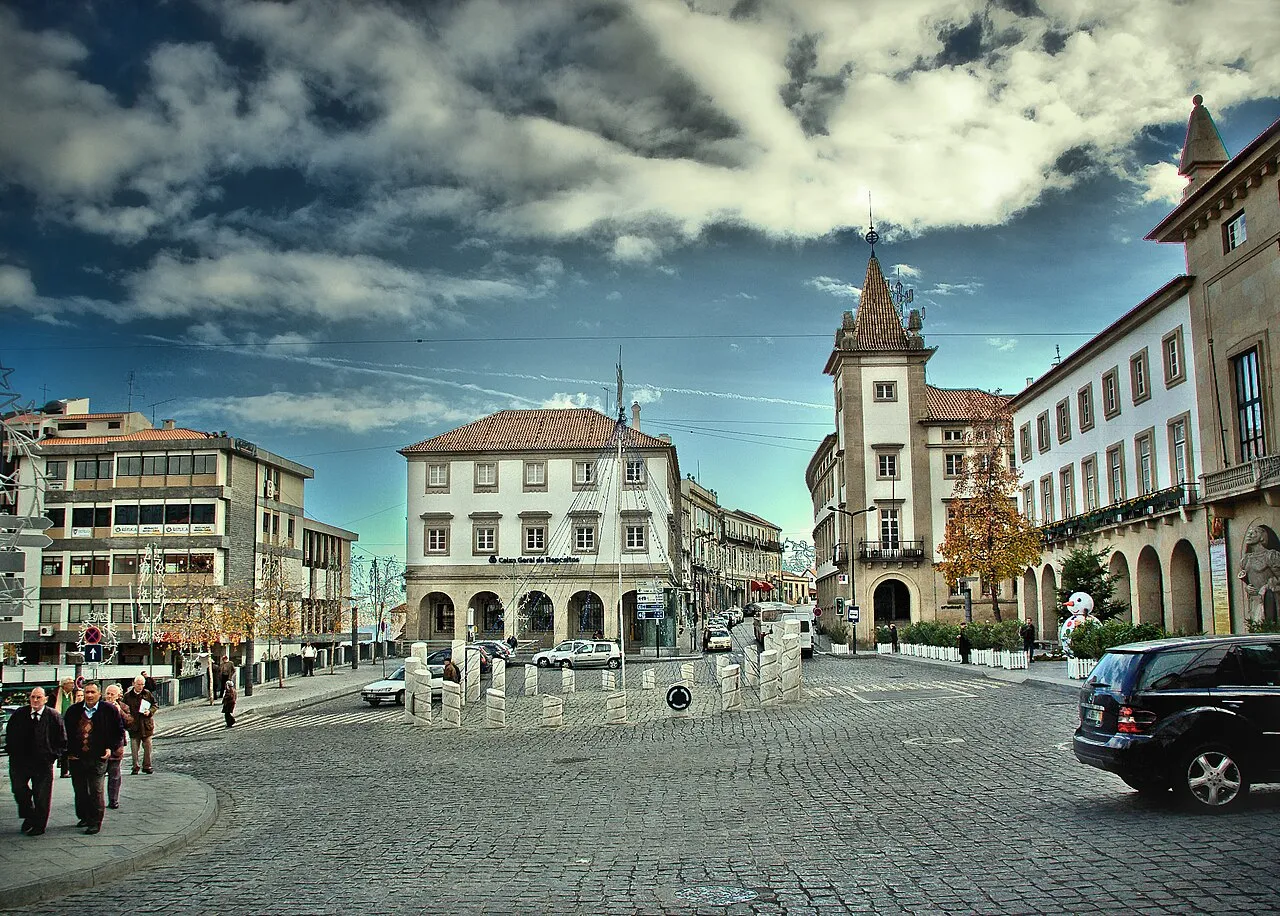
Today, the area associated with the former Judiaria da Covilhã corresponds approximately to the streets around Rua das Flores, Rua da Alegria, Beco da Alegria and Rua do Ginásio Clube. Historical studies also connect the older Jewish area to the broader arrabalde and to streets such as the present Rua do Escondidinho.
These streets should not be read as fixed medieval boundaries. They are cautious urban references for a quarter whose exact limits changed over time and are known mainly through written sources.
The strongest early evidence comes from the Tombo da Comarca da Beira, dated 1395. This document mentions the judiaria of Covilhã and records two Jewish blacksmiths living in royal houses. It is one of the clearest documentary references to Jewish communal presence in the town.
A Large Extramural Jewish Quarter
The Jewish quarter of Covilhã was unusual because it stood outside the walls. Historical reconstruction places it in a broad extramural area, described in the sources as occupying “half” of the arrabalde. It followed the slope of the terrain and was formed by several streets, lanes and passageways connected to the Christian part of the town.
In 1468, the representatives of Covilhã asked King Afonso V to restrict the number of doors in the Jewish quarter. The request is important because it shows that the judiaria was not a small isolated street. It was an extensive and populated urban space, with several openings into the surrounding town.
The king accepted the request and ordered the closure of doors that opened toward churchyards. Other doors remained in use. They were to be closed at the Ave-Marias and opened again at sunrise, following the rules imposed on several Jewish quarters in late medieval Portugal.
The demographic scale of the community was also significant. In the census of 1496, Covilhã had 2,334 recorded “persons”, a category that cannot be translated directly into modern population figures. Of these, 108 were described as followers of the Law of Moses, around five percent of the total. If these entries represent household heads, the Jewish population may have reached several hundred people.
Synagogue, Names and Community Life
The synagogue stood in the Rua dos Judeus, but its exact location is not securely known. The documents allow us to say that the community had a synagogue and that it likely served as a house of prayer, a space of teaching and a centre of communal administration. No surviving building can be identified today as that synagogue.
The names preserved in the historical record show the size and diversity of the Jewish community of Covilhã. They include Salomão, Abraão, David, Isaac, Cinfa and Formosa, as well as family names such as Cohen, Levi, Benjamim, Matrotel, Mazod, Adida, Salema, Franco and Amiz.
Some members of the wider Covilhã Jewish network reached the royal court. The Vizinho family, including Mestre José Vizinho, and the Goleima family were linked to medicine, astronomy and royal service. José Vizinho was a physician and astronomer connected to the scientific circle of King João II. After baptism, he became known as Diogo Vizinho. His family would later appear again in the Sephardic diaspora.
After the forced baptism of the Jews in Portugal in 1497, the Judiaria da Covilhã ceased to exist as a legally separate Jewish quarter. Its doors were removed, its limits were opened and Christians were allowed to occupy houses left by Jews who had gone to Lisbon in an attempt to leave the kingdom, or who had returned from Castile already baptized. The former Jewish quarter was then absorbed into the urban fabric as Rua Nova, Bairro or Arrabalde, while many descendants of the Jewish community remained in the region as New Christians.
Gallery
Sources & Bibliography
Article researched and curated by Jew Where.
The Jew Where project is collaborative. Do you have additional information, found an inaccuracy, or have historical photos of this location? Contact our team.
Community notes
Comments
Logged-in visitors can submit comments for moderation before they appear publicly.
No comments yet.
Log in to leave a comment. Go to Account.