

The Judiaria de Almeida refers to the remembered Jewish quarter of Almeida, a fortified town in the Beira Interior, close to the Portuguese-Spanish border. Its historical value lies less in surviving monumental architecture than in the documentary and topographical memory of a Jewish presence in a frontier settlement. The most specific published indication places the former judiaria near Rua do Arco, within the historic urban fabric of Almeida.
Almeida and the Jewish Frontier
Almeida must be read within the wider Jewish geography of the Raia and the Côa region. In the late Middle Ages, this border zone connected towns such as Guarda, Trancoso, Castelo Mendo, Castelo Bom, Vilar Formoso, and Almeida. These places were not peripheral to Jewish history. They stood along routes of movement, refuge, taxation, trade, and later surveillance.
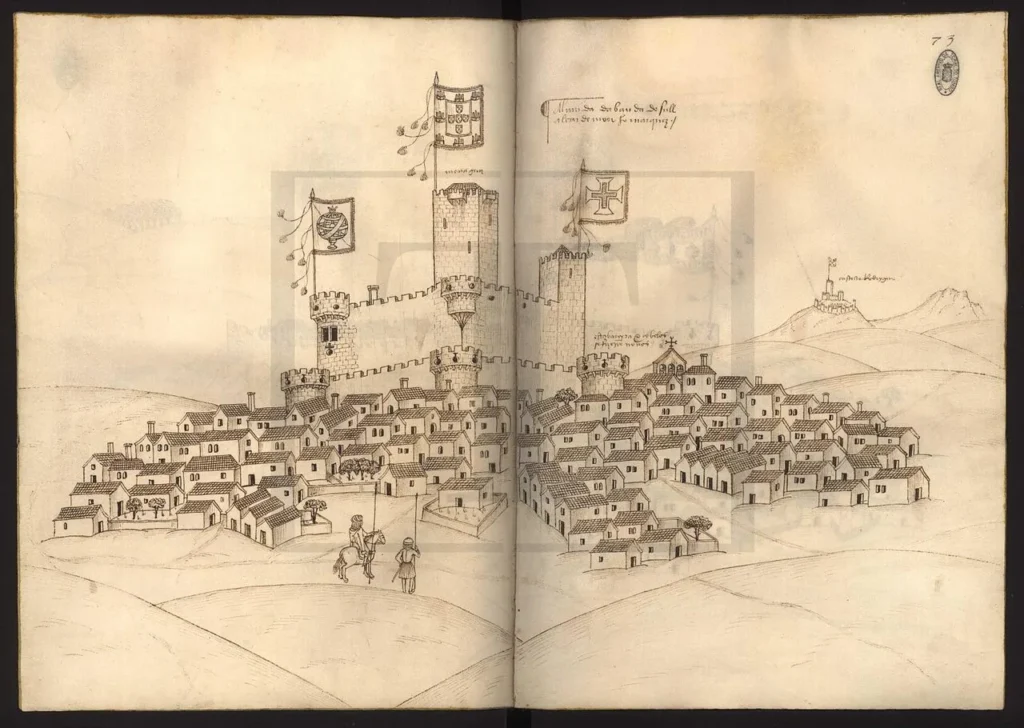
The Jewish presence in Almeida is generally associated with the fifteenth century, especially the period following the expulsion of Jews from Castile and Aragon in 1492. Portuguese border towns received part of this displaced population, although the level of permanent settlement varied from place to place. In Almeida, the evidence points to a local Jewish presence, but it does not currently allow a detailed reconstruction of the size, institutions, or internal structure of the community.
The Judiaria near Rua do Arco
The main identifiable reference to the Judiaria de Almeida places it near Rua do Arco. This indication should be treated carefully. It gives a plausible urban location, but it does not by itself prove the survival of a synagogue, cemetery, ritual bath, or specific communal building.
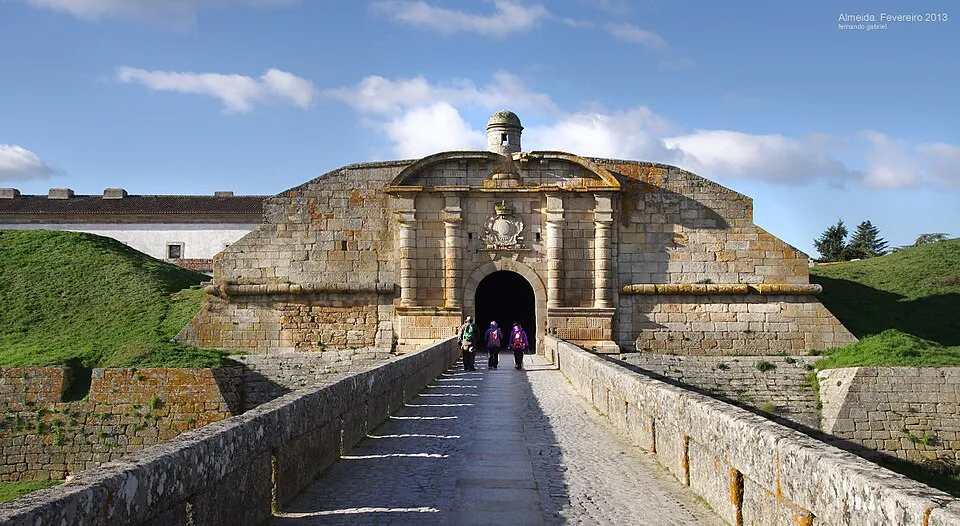
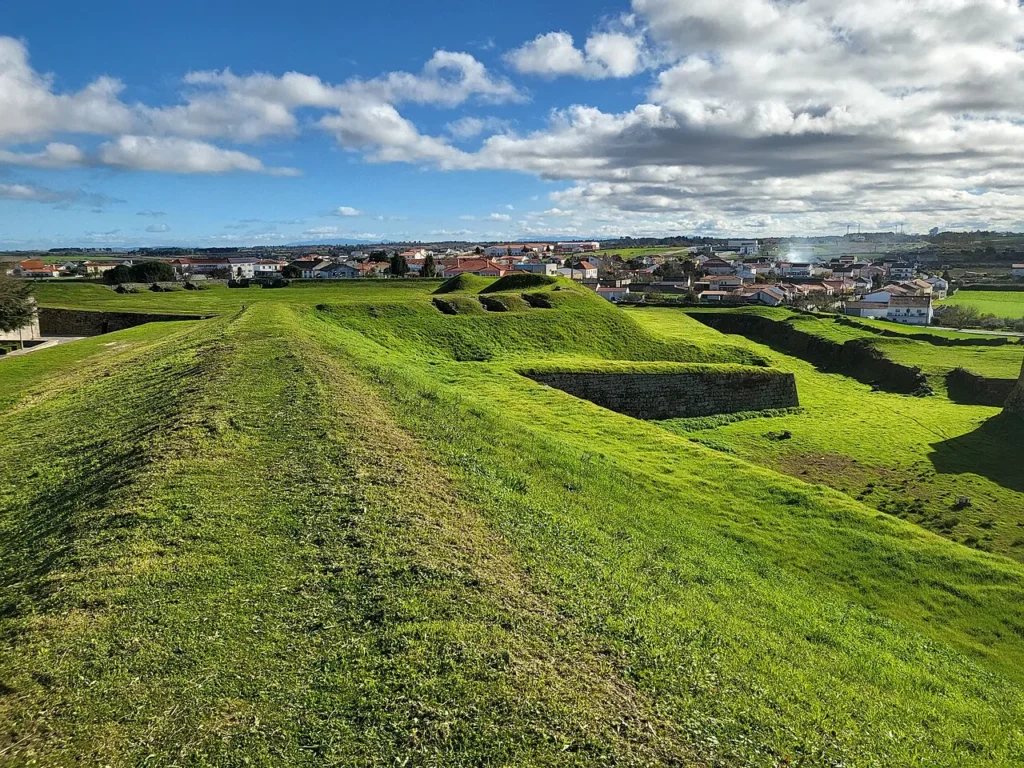
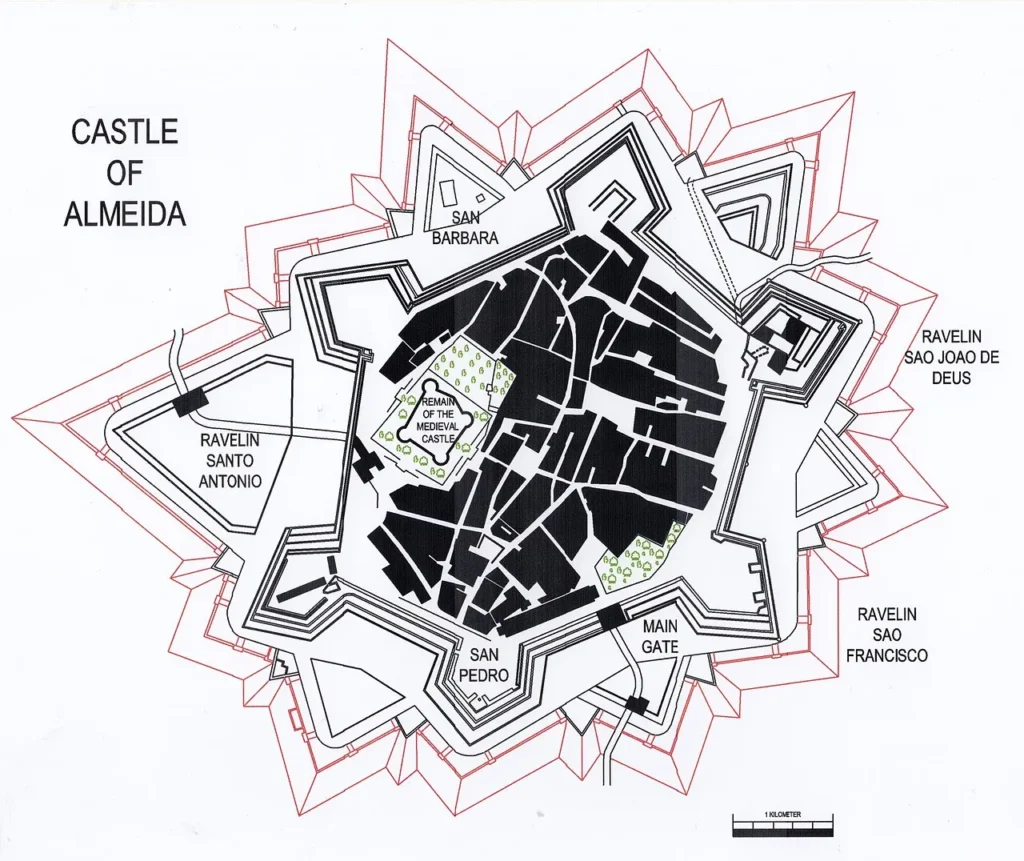
This caution matters. Many Portuguese judiarias are remembered through street names, archival references, and later local tradition rather than preserved Jewish monuments. In Almeida, the former Jewish quarter appears as a layer of historical memory embedded in the town’s medieval and early modern fabric. The later transformation of Almeida into a major bastioned fortress also reshaped the urban landscape, making the reading of earlier medieval spaces more difficult.
Documentary Memory and Heritage Value
The importance of the Judiaria de Almeida is therefore documentary and territorial. It helps map the Jewish presence in a frontier region where communities, converts, refugees, merchants, artisans, and families moved across political and religious boundaries.
After the measures imposed under King Manuel I at the end of the fifteenth century, the formal structure of Jewish communal life in Portugal was broken. Many Jews were forcibly converted, becoming New Christians. In border areas such as Almeida, this rupture did not erase memory immediately. Instead, Jewish presence often survived in place names, family histories, inquisitorial documentation, and the discreet geography of older urban quarters.
Today, the Judiaria de Almeida should be understood as a modest but meaningful heritage site. It does not support a romanticized reconstruction. However, it preserves an important trace of the Jewish history of Almeida and of the broader Sephardic landscape of the Beira Interior.
Gallery
Sources & Bibliography
- Sistema de Informação para o Património Arquitectónico. Núcleo urbano da vila e praça de Almeida / Zona Histórica da Vila de Almeida. Ano: n.d
- Sistema de Informação para o Património Arquitectónico. Muralhas da Praça de Almeida / Castelo e Fortaleza de Almeida. Ano: n.d
- Município de Almeida. Conhecer Almeida. Ano: n.d
- Município de Almeida. Apresentação do livro Gente de Nação Além e Aquém do Côa: Judeus Sefarditas. Ano: n.d
Article researched and curated by Jew Where.
The Jew Where project is collaborative. Do you have additional information, found an inaccuracy, or have historical photos of this location? Contact our team.
Community notes
Comments
Logged-in visitors can submit comments for moderation before they appear publicly.
No comments yet.
Log in to leave a comment. Go to Account.