

The Judiaria da Guarda was one of the best documented Jewish quarters of medieval Beira Interior. Its earliest secure reference dates to 1295, during the reign of King Dinis. From that point until the expulsion and forced conversion of the Jews in 1496-1497, the written record preserves references to Jewish residents, royal property, houses, urban limits, the synagogue, and the later expansion of the quarter.
Royal Property and Early Records
The first systematic record of royal property in the Jewish area belongs to the reign of King Dinis, between 1295 and 1318. It lists 44 leased plots, of which 16 were leased to Jews and 28 to Christians. In household terms, the same study identifies 15 Jewish families and 26 Christian families living on the king’s property.
The synagogue appears in these early records. A document dated 6 August 1295 refers to a house described as the synagogue, already with an older charter. The same documentary group records Jewish names such as Abraão Alacar, Váz Judeu, Isaque, Sanção Judeu, Misol, Valeade Judeu, Judas Mestre, Juça son of Bolafia, and Mosem de Valhadolid.
Area of the Judiaria da Guarda
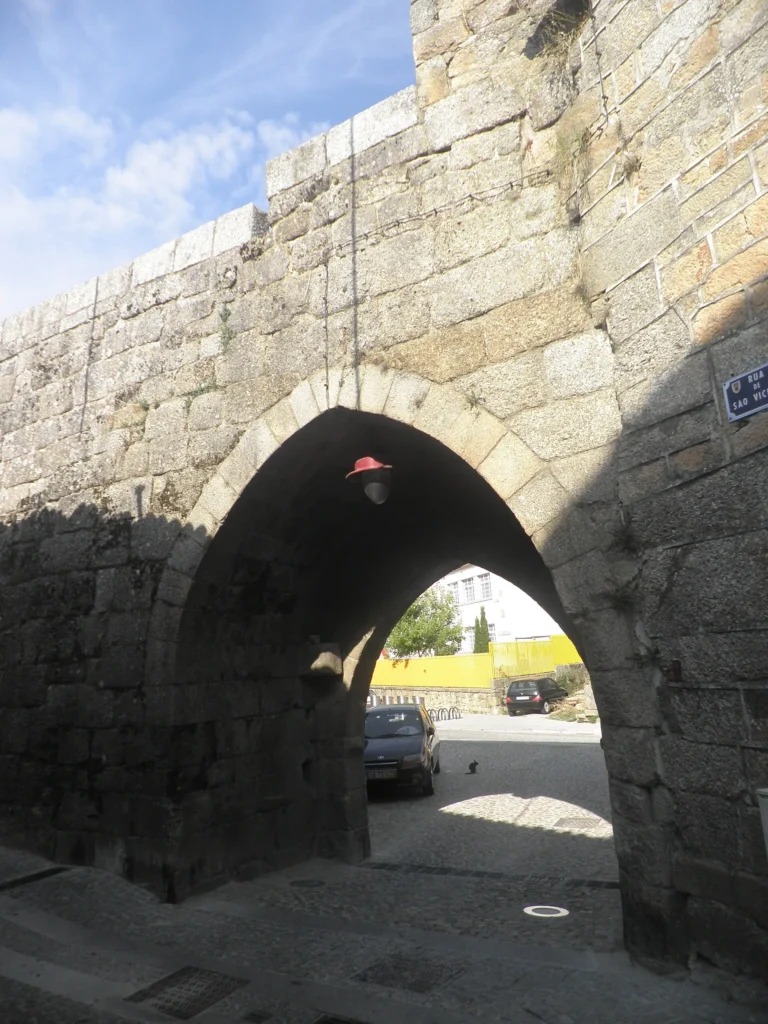
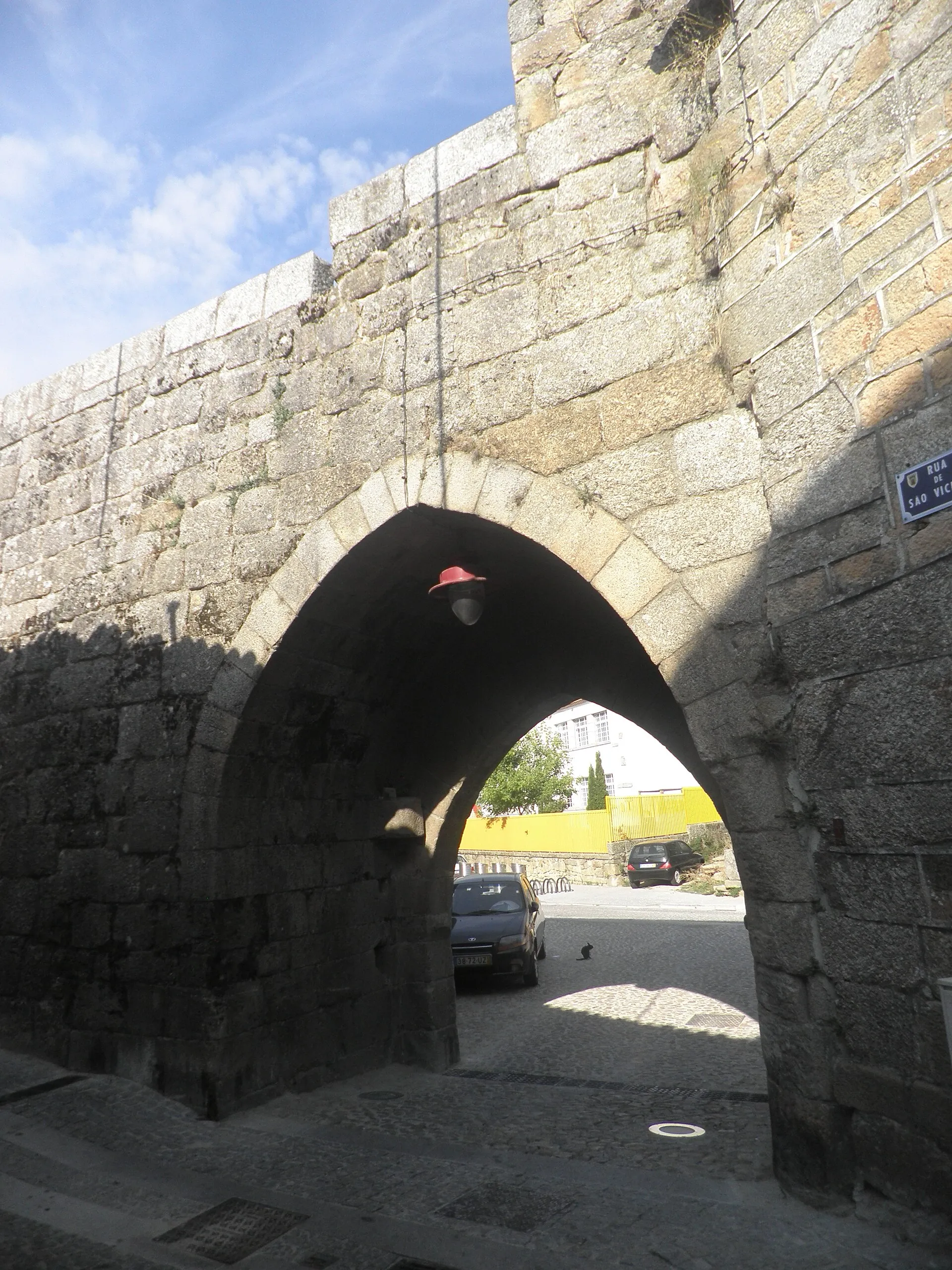
The medieval Jewish quarter was located inside the walled city, in the northwestern part of Guarda, near Porta d’El Rei and São Vicente. The royal property had defined limits. Its southern boundary was the Rua Direita running from Porta d’El Rei toward São Vicente. Its eastern boundary was another Rua Direita, coming from Porta da Covilhã toward Torre Velha. Its western boundary was the city wall.
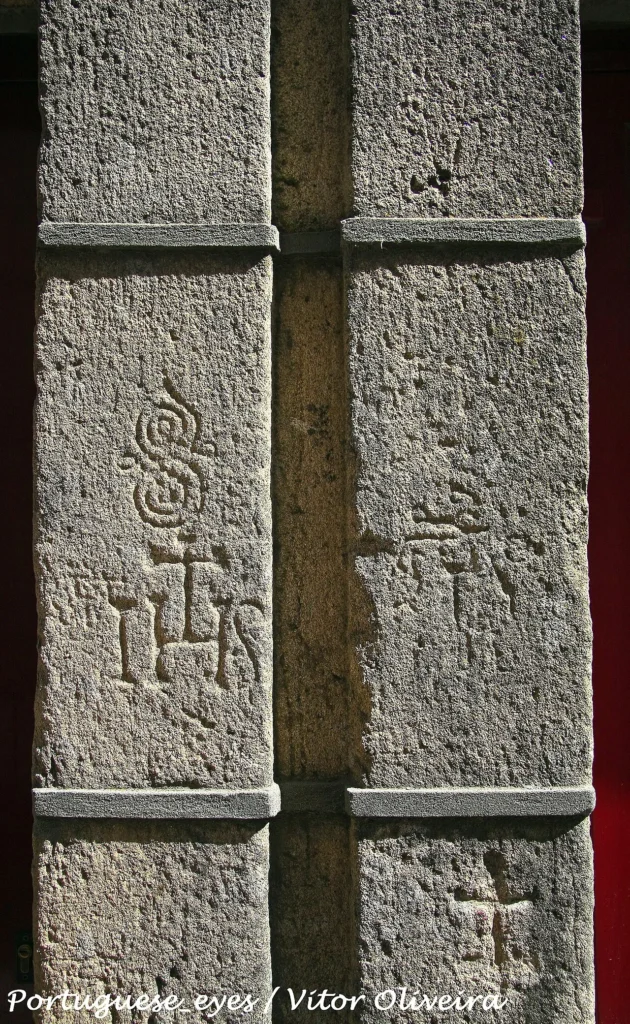
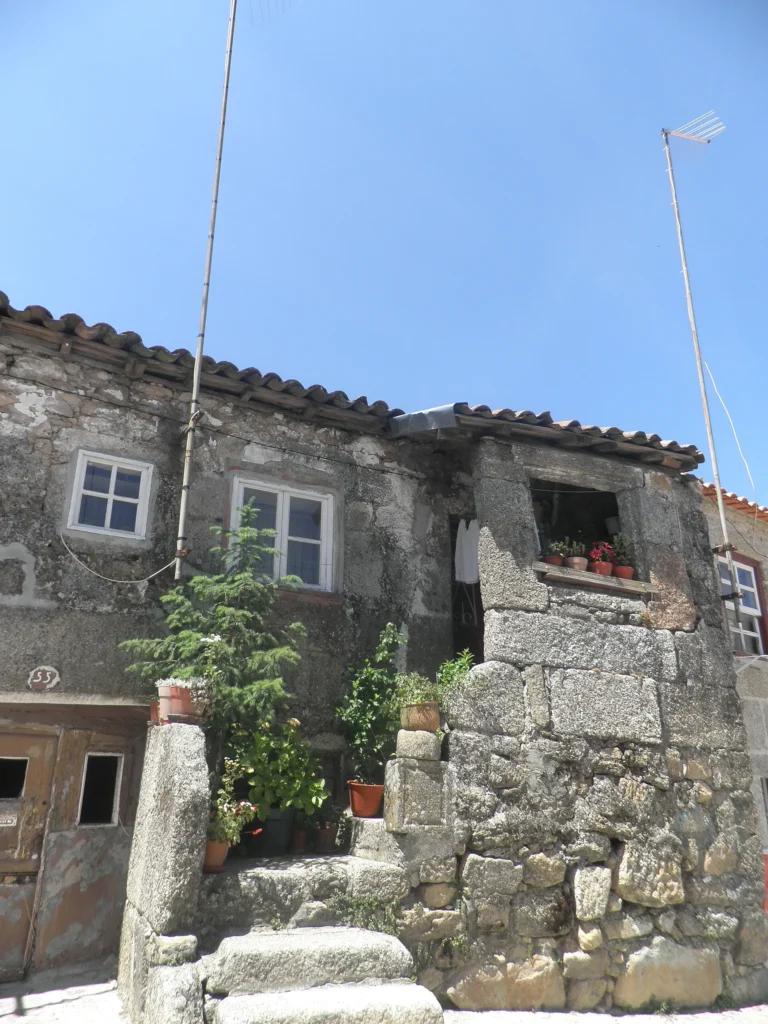
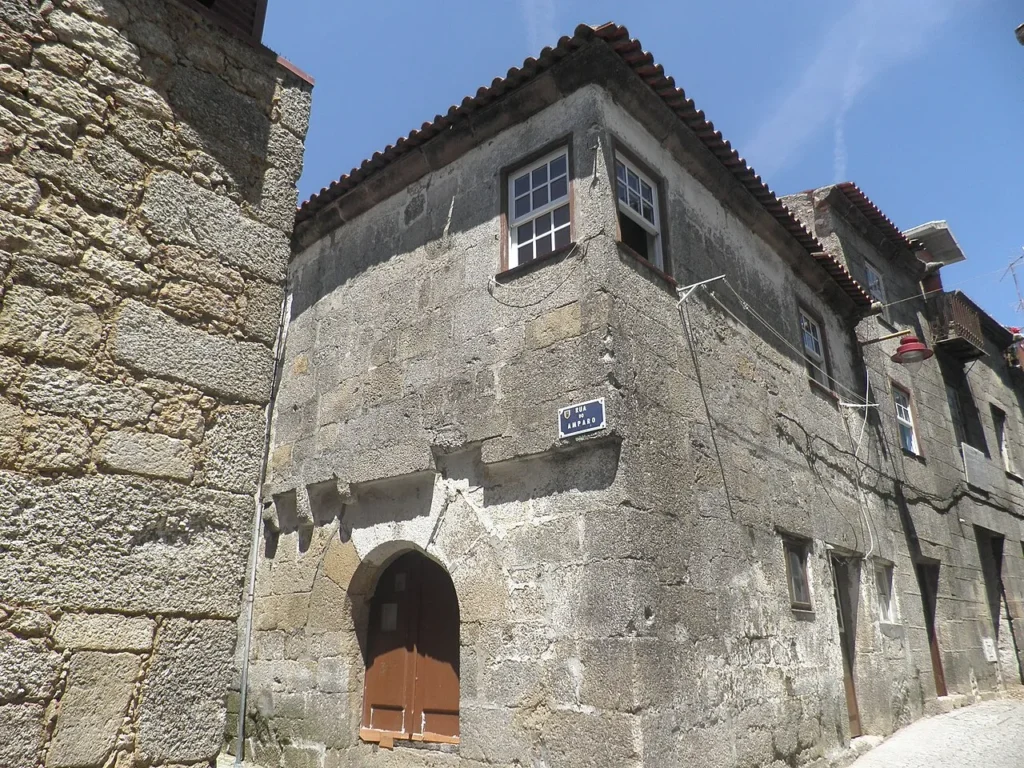
The documentation also refers to Rua da Judiaria, Judiaria Velha, the Adro de São Vicente, the route from the old butcheries to the royal palace, and later the area of Poço do Gado. Today, the former Jewish area is mainly associated with Rua do Amparo, Rua de São Vicente, Largo de São Vicente, and the surroundings of Porta d’El Rei.
Growth, Synagogue and Daily Life
The Tombo da Comarca da Beira of 1395 gives one of the clearest pictures of the Jewish quarter. It records 115 leased plots held by 96 families. Of these, 50 plots belonged to 38 Jewish families, while 65 plots belonged to 58 Christian families. This shows that the Jewish presence had grown considerably since the records of the late thirteenth and early fourteenth centuries.
The documents also show Jewish residents still living near the Adro de São Vicente in 1395. Names recorded there include Abraão Sofel, Davi Favilho, Salomão Pernica, Moisés de Crasto, and Cid.
During the fifteenth century, the quarter expanded. The documentation distinguishes between Judiaria Velha and a newer area of Jewish occupation. By 1465, a royal response to complaints from the town’s procurators refers to a separated Jewish quarter where around 50 to 60 families could live. The same decision ordered the immediate and permanent closure of the door that gave access to the Adro de São Vicente. It also required the other doors of the Judiaria to be closed at night.
The synagogue of Guarda is documented in written sources, although its precise archaeological identification remains cautious. A confirmation from 1441 refers to synagogue houses for Jewish men and women, indicating separate spaces. In 1489, another document still refers to a plot in the Judiaria that bordered the synagogue. This shows that the communal religious space remained active shortly before the end of legal Jewish life in Portugal.
The documents preserve names and professions connected to the community. Among those recorded are Abraão Mamom, a shoemaker; Judas, a blacksmith; Jaco Pernica, a shoemaker; Mestre Moisés; Rabi Davi; Isaque Tecelão, a weaver; Salomão Tovi, a blacksmith; Abraão de Pinhel, a tax farmer; Samuel Abudente, a gibiteiro; Isaque Maçoz, a tailor; and Faym de Cáceres, a merchant.
The Jewish quarter also had a clear economic structure. Documents refer to houses, shops, leased plots, butcheries, royal rents, and the synagogue. Together, these records make the Judiaria da Guarda one of the strongest documentary cases for the study of Jewish urban life in medieval Portugal.
New Christians after 1497
Legally recognized Jewish life ended after the decree of King Manuel I in 1496 and the forced conversions of 1497. In Guarda, one of the clearest post-conversion references is dated 13 November 1497. It mentions Leonel Henriques, a New Christian who had previously been called Samuel Arrari, holding houses on Rua Nova, formerly the Judiaria.
Gallery
Videos
Sources & Bibliography
- RAMOS, Tiago; CAMEIJO, Alcina; MARTINS, Daniel. A Judiaria da Guarda: Textos e Contextos. In: Inclusão e Exclusão na Europa Urbana Medieval, vol. 19. Local: Lisboa / Castelo de Vide. Editora: IEM / Câmara Municipal de Castelo de Vide. Ano: 2019
- RAMOS, Tiago; COSTA GOMES, Rita; JACOB, Berta; MARTINS, Daniel; NETO, Maria José; PINTO, Antonieta. A Judiaria da Guarda em 1395. Iberografias, no. 14, pp. 81-106. Ano: 2018
- VISIT GUARDA. Old Jewish Quarter. Local: Guarda. Editora: Visit Guarda. Ano: n.d
- CENTER OF PORTUGAL. Guarda Jewish Quarter. Editora: Turismo Centro de Portugal. Ano: n.d
- FREGUESIA DA GUARDA. Judiaria. Local: Guarda. Editora: Junta de Freguesia da Guarda. Ano: n.d
- ALDEIAS DE MONTANHA. Antiga Judiaria da Guarda. Local: Guarda. Editora: Aldeias de Montanha. Ano: n.d
- TAVARES, Maria José Ferro. Os Judeus em Portugal no século XV. Vol. I. Local: Lisboa. Editora: Instituto Nacional de Investigação Científica. Ano: 1982.
- GOMES, Rita Costa. A Guarda Medieval: posição, morfologia e sociedade, 1200-1500. Local: Lisboa. Editora: Sá da Costa. Ano: 1987.
Article researched and curated by Jew Where.
The Jew Where project is collaborative. Do you have additional information, found an inaccuracy, or have historical photos of this location? Contact our team.
Community notes
Comments
Logged-in visitors can submit comments for moderation before they appear publicly.
No comments yet.
Log in to leave a comment. Go to Account.