
Skip to content

"Rua da Judiaria preserves Medelim’s Jewish memory by name, though no medieval synagogue, inscription, cemetery, or archaeological remains are confirmed."

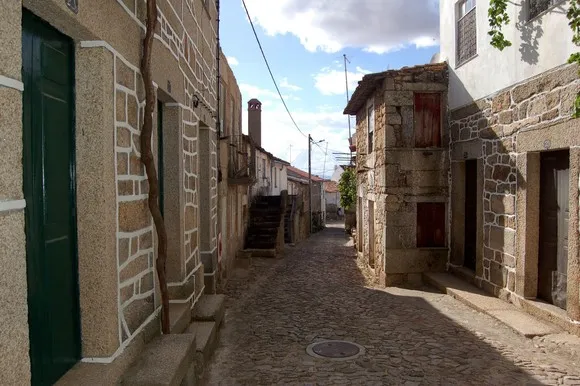
The Jewish Street of Medelim is preserved today mainly through a local toponym: Rua da Judiaria. Its value lies in the survival of the name, rather than in a securely identified medieval building or archaeological structure.

There is little firm documentation about the Jewish community of Medelim. No medieval synagogue, Hebrew inscription, cemetery, or archaeological evidence can be identified today with certainty in the village.

Rua da Judiaria and Local Memory

Municipal and heritage references associate Rua da Judiaria with the memory of a Jewish presence in Medelim before the forced conversion of the Jews in Portugal at the end of the fifteenth century. Some local descriptions also mention houses with internal communication between them, linked by tradition to the old Jewish area.

Even so, the evidence remains limited. The safest reading of the Jewish Street of Medelim is as a place of toponymic memory. The street name preserves a trace of local Jewish presence, while the exact form, size, and institutions of that community remain undocumented.

Gallery
Community notes

Comments

Logged-in visitors can submit comments for moderation before they appear publicly.

No comments yet.

Article researched and curated by Jew Where.

The Jew Where project is collaborative. Do you have additional information, found an inaccuracy, or have historical photos of this location? Contact our team.

Jewish Street of Medelim
Portugal / Castelo Branco / Neighborhoods & Settlements

Jewish Street of Medelim

"Rua da Judiaria preserves Medelim’s Jewish memory by name, though no medieval synagogue, inscription, cemetery, or archaeological remains are confirmed."

Location
Rua da Judiaria, 6060-051 Medelim, Idanha-a-Nova, Castelo Branco, Portugal

The Jewish Street of Medelim is preserved today mainly through a local toponym: Rua da Judiaria. Its value lies in the survival of the name, rather than in a securely identified medieval building or archaeological structure.

There is little firm documentation about the Jewish community of Medelim. No medieval synagogue, Hebrew inscription, cemetery, or archaeological evidence can be identified today with certainty in the village.

Rua da Judiaria and Local Memory

Municipal and heritage references associate Rua da Judiaria with the memory of a Jewish presence in Medelim before the forced conversion of the Jews in Portugal at the end of the fifteenth century. Some local descriptions also mention houses with internal communication between them, linked by tradition to the old Jewish area.

Even so, the evidence remains limited. The safest reading of the Jewish Street of Medelim is as a place of toponymic memory. The street name preserves a trace of local Jewish presence, while the exact form, size, and institutions of that community remain undocumented.

Timeline

  • Until the 16th century Municipal sources associate Medelim with a Jewish community remembered through Rua da Judiaria.
  • 2007 Adufe described Rua da Judiaria as evoking local Jewish memory and mentioned houses with internal communication.
  • 2021 The ARU programme recorded the survival of Rua da Judiaria as toponymy linked to Medelim’s Jewish memory.
  • Today The street survives as a public toponymic trace, without a securely identified medieval Jewish structure.

Sources & Bibliography

  1. MUNICÍPIO DE IDANHA-A-NOVA. Medelim. Local: Idanha-a-Nova. Editora: Município de Idanha-a-Nova. Ano: n.d. https://idanha.pt/idanhapt/o-que-fazer/medelim
  2. SIPA. Povoação de Medelim / Aldeia de Medelim. Editora: Sistema de Informação para o Património Arquitetónico. Ano: n.d. http://www.monumentos.gov.pt/site/app_pagesuser/SIPA.aspx?id=11891

Additional Information

Official website: https://idanha.pt/idanhapt/o-que-fazer/medelim
Current use of the address: Rua da Judiaria remains a public street in the historic core of Medelim; no confirmed medieval synagogue, cemetery, Hebrew inscription, or archaeological structure is identified at the site today.

Article researched and curated by Jew Where.

The Jew Where project is collaborative. Do you have additional information, found an inaccuracy, or have historical photos of this location? Contact our team.