
Skip to content

"Pinhel’s former Jewish quarter is associated with Bairro Marrocos and Rua de Santa Maria, with fifteenth-century records of local Jews and trades."

The Jewish Quarter of Pinhel belonged to the network of Jewish communities of the Beira Interior. It was part of a frontier town connected to trade, crafts and movement between Portugal and Castile.

Jewish Quarter of Pinhel and Bairro Marrocos

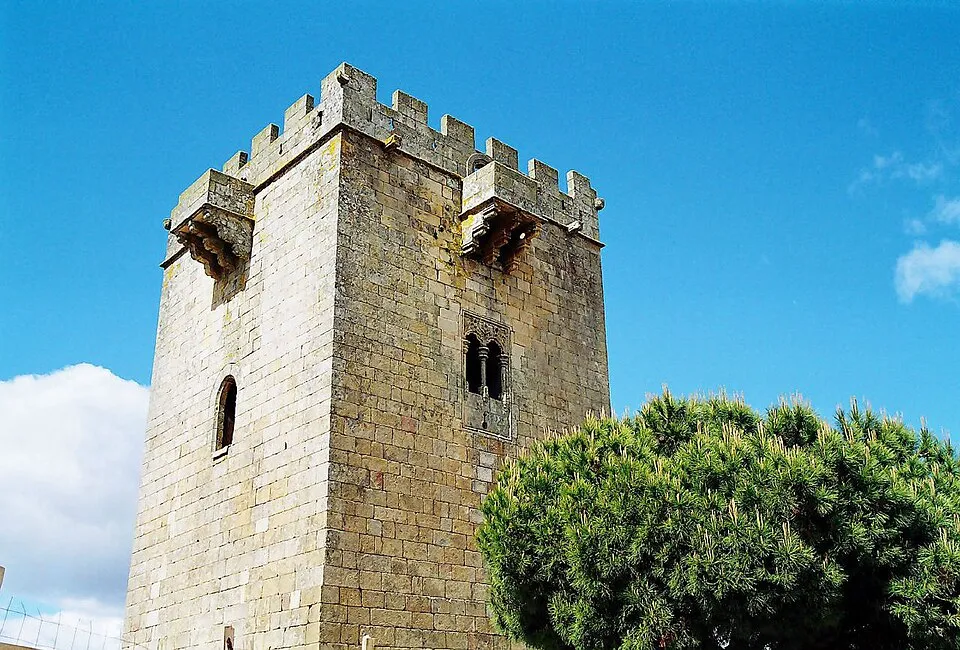
The old judiaria is associated with the area near the Torre de Menagem, especially Bairro Marrocos, with Rua de Santa Maria as one of its main urban references. The exact limits of the medieval Jewish quarter are not fully reconstructed. Even so, this area remains the strongest present reference for the Jewish memory of Pinhel.

Documentary records give Pinhel a concrete Jewish presence in the fifteenth century. Royal chancery sources preserve names and occupations of Jews connected to the town, including merchants, weavers, shoemakers and craftsmen.

Names and occupations in the record

Among the names recorded are Jacob Cager and Abraão Cagez, both merchants in 1442. Later records mention Jacob Caguez and Samuel Caguez, merchants in 1469.

Other names point to the working life of the community. Haim Cide is recorded as a weaver in 1455. Samuel Cide and David de Pinhel appear as shoemakers in 1469 and 1455. Judas Muça, also a shoemaker, is recorded in 1442. Isaac Muça appears in 1455 as a taqueiro, a craft title whose exact meaning remains uncertain today.

These references show that the Jewish community of Pinhel was part of the town’s economic and social life through commerce, textile work, footwear and craft production.

Frontier, movement and forced conversion

The community appears to have grown in the final decades of the fifteenth century, especially after 1492. In that year, Jews expelled from Castile and Aragon entered Portugal through the frontier regions.

Pinhel, like other towns of the Beira Interior, became part of this geography of passage, settlement and pressure. This context shaped the last years of open Jewish life before the forced conversion of the Jews in Portugal.

Gallery
Sources & Bibliography

  • TAVARES, Maria José Ferro. Os Judeus em Portugal no século XV. Editora: INIC. Ano: 1982-1985.
  • TAVARES, Maria José Ferro. As Judiarias de Portugal. Editora: CTT. Ano: 2010.
  • ARQUIVO NACIONAL DA TORRE DO TOMBO. Chancelaria de D. Duarte. Book 1. Ano: n.d.
  • ARQUIVO NACIONAL DA TORRE DO TOMBO. Chancelaria de D. Afonso V. Ano: n.d.

Community notes

Comments

Logged-in visitors can submit comments for moderation before they appear publicly.

No comments yet.

Article researched and curated by Jew Where.

The Jew Where project is collaborative. Do you have additional information, found an inaccuracy, or have historical photos of this location? Contact our team.

Jewish Quarter of Pinhel
Portugal / Guarda / Neighborhoods & Settlements

Jewish Quarter of Pinhel

"Pinhel’s former Jewish quarter is associated with Bairro Marrocos and Rua de Santa Maria, with fifteenth-century records of local Jews and trades."

Location
Rua de Santa Maria, 6400-410 Pinhel, Guarda, Portugal

The Jewish Quarter of Pinhel belonged to the network of Jewish communities of the Beira Interior. It was part of a frontier town connected to trade, crafts and movement between Portugal and Castile.

Jewish Quarter of Pinhel and Bairro Marrocos

The old judiaria is associated with the area near the Torre de Menagem, especially Bairro Marrocos, with Rua de Santa Maria as one of its main urban references. The exact limits of the medieval Jewish quarter are not fully reconstructed. Even so, this area remains the strongest present reference for the Jewish memory of Pinhel.

Documentary records give Pinhel a concrete Jewish presence in the fifteenth century. Royal chancery sources preserve names and occupations of Jews connected to the town, including merchants, weavers, shoemakers and craftsmen.

Names and occupations in the record

Among the names recorded are Jacob Cager and Abraão Cagez, both merchants in 1442. Later records mention Jacob Caguez and Samuel Caguez, merchants in 1469.

Other names point to the working life of the community. Haim Cide is recorded as a weaver in 1455. Samuel Cide and David de Pinhel appear as shoemakers in 1469 and 1455. Judas Muça, also a shoemaker, is recorded in 1442. Isaac Muça appears in 1455 as a taqueiro, a craft title whose exact meaning remains uncertain today.

These references show that the Jewish community of Pinhel was part of the town’s economic and social life through commerce, textile work, footwear and craft production.

Frontier, movement and forced conversion

The community appears to have grown in the final decades of the fifteenth century, especially after 1492. In that year, Jews expelled from Castile and Aragon entered Portugal through the frontier regions.

Pinhel, like other towns of the Beira Interior, became part of this geography of passage, settlement and pressure. This context shaped the last years of open Jewish life before the forced conversion of the Jews in Portugal.

Timeline

  • 1442 Royal chancery records mention Jews connected with Pinhel, including merchants and shoemakers.
  • 1455 Records mention Jewish workers in Pinhel, including a weaver, shoemakers and craftsmen.
  • 1469 Royal chancery records mention further Jewish merchants connected with Pinhel.
  • 1492 Jews expelled from Castile and Aragon entered Portugal through frontier regions, including the Beira Interior.
  • 1496-1497 Open Jewish life in Portugal ended under expulsion and forced conversion.

Sources & Bibliography

  1. TAVARES, Maria José Ferro. Os Judeus em Portugal no século XV. Editora: INIC. Ano: 1982-1985.
  2. TAVARES, Maria José Ferro. As Judiarias de Portugal. Editora: CTT. Ano: 2010.
  3. ARQUIVO NACIONAL DA TORRE DO TOMBO. Chancelaria de D. Duarte. Book 1. Ano: n.d.
  4. ARQUIVO NACIONAL DA TORRE DO TOMBO. Chancelaria de D. Afonso V. Ano: n.d.

Additional Information

Current use of the address: Public historic urban streets in Pinhel; the exact limits of the medieval Jewish quarter are not fully reconstructed.

Article researched and curated by Jew Where.

The Jew Where project is collaborative. Do you have additional information, found an inaccuracy, or have historical photos of this location? Contact our team.