Skip to content

"Medieval Jewish quarter of Évora, centered in the western city, with synagogue, Midrash and communal records transformed after 1496."

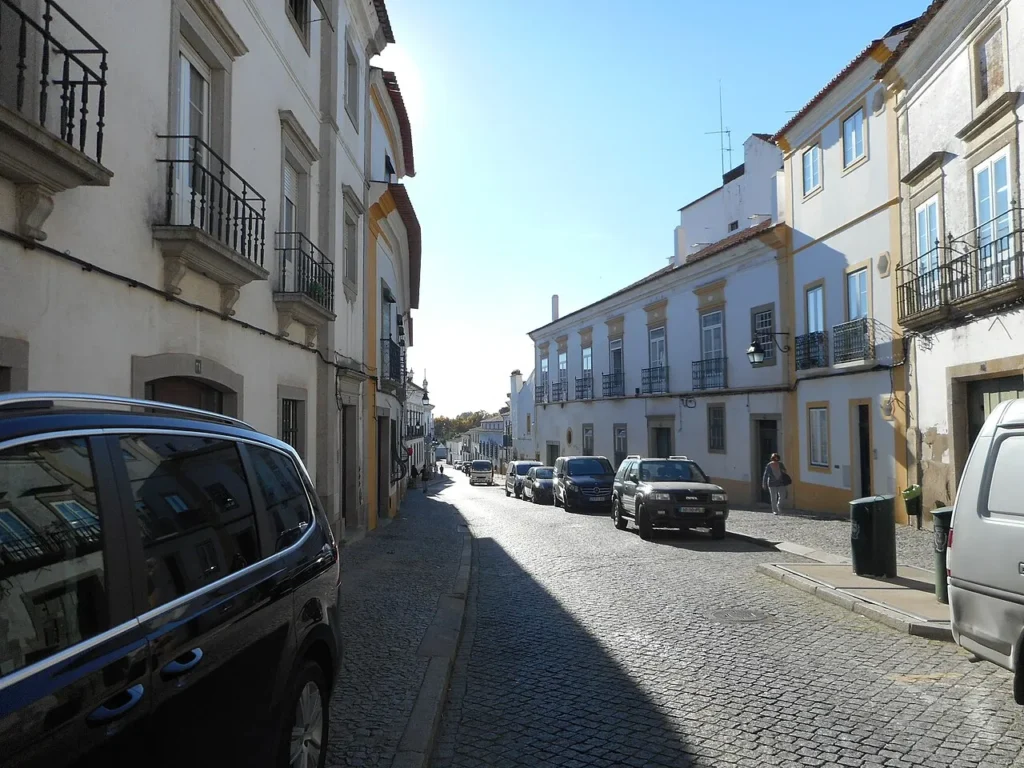
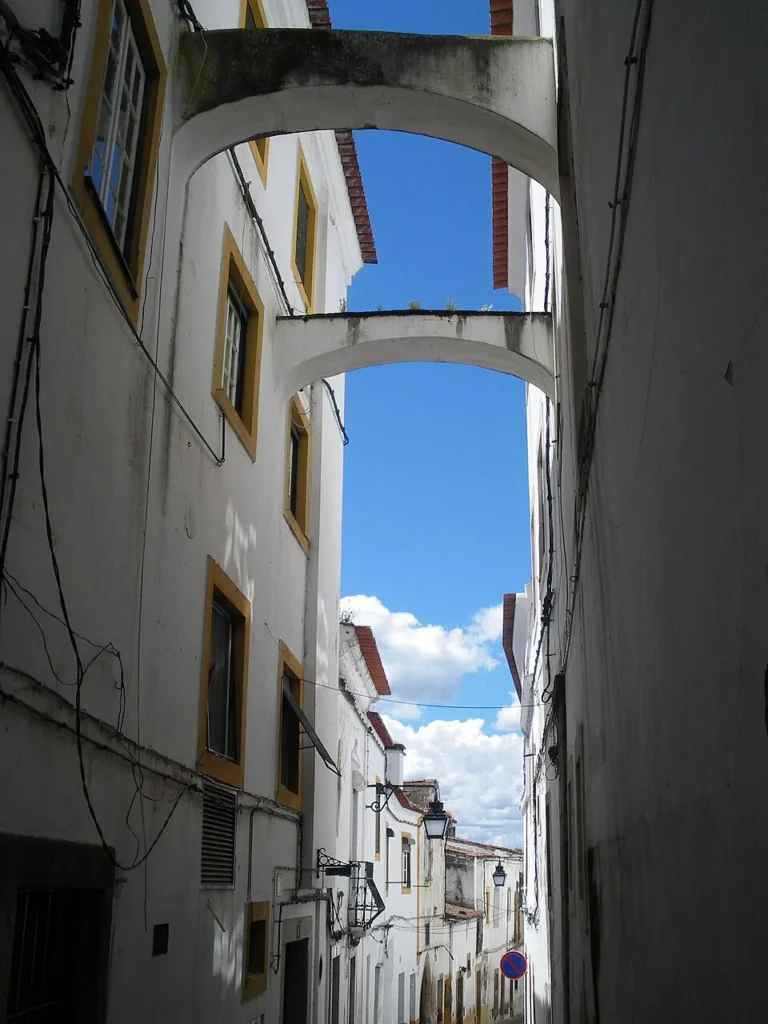
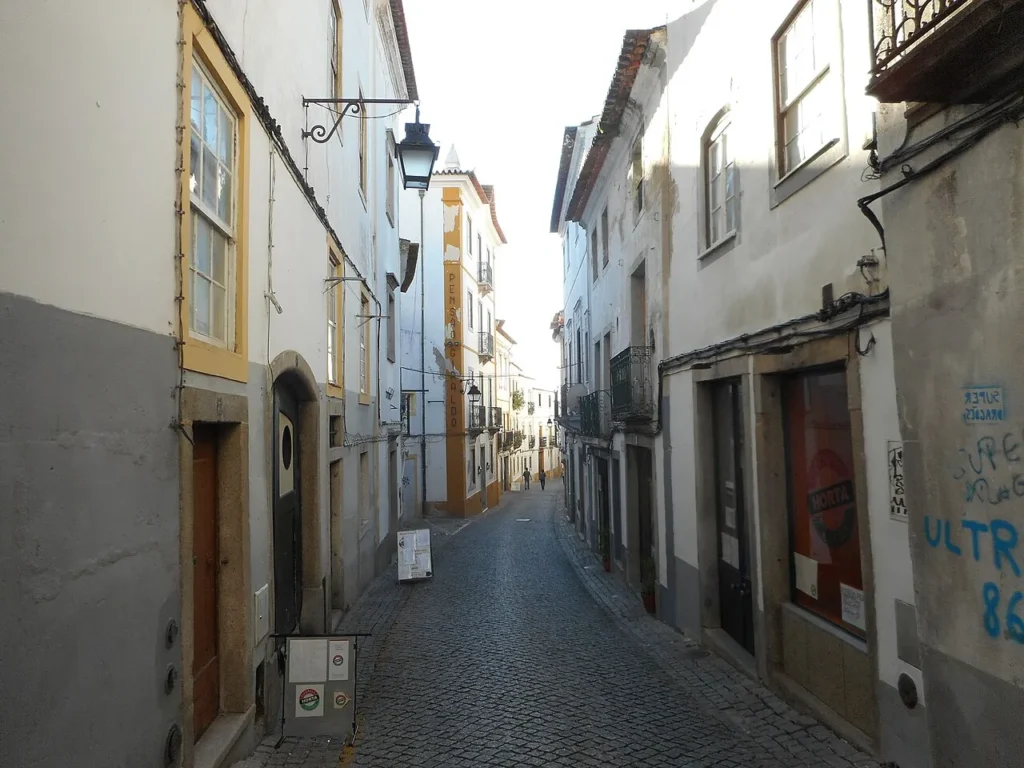
The Jewish Quarter of Évora was one of the most significant Jewish urban spaces in medieval Portugal. In the fourteenth and fifteenth centuries, Évora was not a marginal town but a major royal, ecclesiastical and commercial centre. Within that setting, its aljama developed as a legally defined and socially active Jewish quarter, tied to residence, worship, education, trade and communal administration. Scholarly work identifies the medieval Jewish area mainly in the western sector of the city, between the present Rua Serpa Pinto and Rua do Raimundo, although the exact limits remain debated because medieval toponyms shifted after 1497.

The Jewish Quarter of Évora in the medieval city

The documented history of the Jewish Quarter of Évora is not limited to one fixed street. Research distinguishes an earlier Jewish area from the later “Judiaria Nova”, first referenced in 1331. This later quarter emerged during a period of urban expansion beyond the older enclosure, as Évora grew between the Cerca Velha and the Cerca Nova. The process seems to have been gradual. In the early fourteenth century, older and newer Jewish residential areas may even have coexisted for some time.

By the fifteenth century, the Jewish quarter had expanded further. In 1408, King João I authorized an enlargement of the judiaria. The documentary references connect the area with the Rua do Tinhoso, the Rua Direita, the Rua dos Mercadores, nearby lanes, and the urban line toward Rua do Raimundo. This does not mean that every modern building in this zone can be identified as Jewish. It does mean that the quarter functioned as a dense urban and social organism, whose memory survived through documents, property records, street names and architectural traces.

Synagogue, Midrash and communal life

The Jewish Quarter of Évora contained institutions expected in a large medieval Jewish community. The synagogue is the most important, but also the most difficult to reconstruct with certainty. Fifteenth-century documents mention a “Sinagoga Velha” in 1458 and a “Sinagoga Grande” in 1477. Scholars disagree over whether these were two separate synagogues or whether the older synagogue was enlarged and later called the Great Synagogue. The area around Travessa do Barão is central to this debate, but the archaeological evidence does not allow absolute certainty.

The Midrash, or Bet Midrash, is another essential element. It appears in the documentation as a place of study and communal identity, connected with the teaching of biblical interpretation and Jewish law. After the forced conversion and expulsion measures, King Manuel I donated the old Midrash building of the Évora judiaria to D. Carlos, a nobleman of the royal household. The memory of the institution also survived in the toponyms Rua do Midras and Rua do Midras de Baixo, associated with the present Travessa da Parreira and Travessa do Pocinho.

Other communal references point to a more complete Jewish urban infrastructure. Sources mention the Jewish butcher’s facilities, baths, and streets associated with craft, commerce and food regulation. The municipal postures of Évora also show that the Jewish community, while possessing its own structures of governance, interacted with the Christian council in practical matters of urban life and market regulation.

After 1496

The rupture came with the edict issued by King Manuel I in 1496 and the forced transformation of Jewish life in 1497. Jews formally disappeared from Portugal as a legally recognized community, either through forced baptism or departure. As a result, the judiarias lost their legal purpose as segregated minority spaces. In Évora, this produced changes in ownership, function, terminology and memory.

From the early sixteenth century onward, the former Jewish quarter was increasingly absorbed into the Christian urban fabric. Some documents refer to the area as “Vila Nova”, while older references to synagogue spaces disappear from street descriptions. Yet the memory did not vanish completely. Toponyms such as Rua do Tinhoso, Rua da Moeda and Rua do Midras, together with property records and architectural remains, continued to preserve fragments of the former Jewish geography.

Today, the Jewish Quarter of Évora should be read as a layered documentary landscape rather than as a single preserved monument. Its importance lies precisely in this complexity. It reveals how a major medieval Jewish community was embedded in the city, how its institutions shaped urban space, and how the violence of forced conversion altered both the material fabric and the memory of the place.

Gallery
Community notes

Comments

Logged-in visitors can submit comments for moderation before they appear publicly.

No comments yet.

Article researched and curated by Jew Where.

The Jew Where project is collaborative. Do you have additional information, found an inaccuracy, or have historical photos of this location? Contact our team.
Jewish Quarter of Évora
Portugal / Evora / Neighborhoods & Settlements

Jewish Quarter of Évora

"Medieval Jewish quarter of Évora, centered in the western city, with synagogue, Midrash and communal records transformed after 1496."

Location
Approximate central reference: Travessa do Barão, 7000-556 Évora, Portugal

The Jewish Quarter of Évora was one of the most significant Jewish urban spaces in medieval Portugal. In the fourteenth and fifteenth centuries, Évora was not a marginal town but a major royal, ecclesiastical and commercial centre. Within that setting, its aljama developed as a legally defined and socially active Jewish quarter, tied to residence, worship, education, trade and communal administration. Scholarly work identifies the medieval Jewish area mainly in the western sector of the city, between the present Rua Serpa Pinto and Rua do Raimundo, although the exact limits remain debated because medieval toponyms shifted after 1497.

The Jewish Quarter of Évora in the medieval city

The documented history of the Jewish Quarter of Évora is not limited to one fixed street. Research distinguishes an earlier Jewish area from the later “Judiaria Nova”, first referenced in 1331. This later quarter emerged during a period of urban expansion beyond the older enclosure, as Évora grew between the Cerca Velha and the Cerca Nova. The process seems to have been gradual. In the early fourteenth century, older and newer Jewish residential areas may even have coexisted for some time.

By the fifteenth century, the Jewish quarter had expanded further. In 1408, King João I authorized an enlargement of the judiaria. The documentary references connect the area with the Rua do Tinhoso, the Rua Direita, the Rua dos Mercadores, nearby lanes, and the urban line toward Rua do Raimundo. This does not mean that every modern building in this zone can be identified as Jewish. It does mean that the quarter functioned as a dense urban and social organism, whose memory survived through documents, property records, street names and architectural traces.

Synagogue, Midrash and communal life

The Jewish Quarter of Évora contained institutions expected in a large medieval Jewish community. The synagogue is the most important, but also the most difficult to reconstruct with certainty. Fifteenth-century documents mention a “Sinagoga Velha” in 1458 and a “Sinagoga Grande” in 1477. Scholars disagree over whether these were two separate synagogues or whether the older synagogue was enlarged and later called the Great Synagogue. The area around Travessa do Barão is central to this debate, but the archaeological evidence does not allow absolute certainty.

The Midrash, or Bet Midrash, is another essential element. It appears in the documentation as a place of study and communal identity, connected with the teaching of biblical interpretation and Jewish law. After the forced conversion and expulsion measures, King Manuel I donated the old Midrash building of the Évora judiaria to D. Carlos, a nobleman of the royal household. The memory of the institution also survived in the toponyms Rua do Midras and Rua do Midras de Baixo, associated with the present Travessa da Parreira and Travessa do Pocinho.

Other communal references point to a more complete Jewish urban infrastructure. Sources mention the Jewish butcher’s facilities, baths, and streets associated with craft, commerce and food regulation. The municipal postures of Évora also show that the Jewish community, while possessing its own structures of governance, interacted with the Christian council in practical matters of urban life and market regulation.

After 1496

The rupture came with the edict issued by King Manuel I in 1496 and the forced transformation of Jewish life in 1497. Jews formally disappeared from Portugal as a legally recognized community, either through forced baptism or departure. As a result, the judiarias lost their legal purpose as segregated minority spaces. In Évora, this produced changes in ownership, function, terminology and memory.

From the early sixteenth century onward, the former Jewish quarter was increasingly absorbed into the Christian urban fabric. Some documents refer to the area as “Vila Nova”, while older references to synagogue spaces disappear from street descriptions. Yet the memory did not vanish completely. Toponyms such as Rua do Tinhoso, Rua da Moeda and Rua do Midras, together with property records and architectural remains, continued to preserve fragments of the former Jewish geography.

Today, the Jewish Quarter of Évora should be read as a layered documentary landscape rather than as a single preserved monument. Its importance lies precisely in this complexity. It reveals how a major medieval Jewish community was embedded in the city, how its institutions shaped urban space, and how the violence of forced conversion altered both the material fabric and the memory of the place.

Timeline

  • 1331 The later Jewish quarter, or Judiaria Nova, appears in the documentation.
  • 1408 King João I authorized the enlargement of the Jewish quarter.
  • 1458 Documents mention a Sinagoga Velha within the Évora Jewish quarter.
  • 1477 Documents mention a Sinagoga Grande, central to debates about the synagogue complex.
  • 1496 King Manuel I issued the edict that ended Jewish communal life as a legal category in Portugal.
  • 1497 Forced baptism and conversion measures transformed the former judiaria; the old Midrash was donated to D. Carlos.

Sources & Bibliography

  1. FELÍCIO, Beatriz da Silva. Os impactos do Édito de Expulsão (1496) nas judiarias medievais: o caso de Évora. Master’s dissertation. Local: Évora. Editora: Universidade de Évora. Ano: 2025. https://dspace.uevora.pt/rdpc/handle/10174/38380
  2. SILVA, André Filipe Oliveira da. Ensinar e Aprender na Évora Medieval. Medievalista, no. 24. Editora: Instituto de Estudos Medievais. Ano: 2018. https://journals.openedition.org/medievalista/1701
  3. FEIO, Rodolfo Petronilho. Som servidores d’El Rey e do Concelho: a presença judaica no Livro das Posturas Antigas de Évora. Revista de História da Sociedade e da Cultura, no. 18, pp. 33-47. Local: Coimbra. Editora: Universidade de Coimbra. Ano: 2018. https://dialnet.unirioja.es/servlet/articulo?codigo=8199664
  4. BALLESTEROS, Carmen. A Judiaria e a Sinagoga Medieval de Évora. In Os Judeus Sefarditas entre Portugal, Espanha e Marrocos. Local: Lisbon. Ano: 2004. https://www.proyectos.cchs.csic.es/sefardiweb/node/2344
  5. UNESCO WORLD HERITAGE CENTRE. Historic Centre of Évora. Editora: UNESCO World Heritage Centre. Ano: n.d. https://whc.unesco.org/en/list/361

Additional Information

Official website: https://whc.unesco.org/en/list/361
Current use of the address: Public streets and private urban buildings within Évora’s historic centre; no active Jewish communal function identified.

Article researched and curated by Jew Where.

The Jew Where project is collaborative. Do you have additional information, found an inaccuracy, or have historical photos of this location? Contact our team.