

The Judiaria de Castelo de Vide was the medieval Jewish quarter of Castelo de Vide, documented through royal records, urban toponymy, architectural remains, local memory, and archaeological studies. Its importance is linked to the town’s position near the Castilian border and to the arrival of Jews expelled from Castile and Aragon in 1492.
Judiaria de Castelo de Vide in the Royal Records
An early royal reference connected to Jewish presence in Castelo de Vide dates from 29 August 1366. On that date, King Pedro I granted a plot of land in Castelo de Vide to Mestre Lourenço, his surgeon, in return for an annual payment. The document does not define the Jewish quarter, but it places a royal medical figure in direct connection with the town in the fourteenth century.
The first known reference to the Jewish commune of Castelo de Vide belongs to the reign of King João I. This indicates that, by the late fourteenth or early fifteenth century, the Jewish presence was organized enough to be recognized as a communal body with at least the minimum number of adult members required for communal life.
Streets and Urban Area
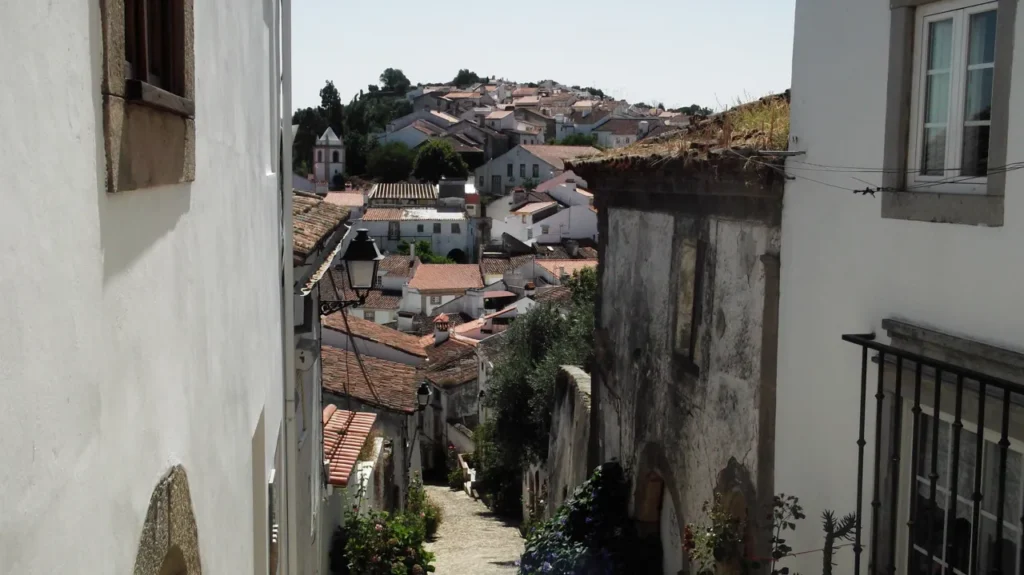
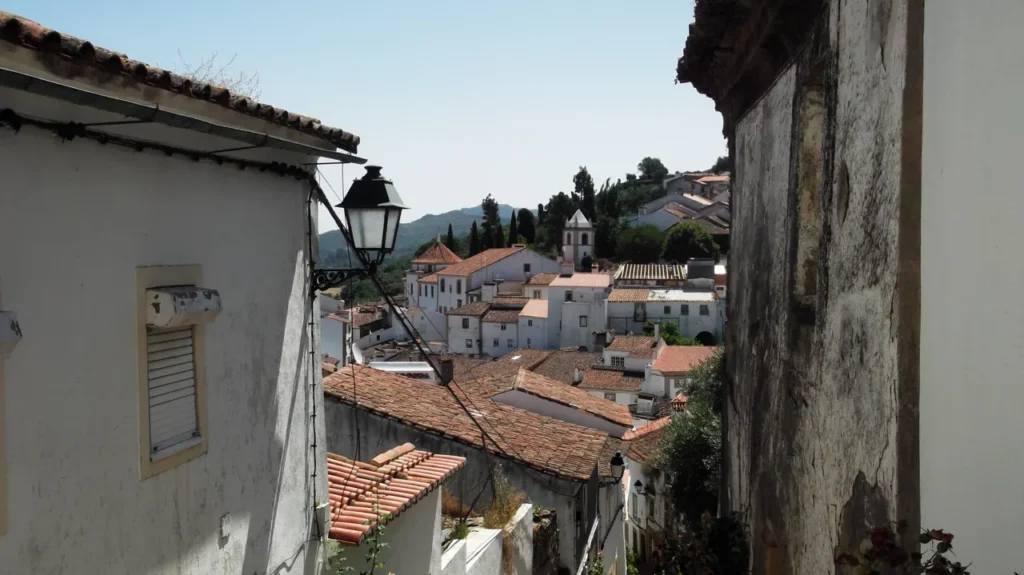
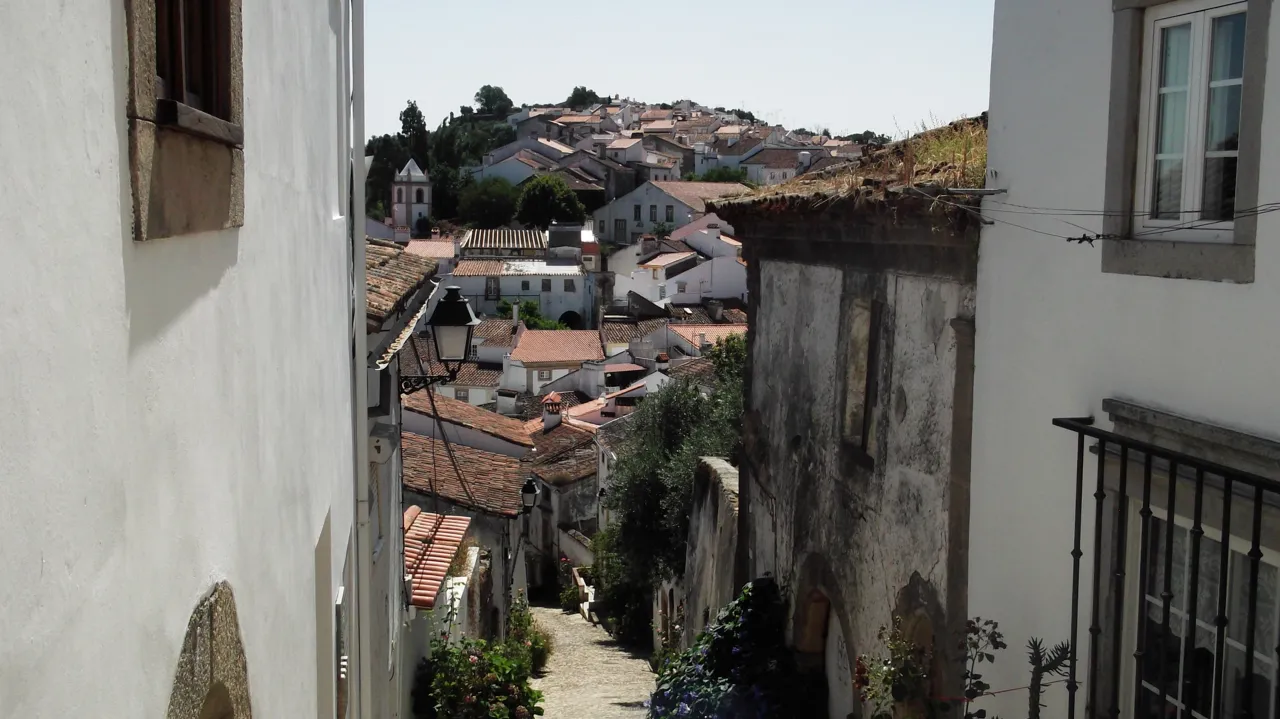
The Judiaria de Castelo de Vide occupied a small but significant area on the slope below the castle, extending toward the Fonte da Vila. It formed part of the medieval urban fabric of the town, connecting residence, trade, workshops, water supply, and daily movement.
The area is associated with Rua da Judiaria, Rua da Fonte, Rua do Mercado, Largo do Arçário, Rua do Arçário, Ruinha da Judiaria, Rua Nova, Rua do Mestre Jorge, and the present Rua dos Serralheiros.
The name Rua do Arçário preserves the memory of the arçário, understood in local and institutional studies as the treasurer or financial officer connected to the Jewish community. Rua Nova is associated with the period after the forced conversions, when former Jews continued to live in Castelo de Vide under the legal status of New Christians.
Houses, Marks and Archaeological Evidence
The houses of the Judiaria often combined domestic and commercial functions. Ground-floor spaces could serve as shops or workshops, while the upper floors were used for residence. The area still preserves narrow streets, Gothic portals, and architectural elements associated with the old quarter.
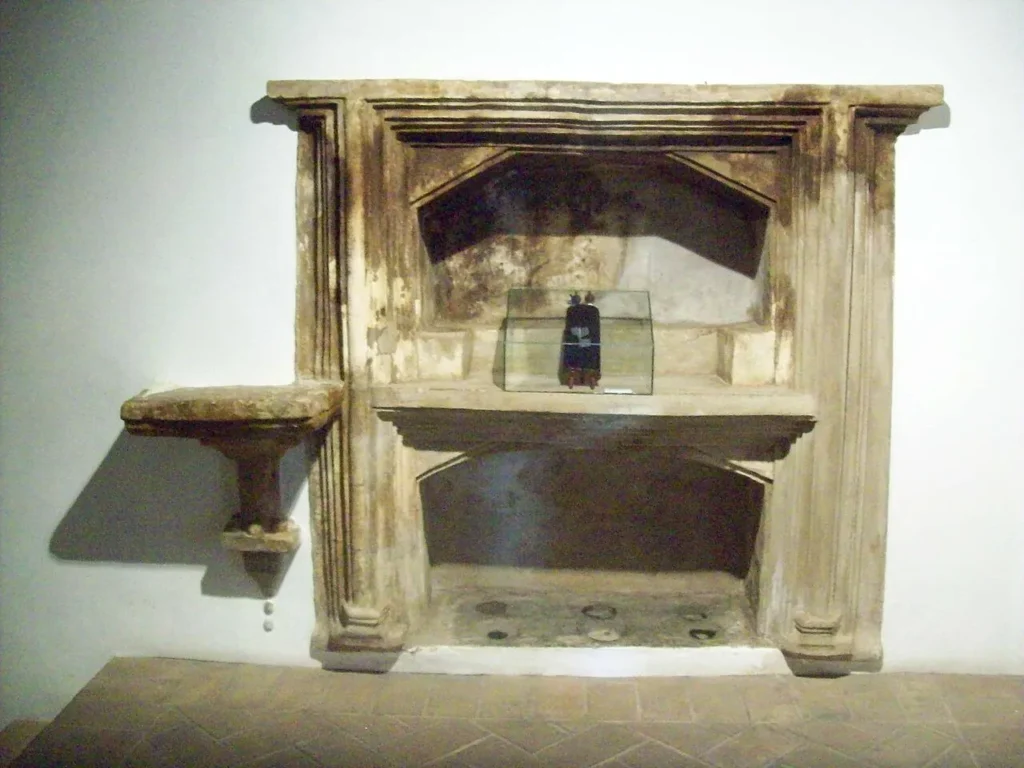
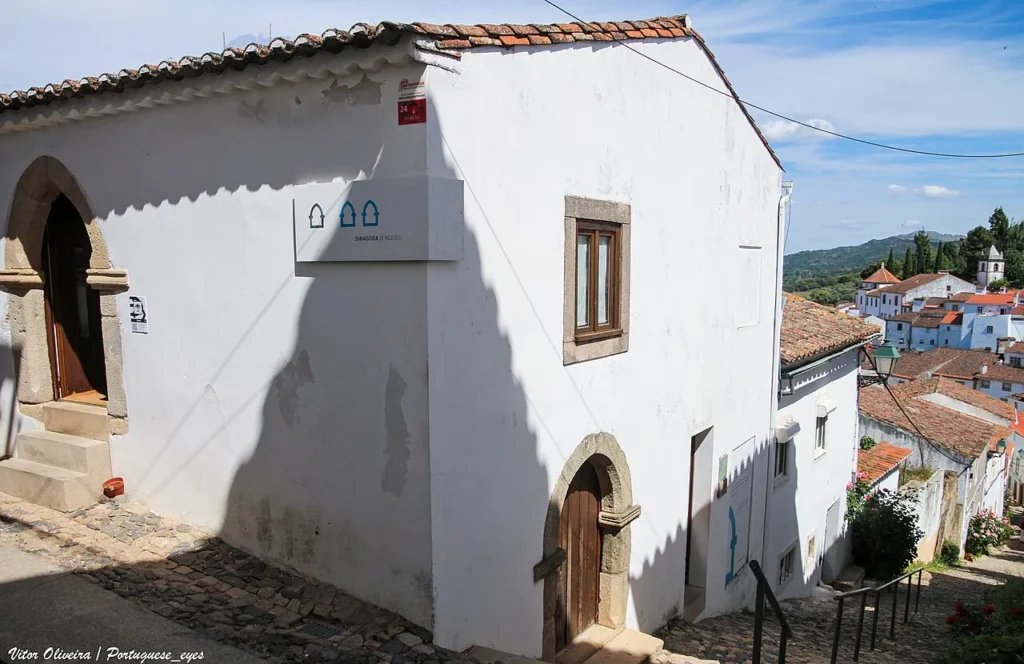
No medieval synagogue building in Castelo de Vide has been securely confirmed by archaeological evidence. The building popularly identified today as the synagogue should therefore be treated with caution. Its value belongs more to local tradition and modern heritage interpretation than to proven medieval religious function.
Archaeological work in buildings on Rua da Judiaria, especially in the area described as the possible Casa do Rabino, recorded structures including silos and a tank. Because of its construction, location, and associated finds, this tank has been interpreted by the excavators as possibly connected to a mikveh. Even so, the identification remains cautious and should not be presented as definitively proven.
Architectural studies in the historic centre also recorded marks on doorposts and lintels. These include cruciform signs, vertical and oblique cuts, professional marks, dates, and a small number of traces interpreted as possible mezuzah marks. These elements are useful for reading the urban fabric of the old Judiaria de Castelo de Vide, but their chronology and meaning require caution.
Growth After 1492
Before 1492, Castelo de Vide appears to have had a relatively small Jewish community. RTP’s Visita Guiada, with Susana Bastos Mateus, refers to around fifteen Jewish families living there by the late 1480s.
The situation changed after the expulsion of the Jews from Castile and Aragon in 1492. Because of its proximity to the border and to the Marvão crossing, Castelo de Vide became one of the places affected by the arrival and concentration of Jewish refugees entering Portugal.
This movement increased the Jewish presence in and around the town. Later New Christian records and surnames of Castilian origin connected to the region reflect this demographic transformation.
Legally recognized Jewish communal life ended after the decree of King Manuel I in 1496 and the forced conversions of 1497. From that point onward, the former Jewish population of Castelo de Vide continued under the legal status of New Christians.
Gallery
Sources & Bibliography
- SIPA / Monumentos. Judiaria de Castelo de Vide. Local: Castelo de Vide. Editora: Sistema de Informação para o Património Arquitetónico. Ano: n.d
- SIPA / Monumentos. Sinagoga Medieval de Castelo de Vide. Local: Castelo de Vide. Editora: Sistema de Informação para o Património Arquitetónico. Ano: n.d
- CÂMARA MUNICIPAL DE CASTELO DE VIDE. Sinagoga. Local: Castelo de Vide. Editora: Câmara Municipal de Castelo de Vide. Ano: 2022
- TURISMO DE PORTUGAL. Sinagoga Medieval de Castelo de Vide. Local: Castelo de Vide. Editora: Turismo de Portugal. Ano: n.d
- FALCÃO, Tânia Maria; SANTOS, Heloísa Valente dos; COSME, Susana Rodrigues. Rua da Judiaria – Castelo de Vide: aspetos gerais da intervenção arqueológica na eventual Casa do Rabino. In Arqueologia em Portugal: 2023 - Estado da Questão. Local: Lisboa. Editora: Associação dos Arqueólogos Portugueses. Ano: 2023
- PATRIMÓNIO CULTURAL, I.P., Biblioteca de Arqueologia. Rua da Judiaria - Castelo de Vide: aspetos gerais da intervenção arqueológica na eventual Casa do Rabino. Local: Portugal. Editora: Património Cultural, I.P. Ano: n.d
- BALESTEROS, Carmen; OLIVEIRA, Jorge de. A Judiaria e a Sinagoga de Castelo de Vide. Local: Castelo de Vide. Editora: Câmara Municipal de Castelo de Vide. Ano: 1993. +
- CALHAU, Luís Projecto. Judeus de Castelo de Vide e cristãos-novos: da identidade às linhagens séculos XV a XIX. Ano: n.d.
- SOYER, François. The Persecution of the Jews and Muslims of Portugal: King Manuel I and the End of Religious Tolerance, 1496–7. Local: Leiden; Boston. Editora: Brill. Ano: 2007
Article researched and curated by Jew Where.
The Jew Where project is collaborative. Do you have additional information, found an inaccuracy, or have historical photos of this location? Contact our team.
Community notes
Comments
Logged-in visitors can submit comments for moderation before they appear publicly.
No comments yet.
Log in to leave a comment. Go to Account.