Skip to content

"Medieval Jewish quarter of Barcelos, documented by property records, Rua dos Judeus, a synagogue reference, and later memory."

The Jewish Quarter of Barcelos is not merely a later memory of Jewish presence in northern Portugal. It is documented through medieval property records preserved in the fonds of the Colegiada de Santa Maria de Barcelos, now held by the Arquivo Nacional da Torre do Tombo. These records show that the judiaria of Barcelos was already an identifiable urban space in the fourteenth century, with houses, streets, contracts, and named Jewish residents appearing in ecclesiastical documentation.

Rua dos Judeus and Urban Evidence

The strongest evidence comes from property references dated between the fourteenth and fifteenth centuries. A document from 1355 mentions a house located in Rua das Aldas, within the Jewish quarter. In 1362, another record refers to a cellar and house in Rua dos Judeus, literally “Street of the Jews.” In 1369, an emphyteusis contract mentions a house next to that of Moser Moussem, a Jew, and close to the Jewish quarter. These references place the Jewish presence within the ordinary legal and economic life of medieval Barcelos.

Synagogue and Communal Space

A particularly important document from 1431 records the lease of a house in the Jewish Quarter of Barcelos located in front of the synagogue. This is one of the clearest references to the existence of a Jewish religious building in the town. It does not preserve the architecture of the synagogue, nor does it allow a full reconstruction of its plan. Even so, it confirms that the community had a recognized place of worship integrated into the urban fabric.

After the Forced Conversion

The documentary trail continues after the forced conversion of the Jews in Portugal at the end of the fifteenth century. Records from 1511 and 1512 refer to properties located in the place of the former Jewish quarter of Barcelos. This wording is significant. It shows that, even after the disappearance of the official Jewish community, the urban memory of the judiaria remained fixed in property language and local geography.

Later Memory and Caution

A twentieth-century notice published in Ha-Lapid preserves a later tradition identifying the former Rua Nova, later Rua dos Lanterneiros and today Rua do Infante D. Henrique, as the area of the judiaria. The same text states that the quarter was closed by two iron gates, that the synagogue stood where the telegraph-postal station later rose, and that the Jewish cemetery lay outside the settlement, although its location was no longer identifiable. This information is valuable, but it must be handled with caution, since the strongest evidence remains the medieval archival record.

Documentary Heritage

Today, the Jewish Quarter of Barcelos survives primarily as a documentary and urban-historical trace, rather than as a preserved monumental complex. Its importance lies in the convergence of street names, property contracts, synagogue references, and post-1497 memory. For this reason, the Jewish Quarter of Barcelos should be read as part of the wider medieval Jewish geography of northern Portugal, where archival fragments often preserve what architecture no longer visibly shows.

Gallery
Community notes

Comments

Logged-in visitors can submit comments for moderation before they appear publicly.

No comments yet.

Article researched and curated by Jew Where.

The Jew Where project is collaborative. Do you have additional information, found an inaccuracy, or have historical photos of this location? Contact our team.
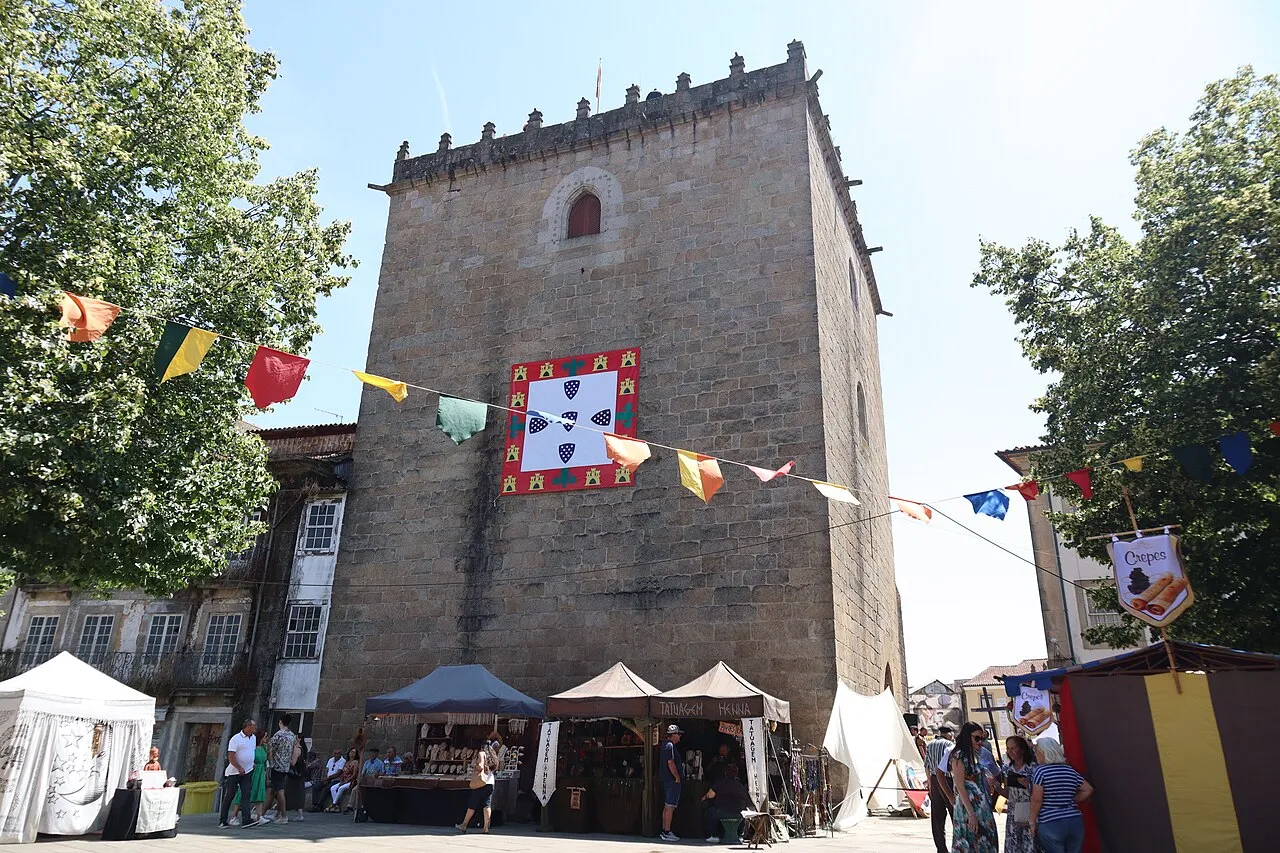
Jewish Quarter of Barcelos
Portugal / Braga / Neighborhoods & Settlements

Jewish Quarter of Barcelos

"Medieval Jewish quarter of Barcelos, documented by property records, Rua dos Judeus, a synagogue reference, and later memory."

Location
Rua Infante D. Henrique, 4750-251 Barcelos, Braga, Portugal

The Jewish Quarter of Barcelos is not merely a later memory of Jewish presence in northern Portugal. It is documented through medieval property records preserved in the fonds of the Colegiada de Santa Maria de Barcelos, now held by the Arquivo Nacional da Torre do Tombo. These records show that the judiaria of Barcelos was already an identifiable urban space in the fourteenth century, with houses, streets, contracts, and named Jewish residents appearing in ecclesiastical documentation.

Rua dos Judeus and Urban Evidence

The strongest evidence comes from property references dated between the fourteenth and fifteenth centuries. A document from 1355 mentions a house located in Rua das Aldas, within the Jewish quarter. In 1362, another record refers to a cellar and house in Rua dos Judeus, literally “Street of the Jews.” In 1369, an emphyteusis contract mentions a house next to that of Moser Moussem, a Jew, and close to the Jewish quarter. These references place the Jewish presence within the ordinary legal and economic life of medieval Barcelos.

Synagogue and Communal Space

A particularly important document from 1431 records the lease of a house in the Jewish Quarter of Barcelos located in front of the synagogue. This is one of the clearest references to the existence of a Jewish religious building in the town. It does not preserve the architecture of the synagogue, nor does it allow a full reconstruction of its plan. Even so, it confirms that the community had a recognized place of worship integrated into the urban fabric.

After the Forced Conversion

The documentary trail continues after the forced conversion of the Jews in Portugal at the end of the fifteenth century. Records from 1511 and 1512 refer to properties located in the place of the former Jewish quarter of Barcelos. This wording is significant. It shows that, even after the disappearance of the official Jewish community, the urban memory of the judiaria remained fixed in property language and local geography.

Later Memory and Caution

A twentieth-century notice published in Ha-Lapid preserves a later tradition identifying the former Rua Nova, later Rua dos Lanterneiros and today Rua do Infante D. Henrique, as the area of the judiaria. The same text states that the quarter was closed by two iron gates, that the synagogue stood where the telegraph-postal station later rose, and that the Jewish cemetery lay outside the settlement, although its location was no longer identifiable. This information is valuable, but it must be handled with caution, since the strongest evidence remains the medieval archival record.

Documentary Heritage

Today, the Jewish Quarter of Barcelos survives primarily as a documentary and urban-historical trace, rather than as a preserved monumental complex. Its importance lies in the convergence of street names, property contracts, synagogue references, and post-1497 memory. For this reason, the Jewish Quarter of Barcelos should be read as part of the wider medieval Jewish geography of northern Portugal, where archival fragments often preserve what architecture no longer visibly shows.

Timeline

  • 1355 A property document mentions a house in Rua das Aldas, within the Jewish quarter of Barcelos.
  • 1362 A record refers to a cellar and house in Rua dos Judeus, confirming Jewish urban toponymy.
  • 1369 An emphyteusis contract mentions a house near that of Moser Moussem, a Jew, and close to the Jewish quarter.
  • 1431 A lease records a house in the Jewish Quarter of Barcelos located in front of the synagogue.
  • 1497 The forced conversion of the Jews in Portugal ended the official Jewish community framework.
  • 1511-1512 Documents refer to properties located in the former Jewish quarter of Barcelos.
  • 1947 Ha-Lapid publishes a later notice preserving traditions about the former judiaria, synagogue area, gates, and cemetery.

Sources & Bibliography

  1. DHLAB, CHAM, NOVA FCSH. Colegiada de Santa Maria de Barcelos. Western Sephardic Diaspora Roadmap. Local: Lisbon. Editora: DHLAB, CHAM, NOVA FCSH. Ano: n.d. https://projetos.dhlab.fcsh.unl.pt/s/wsdroadmap/item/5357
  2. TAVARES, Maria José Pimenta Ferro. Os judeus em Portugal no século XV. 2 vols. Local: Lisboa. Editora: Universidade Nova de Lisboa, Faculdade de Ciências Sociais e Humanas. Ano: 1982. https://openlibrary.org/books/OL2639694M/Os_judeus_em_Portugal_no_seculo_XV

Additional Information

Current use of the address: The historical Jewish quarter does not survive as a preserved Jewish monument; the marker indicates the traditional urban area associated with later memory, while the exact medieval limits remain uncertain.

Article researched and curated by Jew Where.

The Jew Where project is collaborative. Do you have additional information, found an inaccuracy, or have historical photos of this location? Contact our team.