

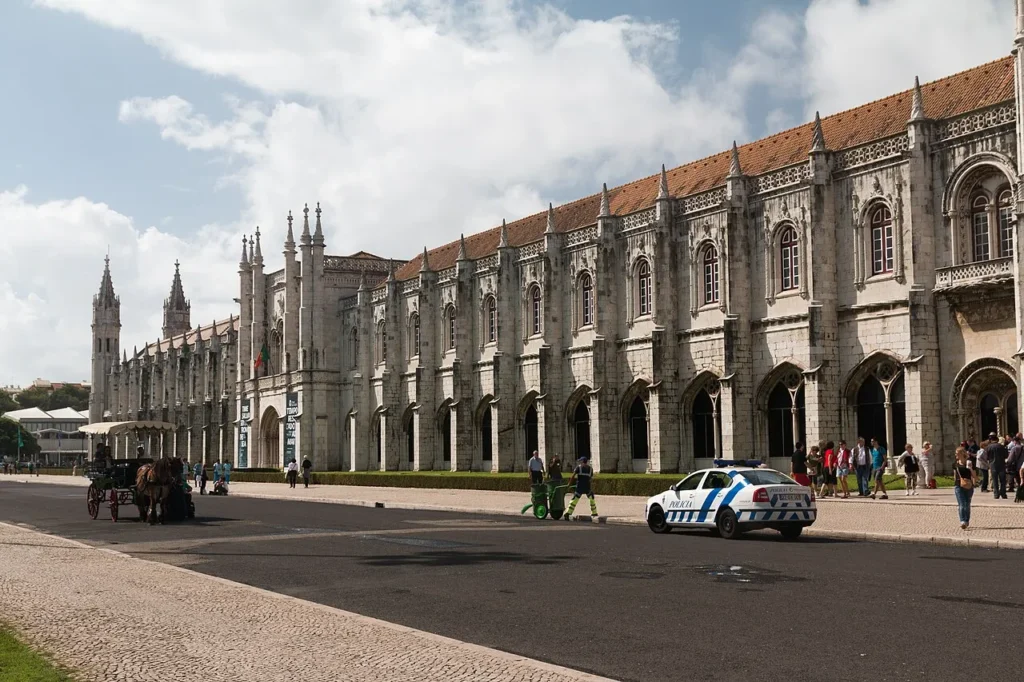
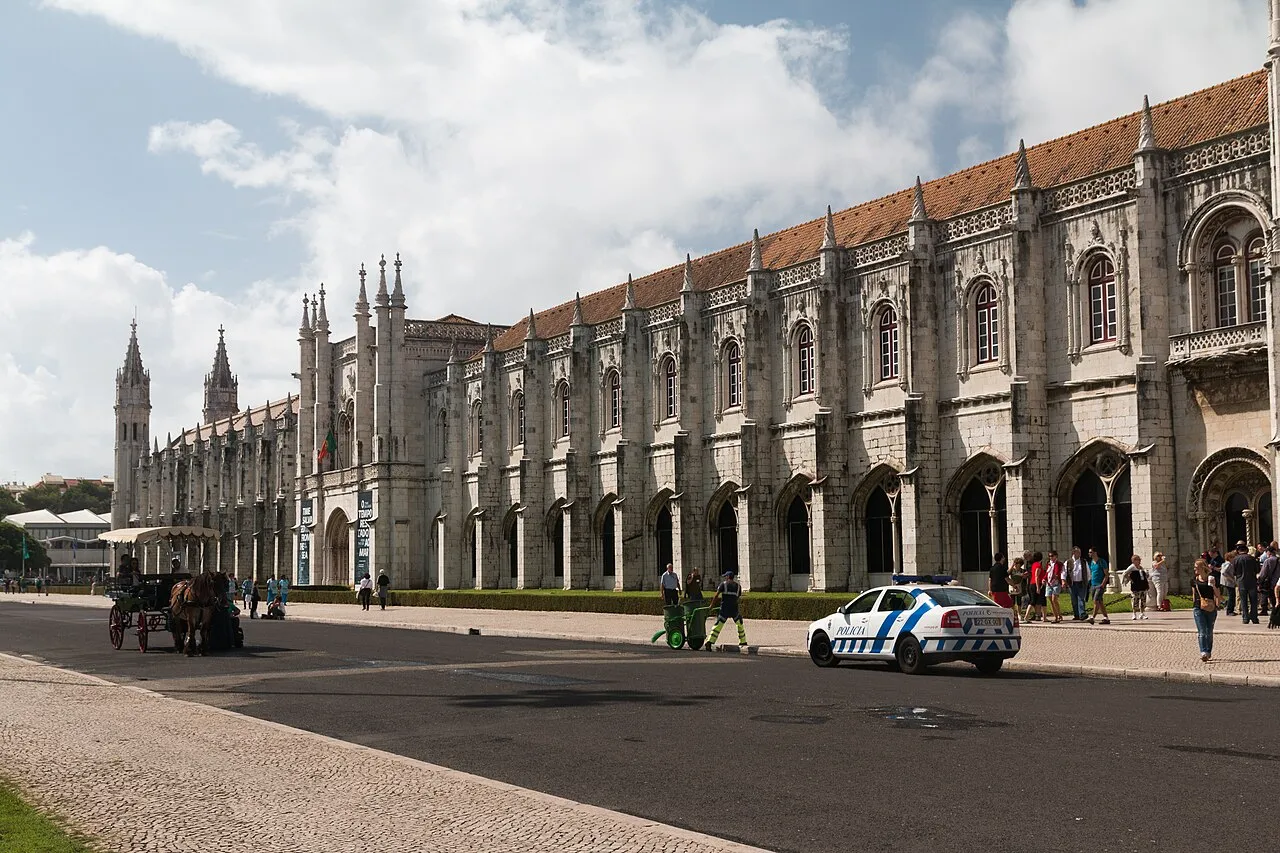
The Jewish objects at the National Museum of Archaeology in Belém are best understood as a dispersed archaeological and documentary constellation. They do not form a single Jewish gallery. Even so, they preserve some of the most relevant material traces for studying Jewish presence, memory, and transmission in Portugal.
The museum, founded in 1893 by José Leite de Vasconcelos, became Portugal’s central institution for archaeological collections. Within that wider national archive, the Jewish-related material occupies a particular place. It connects Roman Lusitania, medieval and early modern Hebrew memory, manuscript culture, and modern collecting practices.
Jewish objects at the National Museum of Archaeology
A preliminary list published by the MNA in 2017 identified several cultural objects with possible or direct relevance to the history of Jews in Portugal. These include Hebrew manuscripts, a Book of Esther scroll, a leather sheet written in Hebrew, and a manuscript concerning the expulsion and general pardon of the Jews. This group shows that Jewish memory in the museum is not only archaeological. It is also textual, legal, liturgical, and archival.
The presence of these documents matters because Jewish history in Portugal was often preserved through fragments. Some fragments are inscriptions. Others are manuscripts, copies, references, or objects displaced from their original contexts. In this sense, the MNA collection helps show how Jewish heritage can survive outside synagogues, cemeteries, and community buildings.
The menorah intaglio from Ammaia
The most important object in this context is the ring stone with a menorah from Roman Ammaia, catalogued as MNA Au 1193. It is a small nicolo intaglio, dated broadly to the Roman period, usually between the 2nd and 3rd centuries CE. Its imagery includes a seven-branched menorah, together with other Jewish ritual symbols associated with Jewish visual culture in Late Antiquity.
This object is exceptional because it belongs to the earliest archaeological evidence for Jewish presence in the territory of present-day Portugal. It does not, by itself, prove a fully organized community in Ammaia. However, it strongly supports the presence of at least one Jewish individual, and it strengthens the broader argument for Jewish life in Roman Lusitania.
The ring stone also changes the scale of interpretation. Jewish history in Portugal is often approached through medieval quarters, expulsions, New Christians, and Inquisition records. The Ammaia intaglio pushes the discussion further back. It places Jewish presence within the Roman landscape of Lusitania, before the better-documented medieval period.
Hebrew memory, replicas, and collecting
Other objects in the MNA list require a more cautious reading. The museum records a pendant amulet in the form of a hexalpha with the Hebrew inscription “Zion,” acquired by José Leite de Vasconcelos in Karlsbad in 1921. This is a Jewish object in the collection, but it is not evidence of ancient or medieval Jewish life in Portugal.
The same caution applies to the replica of a Hebrew inscription from the Jewish cemetery of Espaldão, in Faro. The original was recorded in 1903 on the cemetery wall, and two copies were made. One remained connected to Faro, while the MNA preserved another. Here, the value lies not in original archaeological context, but in preservation, documentation, and the circulation of Jewish epigraphic memory.
Together, these objects make the Jewish objects at the National Museum of Archaeology historically significant. Their importance is not only aesthetic. It lies in the way they connect material culture, Hebrew writing, Roman mobility, collecting history, and the fragile survival of Jewish traces in Portugal.
Gallery
Sources & Bibliography
- MUSEUS E MONUMENTOS DE PORTUGAL. National Museum of Archaeology. Local: Lisbon. Editora: Museus e Monumentos de Portugal. Ano: n.d
- MUSEU NACIONAL DE ARQUEOLOGIA. Museu Nacional de Arqueologia. Local: Lisboa. Editora: Museu Nacional de Arqueologia. Ano: n.d
- CRAVINHO, Graça; AMORAI-STARK, Shua. A Jewish Intaglio from Roman Ammaia, Lusitania. Liber Annuus 56. Local: Jerusalem. Editora: Studium Biblicum Franciscanum. Ano: 2006
- MATRIZPIX / DIREÇÃO-GERAL DO PATRIMÓNIO CULTURAL. Pedra de anel com representação de Menorah, Au 1193. Local: Lisboa. Editora: Direção-Geral do Património Cultural. Ano: n.d
Article researched and curated by Jew Where.
The Jew Where project is collaborative. Do you have additional information, found an inaccuracy, or have historical photos of this location? Contact our team.
Community notes
Comments
Logged-in visitors can submit comments for moderation before they appear publicly.
No comments yet.
Log in to leave a comment. Go to Account.