

Rue des Rosiers is one of the central streets of the Jewish Marais, in the 4th arrondissement of Paris. It belongs to the area known as the Pletzl, a Yiddish word usually translated as “little square” or “little place”. From the late nineteenth century onward, this part of the Marais became one of the main centres of Jewish immigrant life in Paris.
Medieval Jewish Memory in the Marais
The Jewish memory of this area is older than the modern neighbourhood. Jewish presence in the Marais is documented from the thirteenth century, before the expulsions that marked Jewish life in medieval France. This earlier layer does not mean that Rue des Rosiers preserved an uninterrupted Jewish community across the centuries. It does, however, place the street within a wider medieval geography of Jewish Paris.
After Jewish emancipation in 1791, Jewish families gradually returned to this part of the city. In the early nineteenth century, Jews from Alsace and eastern France were among those who settled in the district. Later, from the 1880s onward, the area received larger numbers of Jews from Eastern and Central Europe, many fleeing poverty, antisemitism and persecution.
Rue des Rosiers and the Pletzl
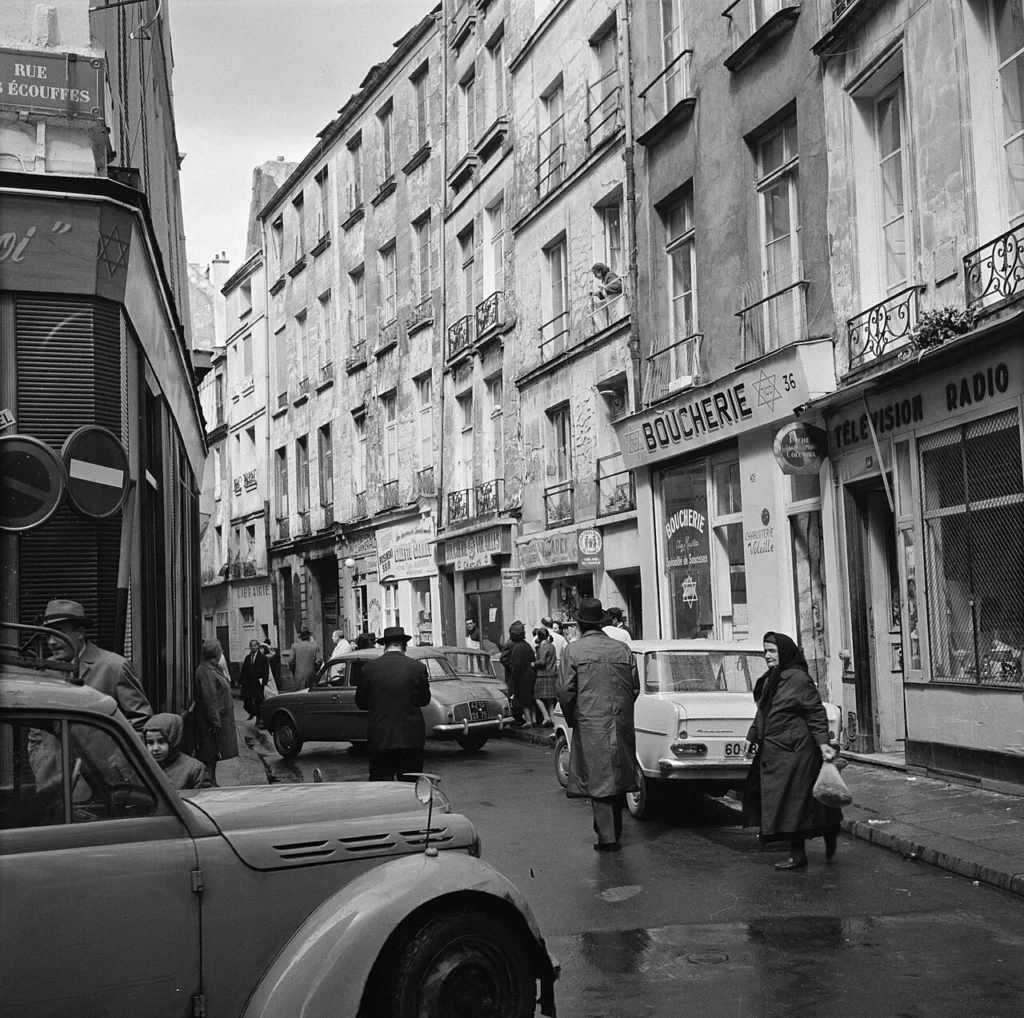
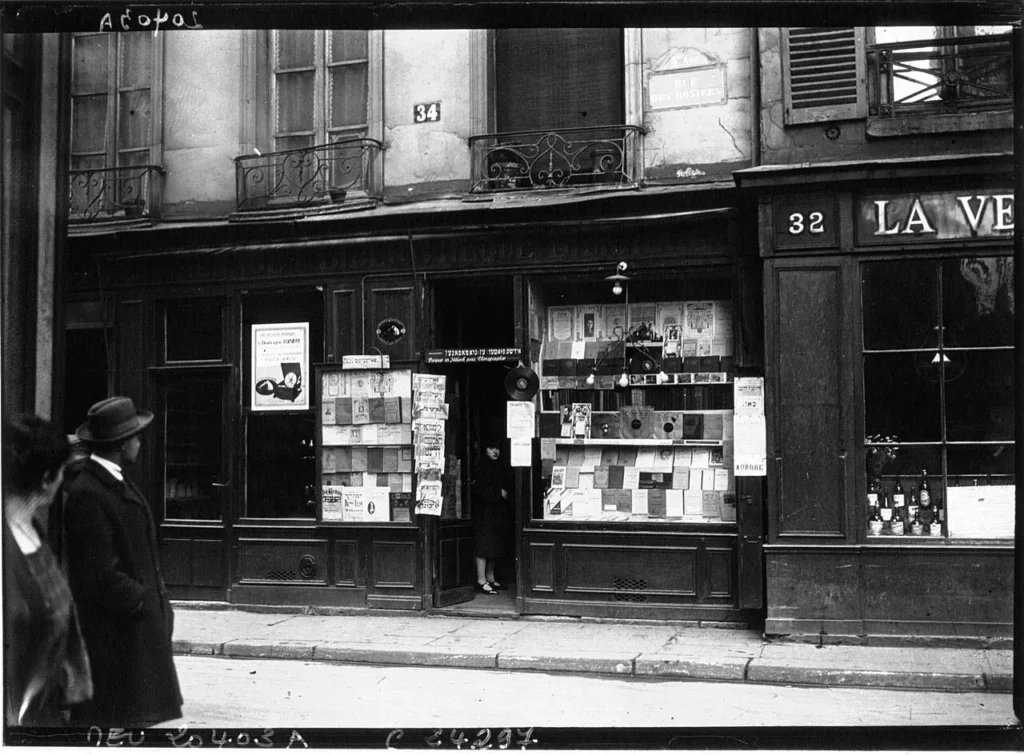
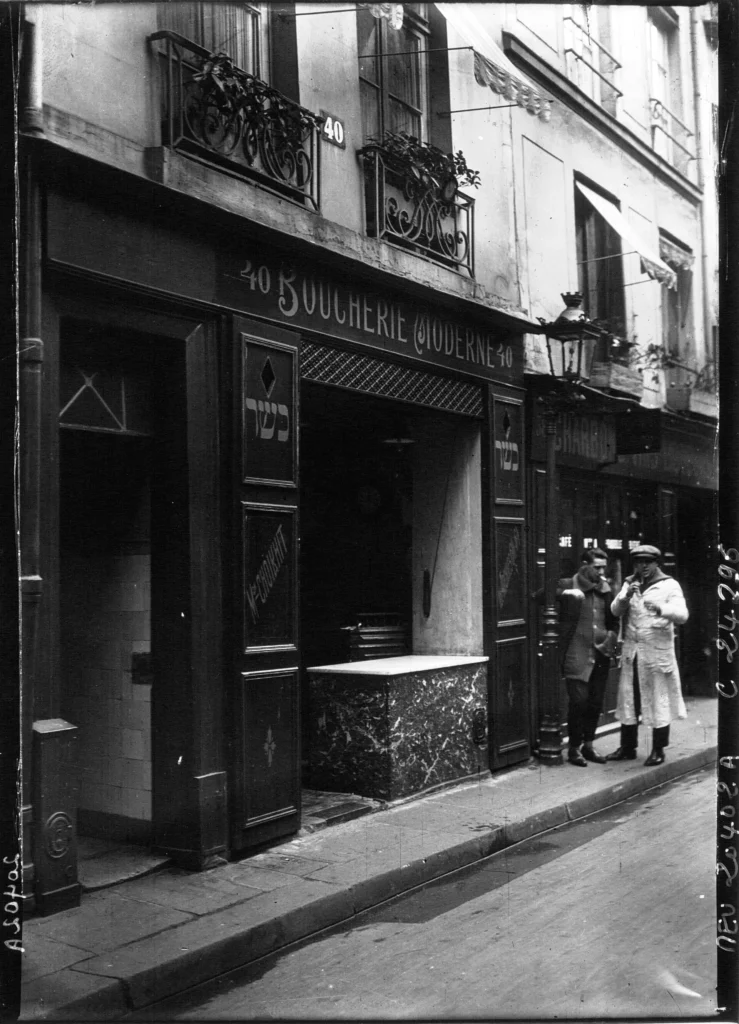
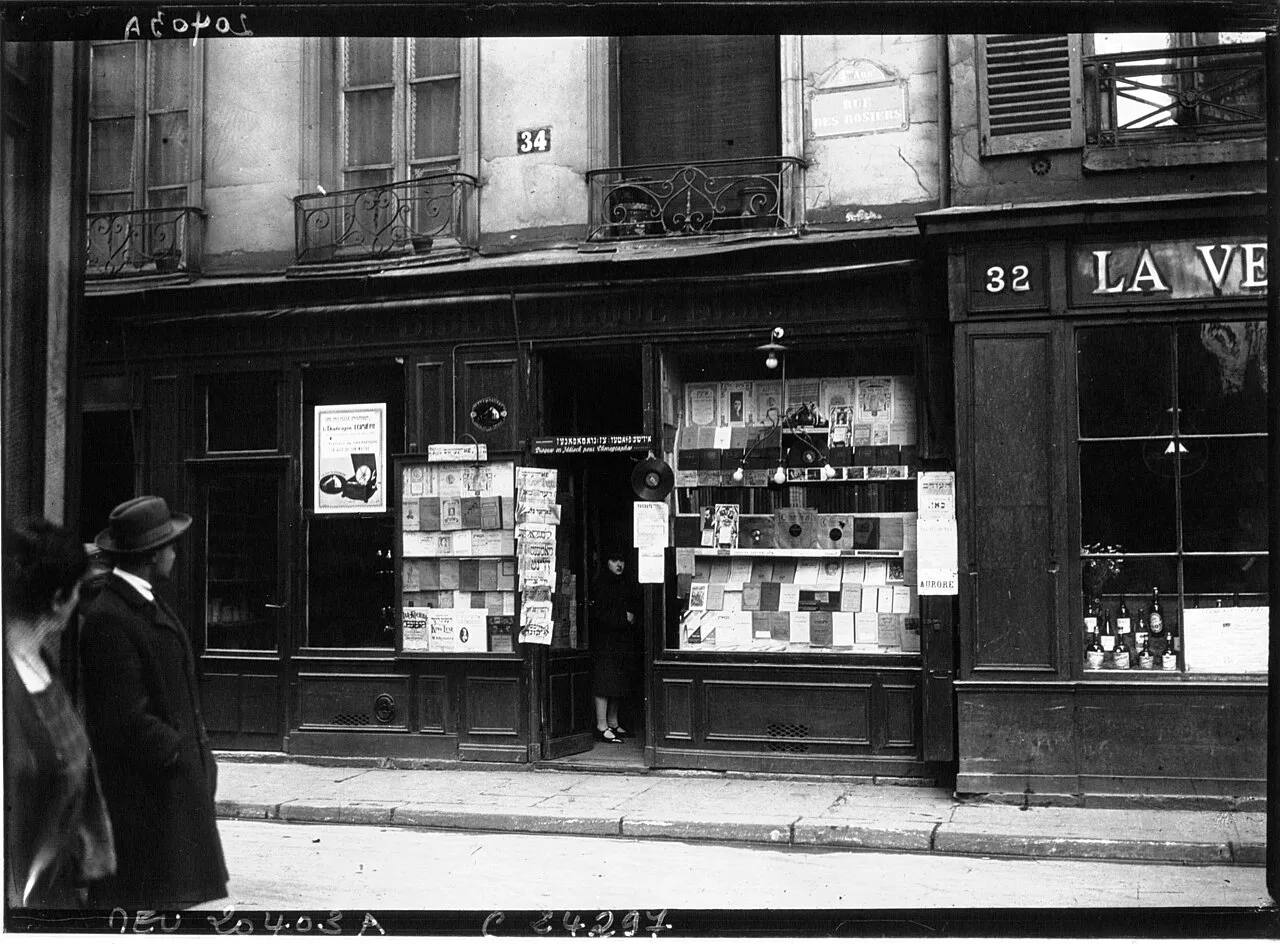
Rue des Rosiers became one of the symbolic streets of the Yiddish-speaking Jewish quarter. Around it developed synagogues, small prayer rooms, kosher butchers, bakeries, restaurants, bookshops, workshops, mutual aid networks and political activity. The street was not only a religious space. It was also a dense immigrant environment, shaped by work, language, food, education and everyday communal life.
The Pletzl was especially associated with Ashkenazi Jewish immigrants. Even so, the Jewish Marais was never a single, fixed identity. It changed according to migration, religious practice, economic life and the wider pressures of Parisian urban history.
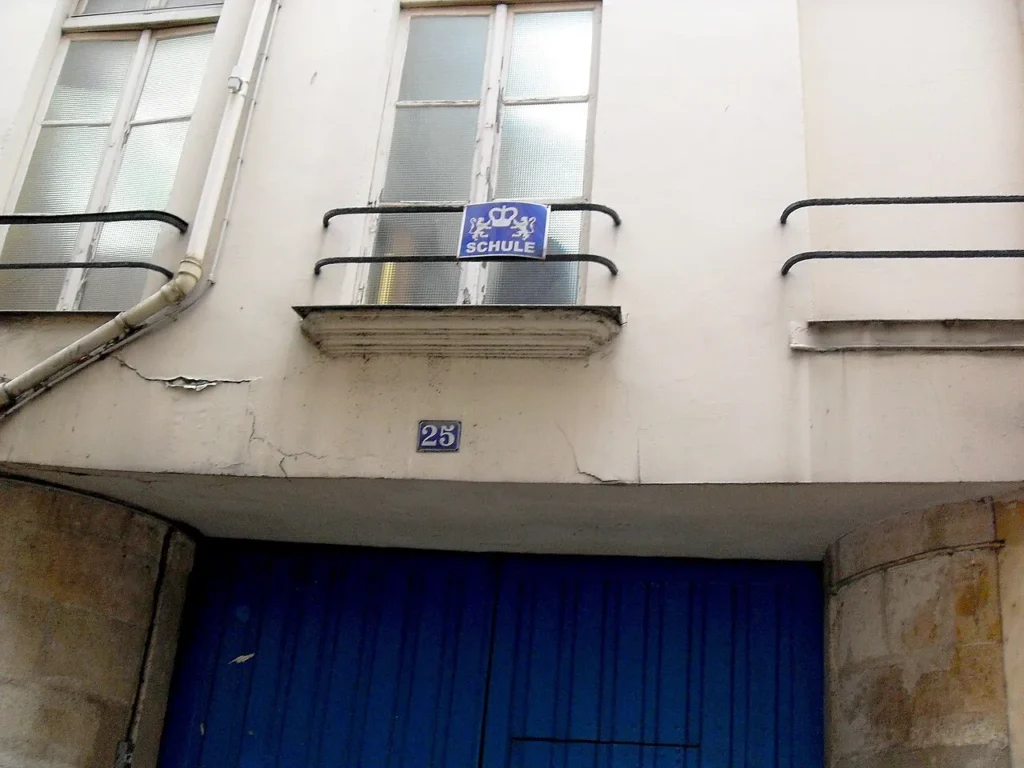
During the Second World War, the Jewish Marais was devastated by arrests, deportations and murder. The district lost a large part of its Jewish population during the Shoah. Memorial plaques, school commemorations and nearby institutions of Shoah memory still mark this history in the urban landscape.
Post-war Jewish Marais
After the war, Jewish life returned to Rue des Rosiers and the surrounding streets. In the 1960s and 1970s, the neighbourhood was also reshaped by the arrival of Jews from North Africa. This added new religious, culinary and cultural layers to the older Ashkenazi Pletzl.
Today, Rue des Rosiers remains one of the best-known Jewish streets in Paris. It is connected to Jewish food places, bookshops, synagogues nearby, memorial plaques and routes associated with the Musée d’Art et d’Histoire du Judaïsme. At the same time, the street has been strongly transformed by fashion stores, tourism and gentrification.
Rue des Rosiers is therefore not a frozen Jewish quarter. It is a street where medieval memory, immigrant Jewish life, Shoah memory, post-war renewal and contemporary commercial change remain visible in the same urban space.
Gallery
Sources & Bibliography
- Musée d’Art et d’Histoire du Judaïsme. The Jewish Marais. Local: Paris. Editora: Musée d’Art et d’Histoire du Judaïsme. Ano: n.d
- GREEN, Nancy L. The Pletzl of Paris: Jewish Immigrant Workers in the Belle Epoque. Editora: Holmes & Meier. Ano: 1986
- JARRASSÉ, Dominique. Guide du patrimoine juif parisien. Local: Paris. Editora: Parigramme. Ano: 2003
- HILLAIRET, Jacques. Dictionnaire historique des rues de Paris. Local: Paris. Editora: Les Éditions de Minuit. Ano: 1960
- INALCO. Jewish mosaics in Paris. Local: Paris. Editora: INALCO. Ano: n.d
Article researched and curated by Jew Where.
The Jew Where project is collaborative. Do you have additional information, found an inaccuracy, or have historical photos of this location? Contact our team.
Community notes
Comments
Logged-in visitors can submit comments for moderation before they appear publicly.
No comments yet.
Log in to leave a comment. Go to Account.