Skip to content

"Public garden in the Marais named for Anne Frank, with a chestnut tree linked to the Secret Annex and a Paul Celan sculpture."

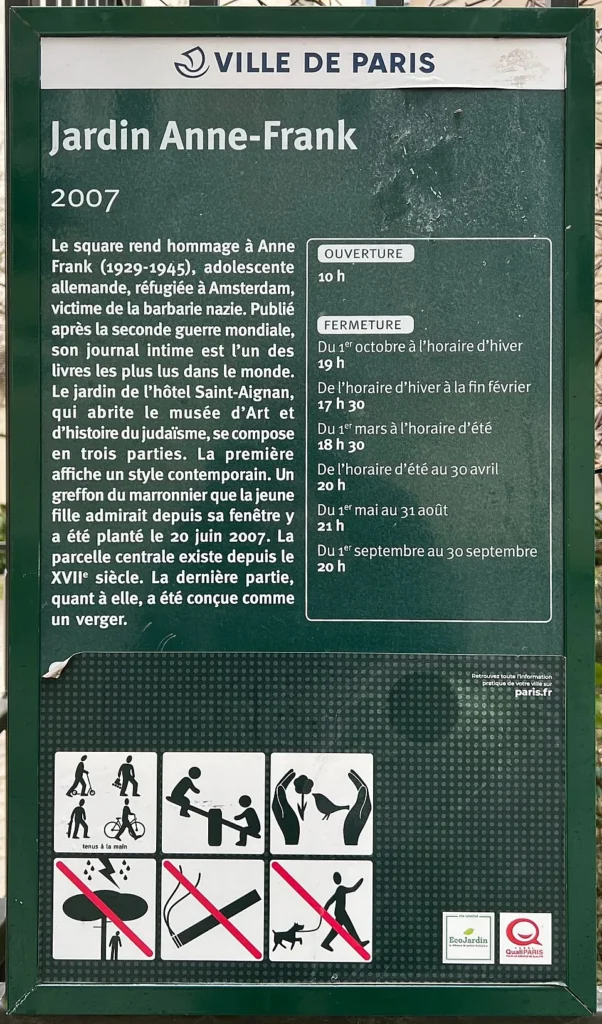
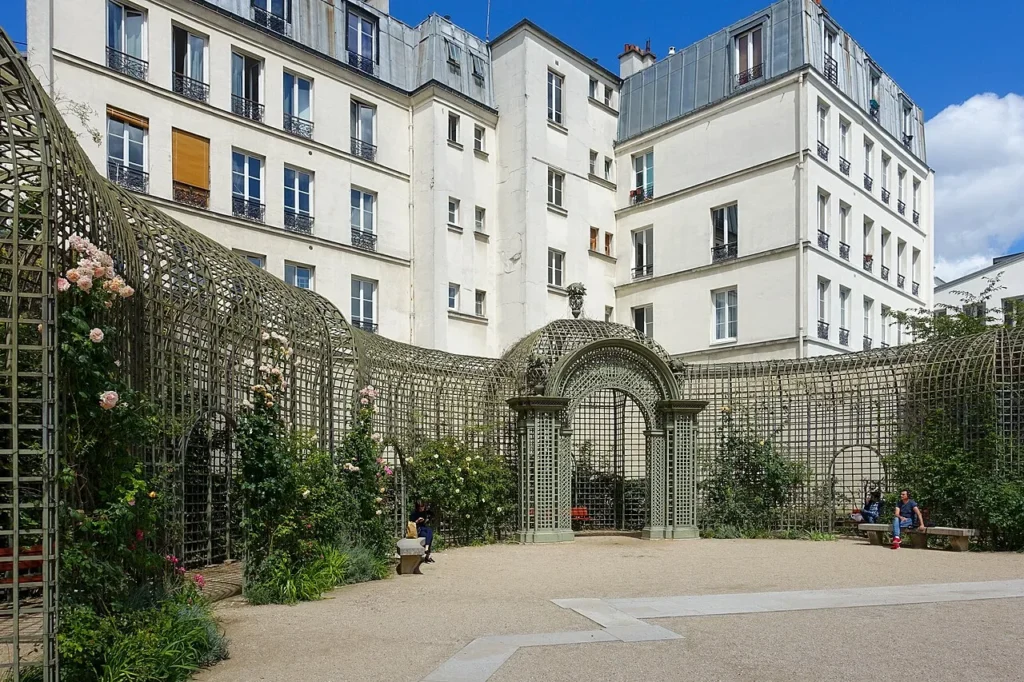
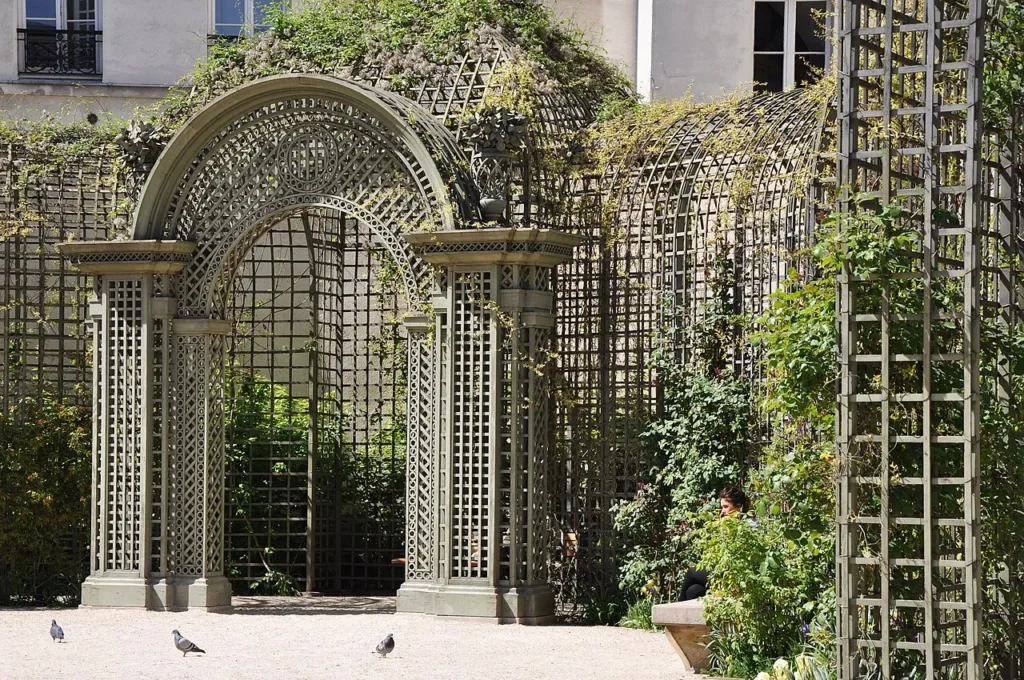
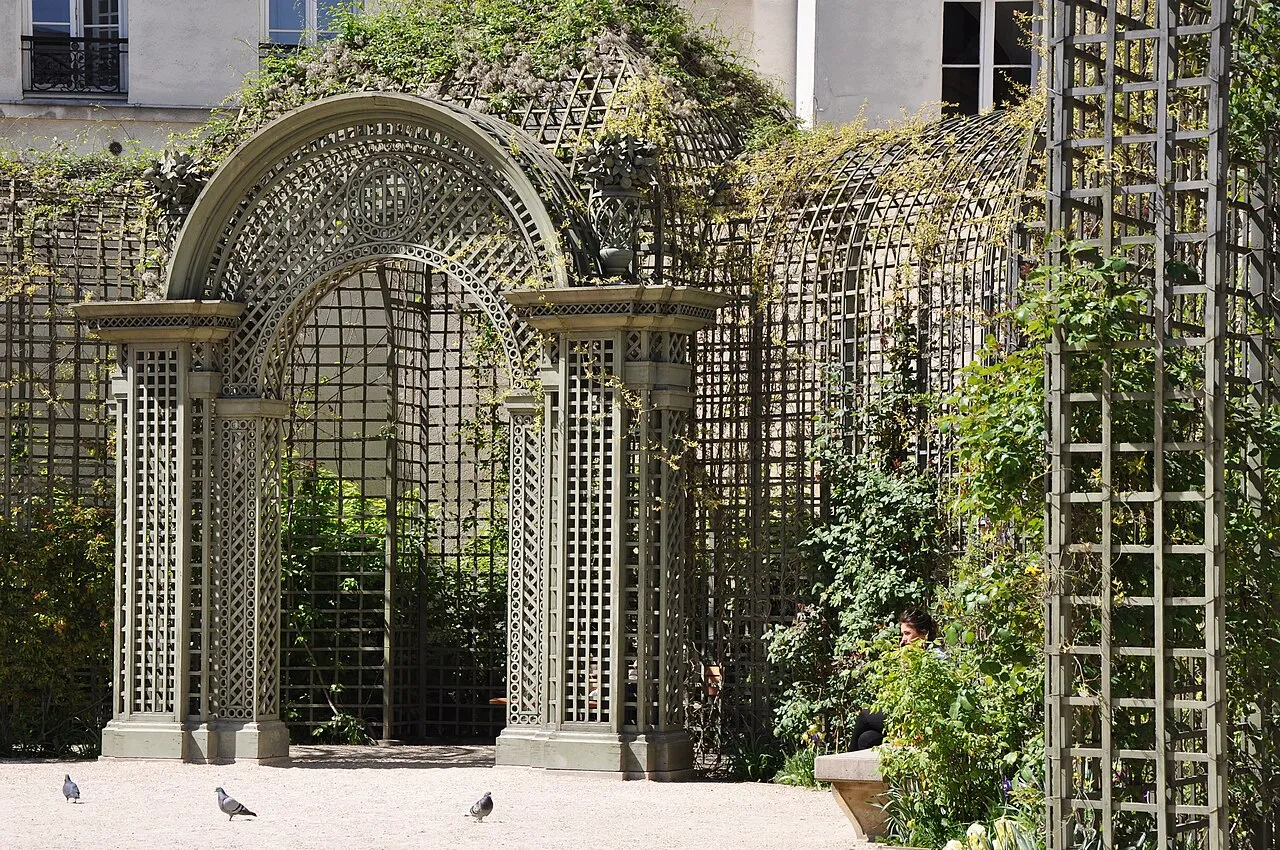
The Jardin Anne Frank is located at 14 impasse Berthaud, behind the Musée d’Art et d’Histoire du Judaïsme, in the Marais of Paris. The garden is a public site of Jewish memory dedicated to Anne Frank, the German-born Jewish teenager whose diary became one of the most widely read testimonies of Nazi persecution.

Anne Frank and Jewish Memory

Anne Frank was born in Frankfurt am Main in 1929. After the rise of Nazism, her parents, Otto and Edith Frank, moved the family to Amsterdam. Following the German occupation of the Netherlands, anti-Jewish measures progressively excluded Jews from public life, education and work.

In July 1942, the Frank family went into hiding in the Secret Annex at Prinsengracht 263. Anne lived there for more than two years and wrote the diary that preserved her experience of confinement, fear, observation and intellectual formation under persecution.

Anne Frank and the others in hiding were arrested on 4 August 1944. She was deported through Westerbork and Auschwitz and later sent to Bergen-Belsen, where she died in 1945. Her father, Otto Frank, was the only person from the Secret Annex to survive the war.

Jardin Anne Frank in Paris

The garden was named after Anne Frank in 2006, when the Paris City Council approved the attribution of her name to a public garden in the 3rd arrondissement. In the municipal debate, Anne Frank’s name was connected to the memory of Jewish children deported during the Shoah and to the transmission of memory against Nazi antisemitism.

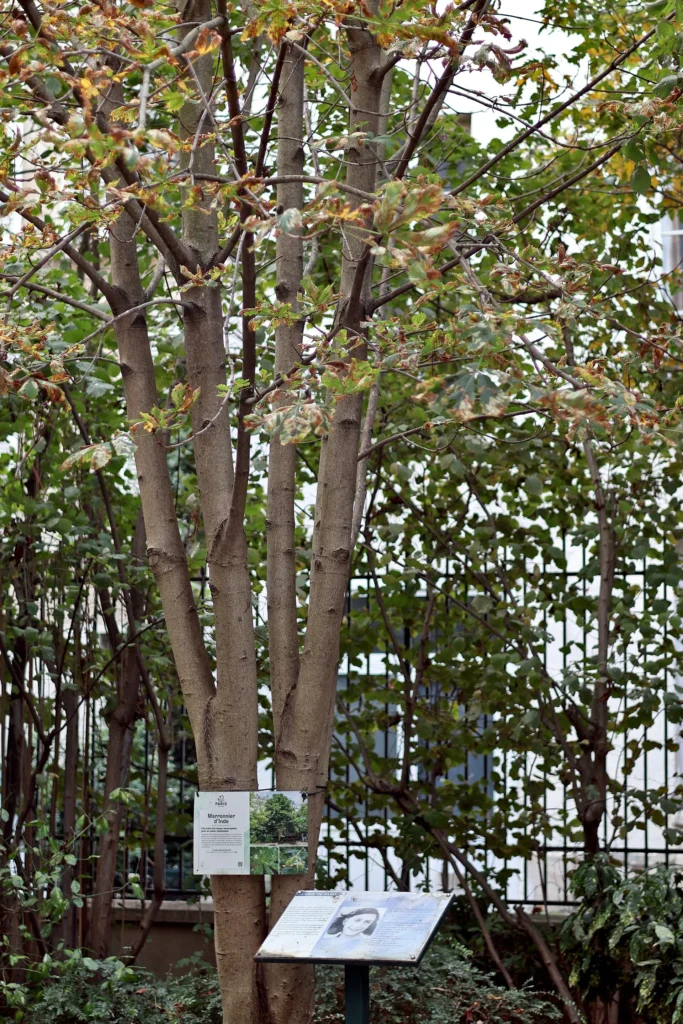
The Paris garden opened in 2007. On 20 June 2007, a horse chestnut descended from the tree Anne Frank saw from the Secret Annex in Amsterdam was planted in the garden. This tree gives the site a direct material link to one of the most intimate images in her diary: the view of nature from confinement.

The Marais and Later Memory

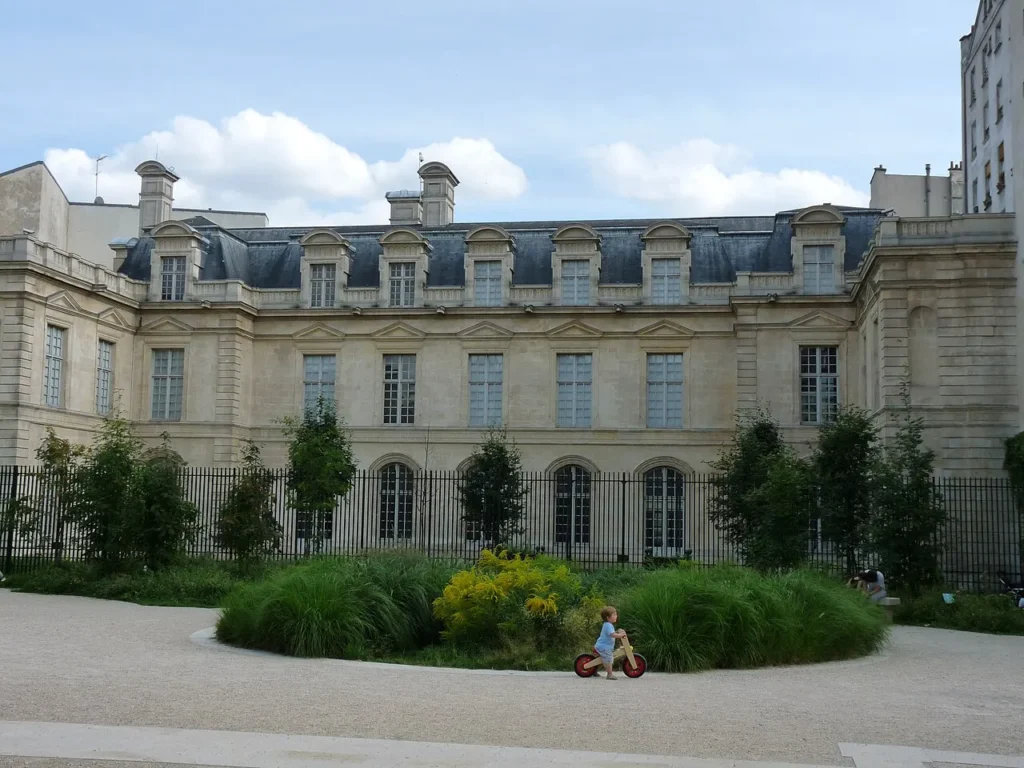
The garden also preserves an older urban layer of the Marais. Its central plot belonged to the former garden of the Hôtel de Saint-Aignan, today the Musée d’Art et d’Histoire du Judaïsme. This position places the Jardin Anne Frank beside one of France’s main institutions dedicated to Jewish art, history and transmission.

Since 2016, the garden has also housed a bronze work by Alexander Polzin dedicated to Paul Celan, the Jewish poet whose writing remains inseparable from the memory of the Holocaust.

Gallery
Community notes

Comments

Logged-in visitors can submit comments for moderation before they appear publicly.

No comments yet.

Article researched and curated by Jew Where.

The Jew Where project is collaborative. Do you have additional information, found an inaccuracy, or have historical photos of this location? Contact our team.
Jardin Anne Frank
France / Île-de-France / Memory & Holocaust

Jardin Anne Frank

"Public garden in the Marais named for Anne Frank, with a chestnut tree linked to the Secret Annex and a Paul Celan sculpture."

Location
Jardin Anne Frank, 14 impasse Berthaud, 75003 Paris, France
Opening Hours
May 1-August 31: 10:00-21:00 September 1-30: 10:00-20:00 October 1-24: 10:00-19:00 School period Wednesday-Friday 10:00-12:00: Closed

The Jardin Anne Frank is located at 14 impasse Berthaud, behind the Musée d’Art et d’Histoire du Judaïsme, in the Marais of Paris. The garden is a public site of Jewish memory dedicated to Anne Frank, the German-born Jewish teenager whose diary became one of the most widely read testimonies of Nazi persecution.

Anne Frank and Jewish Memory

Anne Frank was born in Frankfurt am Main in 1929. After the rise of Nazism, her parents, Otto and Edith Frank, moved the family to Amsterdam. Following the German occupation of the Netherlands, anti-Jewish measures progressively excluded Jews from public life, education and work.

In July 1942, the Frank family went into hiding in the Secret Annex at Prinsengracht 263. Anne lived there for more than two years and wrote the diary that preserved her experience of confinement, fear, observation and intellectual formation under persecution.

Anne Frank and the others in hiding were arrested on 4 August 1944. She was deported through Westerbork and Auschwitz and later sent to Bergen-Belsen, where she died in 1945. Her father, Otto Frank, was the only person from the Secret Annex to survive the war.

Jardin Anne Frank in Paris

The garden was named after Anne Frank in 2006, when the Paris City Council approved the attribution of her name to a public garden in the 3rd arrondissement. In the municipal debate, Anne Frank’s name was connected to the memory of Jewish children deported during the Shoah and to the transmission of memory against Nazi antisemitism.

The Paris garden opened in 2007. On 20 June 2007, a horse chestnut descended from the tree Anne Frank saw from the Secret Annex in Amsterdam was planted in the garden. This tree gives the site a direct material link to one of the most intimate images in her diary: the view of nature from confinement.

The Marais and Later Memory

The garden also preserves an older urban layer of the Marais. Its central plot belonged to the former garden of the Hôtel de Saint-Aignan, today the Musée d’Art et d’Histoire du Judaïsme. This position places the Jardin Anne Frank beside one of France’s main institutions dedicated to Jewish art, history and transmission.

Since 2016, the garden has also housed a bronze work by Alexander Polzin dedicated to Paul Celan, the Jewish poet whose writing remains inseparable from the memory of the Holocaust.

Timeline

  • 1929 Anne Frank is born in Frankfurt am Main.
  • July 1942 The Frank family goes into hiding in the Secret Annex at Prinsengracht 263 in Amsterdam.
  • 1944-08-04 Anne Frank and the others hiding in the Secret Annex are arrested.
  • 1945 Anne Frank dies in Bergen-Belsen.
  • 2006 Paris City Council approves the attribution of the name “Jardin Anne Frank” to the public garden.
  • 2007 The Jardin Anne Frank opens in Paris.
  • 2007-06-20 A horse chestnut descended from the tree Anne Frank saw from the Secret Annex is planted in the garden.
  • 2016-05-31 Alexander Polzin’s bronze work dedicated to Paul Celan is unveiled in the Jardin Anne Frank.

Sources & Bibliography

  1. Ville de Paris. Jardin Anne Frank. Local: Paris. Editora: Ville de Paris. Ano: n.d. https://www.paris.fr/lieux/jardin-anne-frank-2737
  2. Anne Frank House. Who was Anne Frank?. Ano: n.d. https://www.annefrank.org/en/anne-frank/who-was-anne-frank
  3. Anne Frank House. The Secret Annex. Ano: n.d. https://www.annefrank.org/en/anne-frank/secret-annex
  4. Musée d’Art et d’Histoire du Judaïsme. Hôtel de Saint-Aignan. Ano: n.d. https://www.mahj.org/en/discover-museum/history-hotel-saint-aignan
  5. Maestro Arts. Polzin’s Hommage à Paul Celan unveiled in Paris. Ano: 2016. https://www.maestroarts.com/news/hommage-a-paul-celan-1

Additional Information

Official website: https://www.paris.fr/lieux/jardin-anne-frank-2737
Instagram: https://www.instagram.com/paris4nature
Facebook: https://www.facebook.com/parisnature
YouTube: https://www.youtube.com/c/parisnature

Article researched and curated by Jew Where.

The Jew Where project is collaborative. Do you have additional information, found an inaccuracy, or have historical photos of this location? Contact our team.