Skip to content
Historic Romaniote Synagogue in New York

Historic Romaniote Synagogue in New York

"Romaniote synagogue founded by immigrants from Ioannina, opened here in 1927, with an active congregation and a museum on Greek Jewish history."

Back to Map

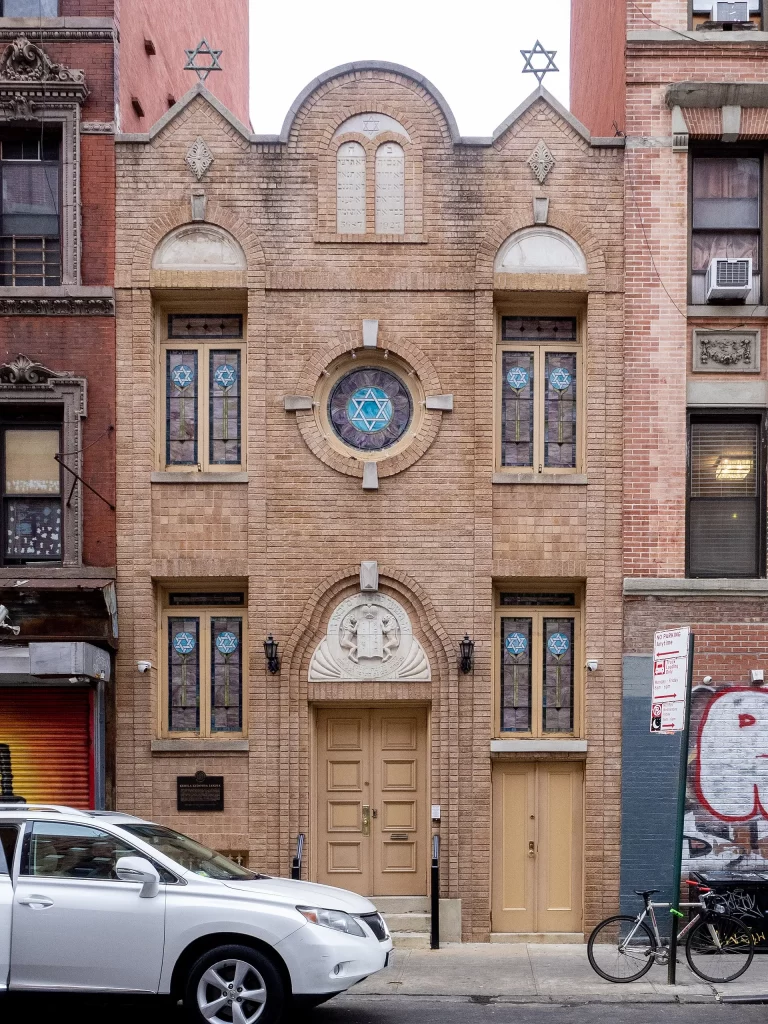
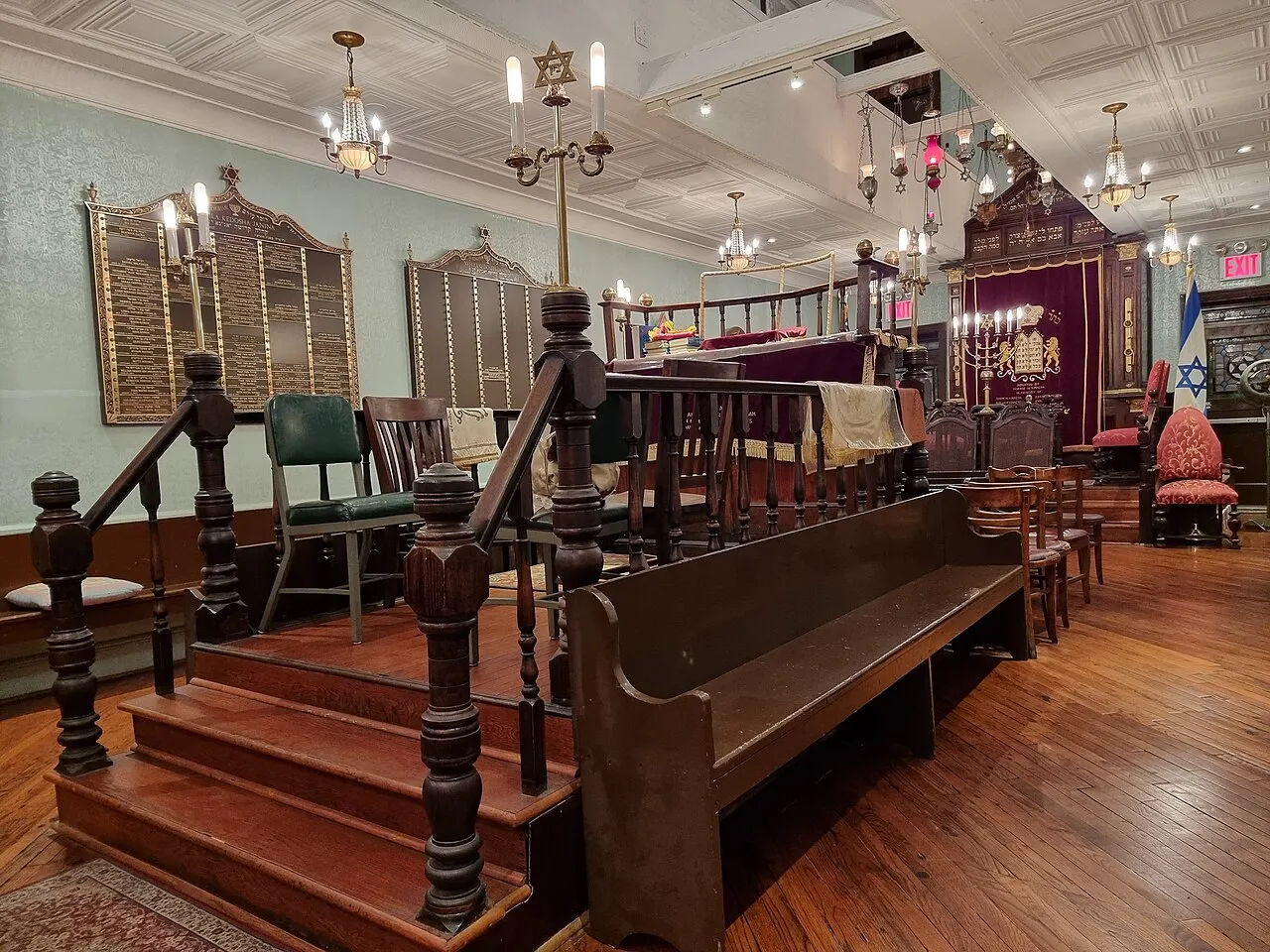
Kehila Kedosha Janina, often abbreviated as KKJ, is one of the rarest and most living cases of Judaism on the Lower East Side: a Romaniote synagogue, linked to the Greek Jewish tradition and distinct from both the Ashkenazi and Sephardic worlds. The building itself, narrow and in a tenement-style format, was constructed in 1926–1927 for a community of Romaniote Jews originating from Ioannina, also known as Janina, in northwestern Greece.

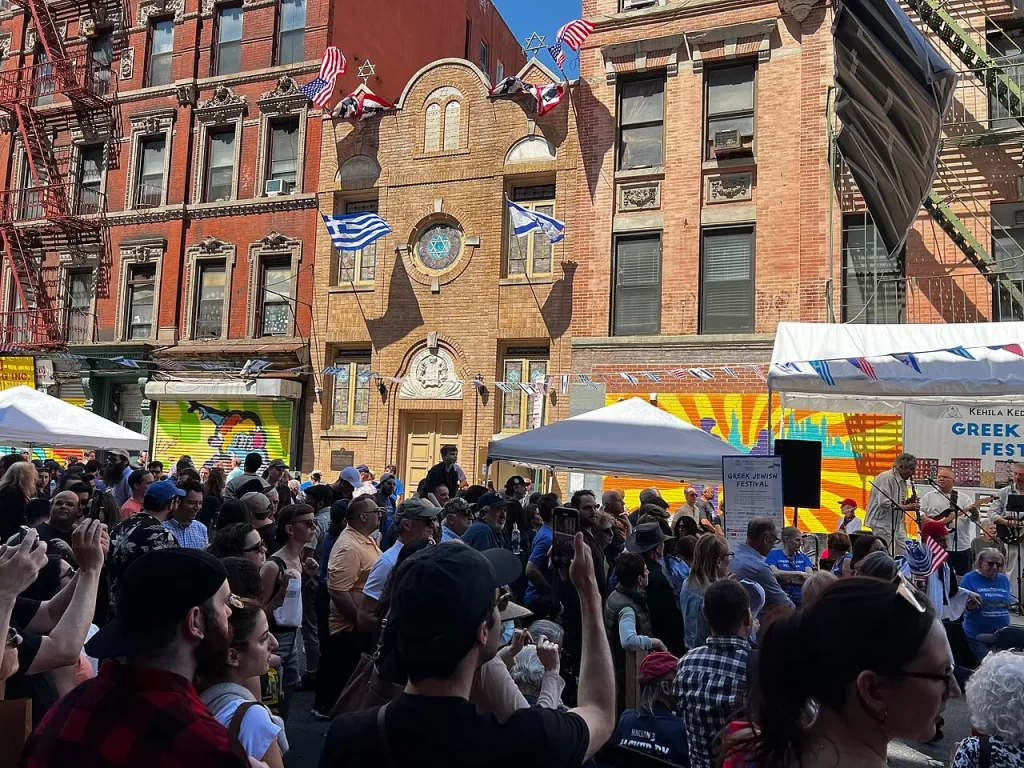
The congregation was organized in New York in 1906, at a time when the neighborhood was dense with immigrant synagogues, almost all marked by different languages and rites. The impulse was clear: to preserve a specific liturgy and a communal culture developed in Greece over centuries. In 1927, the group opened its doors at the current address, consolidating on the city’s Jewish map a third, lesser-known identity strand, and for that reason all the more significant.

The building was designed by Sydney Daub and is immediately recognizable by the symbols on its facade: Stars of David, Tablets of the Law, and a cut-out arch suggesting an Orientalizing visual language, consistent with the Mediterranean origins of the community. It is also identified as the only surviving Romaniote synagogue in the Western Hemisphere with an active congregation.

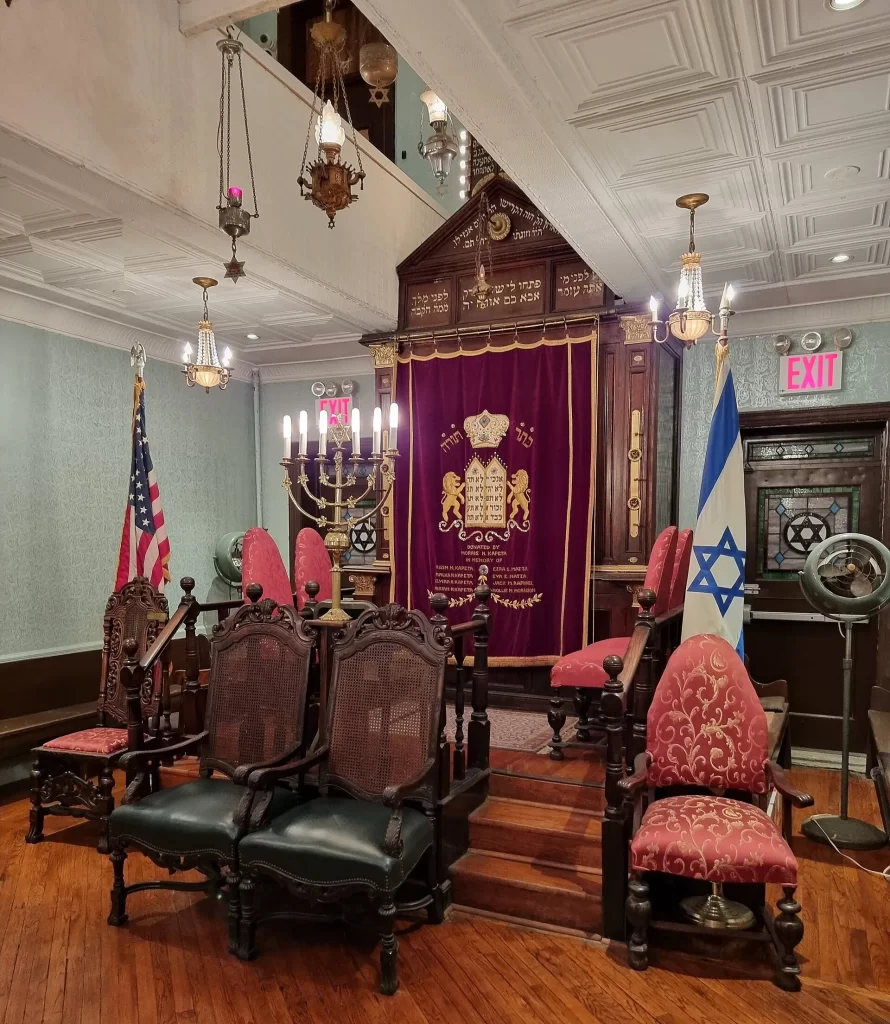
Here the Torah is not a decorative detail, but memory carried in material form. KKJ preserves three Torah scrolls brought from Ioannina, and one of them, associated with the synagogue’s dedication in 1927, is described as housed in a heavy silver tik, a rigid case common in Mediterranean and Eastern traditions and distinct from the more widely known Ashkenazi imagery prevalent in New York.

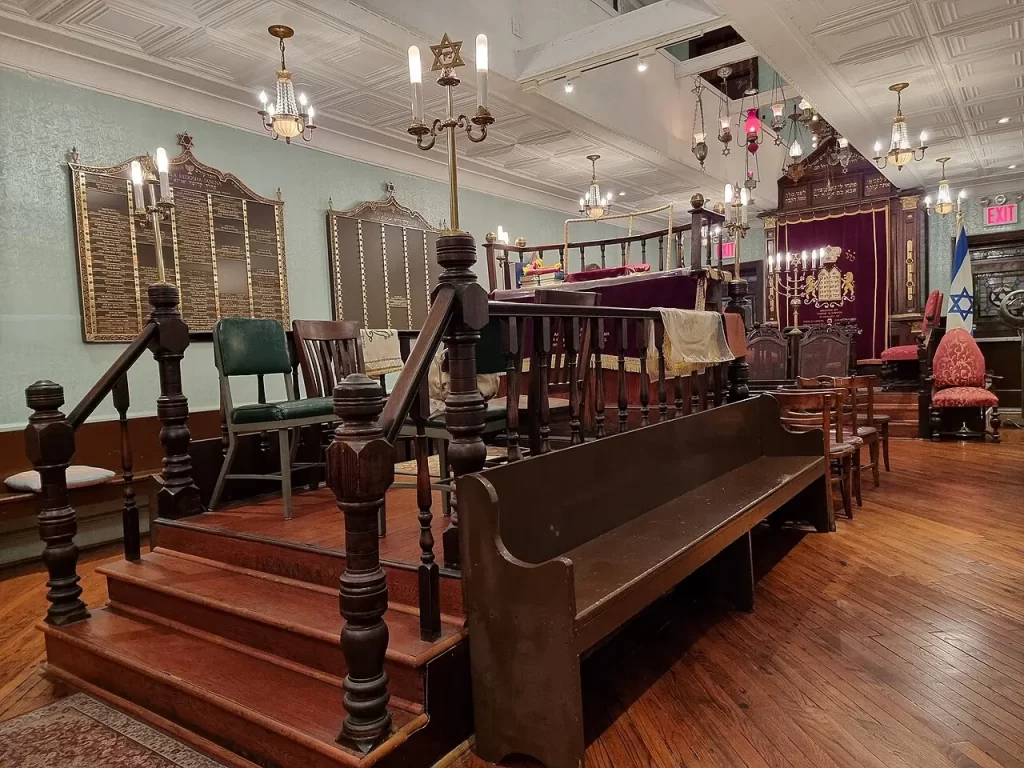
Since 1997, the women’s gallery has housed a museum created to tell the story of the community and of Greek Judaism to an audience that, in most cases, had never heard of the Romaniotes. The space includes a library, gallery, and educational resources, and is described as containing the first Holocaust memorial in America dedicated to Greek Jews, as well as a community area on the lower floor inspired by a traditional Greek cafe.

Gallery
Article researched and curated by Jew Where.

The Jew Where project is collaborative. Do you have additional information, found an inaccuracy, or have historical photos of this location? Contact our team.
Historic Romaniote Synagogue in New York
United States of America / New York / Civic & Cultural

Historic Romaniote Synagogue in New York

"Romaniote synagogue founded by immigrants from Ioannina, opened here in 1927, with an active congregation and a museum on Greek Jewish history."

Location
280 Broome Street, New York, NY 10002
Opening Hours
Synagogue services, Saturday: 09:30; Jewish holidays: Throughout the year; Museum tours by appointment on Sundays and weekdays;

Kehila Kedosha Janina, often abbreviated as KKJ, is one of the rarest and most living cases of Judaism on the Lower East Side: a Romaniote synagogue, linked to the Greek Jewish tradition and distinct from both the Ashkenazi and Sephardic worlds. The building itself, narrow and in a tenement-style format, was constructed in 1926–1927 for a community of Romaniote Jews originating from Ioannina, also known as Janina, in northwestern Greece.

The congregation was organized in New York in 1906, at a time when the neighborhood was dense with immigrant synagogues, almost all marked by different languages and rites. The impulse was clear: to preserve a specific liturgy and a communal culture developed in Greece over centuries. In 1927, the group opened its doors at the current address, consolidating on the city’s Jewish map a third, lesser-known identity strand, and for that reason all the more significant.

The building was designed by Sydney Daub and is immediately recognizable by the symbols on its facade: Stars of David, Tablets of the Law, and a cut-out arch suggesting an Orientalizing visual language, consistent with the Mediterranean origins of the community. It is also identified as the only surviving Romaniote synagogue in the Western Hemisphere with an active congregation.

Here the Torah is not a decorative detail, but memory carried in material form. KKJ preserves three Torah scrolls brought from Ioannina, and one of them, associated with the synagogue’s dedication in 1927, is described as housed in a heavy silver tik, a rigid case common in Mediterranean and Eastern traditions and distinct from the more widely known Ashkenazi imagery prevalent in New York.

Since 1997, the women’s gallery has housed a museum created to tell the story of the community and of Greek Judaism to an audience that, in most cases, had never heard of the Romaniotes. The space includes a library, gallery, and educational resources, and is described as containing the first Holocaust memorial in America dedicated to Greek Jews, as well as a community area on the lower floor inspired by a traditional Greek cafe.

Timeline

  • 1906 Romaniote Jews from Ioannina organized the congregation in New York.
  • 1926–1927 The current building at 280 Broome Street was constructed, designed by Sydney Daub.
  • 1927 The congregation opened its synagogue at the current address; a Torah in a silver tik was brought from Ioannina for the dedication.
  • 1997 A museum on Greek Jewish history was created in the women’s gallery.
  • 30 November 1999 The synagogue was listed in the National Register of Historic Places.
  • 11 May 2004 The building was designated a New York City Landmark, LP-2143.

Sources & Bibliography

  1. New York City Landmarks Preservation Commission. Kehila Kadosha Janina Synagogue. Designation Report LP-2143. Local: New York. Publisher: Landmarks Preservation Commission. Ano: 2004. https://s-media.nyc.gov/agencies/lpc/lp/2143.pdf
  2. Kehila Kedosha Janina. About Us. Local: New York. Publisher: Kehila Kedosha Janina. Ano: n.d. https://www.kkjsm.org/about-us
  3. Kehila Kedosha Janina. Museum and Exhibits. Local: New York. Publisher: Kehila Kedosha Janina. Ano: n.d. https://www.kkjsm.org/museum-and-exhibits
  4. Kehila Kedosha Janina. Publications and Newsletters. Local: New York. Publisher: Kehila Kedosha Janina. Ano: n.d. https://www.kkjsm.org/publications-and-newsletters
  5. National Park Service. National Register of Historic Places 1999 Weekly Lists. Local: Washington, D.C., if available. Publisher: National Park Service. Ano: n.d. https://www.nps.gov/subjects/nationalregister/upload/weekly-list-1999-national-register-of-historic-places.pdf
  6. University of Southern California. Torah scroll. Romaniote Memories. Local: Los Angeles, if available. Publisher: University of Southern California. Ano: 2021. https://scalar.usc.edu/works/romaniote-memories/torah-scroll
  7. Center for Jewish Art, Hebrew University of Jerusalem. Holy Community of Ioannina (Kehila Kedosha Janina) in New York City. Local: Jerusalem. Publisher: Center for Jewish Art. Ano: n.d. https://cja.huji.ac.il/browser.php?id=34811&mode=set

Additional Information

Official website: https://www.kkjsm.org/

Email: [email protected]

Facebook: https://www.facebook.com/kkjnyc/

YouTube: https://www.youtube.com/@kkjnyc

Article researched and curated by Jew Where.

The Jew Where project is collaborative. Do you have additional information, found an inaccuracy, or have historical photos of this location? Contact our team.