

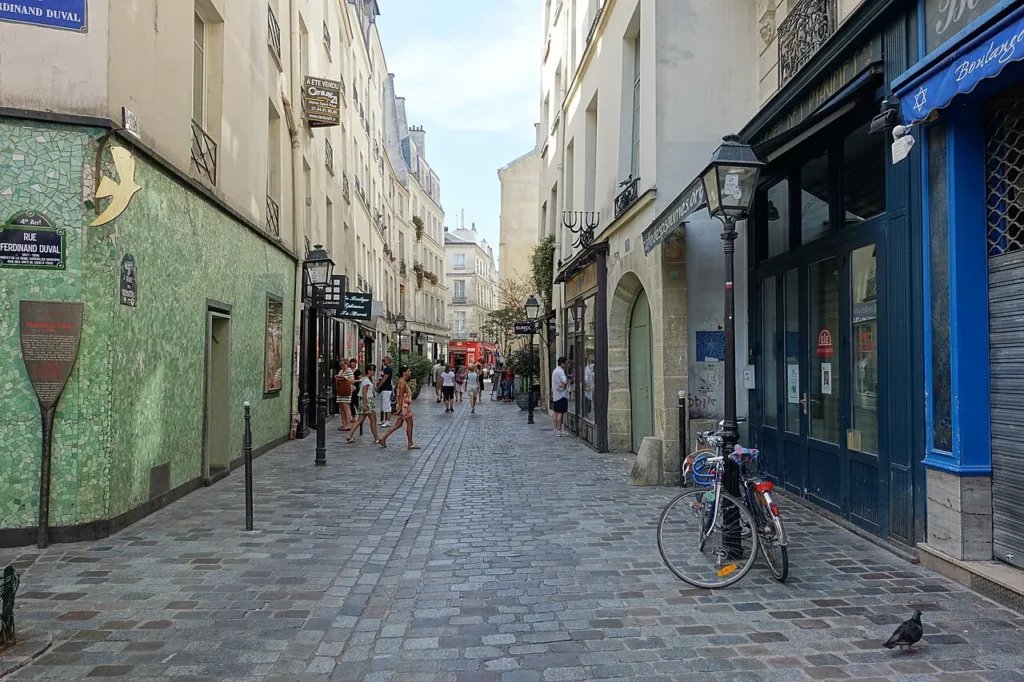
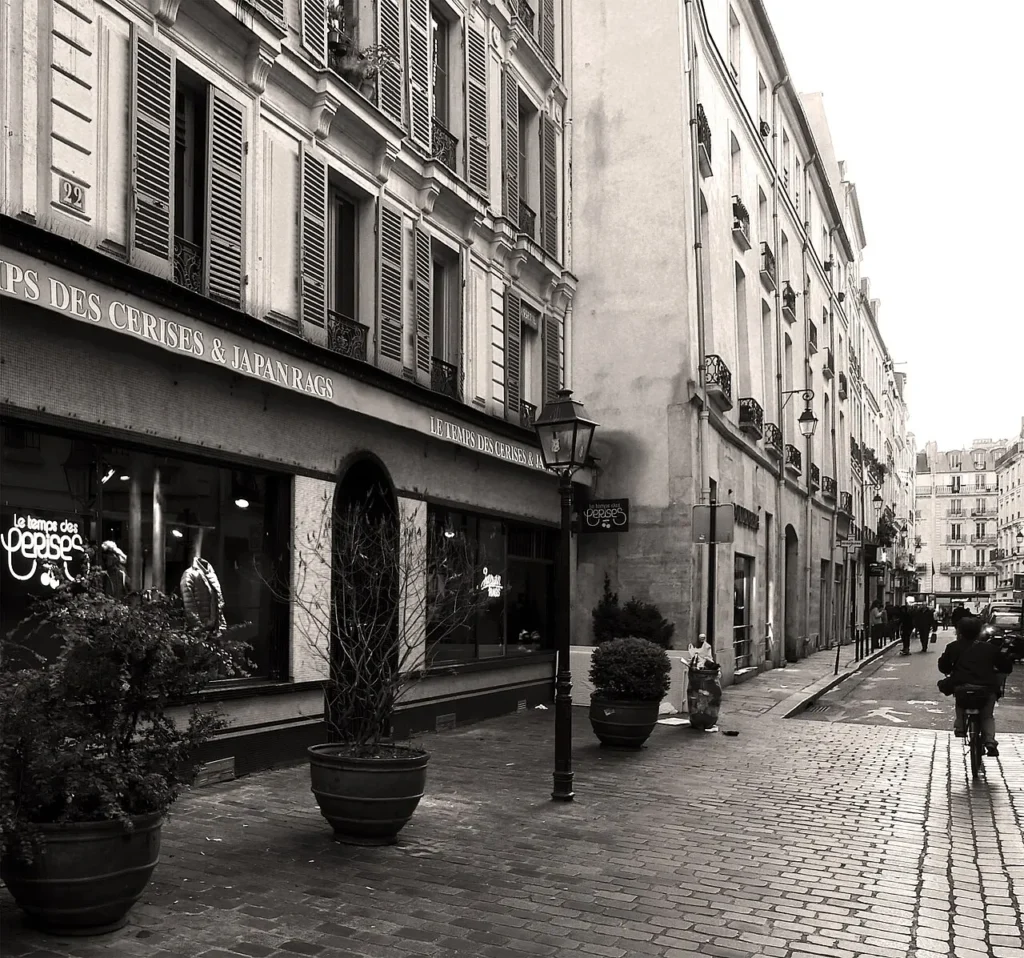
Rue Ferdinand-Duval is a short street in the Marais, in the 4th arrondissement of Paris. It runs into Rue des Rosiers, one of the best-known streets of the Jewish Marais, and belongs to the area often called the Pletzl, the Yiddish term for “little place”.
Today, Rue Ferdinand-Duval is not an isolated historical site. It is part of the living Jewish geography of the Marais, close to kosher shops, Jewish restaurants, bookshops, synagogues, memorial plaques and the Musée d’Art et d’Histoire du Judaïsme. The street belongs to the same urban fabric that connects medieval Jewish Paris, the immigrant Jewish quarter of the nineteenth and twentieth centuries, and post-war Jewish memory.
Medieval Jewish Memory in Paris
Before receiving its current name, the street was known as Rue des Juifs, the Street of the Jews. The official list of old Paris street names records Rue des Juifs as the former name of today’s Rue Ferdinand-Duval.
The Jewish memory of this wider area is medieval. References from 1224 mention a Rue de la Juifverie, and in 1241 a Rue de la Vieille Juifverie appears in the same broader Parisian sector. In 1287, a house sold to the Temple is described as having belonged to Jews and as standing at the corner of the Rue des Juifs. These records connect the street name to property, residence and the medieval Jewish geography of Paris.
The area was deeply affected by the expulsions and returns that marked Jewish life in medieval France. The expulsion ordered by Philip IV in 1306, later returns, and the final expulsion from the kingdom in 1394 changed the Jewish presence in Paris. Even so, the memory of Jewish residence remained fixed in street names.
Rue des Juifs and the Hôtel des Juifs
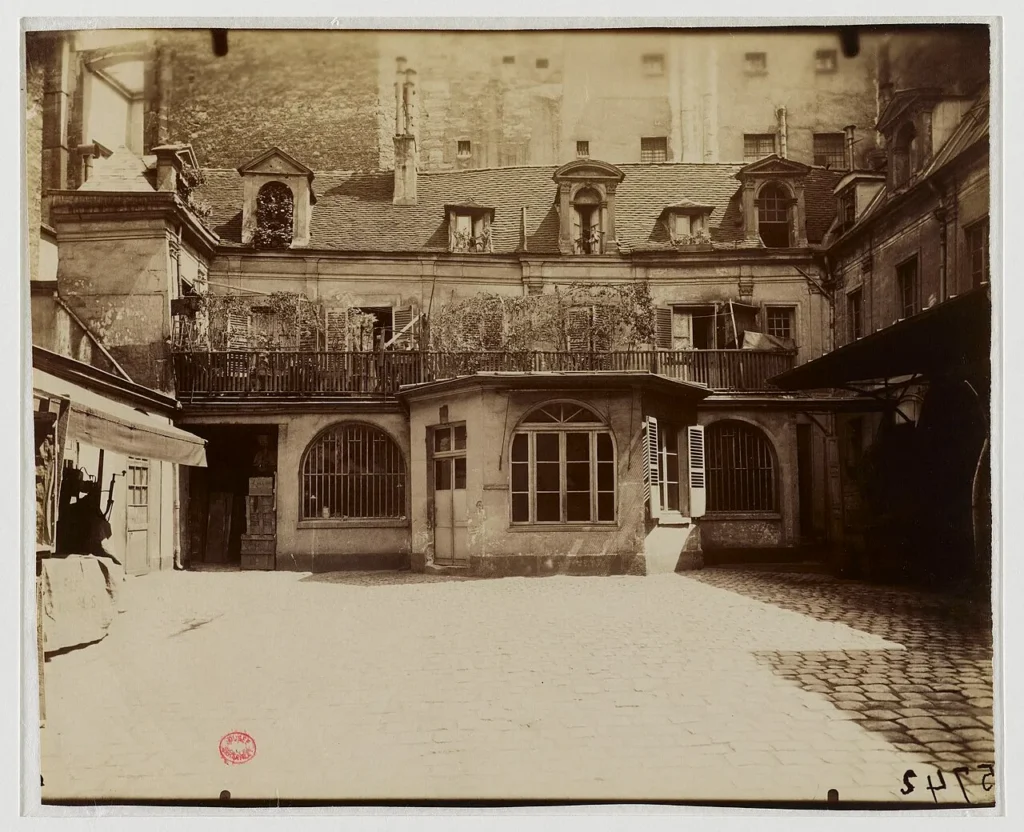
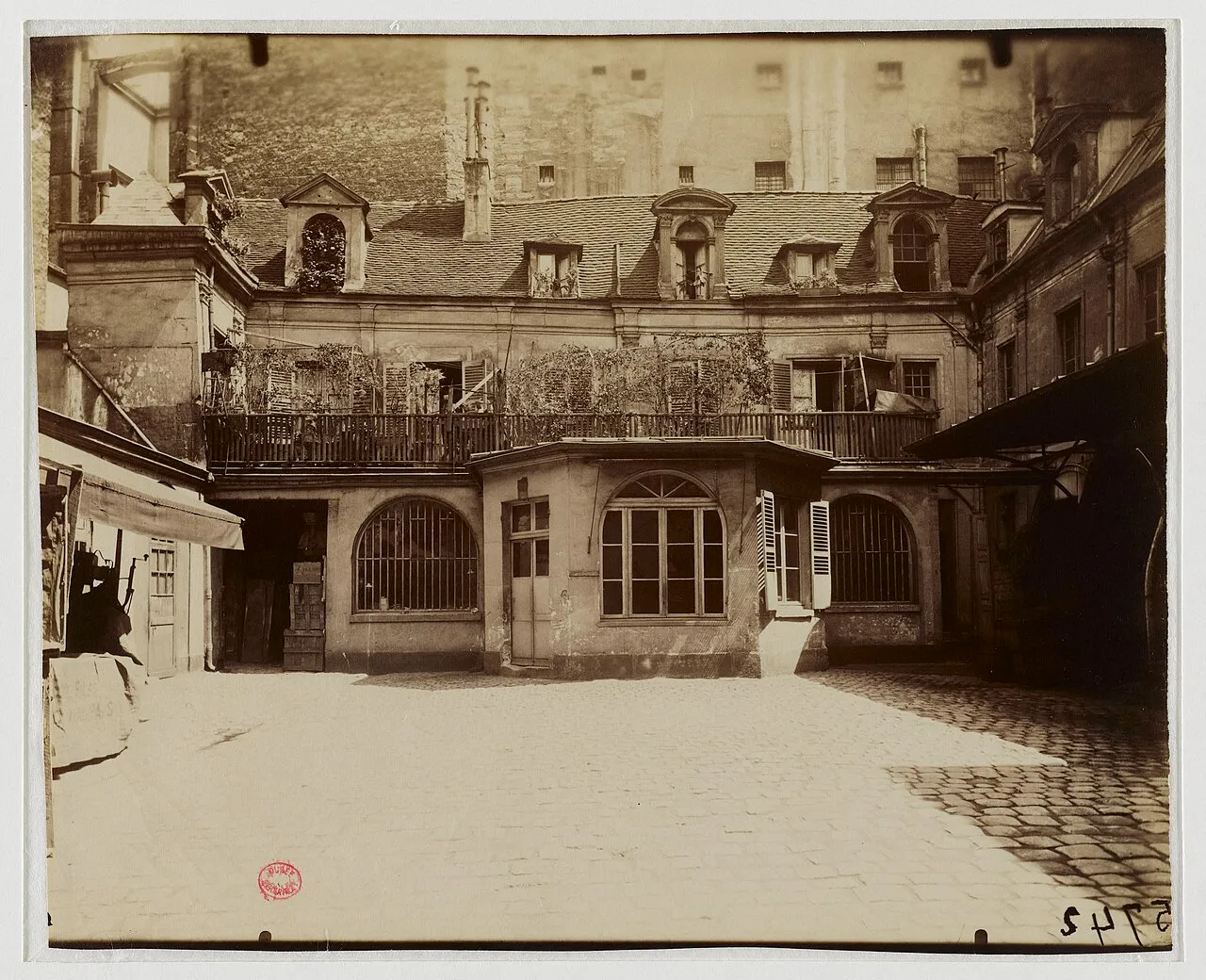
At number 20 Rue Ferdinand-Duval, the courtyard preserves an hôtel particulier historically known as the Hôtel des Juifs, also associated in heritage literature with the Hôtel de Cormery. Its name is linked to the memory of Manessier de Vesoul, a royal officer connected to the Jews of northern France in the late fourteenth century. Eugène Atget photographed the building in 1910, and the image is preserved in the collections of the Musée Carnavalet.
The name Rue des Juifs continued to appear in later records. On the Vassalieu plan of Paris from 1609, the street appears as “R. d. Iuifz”. It is also cited as “rue des Juifz” in a manuscript from 1636. The name therefore survived in the official and cartographic memory of Paris long after the medieval Jewish community had been removed from the city.
Rue Ferdinand-Duval and the Pletzl
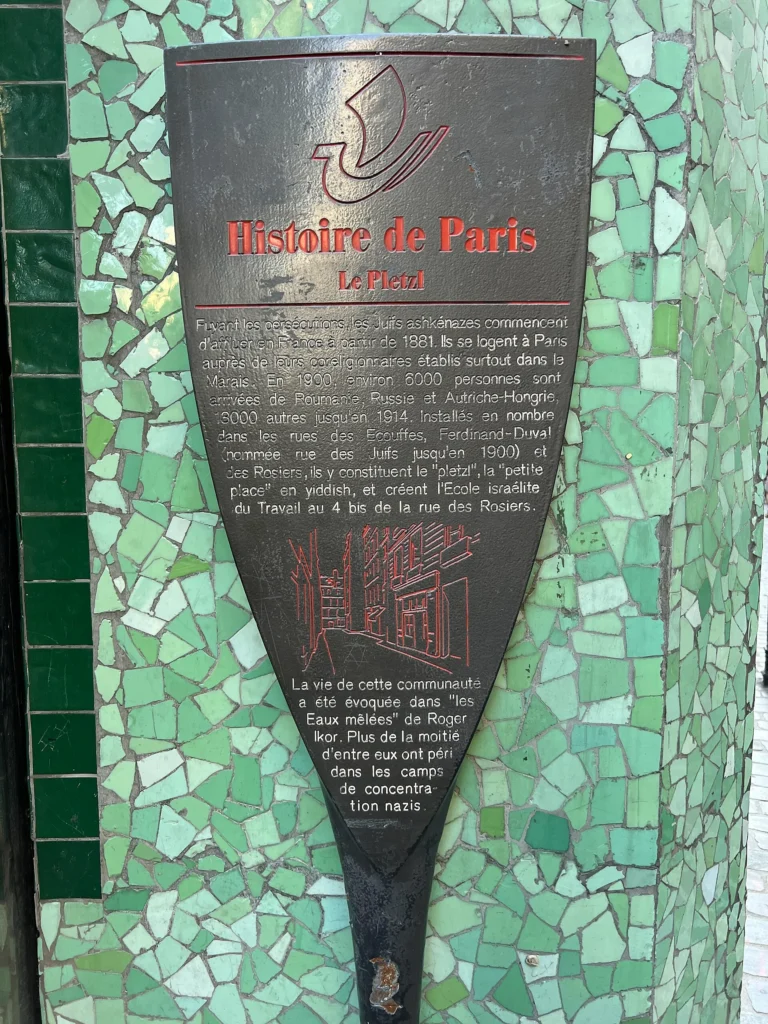
In the nineteenth century, the Marais again became a major Jewish neighbourhood. From the 1880s onward, Jewish immigrants from Eastern and Central Europe settled around Rue des Rosiers, Rue des Écouffes and Rue des Juifs. This new Yiddish-speaking community gave the area the name Pletzl and filled it with workshops, food shops, religious life, political activity and mutual aid institutions.
In 1898, during the period of the Dreyfus Affair, merchants from the street petitioned the Paris municipal council to change the name Rue des Juifs. On 7 December 1900, a prefectural order renamed the street Rue Ferdinand-Duval. The decision was approved by decree on 6 January 1901. The new name honoured Émile Gustave Ferdinand Duval, born in 1827 and died in 1896, a former prefect of the Seine and municipal councillor.
The renaming belongs to the political and social atmosphere of the Dreyfus period, when Jewish identity, antisemitism and public language were central issues in France. The old name was removed from the official street map, but the Jewish history of the place remained.
Today, Rue Ferdinand-Duval is one of the streets through which the Jewish history of the Marais can still be read in the city itself: in its former name, in its connection to Rue des Rosiers, in the memory of the Hôtel des Juifs, and in its place within the contemporary Jewish quarter of Paris.
Gallery
Sources & Bibliography
- Musée d’Art et d’Histoire du Judaïsme. Jews in France in the Middle Ages. Local: Paris. Editora: Musée d’Art et d’Histoire du Judaïsme. Ano: n.d
- Anchel, Robert. The Early History of the Jewish Quarters in Paris. Jewish Social Studies, vol. 2, no. 1. Ano: 1940
- Hillairet, Jacques. Dictionnaire historique des rues de Paris. Local: Paris. Editora: Les Éditions de Minuit. Ano: 1960.
- Jarassé, Dominique. Guide du patrimoine juif parisien. Local: Paris. Editora: Parigramme. Ano: 2003.
Article researched and curated by Jew Where.
The Jew Where project is collaborative. Do you have additional information, found an inaccuracy, or have historical photos of this location? Contact our team.
Community notes
Comments
Logged-in visitors can submit comments for moderation before they appear publicly.
No comments yet.
Log in to leave a comment. Go to Account.