Skip to content
Former Jewish Quarter of Castro Marim

Former Jewish Quarter of Castro Marim

"Documented medieval Jewish quarter behind Castro Marim Castle, active until the early 1500s and later absorbed into the surrounding urban fabric."

Back to Map

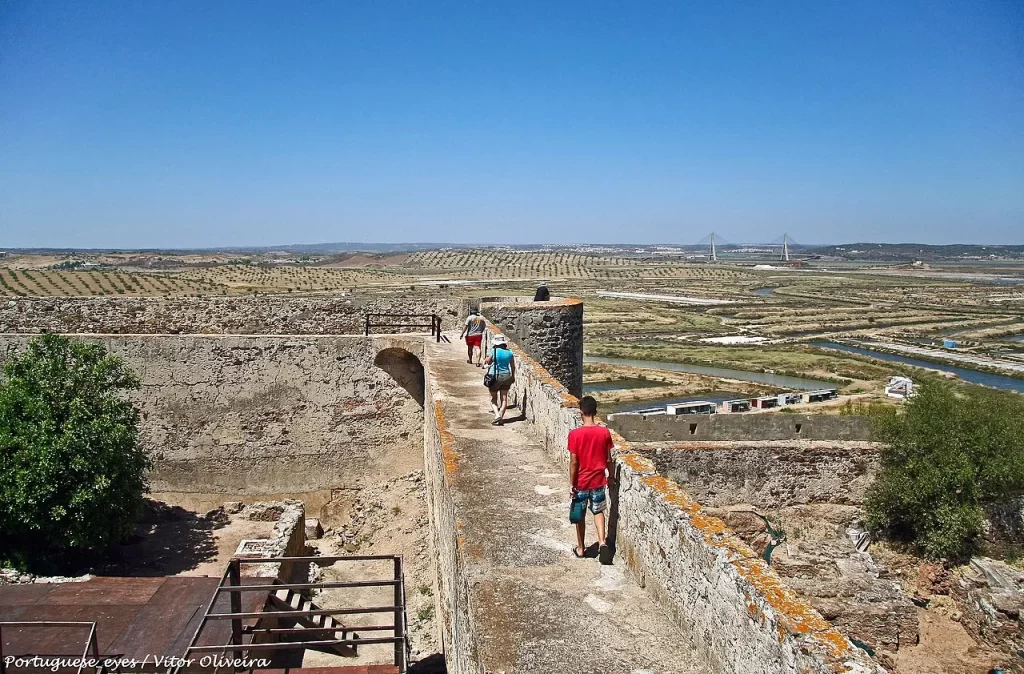
The town of Castro Marim, located on the right bank of the mouth of the Guadiana River, emerges in the Middle Ages as a frontier fortress of great strategic importance. The castle dominates the junction between the river, maritime routes, and the border line with Ayamonte. In 1277, King Afonso III granted the town a charter, with privileges intended to attract settlers and consolidate the defense of the territory. From that point onward, the urban nucleus developed within the walls of the so-called “old castle.”

At the beginning of the 14th century, the centrality of Castro Marim was further reinforced by the installation there of the first headquarters of the Order of Christ, created in 1319 following the extinction of the Order of the Temple. The order remained based in the castle until the mid-14th century, when its headquarters were transferred to Tomar, but this period was sufficient to consolidate the town as a frontier stronghold and a point of articulation between the Algarve, the border, and the Atlantic.

It is within this context that documentation from the 15th and 16th centuries, as gathered in recent syntheses, notes the existence of a Jewish quarter in Castro Marim, located behind the castle. The description points to a small Jewish neighborhood adjoining the fortified enclosure, in a peripheral position but protected by the walls, in accordance with patterns observed in other frontier towns. The same compilations, based on royal and local sources, state that in 1507, at a time when Jews were already subject to the general laws of the kingdom, the synagogue of Castro Marim was closed, and that around 1509, immediately before the drafting of the Tombo of the Commandery of the Order of Christ, the Jewish quarter had already ceased to exist as an active neighborhood.

The Manueline New Charter of 1504 and the Tombo of the Commandery of 1509, studied by Hugo Cavaco, show a town undergoing full administrative and patrimonial reorganization at the beginning of the 16th century. Although these instruments do not preserve detailed descriptions of the former Jewish quarter, the fact that the neighborhood no longer appears as a distinct unit confirms the rapid disappearance of the Jewish communal structure following the measures enacted by King Manuel I. In parallel, the Book of Fortresses by Duarte de Armas, produced in 1509–1510 by royal order, takes Castro Marim as the starting point for the survey of frontier castles, depicting from two perspectives the housing clustered between the castle and the hillside, where the former Jewish area was located.

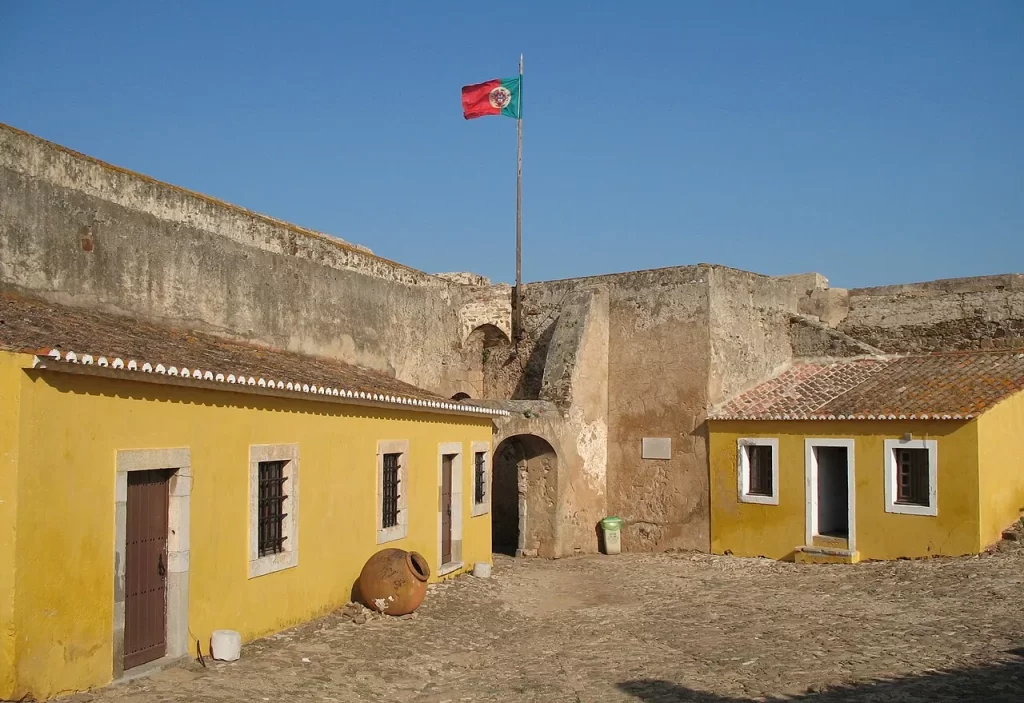
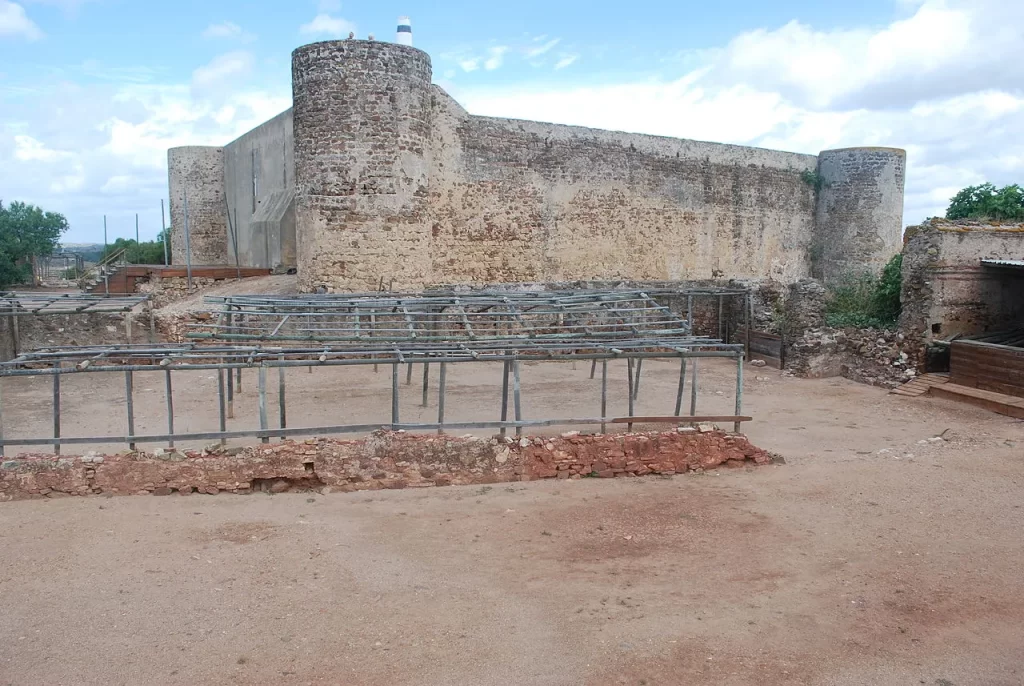
Today, the medieval Jewish quarter of Castro Marim is not recognizable through specific toponyms or buildings identified as a synagogue. What remains is the topography of the castle and the intramural nucleus, as preserved in the urban layout and historical reconstructions, and an indirect memory transmitted through late medieval documentation and modern studies that consistently point to the existence of a small Jewish neighborhood adjoining the castle, active until the early 16th century. For the purposes of heritage mapping, the former Jewish quarter of Castro Marim thus corresponds to the intramural sector located on the rear slope of the castle, associated with the first headquarters of the Order of Christ and with the defensive and circulation network that structured this frontier town.

Gallery
Article researched and curated by Jew Where.

The Jew Where project is collaborative. Do you have additional information, found an inaccuracy, or have historical photos of this location? Contact our team.
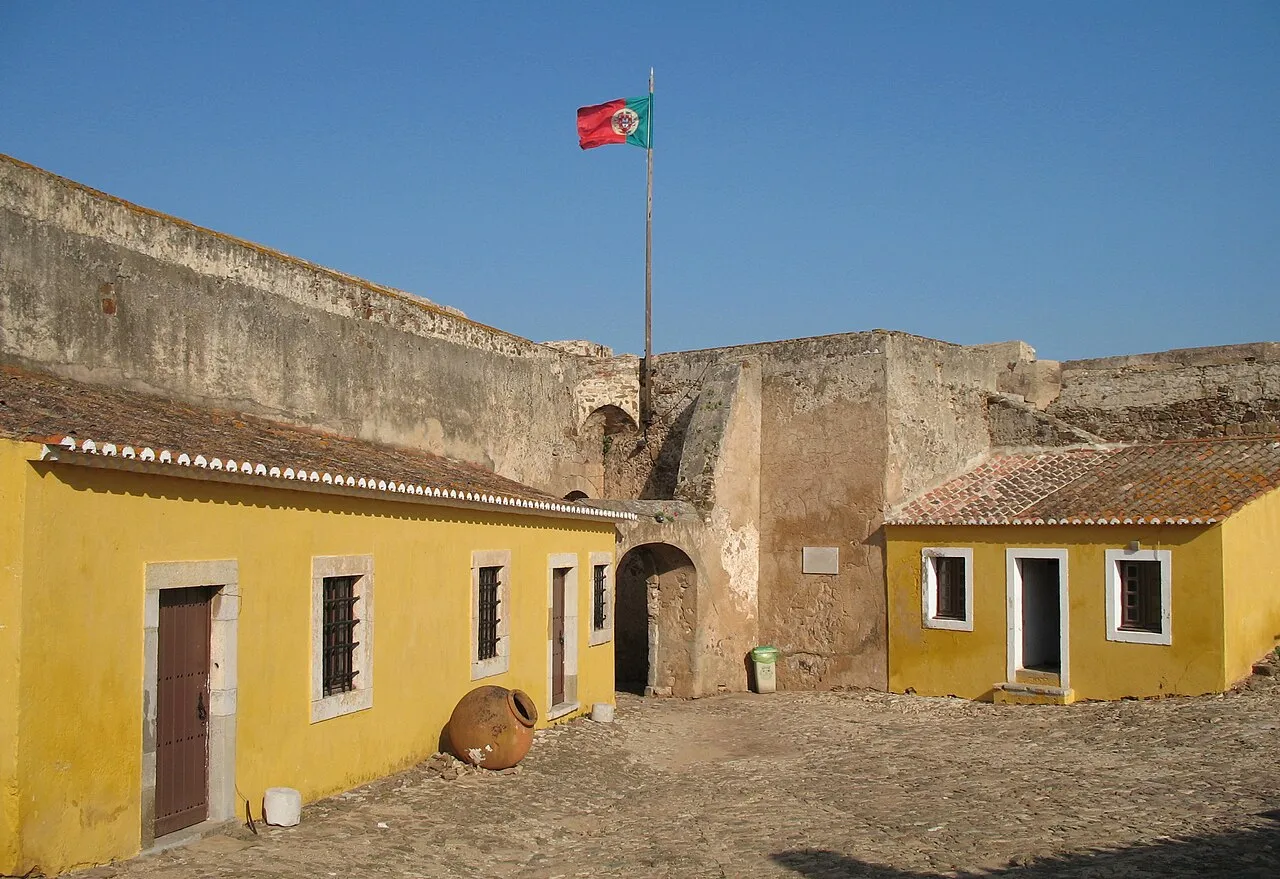
Former Jewish Quarter of Castro Marim
Portugal / Faro / Neighborhoods & Settlements

Former Jewish Quarter of Castro Marim

"Documented medieval Jewish quarter behind Castro Marim Castle, active until the early 1500s and later absorbed into the surrounding urban fabric."

Location
Travessa do Castelo, 8950-122 Castro Marim, Portugal

The town of Castro Marim, located on the right bank of the mouth of the Guadiana River, emerges in the Middle Ages as a frontier fortress of great strategic importance. The castle dominates the junction between the river, maritime routes, and the border line with Ayamonte. In 1277, King Afonso III granted the town a charter, with privileges intended to attract settlers and consolidate the defense of the territory. From that point onward, the urban nucleus developed within the walls of the so-called “old castle.”

At the beginning of the 14th century, the centrality of Castro Marim was further reinforced by the installation there of the first headquarters of the Order of Christ, created in 1319 following the extinction of the Order of the Temple. The order remained based in the castle until the mid-14th century, when its headquarters were transferred to Tomar, but this period was sufficient to consolidate the town as a frontier stronghold and a point of articulation between the Algarve, the border, and the Atlantic.

It is within this context that documentation from the 15th and 16th centuries, as gathered in recent syntheses, notes the existence of a Jewish quarter in Castro Marim, located behind the castle. The description points to a small Jewish neighborhood adjoining the fortified enclosure, in a peripheral position but protected by the walls, in accordance with patterns observed in other frontier towns. The same compilations, based on royal and local sources, state that in 1507, at a time when Jews were already subject to the general laws of the kingdom, the synagogue of Castro Marim was closed, and that around 1509, immediately before the drafting of the Tombo of the Commandery of the Order of Christ, the Jewish quarter had already ceased to exist as an active neighborhood.

The Manueline New Charter of 1504 and the Tombo of the Commandery of 1509, studied by Hugo Cavaco, show a town undergoing full administrative and patrimonial reorganization at the beginning of the 16th century. Although these instruments do not preserve detailed descriptions of the former Jewish quarter, the fact that the neighborhood no longer appears as a distinct unit confirms the rapid disappearance of the Jewish communal structure following the measures enacted by King Manuel I. In parallel, the Book of Fortresses by Duarte de Armas, produced in 1509–1510 by royal order, takes Castro Marim as the starting point for the survey of frontier castles, depicting from two perspectives the housing clustered between the castle and the hillside, where the former Jewish area was located.

Today, the medieval Jewish quarter of Castro Marim is not recognizable through specific toponyms or buildings identified as a synagogue. What remains is the topography of the castle and the intramural nucleus, as preserved in the urban layout and historical reconstructions, and an indirect memory transmitted through late medieval documentation and modern studies that consistently point to the existence of a small Jewish neighborhood adjoining the castle, active until the early 16th century. For the purposes of heritage mapping, the former Jewish quarter of Castro Marim thus corresponds to the intramural sector located on the rear slope of the castle, associated with the first headquarters of the Order of Christ and with the defensive and circulation network that structured this frontier town.

Timeline

  • 1277 King Afonso III grants a charter to Castro Marim, encouraging settlement within the fortified town.
  • c. 1319 The newly created Order of Christ installs its first headquarters in Castro Marim Castle, reinforcing the town's frontier role.
  • 14th-15th centuries A small Jewish quarter is documented behind the castle, within the intramural nucleus.
  • 1504 Manuel I issues the Foral Novo of Castro Marim, within a broader administrative and patrimonial reorganization of the town.
  • 1507 The synagogue of Castro Marim is closed, in the context of the kingdom's general legislation affecting Jews.
  • 1509 By the time of the Tombo da Comenda and Duarte de Armas's survey, the Jewish quarter no longer appears as an active neighborhood.
  • Early 16th century The former Jewish area is progressively absorbed into the surrounding Christian urban fabric linked to the castle and commandery.

Sources & Bibliography

  1. CAVACO, Hugo. Castro Marim quinhentista. O Foral Novo (de 1504) e o Tombo da Comenda (de 1509): subsídios para uma interpretação histórica da vila. Local: Castro Marim. Editora: Câmara Municipal de Castro Marim. Ano: 2000. https://bibliografia.bnportugal.gov.pt/bnp/bnp.exe/registo?cl=fr&mfn=82719
  2. DAVID, Ziva. Curiosidades Judaicas | Algarve. Blog Eterna Sefarad. Ano: 2014. https://zivabdavid.blogspot.com/2014/06/curiosidades-judaicas-algarve.html
  3. CÂMARA MUNICIPAL DE CASTRO MARIM. Castelo. Ano: n.d. https://cm-castromarim.pt/site/conteudo/castelo
  4. CÂMARA MUNICIPAL DE CASTRO MARIM. Castro Marim, Primeira Sede da Ordem de Cristo. Ano: n.d. https://cm-castromarim.pt/site/evento/castro-marim-primeira-sede-da-ordem-de-cristo
  5. PATRIMÓNIO CULTURAL, I.P. / SIPA. Castelo de Castro Marim / Castelo e cerca urbana de Castro Marim. IPA.00002825. Ano: n.d. https://www.monumentos.gov.pt/site/APP_PagesUser/SIPA.aspx?id=2825
  6. ARQUIVO NACIONAL TORRE DO TOMBO. Livro das fortalezas situadas no extremo de Portugal e de Castela por Duarte de Armas. PT/TT/CF/159. Ano: 1509-1510. https://digitarq.arquivos.pt/documentDetails/72c4eeea2882461282ff1c6849e417e6

Article researched and curated by Jew Where.

The Jew Where project is collaborative. Do you have additional information, found an inaccuracy, or have historical photos of this location? Contact our team.