Skip to content
Faro Jewish Quarter

Faro Jewish Quarter

"Medieval Faro’s Jewish quarter stood inside Vila Adentro and is tied to Samuel Gacon’s 1487 Pentateuch; its former urban core was later occupied by the Assunção convent."

Back to Map

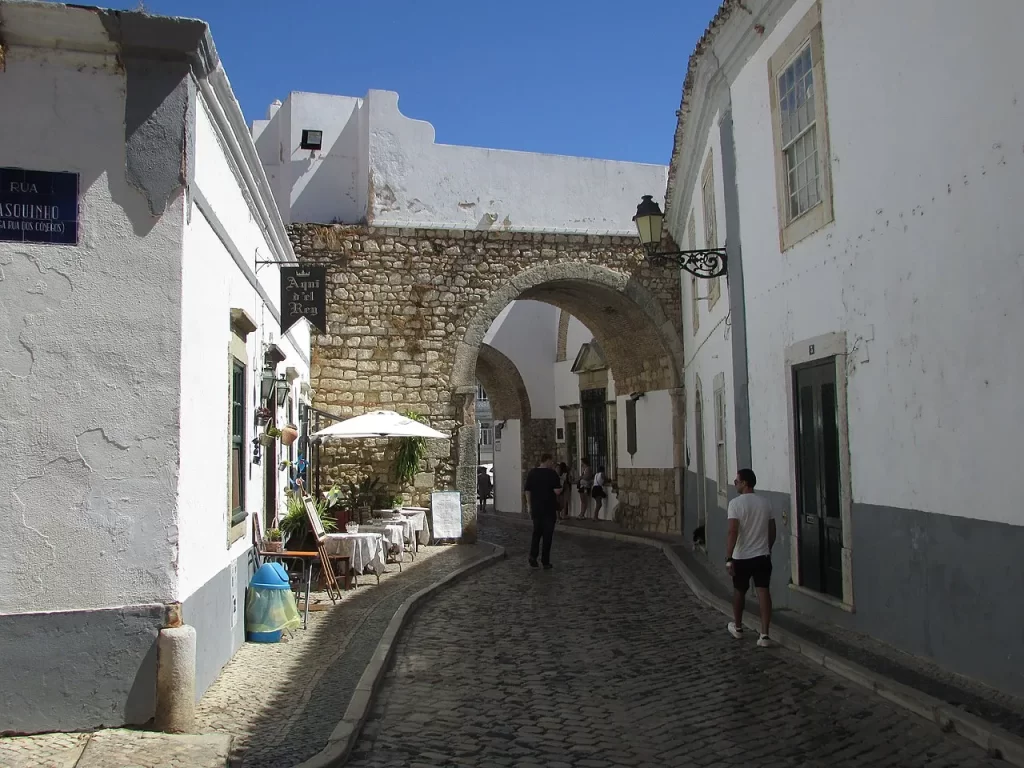
The medieval Jewish quarter of Faro was located inside the walled nucleus now known as Vila Adentro, in an urban sector later absorbed by the Convent of Nossa Senhora da Assunção. Its importance rests above all on the documentary prominence of Faro’s Jewish community and on the activity of Samuel Gacon, whose workshop in Faro produced, in 1487, the Pentateuch generally recognized as the first known book printed in Portugal. The quarter therefore belongs not only to the urban history of Algarve Jewry but also to the early history of Hebrew printing in Portugal.

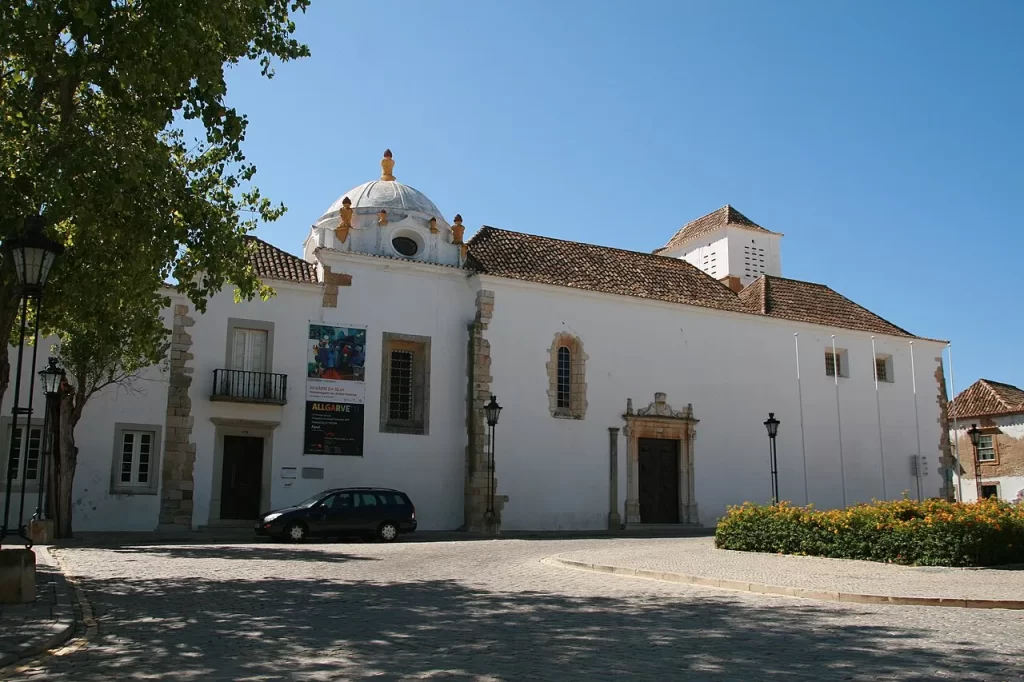
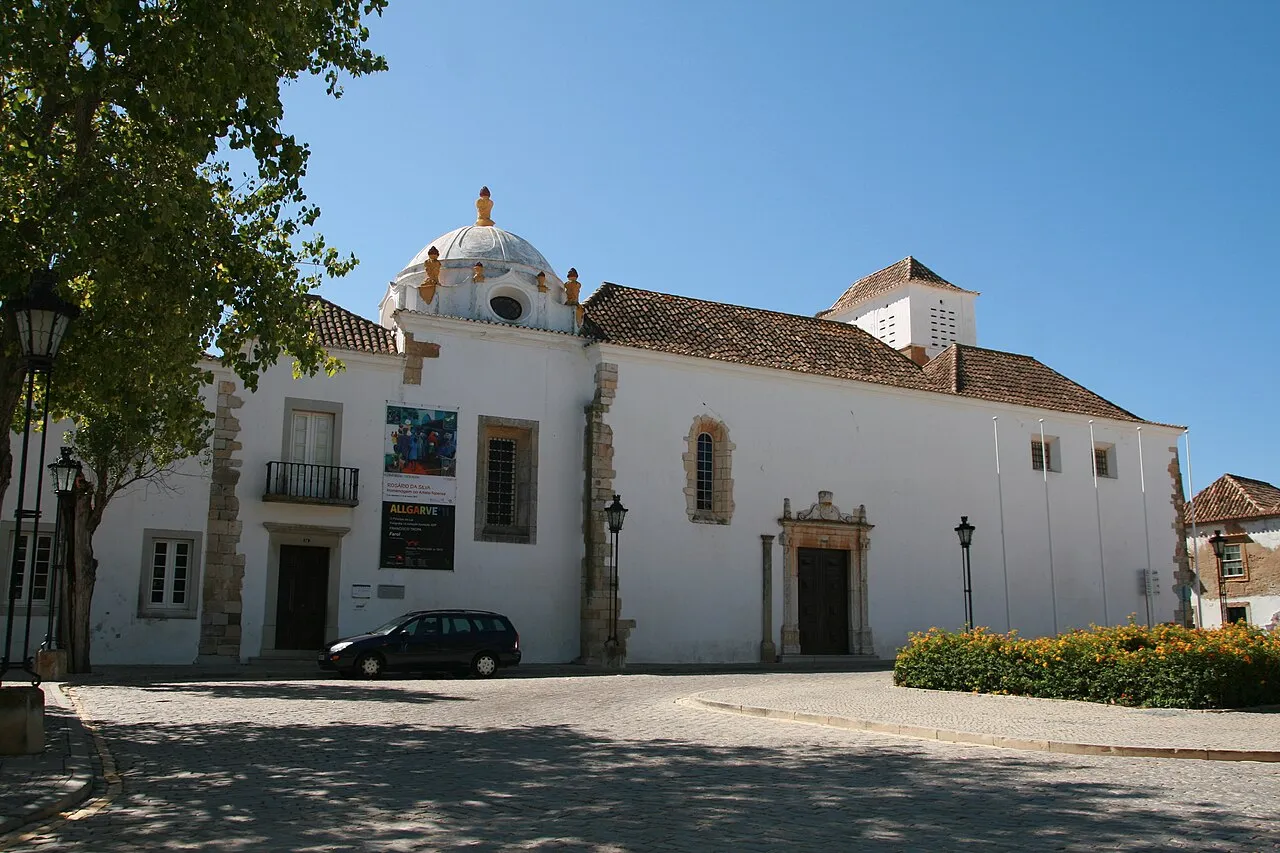
The site does not survive as a visibly Jewish architectural ensemble. Royal documentation still referred in 1496 to the revenues of the “new and old service” of the judiaria of Faro, but after the forced conversion and expulsion policies at the end of the fifteenth century the quarter lost its communal function. From 1519 onward, the Convent of Nossa Senhora da Assunção was built over this area, and the present Municipal Museum marks the clearest surviving landmark through which the former judiaria can now be approached. Its significance is therefore mainly documentary, urban, and memorial, rather than architectural.

Gallery
Article researched and curated by Jew Where.

The Jew Where project is collaborative. Do you have additional information, found an inaccuracy, or have historical photos of this location? Contact our team.
Faro Jewish Quarter
Portugal / Faro / Neighborhoods & Settlements

Faro Jewish Quarter

"Medieval Faro’s Jewish quarter stood inside Vila Adentro and is tied to Samuel Gacon’s 1487 Pentateuch; its former urban core was later occupied by the Assunção convent."

Location
Largo D. Afonso III, 14, Vila Adentro, 8000-167 Faro, Portugal
Opening Hours
Related current visitor hours for the museum at the identified site: Tuesday-Friday: 10:00-18:00; Saturday-Sunday: 10:30-17:00; Monday: Closed

The medieval Jewish quarter of Faro was located inside the walled nucleus now known as Vila Adentro, in an urban sector later absorbed by the Convent of Nossa Senhora da Assunção. Its importance rests above all on the documentary prominence of Faro’s Jewish community and on the activity of Samuel Gacon, whose workshop in Faro produced, in 1487, the Pentateuch generally recognized as the first known book printed in Portugal. The quarter therefore belongs not only to the urban history of Algarve Jewry but also to the early history of Hebrew printing in Portugal.

The site does not survive as a visibly Jewish architectural ensemble. Royal documentation still referred in 1496 to the revenues of the “new and old service” of the judiaria of Faro, but after the forced conversion and expulsion policies at the end of the fifteenth century the quarter lost its communal function. From 1519 onward, the Convent of Nossa Senhora da Assunção was built over this area, and the present Municipal Museum marks the clearest surviving landmark through which the former judiaria can now be approached. Its significance is therefore mainly documentary, urban, and memorial, rather than architectural.

Timeline

  • Medieval period A Jewish quarter functioned inside Faro’s walled urban nucleus, Vila Adentro.
  • 1487 Samuel Gacon printed in Faro the Pentateuch, the first known book printed in Portugal.
  • 30 November 1496 D. Manuel I confirmed the revenues of the “new and old service” of the judiaria of Faro.
  • 1497 The quarter lost its Jewish communal function in the context of forced conversion and expulsion policies.
  • 1519 Construction began on the Convent of Nossa Senhora da Assunção over the former judiaria.
  • 1550 The convent was completed.
  • 1973 The building became the Municipal Museum of Faro.

Sources & Bibliography

  1. PATRIMÓNIO CULTURAL, I.P. Convento de Nossa Senhora da Assunção. n.d. https://imovel.patrimoniocultural.gov.pt/detalhes.php?code=70525
  2. CÂMARA MUNICIPAL DE FARO. História e edifício. n.d. https://www.cm-faro.pt/pt/68442/historia-e-edificio.aspx
  3. CÂMARA MUNICIPAL DE FARO. Museu Municipal de Faro. n.d. https://www.cm-faro.pt/pt/menu/1802/museu-municipal-de-faro.aspx
  4. UFF - UNIÃO DAS FREGUESIAS DE FARO. Brief cultural history of Faro. Faro: UFF - União das Freguesias de Faro. 2018. http://hdl.handle.net/10400.1/12825
  5. ROTA LITERÁRIA DO ALGARVE. Itinerário Literário de Faro. n.d. https://rotaliterariadoalgarve.tcn.pt/download/booklet/rla-07-faro-pt.pdf
  6. PALMA, Patrícia de Jesus. Um impressor, a independência de duas nações. Faro: Universidade do Algarve. 2012. https://sapientia.ualg.pt/entities/publication/181ce772-ba2f-4c02-81a5-619e85afea04

Additional Information

Official website: https://www.cm-faro.pt/pt/menu/1802/museu-municipal-de-faro.aspx

Email: [email protected]

Phone: +351 289 870 827/9

Current use of the address: The identified core area is today occupied by the Convent of Nossa Senhora da Assunção / Municipal Museum of Faro and adjacent public streets within Vila Adentro.

Article researched and curated by Jew Where.

The Jew Where project is collaborative. Do you have additional information, found an inaccuracy, or have historical photos of this location? Contact our team.