

Congregation Shearith Israel, known as the Spanish & Portuguese Synagogue, traces its origins directly to the first organized Jewish settlement in New Amsterdam (New York). According to the congregation itself, the founding core consisted of 23 Jews, largely of Iberian origin, who arrived from Recife in Dutch Brazil, displaced by the Portuguese reconquest and the return of the Inquisition. After initial resistance from local authorities, the community obtained permission to remain in 1655, received a Sefer Torah sent from Amsterdam that same year, and secured land for a cemetery in 1656, thereby establishing the basic structures of Jewish communal life in the New World.
During the colonial period, religious practice was conducted discreetly, yet the congregation left clear documentary traces. By 1695 there is reference to a synagogue on Beaver Street, and around 1700 worship was held in a house on Mill Street. In 1730, Shearith Israel consecrated the first purpose-built synagogue in continental North America, located on Mill Street, today South William Street. Over the centuries, as the city expanded and residential life shifted uptown, the congregation occupied successive buildings, while preserving objects and liturgical forms that materialize the continuity of its minhag.
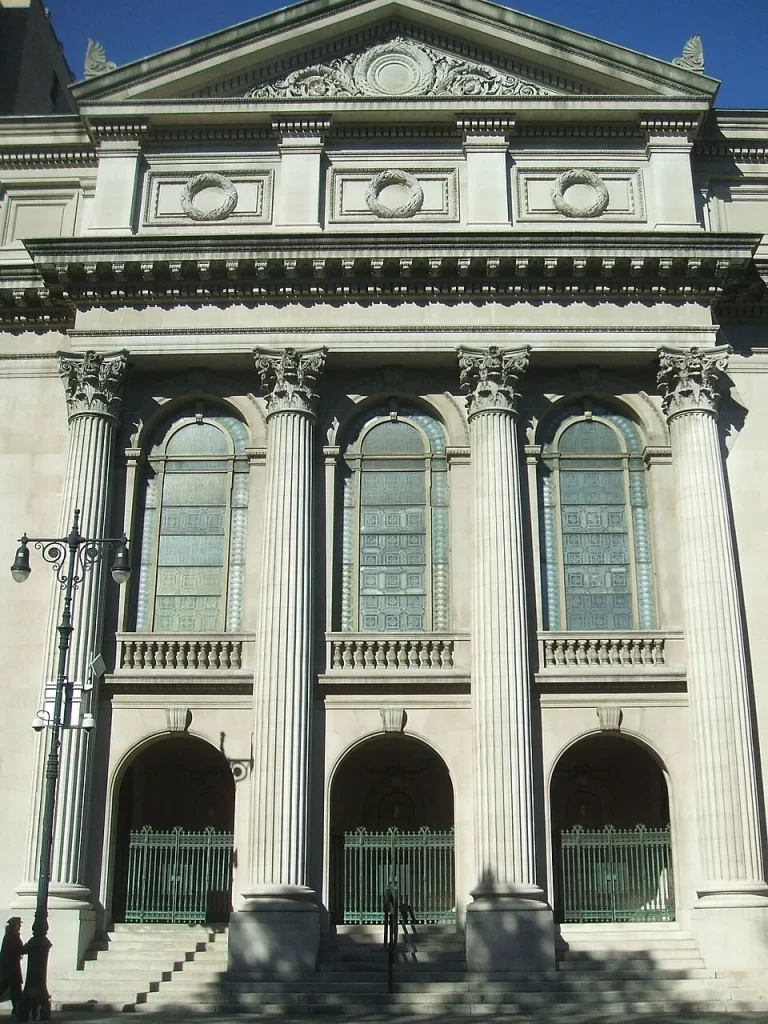
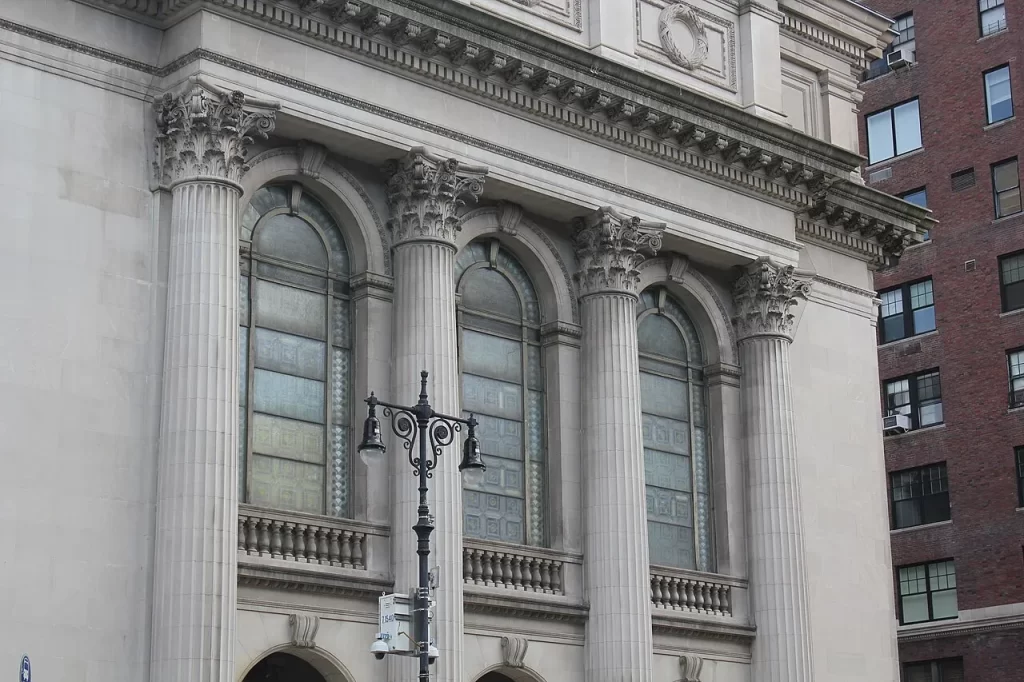
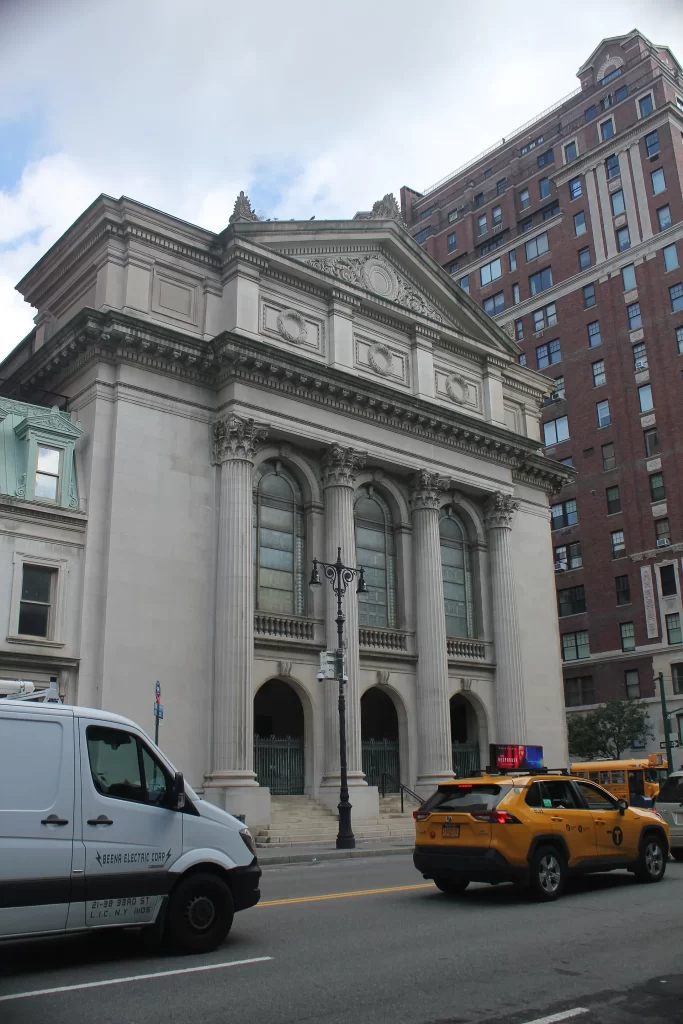
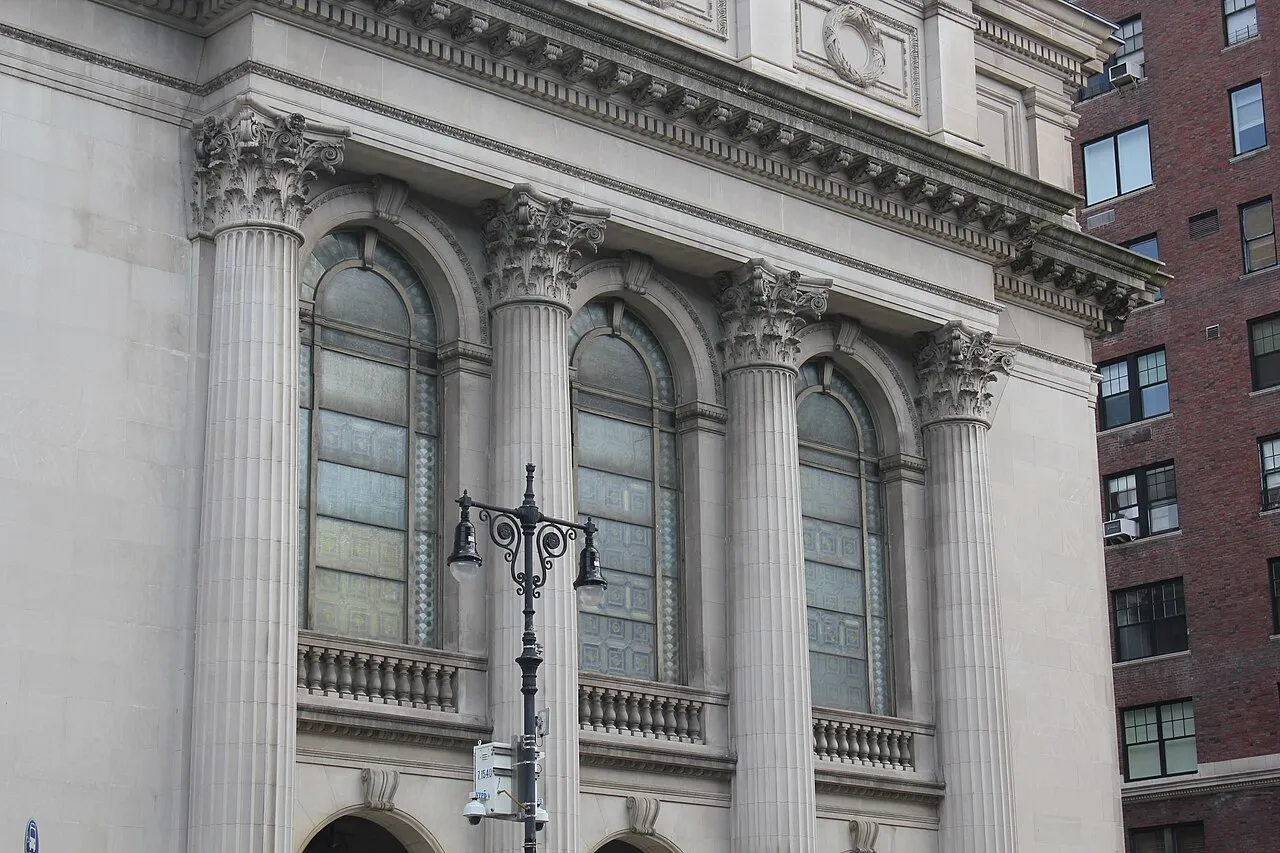
The current building, associated with the address 2 West 70th Street, was constructed in 1896-1897 from a design by the firm Brunner & Tryon and became a landmark example of monumental neoclassical architecture applied to religious buildings at the turn of the century. The New York City Landmarks Preservation Commission describes the principal facade facing Central Park West as composed of four large engaged Composite columns framing arched openings with bronze gates, creating a loggia-like effect, together with a classical composition featuring entablature and attic. The building was designated a New York City Landmark on March 19, 1974.
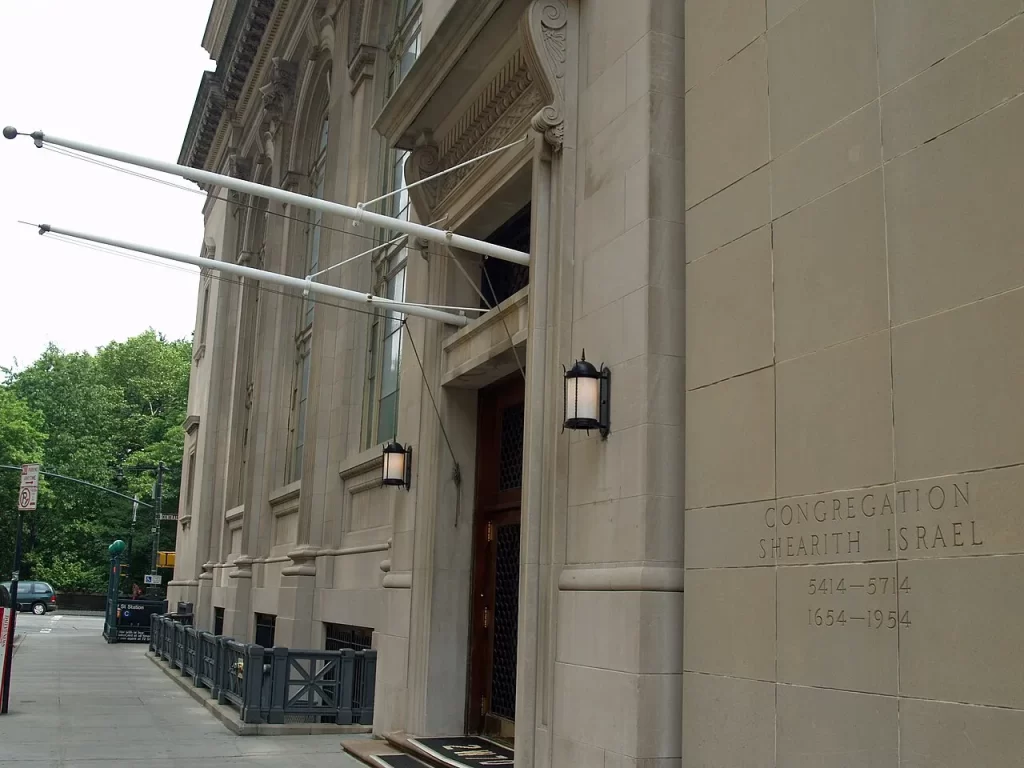
A relevant detail in reading the building is its dual addressing. Despite the ceremonial presence of the Central Park West frontage, daily practice privileges the more discreet entrance on 70th Street, at 2 West 70th Street, partly to avoid interference with the flow of services near the hehal, the ark. The congregation’s own guide explains this choice and also notes the existence of a Large Synagogue and a Small Synagogue for different uses throughout the calendar.
Gallery
Sources & Bibliography
- Congregation Shearith Israel. Congregational History. Local: New York. Publisher: Congregation Shearith Israel. Year: n.d
- Congregation Shearith Israel. Synagogue Buildings. Local: New York. Publisher: Congregation Shearith Israel. Year: n.d
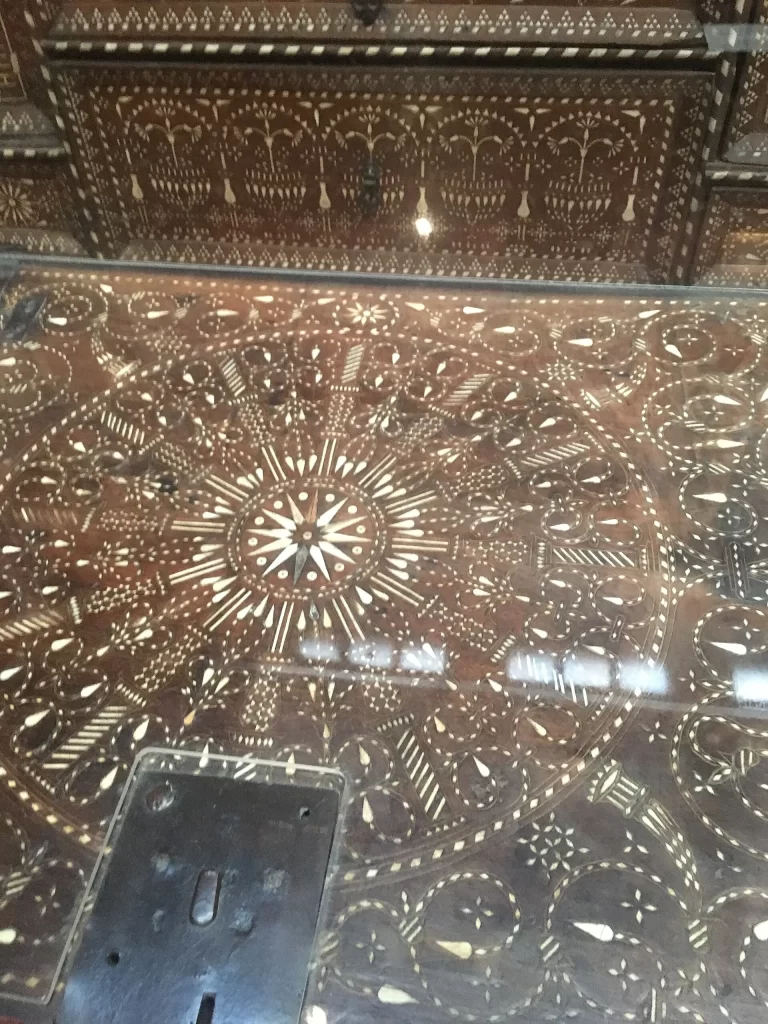
- Congregation Shearith Israel. Objects. Local: New York. Publisher: Congregation Shearith Israel. Year: n.d
- Congregation Shearith Israel. A Guide for the Perplexed. A Newcomer’s Primer to Congregation Shearith Israel. Fourth edition. Local: New York. Publisher: Congregation Shearith Israel. Year: 2024
- Congregation Shearith Israel. The Travels of the Torah. Year of Years booklet. Local: New York. Publisher: Congregation Shearith Israel. Year: 2019
- New York City Landmarks Preservation Commission. Congregation Shearith Israel (the Spanish and Portuguese Synagogue). LP-0832. Local: New York. Publisher: New York City Landmarks Preservation Commission. Year: 1974
Article researched and curated by Jew Where.
The Jew Where project is collaborative. Do you have additional information, found an inaccuracy, or have historical photos of this location? Contact our team.
Community notes
Comments
Logged-in visitors can submit comments for moderation before they appear publicly.
No comments yet.
Log in to leave a comment. Go to Account.