

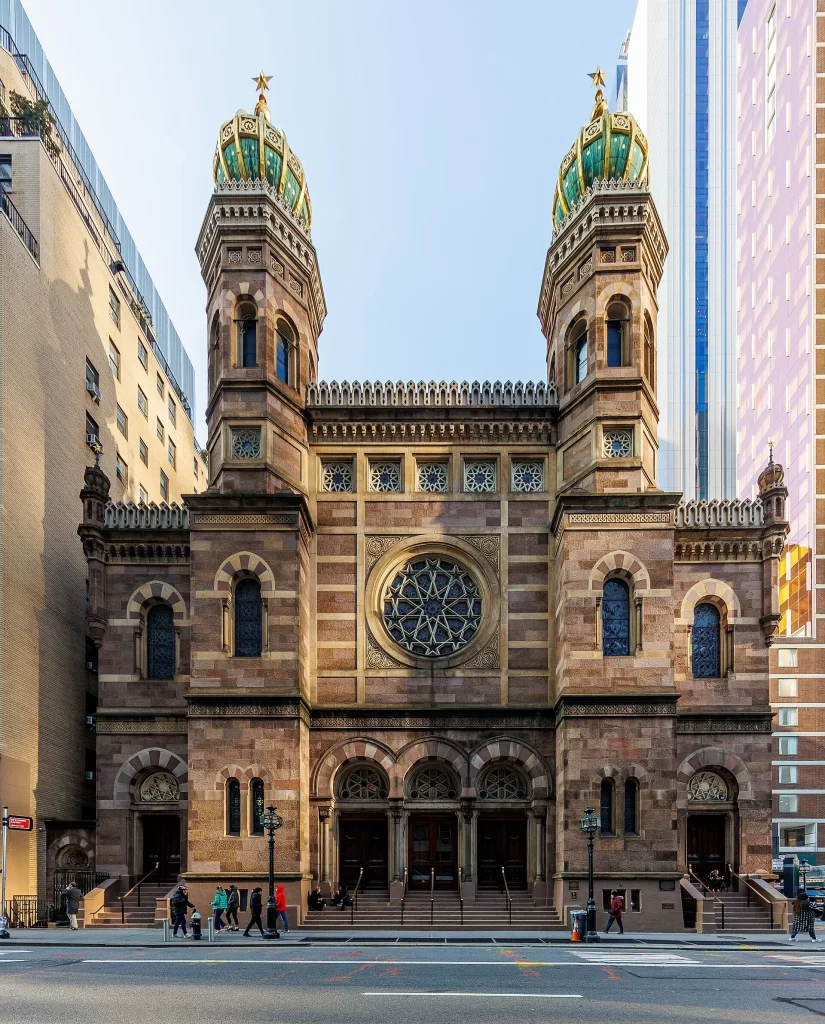
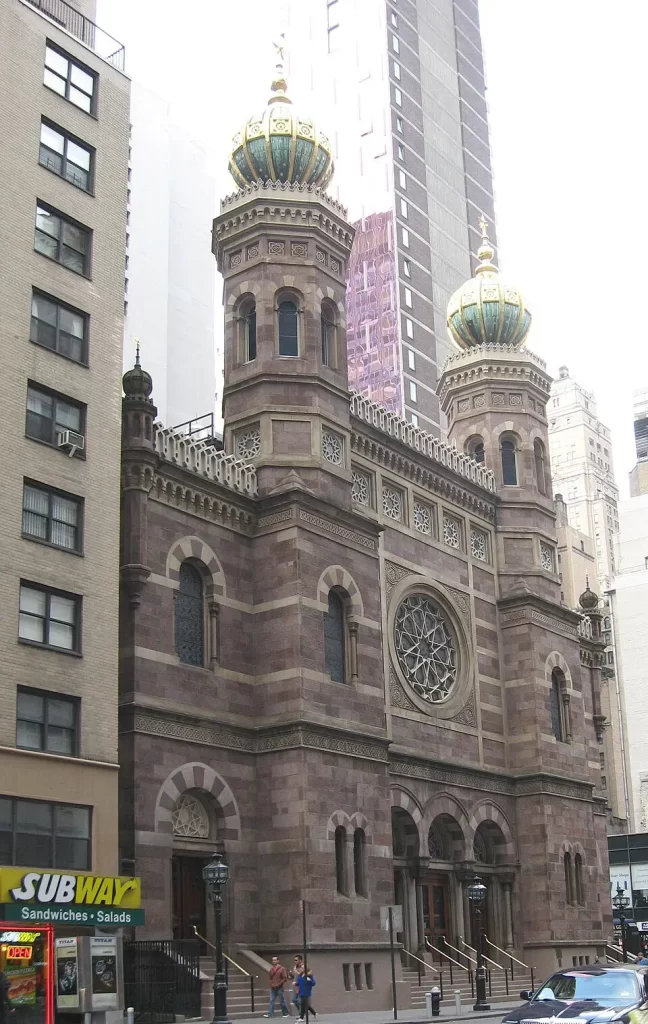
Inaugurated in 1872 at the corner of Lexington Avenue and East 55th Street, Central Synagogue is one of the major landmarks of Reform Judaism in New York City and a rare example of a monumental 19th-century synagogue still in continuous use in the city.
The building was commissioned by the Ahawath Chesed congregation, then numbering around 140 families, with the explicit ambition of creating a space capable of accommodating more than 1,400 worshippers. This figure alone speaks to a moment of strong communal confidence, public visibility, and social consolidation.
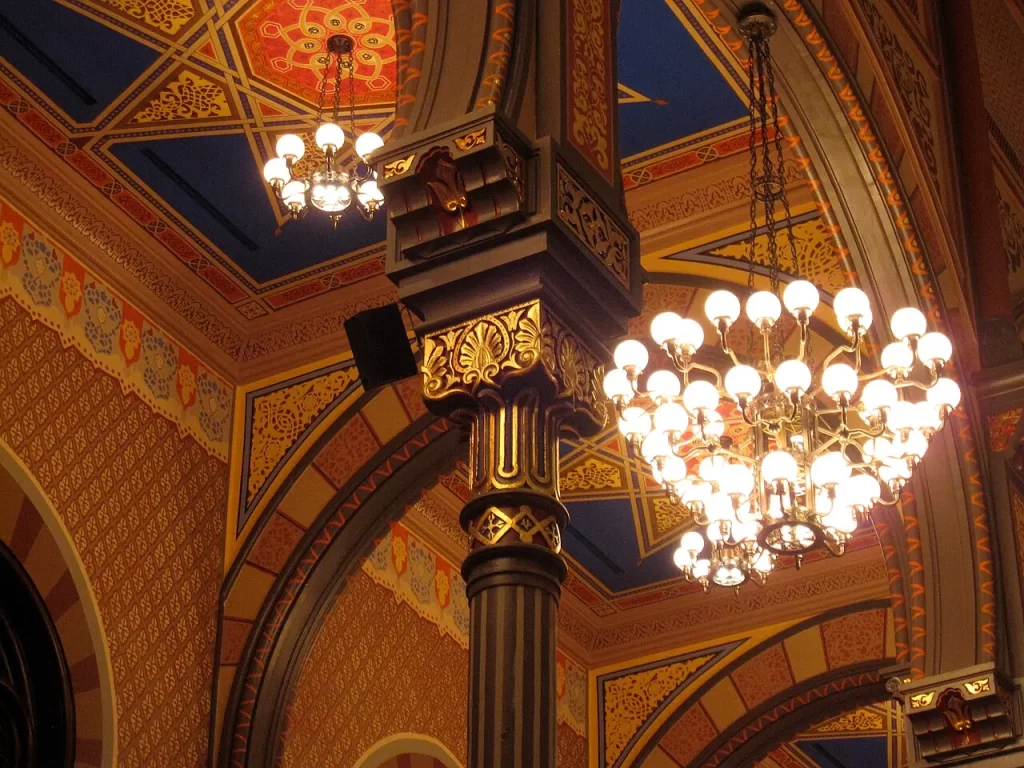
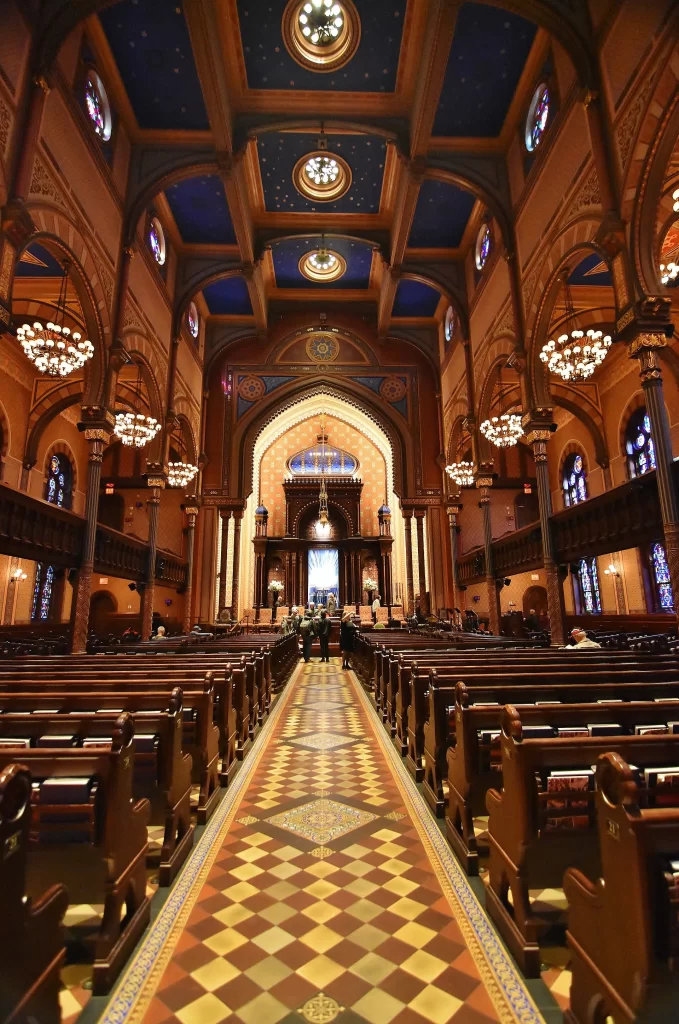
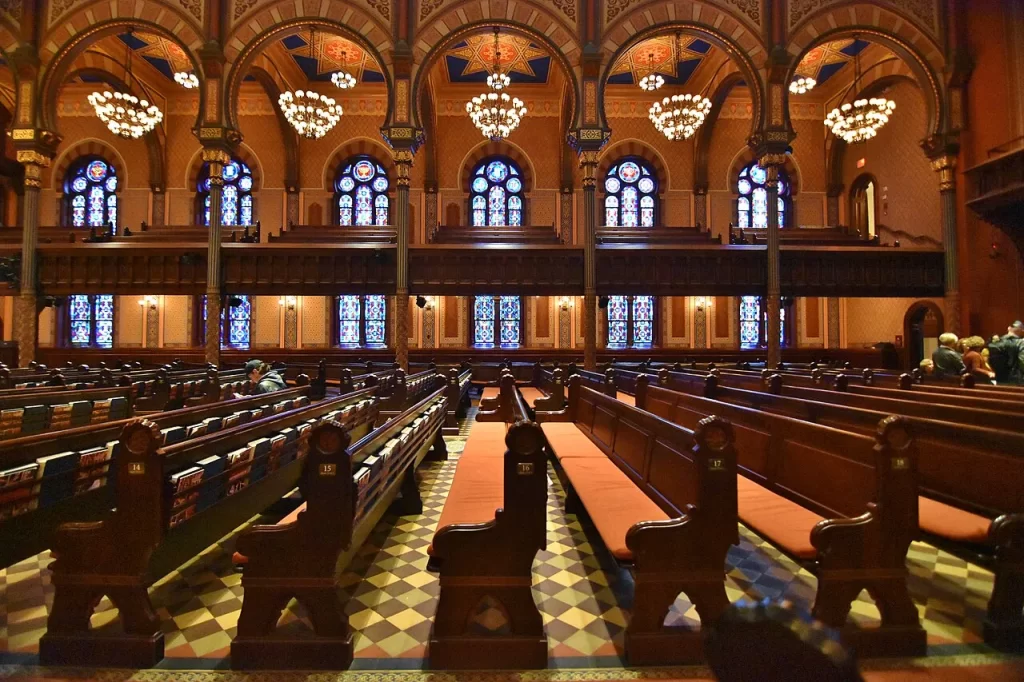
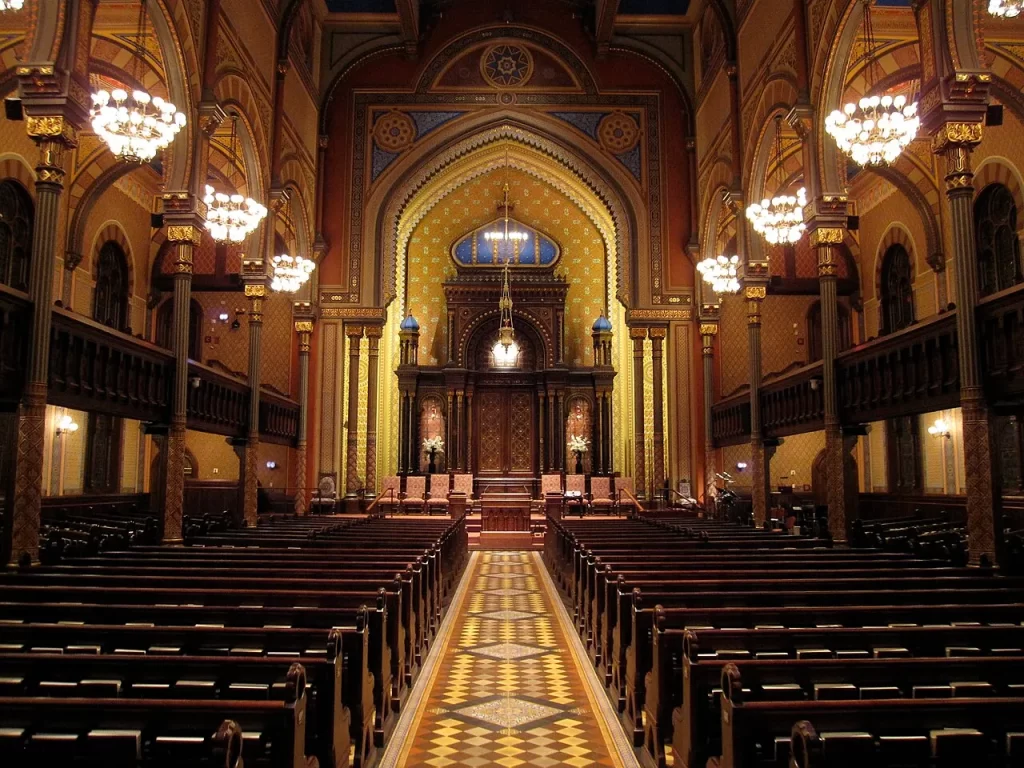
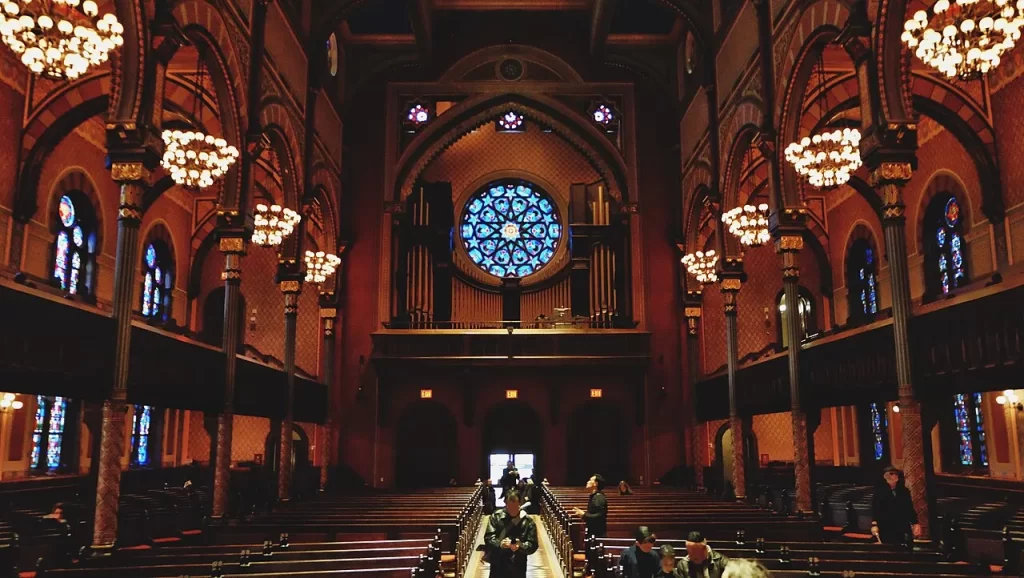
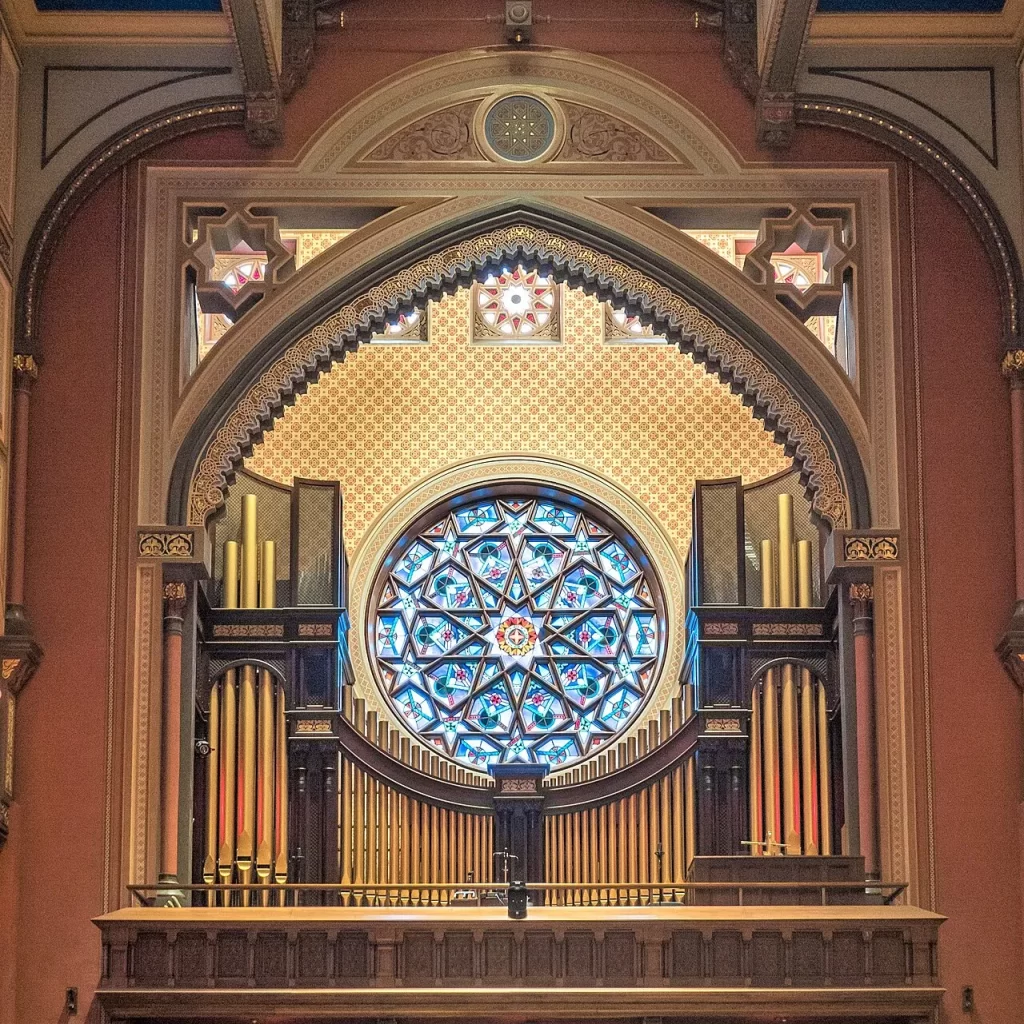
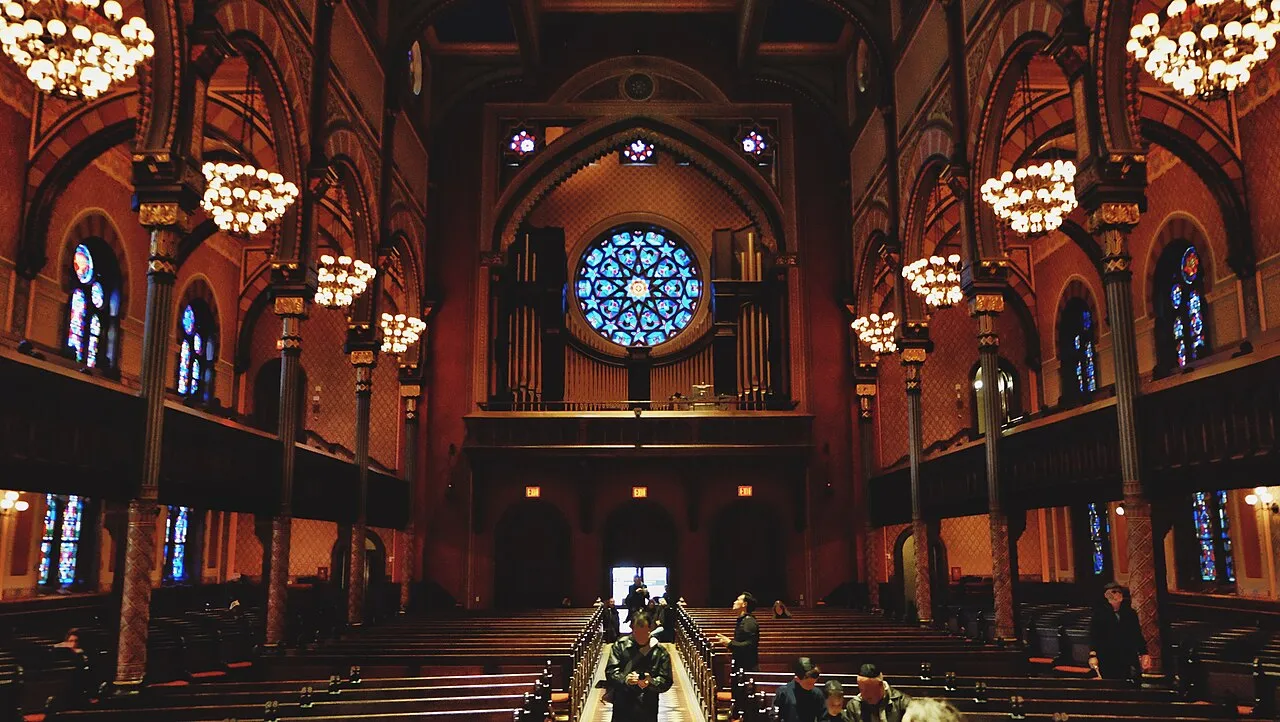
The design was by Henry Fernbach, identified by the synagogue itself as a prominent Jewish architect, and follows an interpretation of the model of the Dohány Street Synagogue in Budapest. Externally, the building is defined by its twin towers, a large rose window, and Moorish Revival arches. Internally, the sanctuary is organized as a basilica, with a high central nave, galleries, and slender cast-iron columns anchored into the bedrock, as well as an organ and extensive decorative work.
Central Synagogue emerged from a well-documented institutional genealogy. Shaar Hashomayim, founded in 1839, and Ahawath Chesed, founded in 1846, both originated on the Lower East Side and merged in 1898 to form Ahawath Chesed Shaar Hashomayim. In 1918, the congregation adopted the name Central Synagogue.
One material detail often surprises visitors. In the Aron Hakodesh of the main sanctuary there is a Torah scroll with its own documented biography, known as the Holocaust Scroll. It is one of 1,564 scrolls rescued from Jewish communities in Bohemia, Moravia, and Silesia, collected in Prague after the Second World War, transferred in 1964 to Westminster Synagogue in London, and redistributed to living communities. Central Synagogue received its scroll in 1967. It was written in the early 19th century and is associated with the community of Lipnik, today in the Czech Republic, identified as number 866 by the Memorial Scrolls Trust.
The recent history of the building is marked by a decisive event. On August 28, 1998, during renovation works, a devastating fire destroyed much of the interior, including the choir and the organ. The Aron was preserved because it was under a separate protective structure, and most ritual objects, including the Torah scrolls, had already been removed due to the ongoing works. The synagogue was reconsecrated and reopened on September 9, 2001, following restoration.
From a heritage perspective, the building was designated a New York City landmark in 1966 and a National Historic Landmark in 1975, recognizing its architectural and historical significance for New York City and for American Jewish history.
Gallery
Sources & Bibliography
- CENTRAL SYNAGOGUE. Our History. Local: New York. Publisher: Central Synagogue. Year: n.d
- LANDMARKS PRESERVATION COMMISSION. Central Synagogue (Congregation Ahawath Chesed Shaar Hashomayim). LP-0276. Local: New York. Publisher: City of New York. Year: 1966
- NATIONAL PARK SERVICE. National Register of Historic Places Inventory - Nomination Form: Central Synagogue. Local: Washington, D.C. Publisher: U.S. Department of the Interior. Year: n.d
Article researched and curated by Jew Where.
The Jew Where project is collaborative. Do you have additional information, found an inaccuracy, or have historical photos of this location? Contact our team.
Community notes
Comments
Logged-in visitors can submit comments for moderation before they appear publicly.
No comments yet.
Log in to leave a comment. Go to Account.