Skip to content
Casa do Judeu

Casa do Judeu

"Casa do Judeu is a sixteenth-century granite house whose Manueline window and passage preserve the memory of Linhares da Beira’s former judiaria."

Back to Map

Casa do Judeu is the current name of a sixteenth-century granite house in Linhares da Beira, in the municipality of Celorico da Beira. Its importance does not rest on a romantic claim about a hidden synagogue, but on a more precise and documentable value: the building preserves one of the most significant architectural markers associated with the former Jewish quarter of Linhares.

Casa do Judeu and the Jewish Quarter

The former judiaria of Linhares is known through written documentation and surviving microtoponymy. A reference in the Livro de Tenças of King João III, dated 1523, records that Francisco de Almeida received an annual income from the Judiaria of Linhares. This confirms that the Jewish quarter still had an identifiable fiscal and administrative existence decades after the forced conversion of Portuguese Jews in 1497.

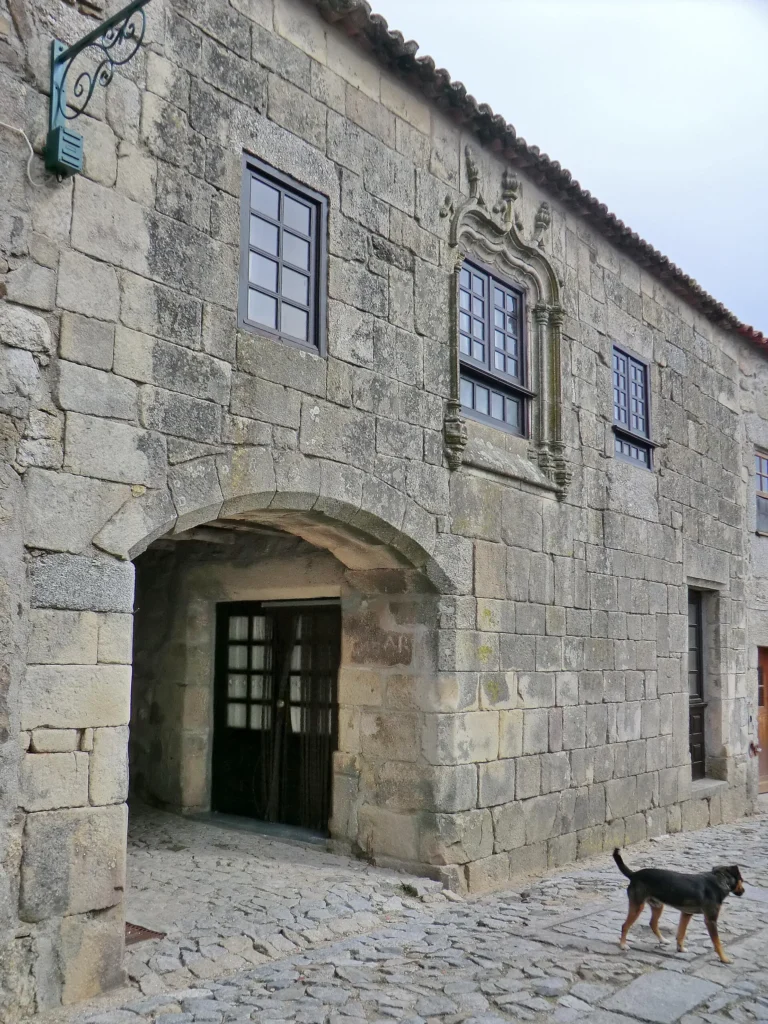
Within this framework, Casa do Judeu occupies a particularly meaningful position. The building stands near the area historically associated with Rua da Judiaria, today linked to Rua do Passadiço and the surroundings of Largo de São Pedro. According to the patrimonial description, the house marks the access point to the former Jewish quarter through a passage opened beneath the building.

Manueline Architecture and Urban Memory

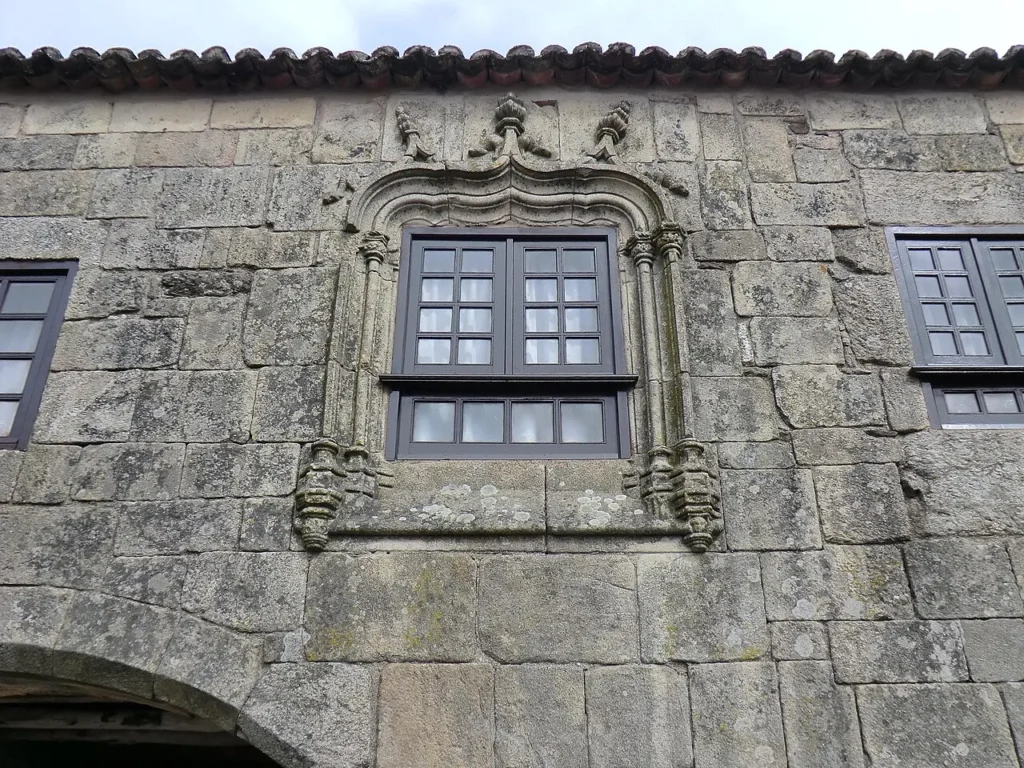
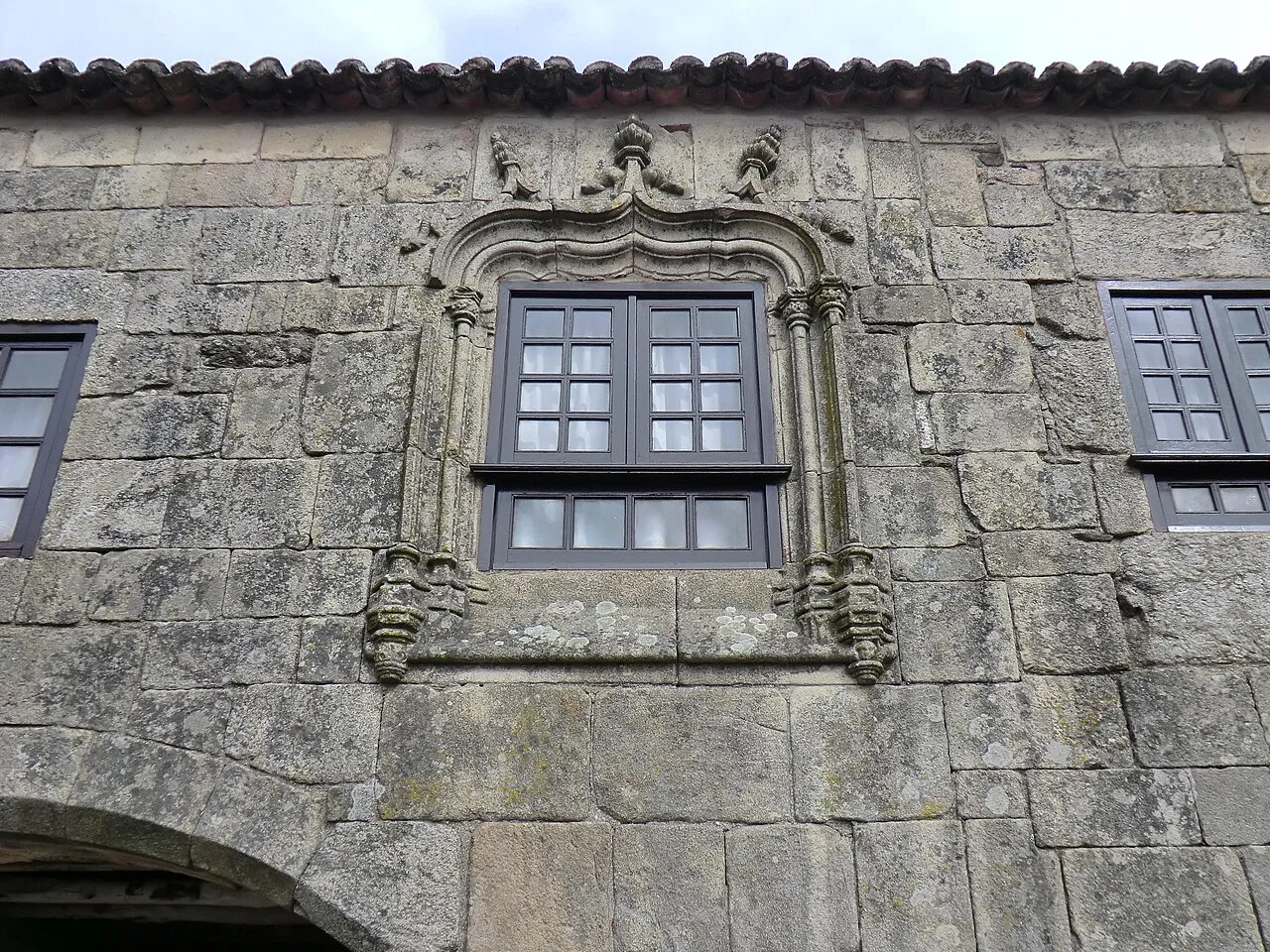
The most visible feature of Casa do Judeu is its richly carved Manueline window. The monument is officially listed as a classified property of public interest, under the designation of a Manueline window integrated into a building on one of the streets leading to the castle. The patrimonial record describes the house as a noble granite building and identifies the window as one of the most interesting Manueline elements in Linhares.

This detail matters because it places the Jewish memory of Linhares within the material culture of the early sixteenth century. The window itself does not prove the original owner’s identity. In fact, the original patron of the window is unknown. However, the building’s location, its association with the access to the old judiaria, and its enduring name preserve a rare overlap between architecture, documentary memory, and local Jewish topography.

A Cautious Reading of the Site

Casa do Judeu should therefore be read with care. It is not enough to repeat that it was a synagogue, since the available documentation does not securely establish that claim. Its stronger value lies elsewhere. The house preserves the spatial memory of the Jewish quarter, the urban threshold between the main street and the area associated with Jewish residence, and a refined Manueline architectural element that survived within the historic fabric of Linhares da Beira.

For Jew Where, Casa do Judeu is important because it shows how Jewish heritage can remain visible even when direct communal institutions have disappeared. Here, memory survives through a name, a passage, a street, and a window carved in stone.

Gallery
Sources & Bibliography

Article researched and curated by Jew Where.

The Jew Where project is collaborative. Do you have additional information, found an inaccuracy, or have historical photos of this location? Contact our team.
Casa do Judeu
Portugal / Guarda / Neighborhoods & Settlements

Casa do Judeu

"Casa do Judeu is a sixteenth-century granite house whose Manueline window and passage preserve the memory of Linhares da Beira’s former judiaria."

Location
Rua do Passadiço / Travessa do Passadiço, 6360-080 Linhares da Beira, Celorico da Beira, Guarda, Portugal

Casa do Judeu is the current name of a sixteenth-century granite house in Linhares da Beira, in the municipality of Celorico da Beira. Its importance does not rest on a romantic claim about a hidden synagogue, but on a more precise and documentable value: the building preserves one of the most significant architectural markers associated with the former Jewish quarter of Linhares.

Casa do Judeu and the Jewish Quarter

The former judiaria of Linhares is known through written documentation and surviving microtoponymy. A reference in the Livro de Tenças of King João III, dated 1523, records that Francisco de Almeida received an annual income from the Judiaria of Linhares. This confirms that the Jewish quarter still had an identifiable fiscal and administrative existence decades after the forced conversion of Portuguese Jews in 1497.

Within this framework, Casa do Judeu occupies a particularly meaningful position. The building stands near the area historically associated with Rua da Judiaria, today linked to Rua do Passadiço and the surroundings of Largo de São Pedro. According to the patrimonial description, the house marks the access point to the former Jewish quarter through a passage opened beneath the building.

Manueline Architecture and Urban Memory

The most visible feature of Casa do Judeu is its richly carved Manueline window. The monument is officially listed as a classified property of public interest, under the designation of a Manueline window integrated into a building on one of the streets leading to the castle. The patrimonial record describes the house as a noble granite building and identifies the window as one of the most interesting Manueline elements in Linhares.

This detail matters because it places the Jewish memory of Linhares within the material culture of the early sixteenth century. The window itself does not prove the original owner’s identity. In fact, the original patron of the window is unknown. However, the building’s location, its association with the access to the old judiaria, and its enduring name preserve a rare overlap between architecture, documentary memory, and local Jewish topography.

A Cautious Reading of the Site

Casa do Judeu should therefore be read with care. It is not enough to repeat that it was a synagogue, since the available documentation does not securely establish that claim. Its stronger value lies elsewhere. The house preserves the spatial memory of the Jewish quarter, the urban threshold between the main street and the area associated with Jewish residence, and a refined Manueline architectural element that survived within the historic fabric of Linhares da Beira.

For Jew Where, Casa do Judeu is important because it shows how Jewish heritage can remain visible even when direct communal institutions have disappeared. Here, memory survives through a name, a passage, a street, and a window carved in stone.

Timeline

  • 1497 Forced conversion ends legal Jewish life in Portugal and transforms former Jewish communities into New Christian populations.
  • 1523 The Livro de Tenças of King João III records Francisco de Almeida receiving annual income from the Judiaria of Linhares.
  • Sixteenth century Casa do Judeu and its Manueline window belong to the early modern granite architecture of Linhares da Beira.
  • 1967 The Manueline window associated with Casa do Judeu is classified as an Imóvel de Interesse Público.

Sources & Bibliography

  1. PATRIMÓNIO CULTURAL. Janela manuelina integrada num prédio situado numa das ruas de acesso ao castelo / Casa do Judeu. Pesquisa de Património Imóvel, code 73241. Ano: n.d. https://imovel.patrimoniocultural.gov.pt/detalhes.php?code=73241
  2. ALDEIAS DE MONTANHA. Casa do Judeu. Local: Linhares da Beira. Ano: n.d. https://www.aldeiasdemontanha.pt/en/villages/figueir%C3%B3-da-serra/casa-do-judeu
  3. RODRIGUES, Adriano Vasco. Celorico da Beira e Linhares: Monografia Histórica e Artística. Editora: Câmara Municipal de Celorico da Beira. Ano: 1979 / 1992.
  4. OLIVEIRA, Manuel Ramos. Celorico da Beira e o seu Concelho através da História e Tradição. Editora: Câmara Municipal de Celorico da Beira. Ano: 1939 / 1997.

Additional Information

Official website: https://imovel.patrimoniocultural.gov.pt/detalhes.php?code=73241
Current use of the address: Historic granite building and exterior heritage marker; no confirmed active Jewish institutional function.

Article researched and curated by Jew Where.

The Jew Where project is collaborative. Do you have additional information, found an inaccuracy, or have historical photos of this location? Contact our team.