

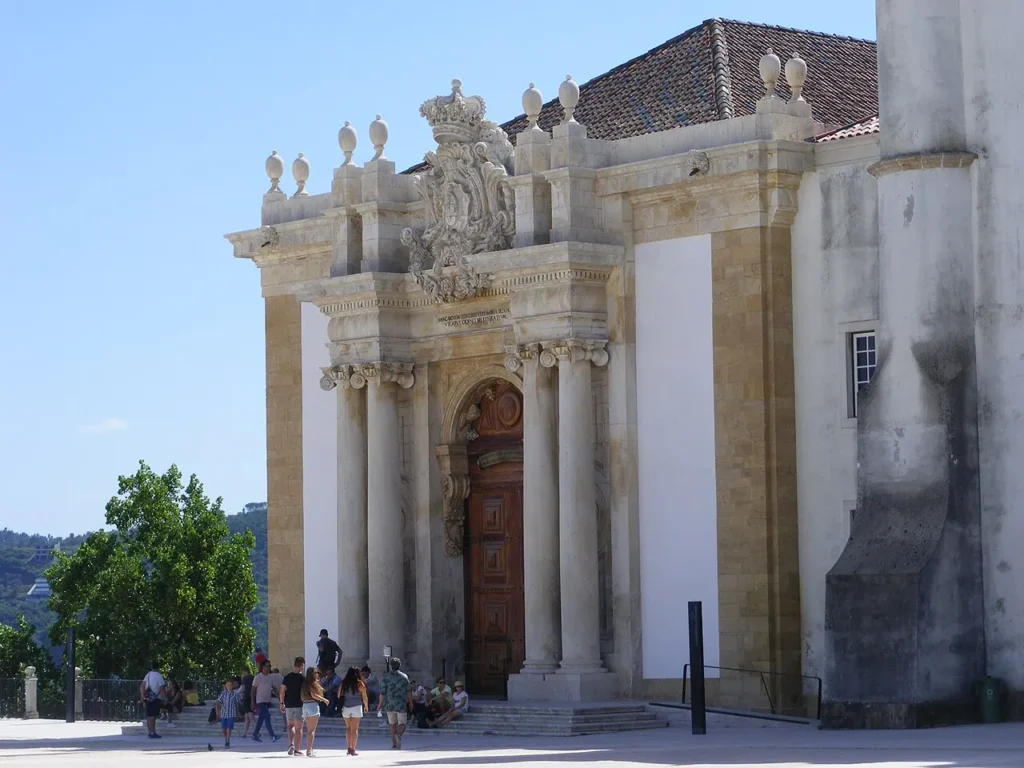
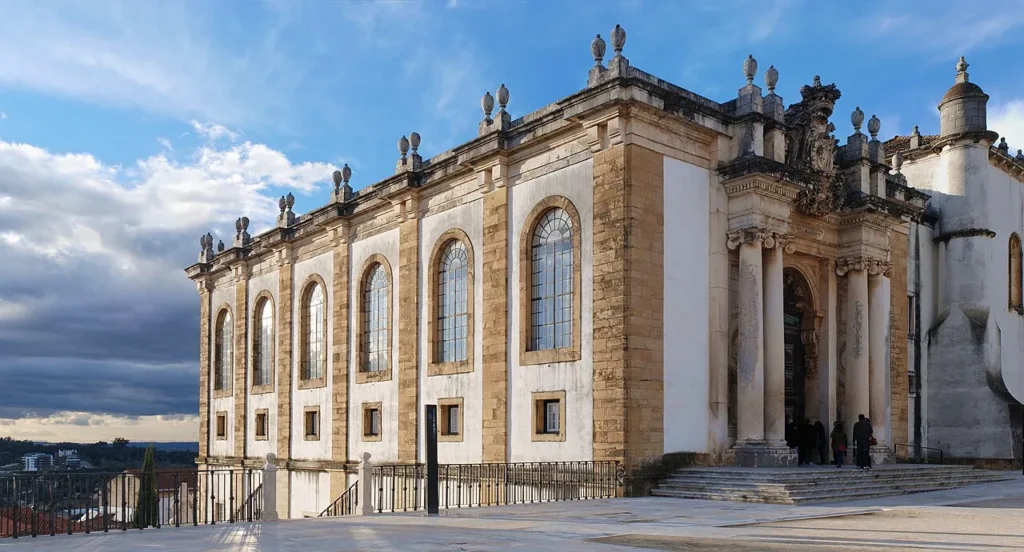
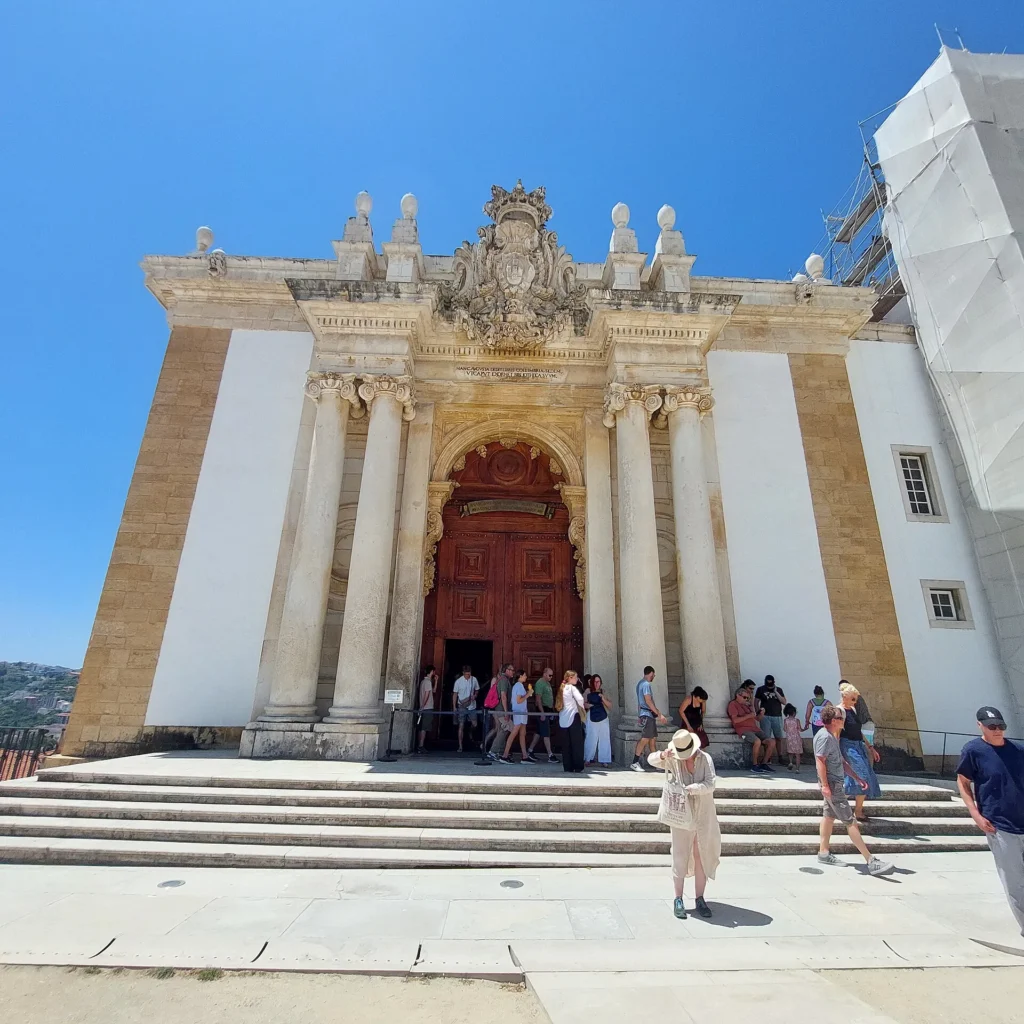
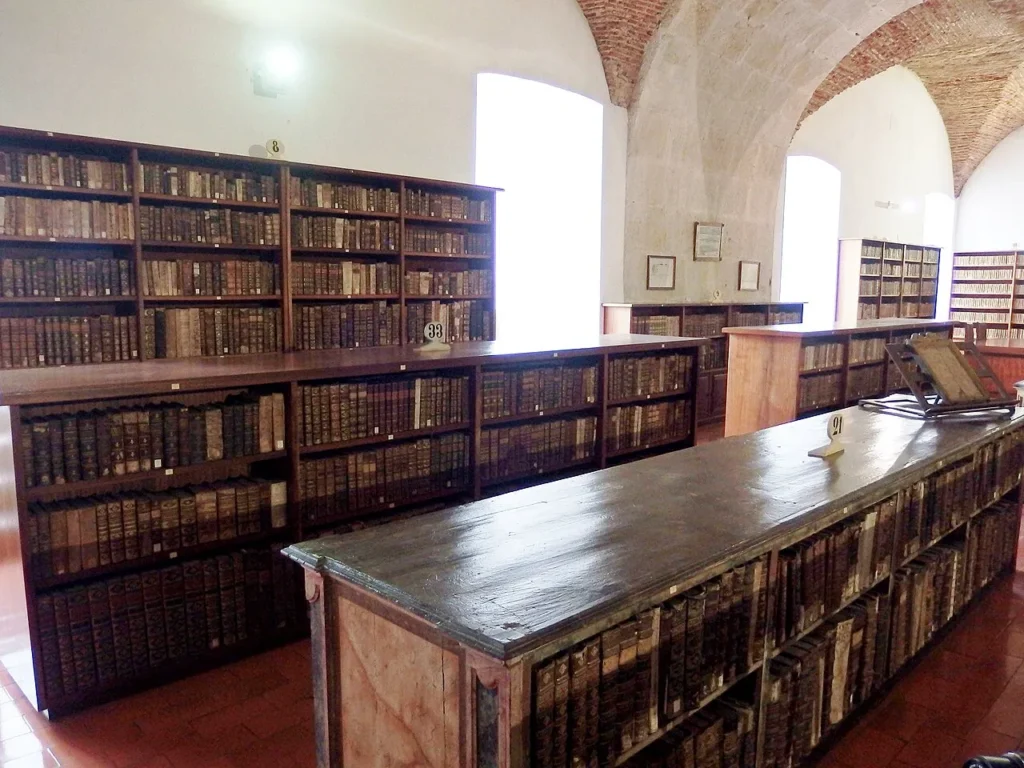
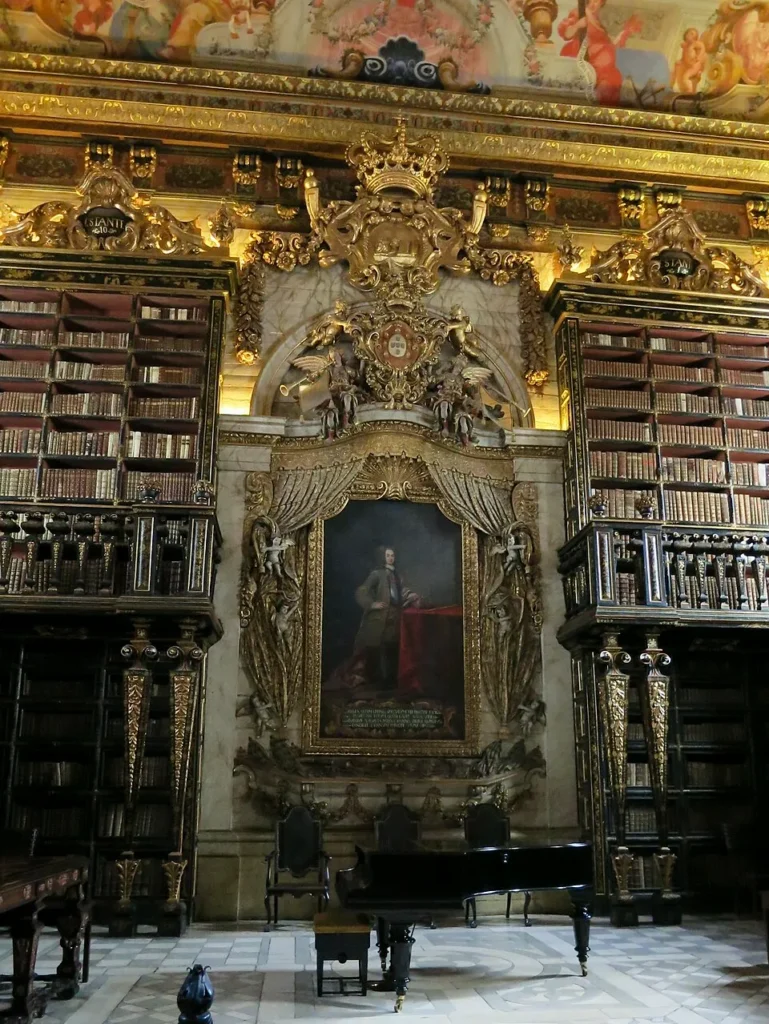
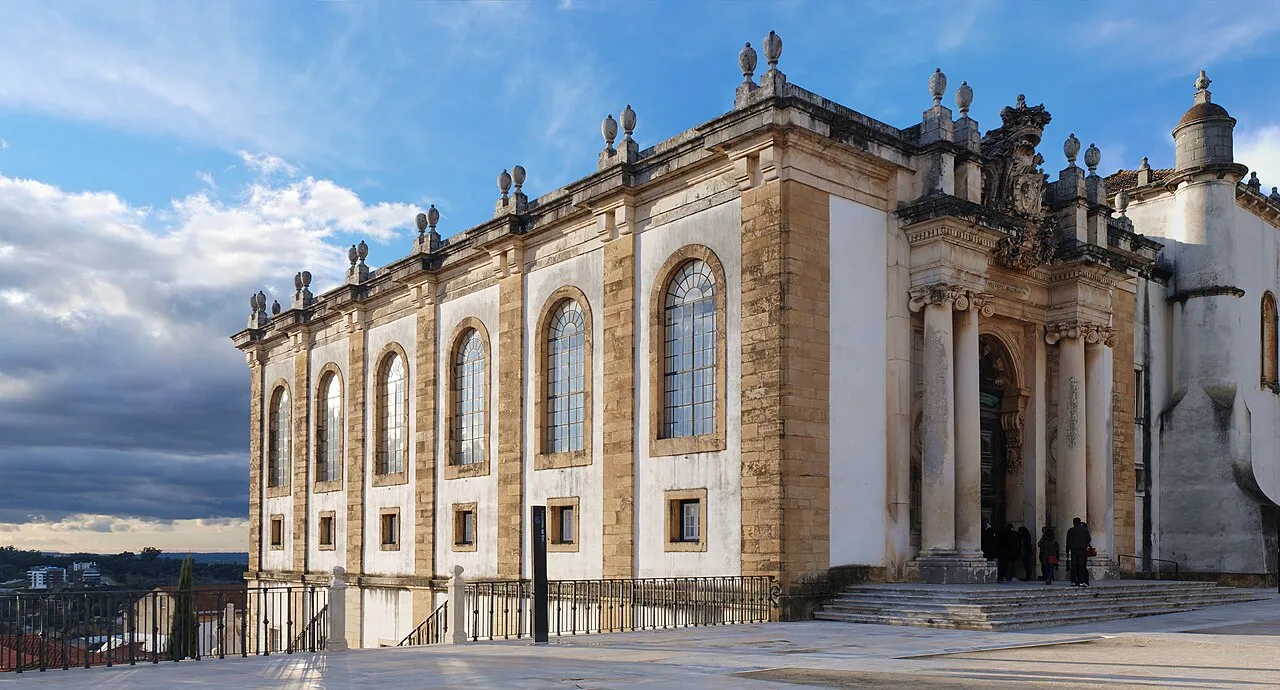
The University of Coimbra / Biblioteca Joanina is relevant to Jewish heritage through the rare Hebrew manuscripts, Sephardic printed books, and university records connected to New Christian scholars preserved in the wider collections of the University of Coimbra. Its central Jewish object is the Bíblia de Abravanel, catalogued as Ms Cofre 1, one of the most important Hebrew manuscripts held in Portugal.
Strictly speaking, the Jewish relevance of this site belongs to the institutional universe of the Biblioteca Geral da Universidade de Coimbra and the Arquivo da Universidade de Coimbra. The Biblioteca Joanina is the historic and monumental face of the university library, while the manuscripts and records form part of a broader documentary heritage.
The Bíblia de Abravanel
The Bíblia de Abravanel is an illuminated Hebrew Bible written on parchment. It has 385 folios, with the biblical text arranged in three columns and 32 lines per column. The manuscript includes masorah magna and masorah parva, the traditional Masoretic notes used to preserve the accuracy of the Hebrew biblical text.
The manuscript has no colophon. Therefore, it does not preserve a direct statement of its date, place of production, or scribe. Even so, its Sephardic Hebrew script and decorated opening pages, including micrographic work with Mudéjar visual influence, place it within the Iberian Jewish manuscript tradition. Its binding is later, probably from the seventeenth or eighteenth century, with golden decoration and bronze locks.
Before the decorated pages, the manuscript preserves Hebrew family inscriptions. These record births dated 1418, 1496, and 1503, and deaths dated 1557, including a man named Samuel da Costa and the wife of the owner. These notes are important because they show that the manuscript was already in use before the fifteenth century and remained in the possession of Portuguese Jews in the sixteenth century.
The manuscript became known as the Bíblia de Abravanel after Joaquim Mendes dos Remédios suggested, in 1903, that it could be the same Hebrew Bible mentioned by António Ribeiro dos Santos as having belonged to D. José Abravanel in Venice in the sixteenth century. This identification should be treated with caution. The manuscript itself does not preserve ownership notes proving a direct link to the Abravanel family.
The Bible was acquired in the Netherlands in the early nineteenth century by Manuel Pedro de Mello. It had been in the Netherlands since at least the late seventeenth century. After its acquisition, it was examined by a committee of theologians and was only incorporated into the University Library collection in 1857.
Hebrew Books and Sephardic Memory
The Jewish collections of the Biblioteca Geral da Universidade de Coimbra go beyond the Bíblia de Abravanel. They include Hebrew manuscripts, Spanish translations of the Pentateuch printed in Amsterdam in the seventeenth century, polyglot editions of biblical texts, and works by Jewish or Jewish-origin authors such as Amato Lusitano, Isaac Cardoso, Samuel Usque, and Zacuto Lusitano.
These works preserve traces of Jewish learning, Sephardic exile, printing, censorship, displacement, and survival. They also connect Coimbra to wider Sephardic geographies, including Portugal, the Netherlands, Italy, and the Western Sephardic diaspora.
New Christian Scholars at the University
The University of Coimbra is also connected to Jewish history through the records of New Christian scholars who studied or taught there. After the forced conversion of Portuguese Jews at the end of the fifteenth century, people of Jewish origin could no longer appear legally as Jews in Portugal. They appeared in documentation as New Christians or conversos, often under the suspicion of Judaism.
The university records preserve material related to New Christians who passed through Coimbra’s academic world. These include the mathematician André de Avelar and the physicians Tomás Rodrigues da Veiga and Ambrósio Nunes, among other professors and students later investigated by the Inquisition.
One of the most important cases was António Homem. He was a professor of Canon Law at the University of Coimbra and a canon of the Cathedral. Coming from a converso background, he became part of the city’s academic and clerical elite. He was arrested by the Inquisition, accused of Judaism and other charges, and condemned in the Lisbon auto-da-fé of 5 May 1624.
Pedro Nunes, one of the most important Portuguese mathematicians and cosmographers of the sixteenth century, was also linked to the University of Coimbra as professor of mathematics. His possible New Christian background should be stated with caution. What is more secure is that his name belongs to the same academic environment in which questions of lineage, suspicion, science, and religious control intersected.
Today, the University of Coimbra / Biblioteca Joanina is not a Jewish monument in the narrow sense. Its importance lies in the survival of documentary memory. Through the Bíblia de Abravanel, Hebrew books, Sephardic authors, and New Christian academic records, the site preserves part of the intellectual history of Portuguese Jewry and its afterlife under persecution.
Gallery
Videos
Sources & Bibliography
- WESTERN SEPHARDIC DIASPORA ROADMAP, DHLAB / NOVA FCSH. Reservados. Ano: n.d
- BIBLIOTECA GERAL DA UNIVERSIDADE DE COIMBRA / ALMA MATER. Ms Cofre 1. Ano: n.d
- UNIVERSIDADE DE COIMBRA. BGUC acolhe palestra e mostra bibliográfica sobre «Memória Judaica». Ano: 2025
- WESTERN SEPHARDIC DIASPORA ROADMAP, DHLAB / NOVA FCSH. Universidade de Coimbra. Ano: n.d
- WESTERN SEPHARDIC DIASPORA ROADMAP, DHLAB / NOVA FCSH. Manuscritos. Ano: n.d
- REMÉDIOS, Joaquim Mendes dos. Uma Bíblia Hebraica da Bibliotheca da Universidade de Coimbra. Local: Coimbra. Editora: Imprensa da Universidade. Ano: 1903
- UNIVERSIDADE DE COIMBRA. Baroque Library. Ano: n.d
- UNIVERSIDADE DE COIMBRA. Prepare your Visit. Ano: n.d
Article researched and curated by Jew Where.
The Jew Where project is collaborative. Do you have additional information, found an inaccuracy, or have historical photos of this location? Contact our team.
Community notes
Comments
Logged-in visitors can submit comments for moderation before they appear publicly.
No comments yet.
Log in to leave a comment. Go to Account.