Skip to content
Bialystoker Synagogue

Bialystoker Synagogue

"Active Lower East Side synagogue founded by Bialystok immigrants, housed since 1905 in an 1826 Federal-style former Methodist church, later landmarked and restored."

Back to Map

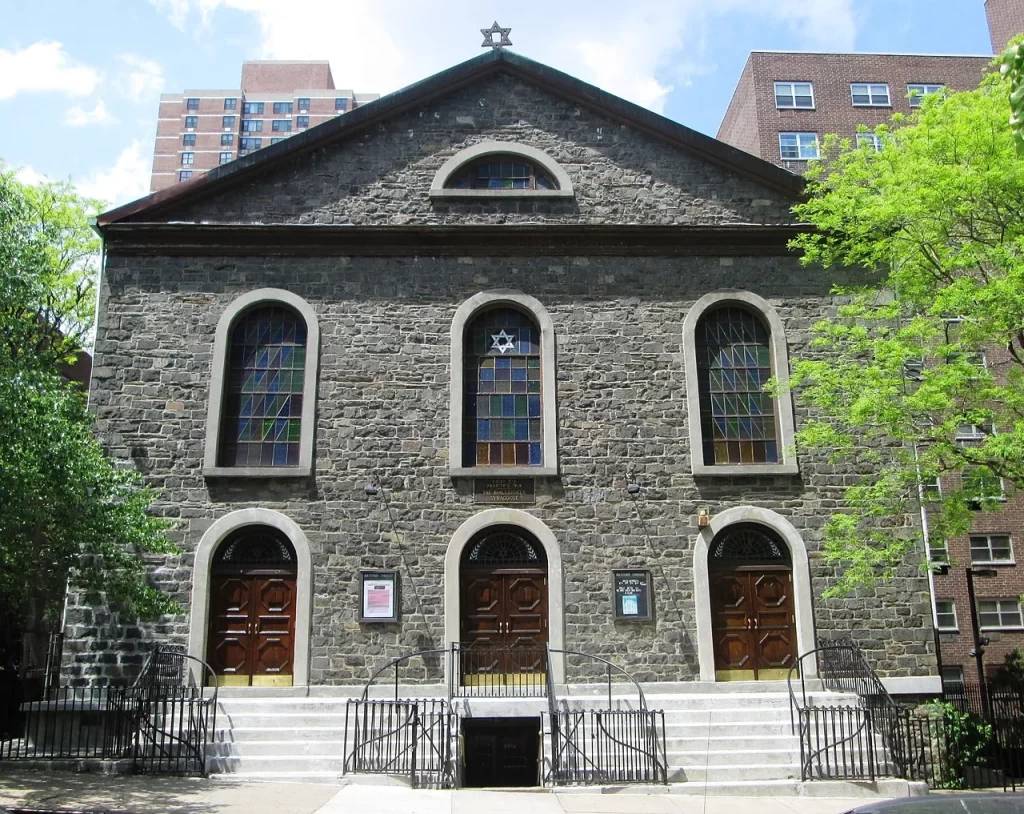
The Bialystoker Synagogue is one of those New York places where the exterior offers little preparation for what lies inside. The building was constructed in 1826 as the Willett Street Methodist Episcopal Church, in an austere, vernacular Federal style. Its preservation is largely due to the fact that it was reused rather than replaced, first as a church and later as a synagogue, retaining an early nineteenth-century shell that came to house an intensely vibrant Jewish life within.

The congregation that gave the synagogue its name was formed by Jews from the Białystok region in northeastern Poland, an area that before the Second World War lay within a corridor of high Jewish population density in Eastern Europe. In 1905, this community purchased the building on Willett Street and converted it into a synagogue, bringing to the Lower East Side the social, religious, and cultural memory of Polish Jewry.

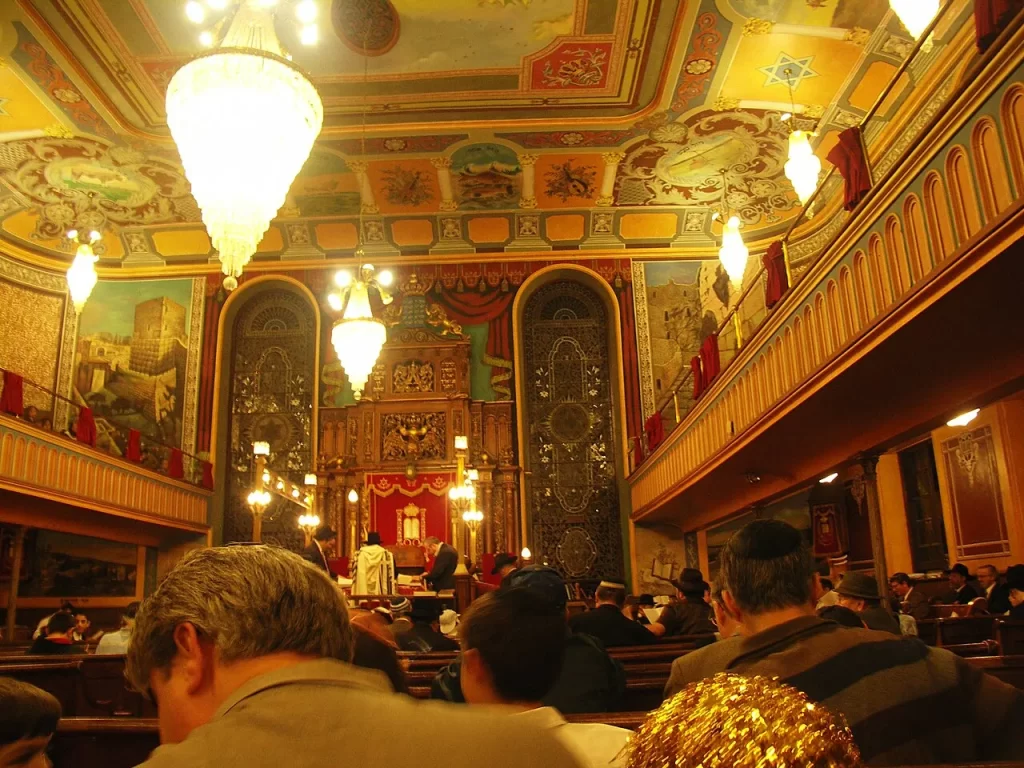
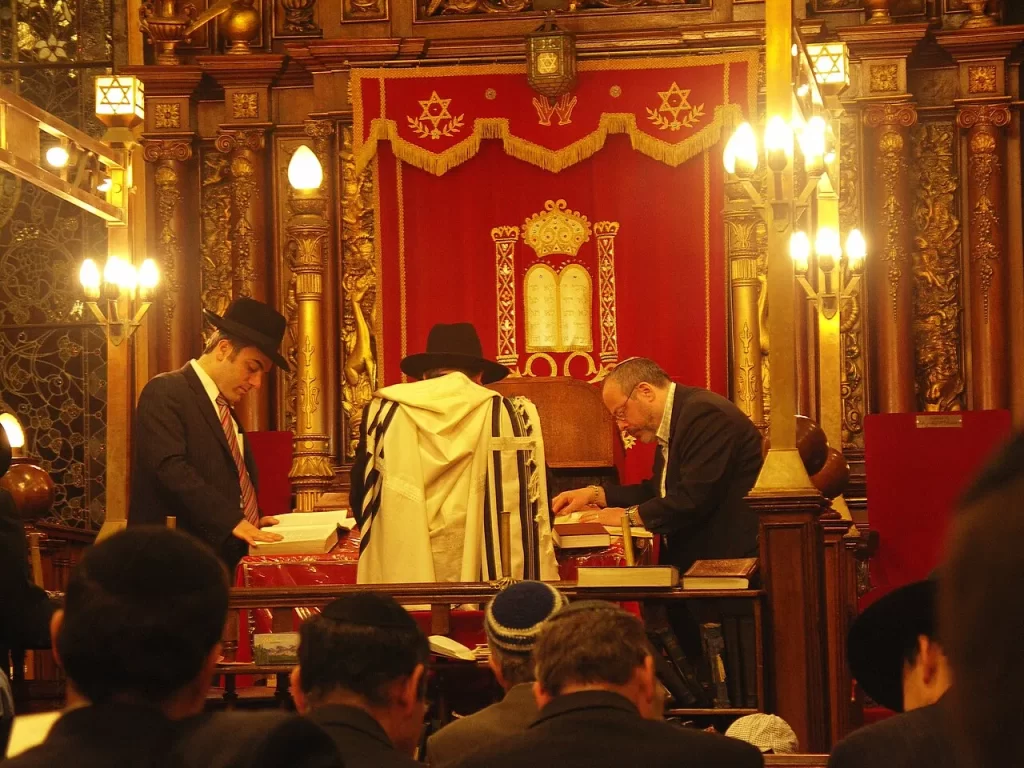
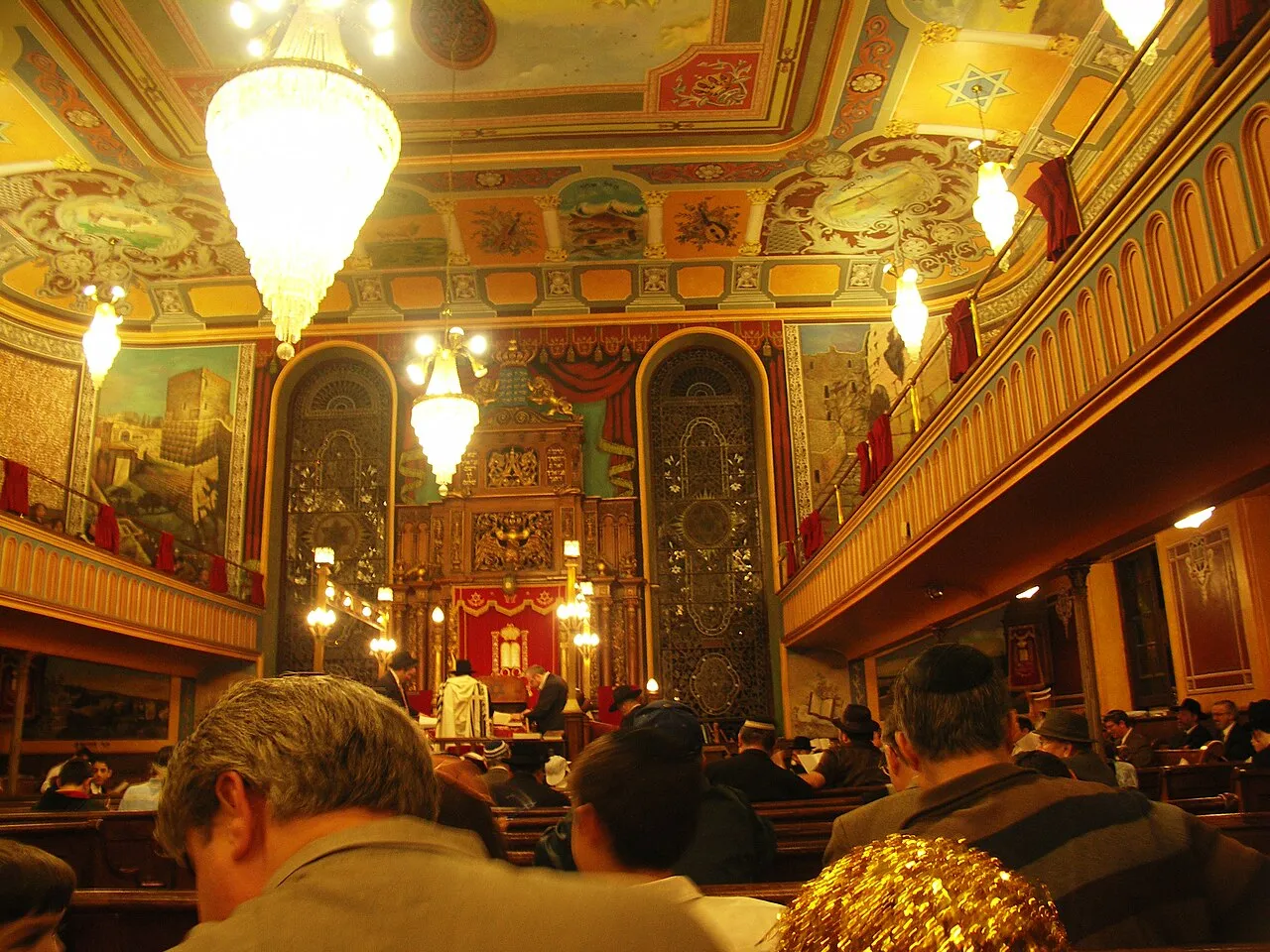
The contrast between exterior and interior is the building’s defining feature. Outside, stone and restraint; inside, an exuberant sanctuary with stained glass, murals, and a painted ceiling that includes zodiac signs, part of a decorative program developed mainly in the twentieth century. The synagogue itself records that during the Great Depression the congregation chose to “beautify” the interior as a spiritual and psychological response to the period, transforming the sanctuary into a space of communal uplift.

A detail that became part of local tradition is associated with the women’s gallery: a discreet opening leads to a staircase up to the attic. The synagogue presents, as an inherited memory, the idea that this space may have served as a refuge within networks that assisted enslaved people escaping via the Underground Railroad, while clearly noting the legendary character of the story rather than presenting it as firm documentary proof. Even so, the narrative reveals how the building accumulated moral and communal layers both before and after 1905.

From a heritage perspective, the building was designated a New York City Landmark on 19 April 1966 and listed on the National Register of Historic Places on 26 April 1972, consolidating its status as a material survivor of nineteenth-century Lower Manhattan and as an example of Federal-period architecture adapted to a Jewish house of worship.

Gallery
Article researched and curated by Jew Where.

The Jew Where project is collaborative. Do you have additional information, found an inaccuracy, or have historical photos of this location? Contact our team.
Bialystoker Synagogue
United States of America / New York / Faith & Ritual

Bialystoker Synagogue

"Active Lower East Side synagogue founded by Bialystok immigrants, housed since 1905 in an 1826 Federal-style former Methodist church, later landmarked and restored."

Location
7-11 Willett Street / Bialystoker Place, New York, NY 10002, USA
Opening Hours
Daily: 08:00-18:00

The Bialystoker Synagogue is one of those New York places where the exterior offers little preparation for what lies inside. The building was constructed in 1826 as the Willett Street Methodist Episcopal Church, in an austere, vernacular Federal style. Its preservation is largely due to the fact that it was reused rather than replaced, first as a church and later as a synagogue, retaining an early nineteenth-century shell that came to house an intensely vibrant Jewish life within.

The congregation that gave the synagogue its name was formed by Jews from the Białystok region in northeastern Poland, an area that before the Second World War lay within a corridor of high Jewish population density in Eastern Europe. In 1905, this community purchased the building on Willett Street and converted it into a synagogue, bringing to the Lower East Side the social, religious, and cultural memory of Polish Jewry.

The contrast between exterior and interior is the building’s defining feature. Outside, stone and restraint; inside, an exuberant sanctuary with stained glass, murals, and a painted ceiling that includes zodiac signs, part of a decorative program developed mainly in the twentieth century. The synagogue itself records that during the Great Depression the congregation chose to “beautify” the interior as a spiritual and psychological response to the period, transforming the sanctuary into a space of communal uplift.

A detail that became part of local tradition is associated with the women’s gallery: a discreet opening leads to a staircase up to the attic. The synagogue presents, as an inherited memory, the idea that this space may have served as a refuge within networks that assisted enslaved people escaping via the Underground Railroad, while clearly noting the legendary character of the story rather than presenting it as firm documentary proof. Even so, the narrative reveals how the building accumulated moral and communal layers both before and after 1905.

From a heritage perspective, the building was designated a New York City Landmark on 19 April 1966 and listed on the National Register of Historic Places on 26 April 1972, consolidating its status as a material survivor of nineteenth-century Lower Manhattan and as an example of Federal-period architecture adapted to a Jewish house of worship.

Timeline

  • 1826 Construction of the building as the Willett Street Methodist Episcopal Church.
  • 1865 The Bialystoker Synagogue was organized on the Lower East Side of New York City.
  • 1905 The congregation purchased the building and converted it into its synagogue.
  • Great Depression The congregation beautified the main sanctuary as a response to the Depression.
  • 19 April 1966 Designation as a New York City Landmark.
  • 26 April 1972 Listing on the National Register of Historic Places.
  • 1988 Major interior restoration and renovation of the former Hebrew school building as the Daniel Potkorony Building.

Sources & Bibliography

  1. BIALYSTOKER SYNAGOGUE. History. Local: New York. Editora: Bialystoker Synagogue. Ano: n.d. https://www.bialystoker.org/history.htm
  2. LANDMARKS PRESERVATION COMMISSION. Bialystoker Synagogue. LP-0181. Local: New York. Editora: Landmarks Preservation Commission. Ano: 1966. https://s-media.nyc.gov/agencies/lpc/lp/0181.pdf
  3. NATIONAL PARK SERVICE. NPGallery Asset Detail, Bialystoker Synagogue. National Register Information System ID 72000861. Local: Washington, D.C. Editora: U.S. Department of the Interior, National Park Service. Ano: 1972. https://npgallery.nps.gov/AssetDetail/NRIS/72000861
  4. CENTER FOR JEWISH ART, HEBREW UNIVERSITY OF JERUSALEM. Bialystoker Synagogue in Lower East Side in New York City, NY. The Bezalel Narkiss Index of Jewish Art and Material Culture. Editora: Center for Jewish Art. Ano: n.d. https://cja.huji.ac.il/browser.php?id=13854&mode=set
  5. SYNAGOGUES360. Bialystoker Synagogue. Editora: ANU Museum of the Jewish People. Ano: n.d. https://synagogues-360.anumuseum.org.il/gallery/bialystoker-synagogue

Additional Information

Official website: https://www.bialystoker.org/

Email: [email protected]

Phone: +1 212 475 0165

Article researched and curated by Jew Where.

The Jew Where project is collaborative. Do you have additional information, found an inaccuracy, or have historical photos of this location? Contact our team.